The Senckenberg Natural History Museum in Frankfurt
In the previous post, I already reported that I was lucky enough to visit the Senckenberg Natural History Museumꜛ in Frankfurt during a conference stay in October last year. While that post was explicitly focused on Lucy, the famous early hominin whose replica is exhibited in the museum, I want to reflect on the museum itself in this post.
 The main entrance of the Senckenberg Museum in Frankfurt. The current building of the Senckenberg Museum was constructed between 1904 and 1907 on an open site outside Frankfurt’s city center, based on plans by architect Ludwig Neher (1850–1916), in the immediate vicinity of Johann Wolfgang Goethe University, which was not founded until 1914. It is located on the so-called Senckenberganlage in Frankfurt’s Westend-Süd district, surrounded on three sides by the Goethe University’s Bockenheim campus.
What fascinated me about the Senckenberg Museum is not only its spectacular exhibits, but also how it showcases the systematic study of nature. Its halls display animals, fossils, rocks, preserved bodies, reconstructed skeletons, models, and instruments. Some objects are beautiful, some are strange, some are unsettling. Together, they create a dense impression of biological diversity, geological time, and the human attempt to understand both.
History of the museum
In 1763, Johann Christian Senckenberg, a wealthy physician and philanthropist in Frankfurt, left a large part of his fortune to support scientific and medical institutions in the city. This legacy eventually led to the founding of the non-profit Senckenberg Society for Nature Research (German: Senckenberg Gesellschaft für Naturforschung (SGN)) in 1817. The society aimed to promote natural science through research, education, and public engagement. Soon after its founding, the physician Johann Georg Neuburg donated his collection of bird and mammal specimens to the society. This collection became the core of the natural history museum, which opened to the public in 1821. Over the following decades, the museum expanded its collections through fieldwork, donations, and acquisitions. It also developed research programs in various areas of natural science.
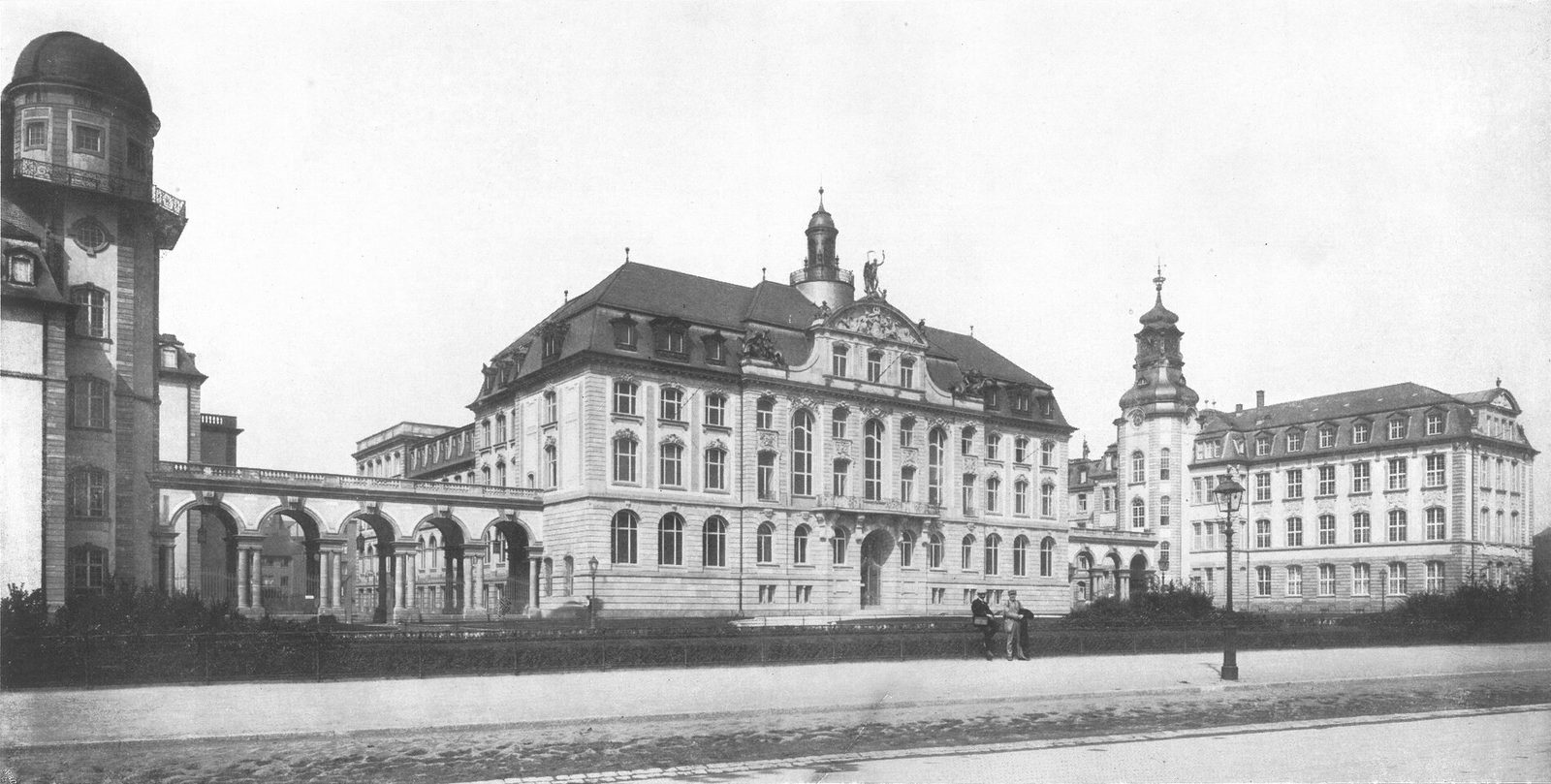
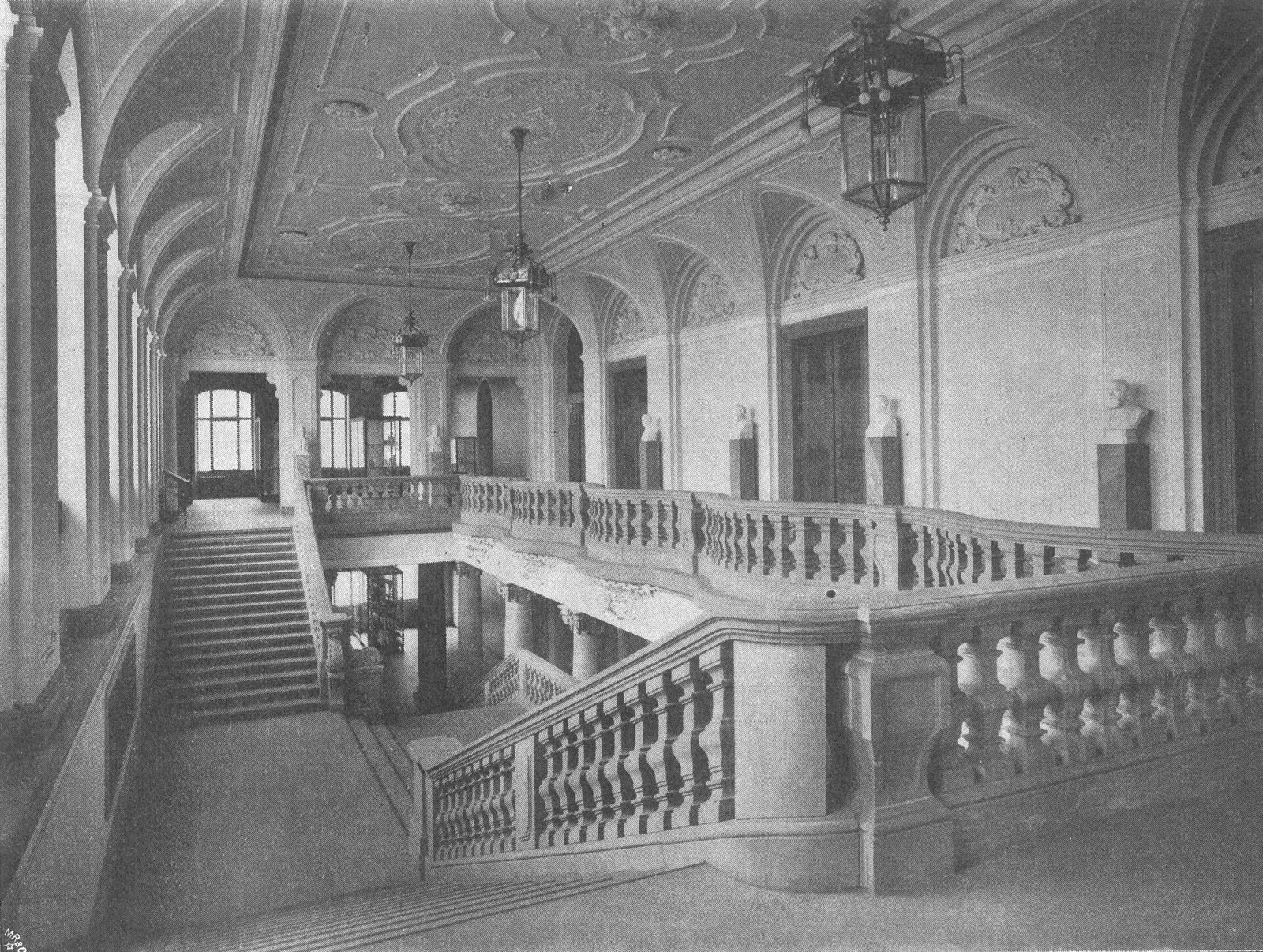
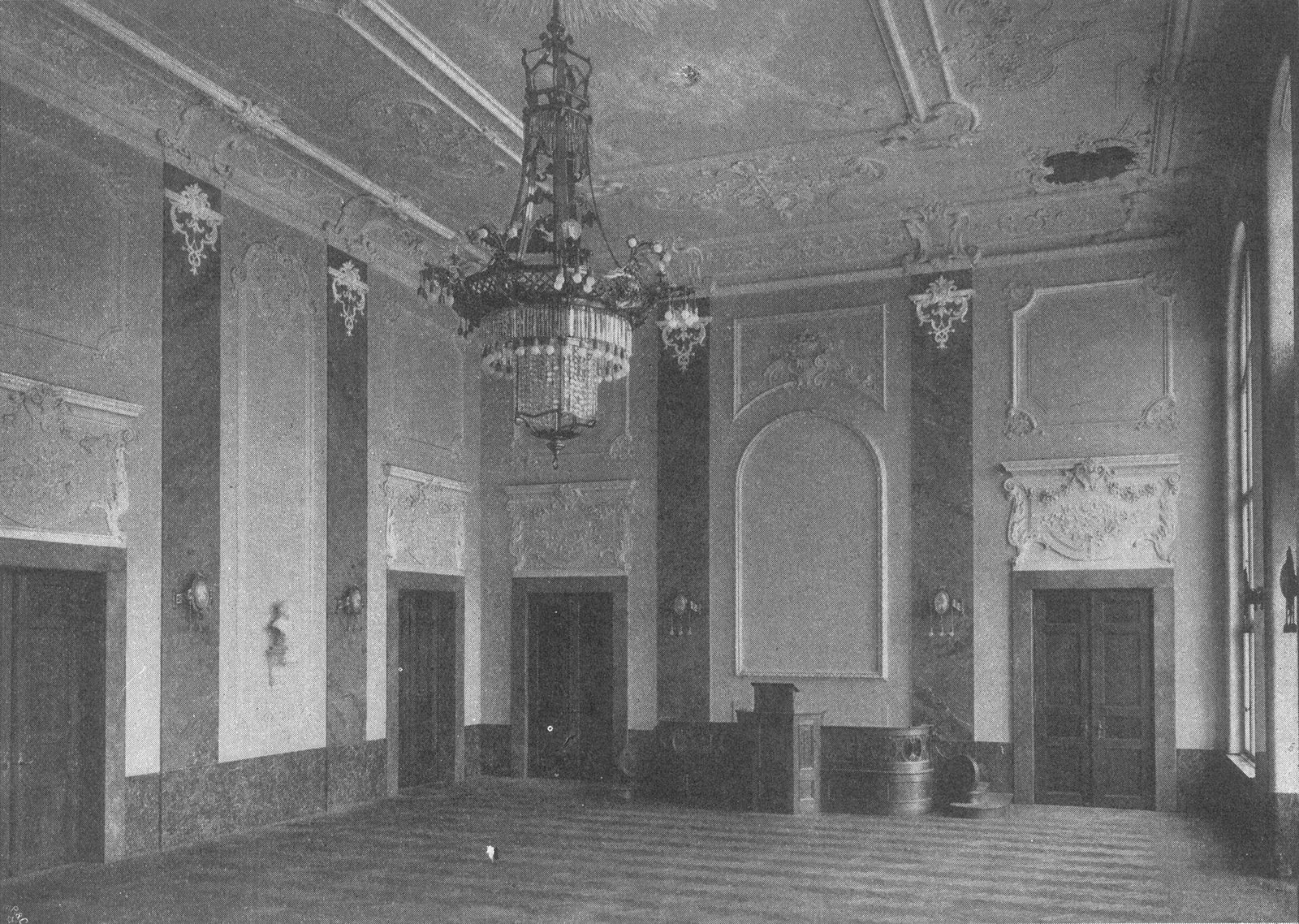
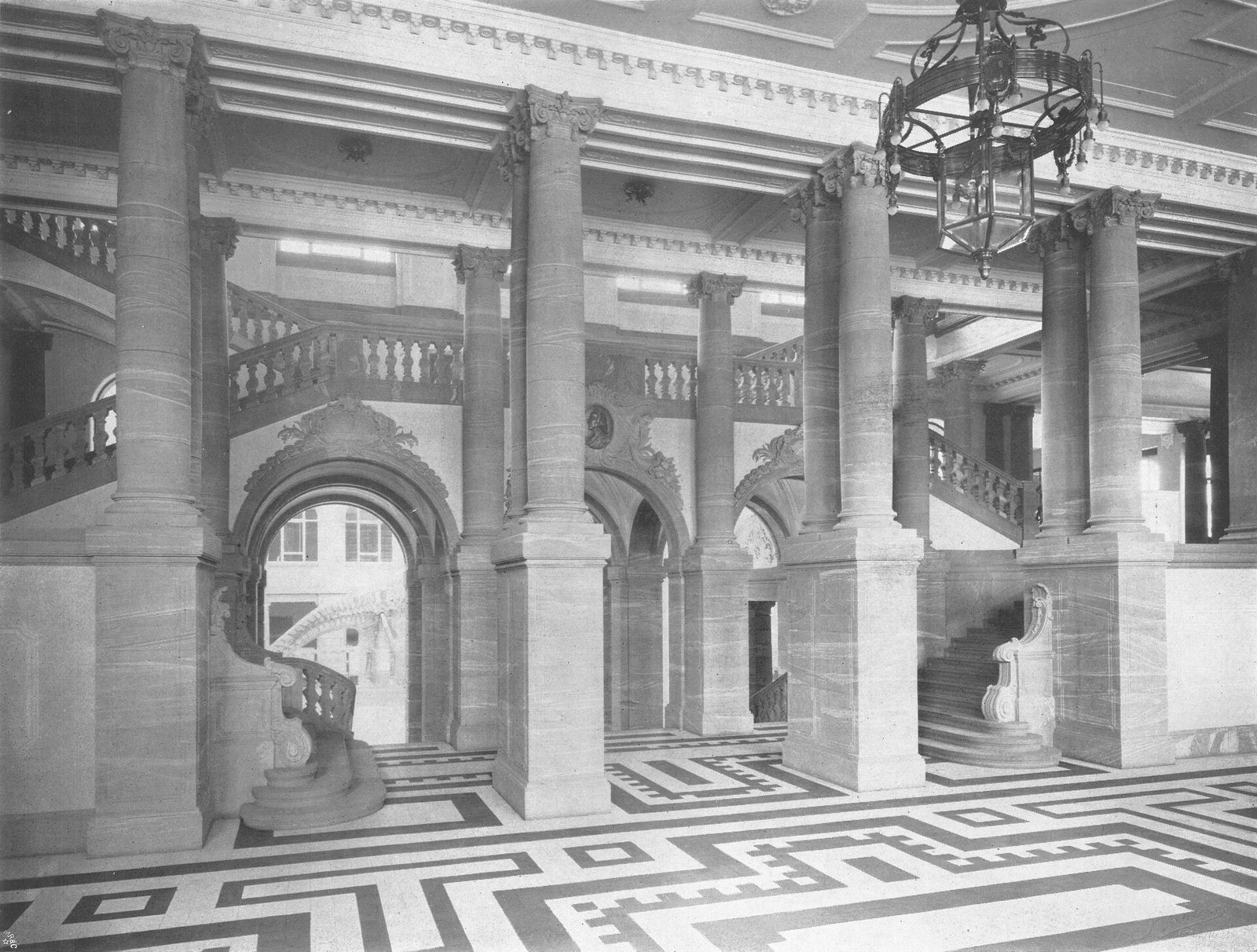
Historical photographs of the Senckenberg Museum around 1908, designed by Ludwig Neher. The photos show the exterior, the staircase, the interior, and the foyer of the museum. They provide a glimpse into the early days of the museum and its architectural style. Source: Wikimedia Commons 1ꜛ, 2ꜛ, 3ꜛ, and 4ꜛ (licenses: all in the public domain).
Today, Senckenberg is much more than a museum. It is part of a major research institution concerned with biodiversity, earth system research, paleontology, geology, and the study of life across time. The Frankfurt museum is therefore both a public exhibition space and the visible part of a much larger scientific infrastructure.
 Bust of two of the 32 founding members of the Senckenberg Society.
In this sense, the Senckenberg Museum is not simply a collection of curiosities, but a public exhibition space built upon fieldwork, taxonomy, collecting, preparation, comparison, classification, and interpretation. Every mounted skeleton, preserved animal, fossil slab, or geological specimen points beyond itself to the work of scientists, preparators, collectors, and institutions.
My walk through the museum
The following sections follow my walk through the main parts of the exhibitions. They are not meant as a comprehensive review, but as a personal selection. I focus on the parts that I found most interesting and those that seemed especially relevant for understanding the value of such a museum.

Dinosaurs and deep time
The very first station after entering the museum is the dinosaur hall, where most visitors likely start. It is a large, open hall with several reconstructed skeletons of dinosaurs, including a Tyrannosaurus rex, a Triceratops, and a Stegosaurus. The skeletons are mounted in dynamic poses, and standing in front (or underneath) of them as a human provides a certain feeling of awe, also a bit of fear, and reminds one where we actually stand in the history of life.


While the main hall is reserved for land dinosaurs, a sub-section also displays marine reptiles. They were equally presented in a dynamic way, almost as if they were swimming in the water. It was interesting to see the diversity of marine reptiles, how gigantic some of them were, how they adapted to their aquatic environment, which predatory strategies they developed, and which evolutionary paths they eventually took.


Fossils: History written in stone
After the dinosaurs, I moved over to another section where a collection of fossils was displayed. Fossils are the preserved remains or traces of ancient organisms such as bones, shells, imprints, or even chemical signatures. What is fascinating about fossils is that they are the primary source of information about extinct life forms and the history of biodiversity. They can be found in various geological formations, and they provide evidence for evolution, extinction, and environmental change. The museum presents them in a very accessible and informative way, which enables visitors to understand their background and significance.


Taxidermied birds and the ethics of display
I then moved over to the section, which houses a large collection of taxidermied birds. I was a bit torn about this.

On the one hand, it was fascinating to see so many different species of birds displayed in one place. Usually, we encounter in the wild, where they are often difficult to observe closely. They move quickly, avoid humans, hide in trees, or simply fly away. In a museum, one can look at them calmly and at close range. This changes the perception of them. What often appears only as a brief movement in everyday life becomes a detailed perception of color, proportion, and posture. The exhibition let’s one explore both common and exotic species – a rare opportunity.


At the same time, this section also raised some ethical questions for me. I mean, one cannot ignore the fact that these birds are taxidermied. All of them were once living animals. Thinking about that they were killed just for the purpose of being preserved and mounted for display also created a certain discomfort. It reminded me that scientific knowledge has often depended – and still does – on practices that always involve ethical considerations and debates.

The museum does not hide this fact, but it also does not make it the central focus. The birds are displayed as objects of natural history, not as reminders of the history of collecting. This created an ambivalence that stayed with me throughout the entire visit.

This was particularly evident for ordinary animals in display. A rooster, for instance, is so common that one rarely thinks about it seriously. Yet when displayed carefully, even such a familiar animal appears with a kind of dignity. Its posture, feathers, colors, and bodily presence make it clear that the ordinary is often only ordinary because we have stopped looking closely. In the end, I think, we should look with awe at all living beings, not only the spectacular ones.

Reptiles and amphibians
The museum also contains smaller displays of reptiles and amphibians. Some exhibits appear as models, while others are preserved specimens, including frogs kept in glass containers with fluid. Fluid or wet preservation (I actually do not know the technical term for this) is a method of preserving biological specimens in a liquid, usually alcohol or formalin. This technique allows for the long-term preservation of soft tissues, which would otherwise decay rapidly.


The brain as an object of art
A particularly unexpected part of the visit was a special exhibition on the brain, called “GEHIRNE” (German for brain). Coming from neuroscience, I was naturally interested in it, but the exhibition was not a conventional anatomical or medical presentation. It approached the brain more through artistic exploration.

There were objects and visual interpretations related to brains, neurons, and perception, but not in a classical scientific way as we, e.g., know from teaching classes. It was quite refreshing to see all the creativity behind all of these objects. A nice reminder that science and art are not separate domains, but can enrich each other in unexpected ways.


Rodents beyond the laboratory
Another small section that interested me personally showed taxidermied rodents. This might sound like a contradiction to what I just said about the ethical tension of taxidermy. But I do not mean that I was fascinated by the taxidermy itself. I was fascinated to see rodents, in particular different types of wild mice, presented in ecological settings. The habitats were models, of course, but they were designed to show the animals within a broader environmental context. The mice were displayed in ways that suggested natural behaviors such as climbing, foraging, or nesting. This created an interesting contrast to the way rodents are usually encountered in scientific research.


Mammals and primates
The next section on my tour was the one on mammals. It included a variety of species such as zebras, deer, goats, elk, primates, and other mammals. The same awe that I felt in front of the dinosaurs and the taxidermied birds also caught me here. The diversity of mammalian life, their adaptations, and their evolutionary history were on full display. It was in particular interesting to see the primates, which are our closest relatives in the animal kingdom.


Lucy
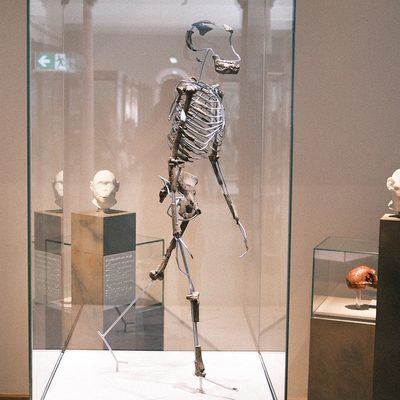
As a subsection of the mammal section, there was a special display dedicated to human evolution, with a focus on Lucy, the Australopithecus afarensis skeleton. Lucy is one of the most famous early hominin fossils, discovered in Ethiopia in 1974. The replica of her skeleton is displayed in the museum, and it was one of the highlights of my visit. Our previous post is entirely dedicated to her, so I will not go into too much detail here. But I want to emphasize that Lucy is not just a “missing link” or a curiosity. She represents a crucial stage in human evolution, showing that bipedalism emerged long before the large brains associated with later humans. She stands near the beginning of a long and branching evolutionary process that eventually gave rise to our own species.


The dark universe beneath the sea
After exploring the history of life on land, the museum also takes visitors to the underwater world. The entire upper floor is dedicated to marine life, with a focus on the deep sea. This section includes a variety of exhibits, such as models of deep-sea creatures, preserved specimens, and a model of a research submersible called ABYSSꜛ from the GEOMAR Helmholtz Centre for Ocean Research Kielꜛ. The deep sea is a fascinating and mysterious environment that is still largely unexplored. It is home to a wide range of unique organisms that have adapted to extreme conditions such as darkness, high pressure, and low temperatures. The exhibition provides insights into the diversity of life in this extreme regime and the scientific efforts to study it. At the same time it also anticipates how much we still have to learn about this vast and largely unknown part of our planet. There is an entire universe lying in the darkness beneath the sea. The exhibition offers a glimpse into this.


A reconstructed laboratory
Toward the end of my tour, I also encountered a display resembling an old scientific laboratory. There were instruments, an old microscope, preserved plants, a human skull, bottles, and preparation fluids. This section was dedicated to the historical practice of studying nature.

I find reconstructions such as these important because in museums, science is often presented only through its results. We see fossils, classifications, diagrams, models, and conclusions. But behind them are scientists, labs, tools, methods, notebooks, chemicals, and technical routines. An old microscope, for instance, is not merely an outdated device. It represents a historical expansion of vision. It made structures visible that could not be seen with the naked eye. Preparation fluids, specimen jars, and laboratory tools likewise show that scientific knowledge depends on material practices. Nature does not simply reveal itself. It has to be collected, prepared, stabilized, magnified, compared, and interpreted.


The reconstructed laboratory therefore added a useful historical layer. In that way, not only the history of life is presented, but also the history of how humans developed methods to study life. And we still pursue this track of exploration and discovery today, albeit with more advanced tools. Science, i.e, the exploration of the surrounding world, is an integral part of the human nature. It is what drives us to continue on our paths, both long term and on a daily basis. The museum overall captures this aspect of human nature quite well, indirectly through its exhibits, but also explicitly in this section.


Why museums like this matter
I believe that museums like the Senckenberg Natural History Museum were and are still valuable because they make complex scientific concepts and histories accessible. They provide a physical and visual representation of ideas that are often abstract and difficult to grasp. For instance, the concept of geological time is hard to understand because it is so vast compared to human experience. When we see fossils from different periods, or a timeline of life on Earth, it becomes more tangible. Similarly, the diversity of life can be overwhelming when presented as a list of species or a phylogenetic tree. But when we see actual specimens, models, and reconstructions, we can appreciate the variety and complexity of life in a more immediate way. In that sense, museums like this pursue both an educational and a scientific mission. They educate the public about the natural world, its history, and the methods of science. nd they also support scientific research by maintaining collections that can be studied and reexamined over time.


At the same time, museums of this kind also raise ethical questions. I felt it acutely. Taxidermied animals, preserved bodies, colonial collecting histories, and older scientific practices cannot be viewed innocently. Many specimens entered collections under conditions that would require careful scrutiny today. The educational and scientific value of such collections is real, but so is the moral discomfort that can arise when looking at once-living beings turned into objects.

I do not think the answer is to dismiss such museums. Nor do I think the ethical questions should be hidden behind fascination. The value of a natural history museum lies partly in holding both aspects together. It can preserve knowledge, support research, and educate the public, while also reminding us that scientific knowledge has its own history, methods, and costs.

For me, the Senckenberg Museum was therefore not simply a collection of impressive exhibits. It was a concentrated encounter with natural history as a process: Life emerging, diversifying, adapting, disappearing, and being studied. From dinosaurs and fossils to birds, mammals, deep sea organisms, and Lucy, the museum makes clear that nature is not static. It is historical, material, contingent, and continuously changing.
References and further reading
- Website of Senckenberg Natural History Museumꜛ
- Wikipedia article on Senckenberg Museumꜛ
- Stephen T. Asma, Stuffed Animals and Pickled Heads: The Culture and Evolution of Natural History Museums, 2001, Oxford University Press, ISBN: 978-0195130508
- Mary Anne Andrei, Nature’s Mirror: How Taxidermists Shaped America’s Natural History Museums and Saved Endangered Species, 2020, University of Chicago Press, ISBN: 978-0226730318
- Jay Kirk, Kingdom Under Glass: A Tale of Obsession, Adventure, and One Man’s Quest to Preserve the World’s Great Animals, 2011, Picador Paper, ISBN: 978-0312610739
- Rebecca Stott, Darwin’s Ghosts: The Secret History of Evolution, 2013, Random House, ISBN: 978-0812981704
- Lance Grande, Curators: Behind the Scenes of Natural History Museums, 2017, University of Chicago Press, ISBN: 978-0226192758


comments