Lucy, the early hominin
In October last year, I was lucky enough to have some time during a conference stay to visit the Senckenberg Natural History Museumꜛ in Frankfurt. Among the many exhibits, ranging from dinosaurs to a large collection of taxidermied animals, I was particularly caught by one of the most famous fossils in paleoanthropology: The skeleton of Lucy, the early hominin.

The museum exhibits a replica of the original fossil, which is kept in Ethiopia, where Lucy was discovered in 1974.
Last year, I ran a series of posts that kind of traced the history of human civilization from its deep origins through language, writing, religion (Mesopotamian, Egyptian, Hindu, Buddhism, Greek, Judaism, Christianity), philosophy (Greek, Chinese, Indian), and science. I thought, a post about Lucy would fit perfectly in line with this series, as it takes us back to the very origins of our species and the evolutionary history that led to the emergence of human civilization.
Lucy…Who?
Lucy is the partial skeleton of an early hominin belonging to the species Australopithecus afarensis. She was discovered in 1974 in Hadar, Ethiopia, by the paleoanthropologist Donald Johanson and his team. The fossil is estimated to be around 3.2 million years old. The name “Lucy” originated from the song Lucy in the Sky with Diamonds by The Beatles, which happened to be playing repeatedly at the excavation camp after the discovery. Scientifically, the specimen is designated AL 288-1.
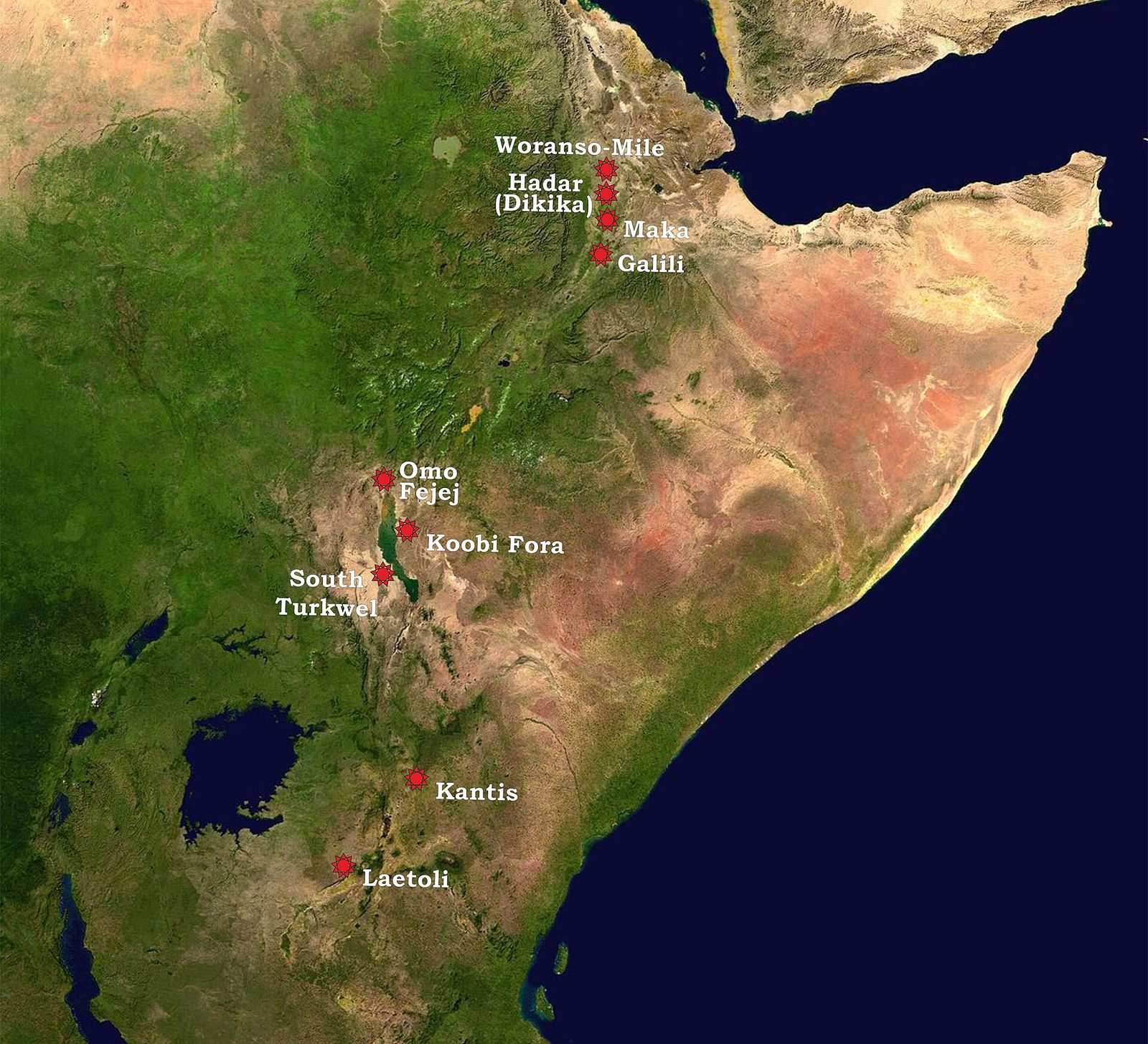
Locations of Australopithecus afarensis sites. Source: Wikimedia Commonsꜛ (license: CC BY-SA 4.0).
What made Lucy extraordinary was not merely her age, but the completeness and preservation of the skeleton. Roughly 40 \% of the body could be reconstructed, an enormous amount for such an ancient hominin fossil. This suddenly allowed researchers to study body proportions, locomotion, posture, and anatomy in unprecedented detail. Lucy, thus, became one of the most important fossils ever discovered because she existed in a critical transitional phase of human evolution.
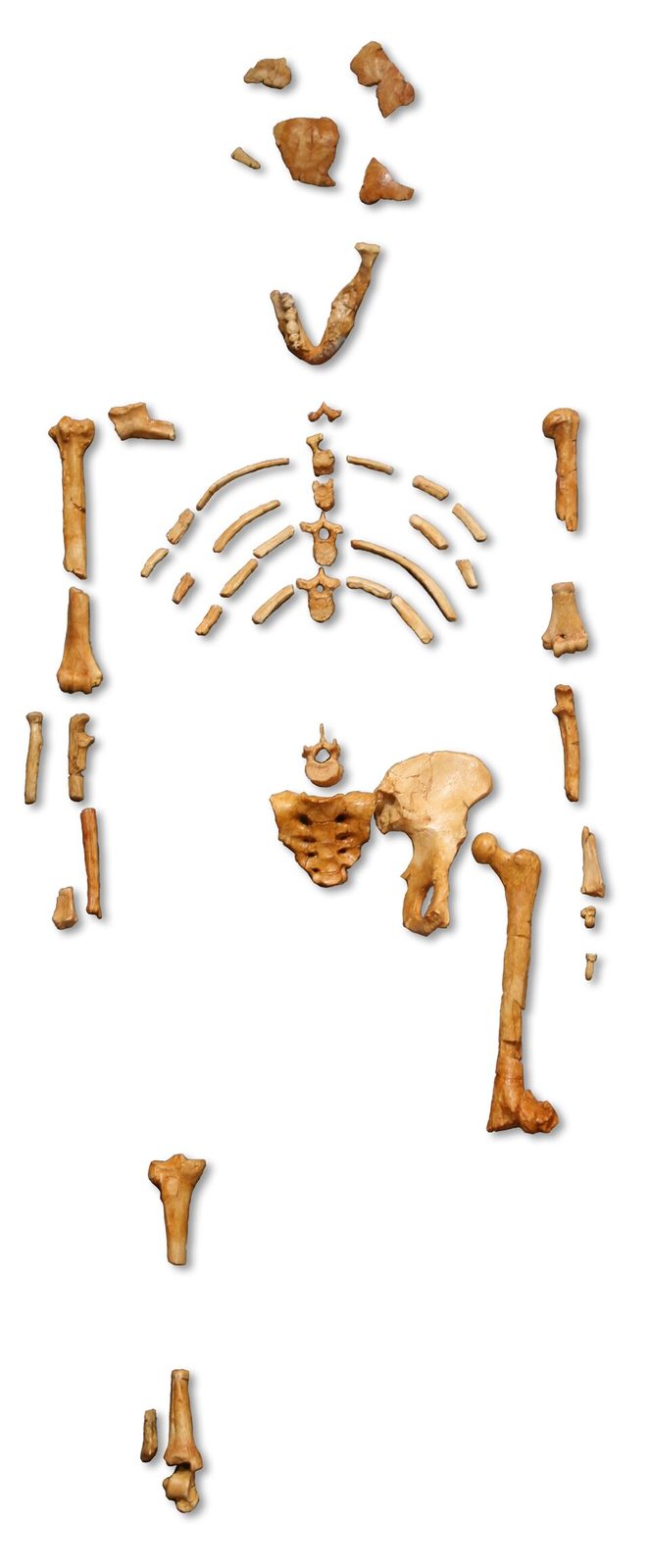
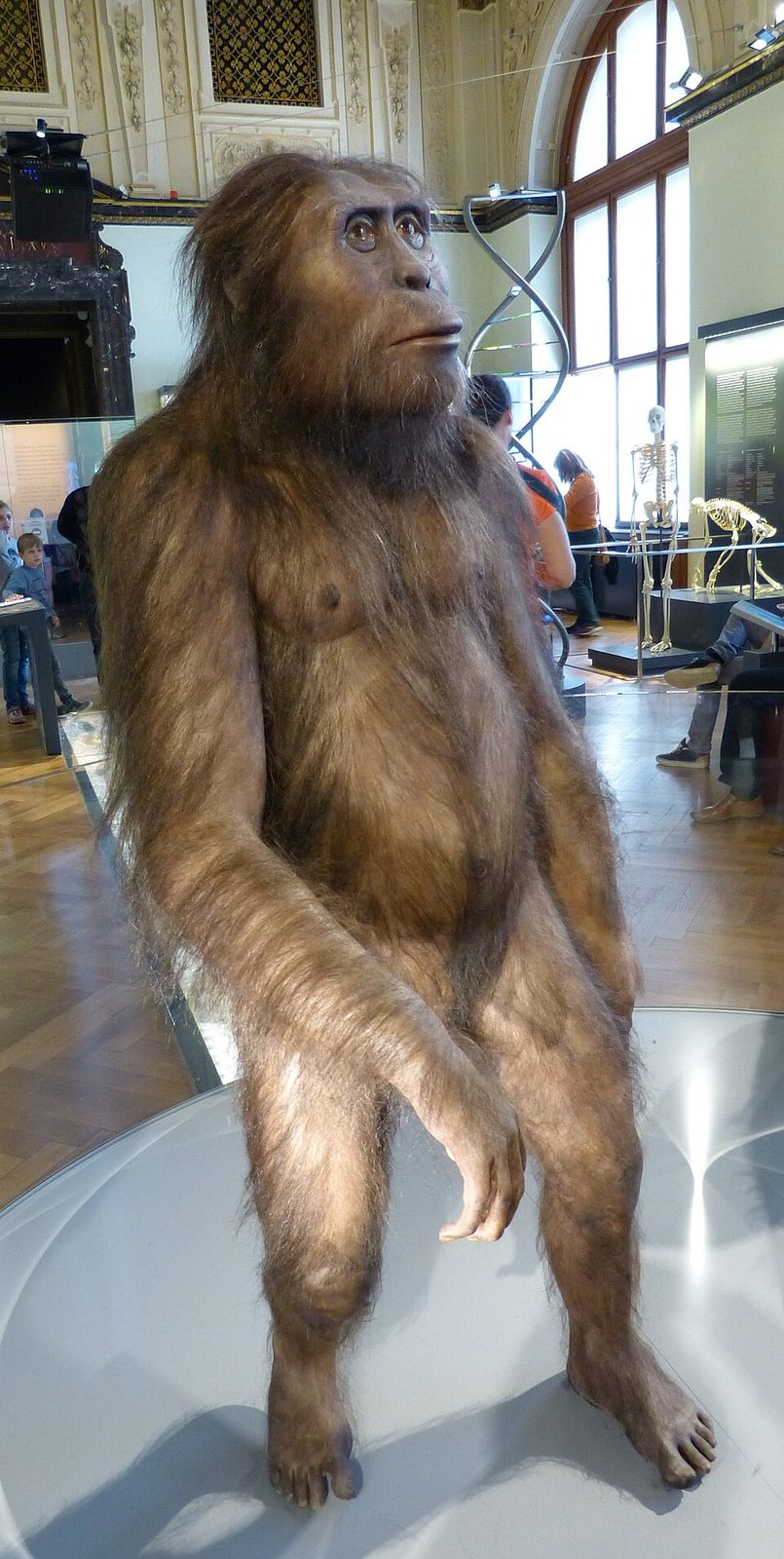
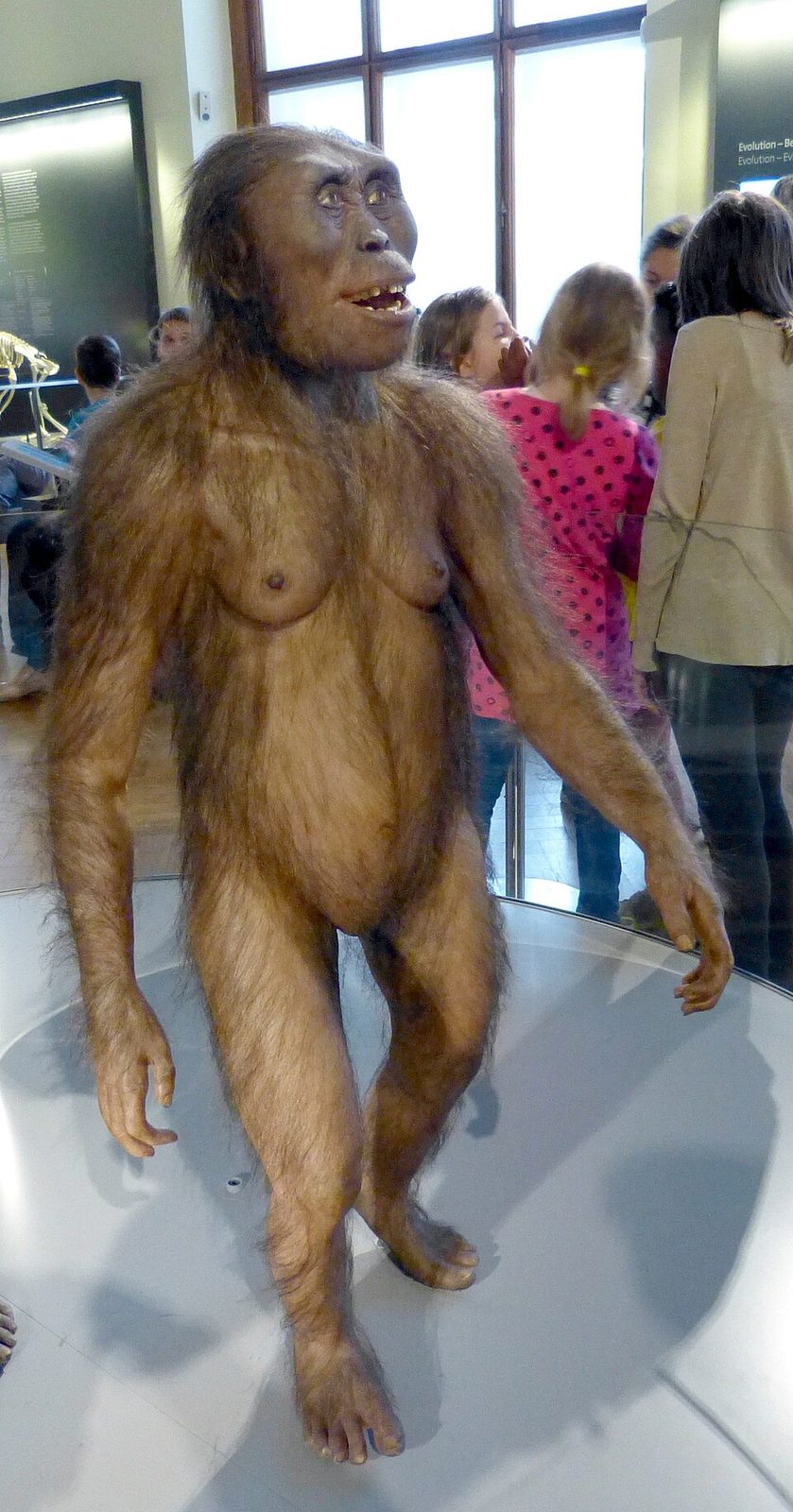
Left: ‘Lucy’ skeleton, cast from Museum national d’histoire naturelle, Paris, France. Source: Wikimedia Commonsꜛ (license: CC BY-SA 3.0). – Center and right: Reconstruction of a male (left) and female (right) A. afarensis at the Natural History Museum, Vienna, Austria. Source: Wikimedia Commonsꜛ and hereꜛ (license: CC BY-SA 4.0).
Neither ape nor human
Lucy’s anatomy is scientifically important because it preserves a combination of traits that helps clarify the order in which major features of human evolution appeared.
Her skull was small, and her brain volume was still much closer to that of modern chimpanzees than to humans. Her face projected forward more strongly than ours, her arms were relatively long, and several anatomical features suggest that climbing still played an important role in her life. At the same time, Lucy’s skeleton shows clear evidence for habitual upright walking.

Her pelvis, femur, knee joint, and spinal alignment indicate bipedal locomotion. If true, this would mean that upright walking had already emerged long before the major brain expansion associated with later members of the genus Homo. This has important consequences for our understanding of human evolution, as it corrects a potentially too simple picture in which intelligence, tool use, or brain size appear as the first defining steps toward humanity. In Lucy’s case, the major change was anatomical and locomotor. The body had already begun to move in a distinctly hominin way, while the brain was still relatively small.

In a sense, Lucy therefore represents an evolutionary mosaic. She was neither a modern human nor merely an ape in the traditional sense. She belonged to a branching population of hominins experimenting, through evolution itself, with new ways of inhabiting the world. And she illustrates that evolution does not proceed as a uniform transformation of the whole organism. Different traits changed at different times and rates. Brain size, locomotion, limb proportions, dentition, and behavior followed partly independent evolutionary trajectories.
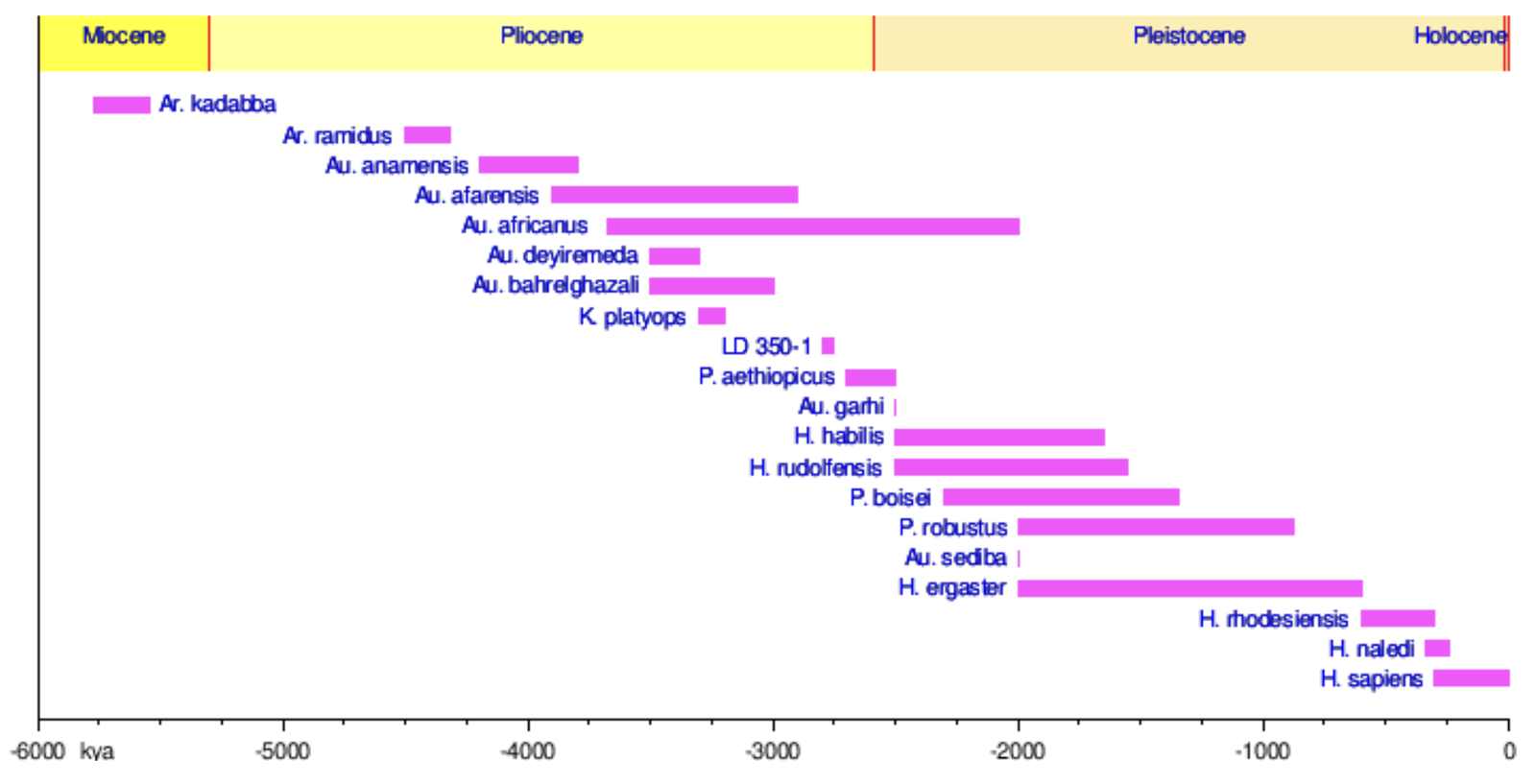
African Hominin timeline. ‘Lucy’, who lived around 3.2 million years ago, is member of the species Australopithecus afarensis (Au. afarensis). Between 4 and 2 million years ago, several species of Australopithecus and other hominins coexisted in Africa. It takes millions of years after Lucy for the first members of the genus Homo to appear. Source: Wikimedia Commonsꜛ (license: CC BY-SA 4.0).
The world Lucy inhabited
Lucy lived during the so-called Pliocene epoch (5.3 to 2.6 million years ago) in eastern Africa, in environments that likely consisted of mixed woodland, river systems, and more open savanna-like regions. The climate was changing. Forests fluctuated and fragmented. Ecological pressures increasingly favored flexibility and adaptation.
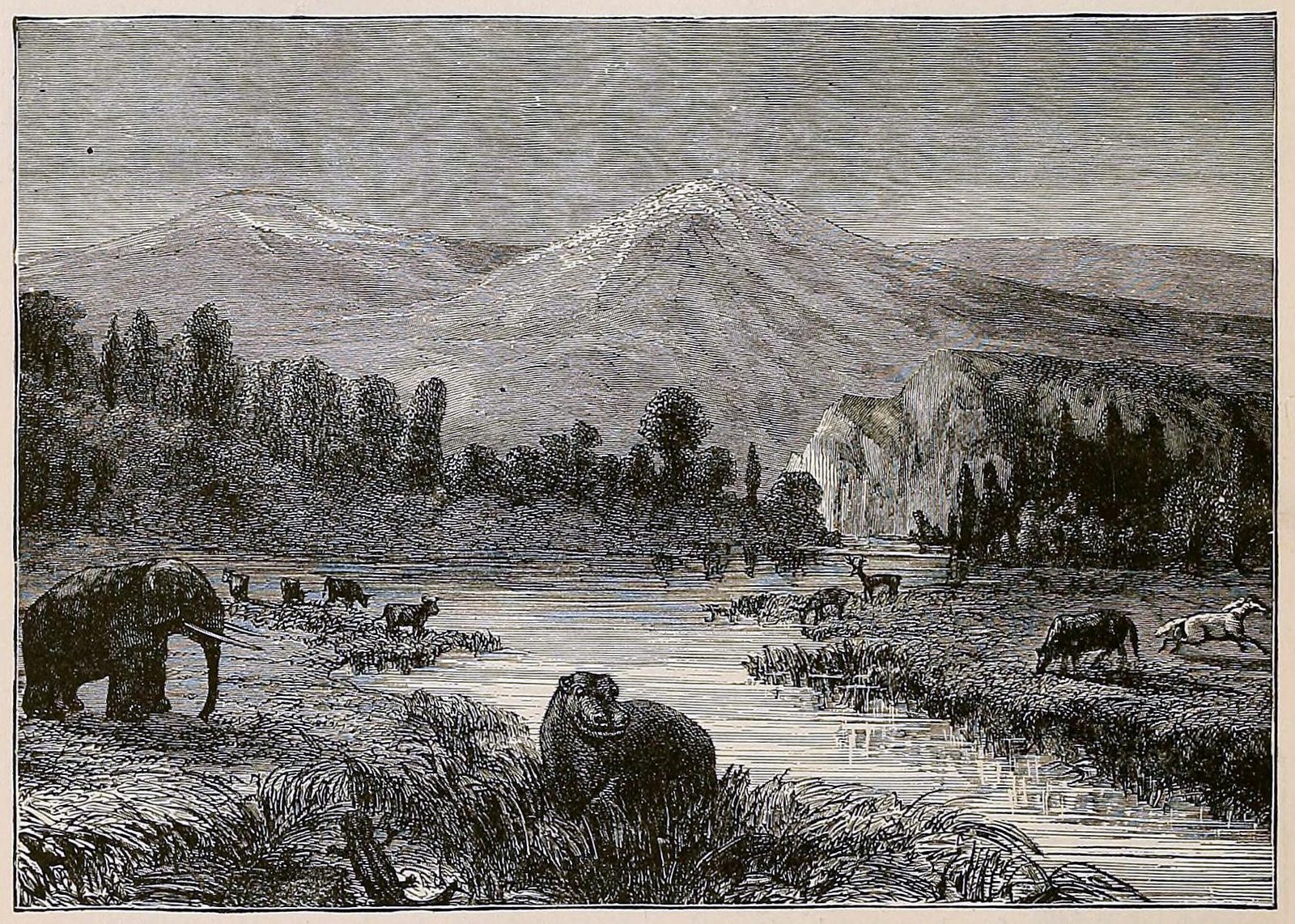 19th-century artist’s impression of a Pliocene landscape. Source: Wikimedia Commonsꜛ (license: public domain)
The evolutionary line leading toward humans emerged not as a straight march toward progress, but as one branch among many hominin experiments. Numerous related species appeared, coexisted, and vanished over millions of years. Most left no descendants.
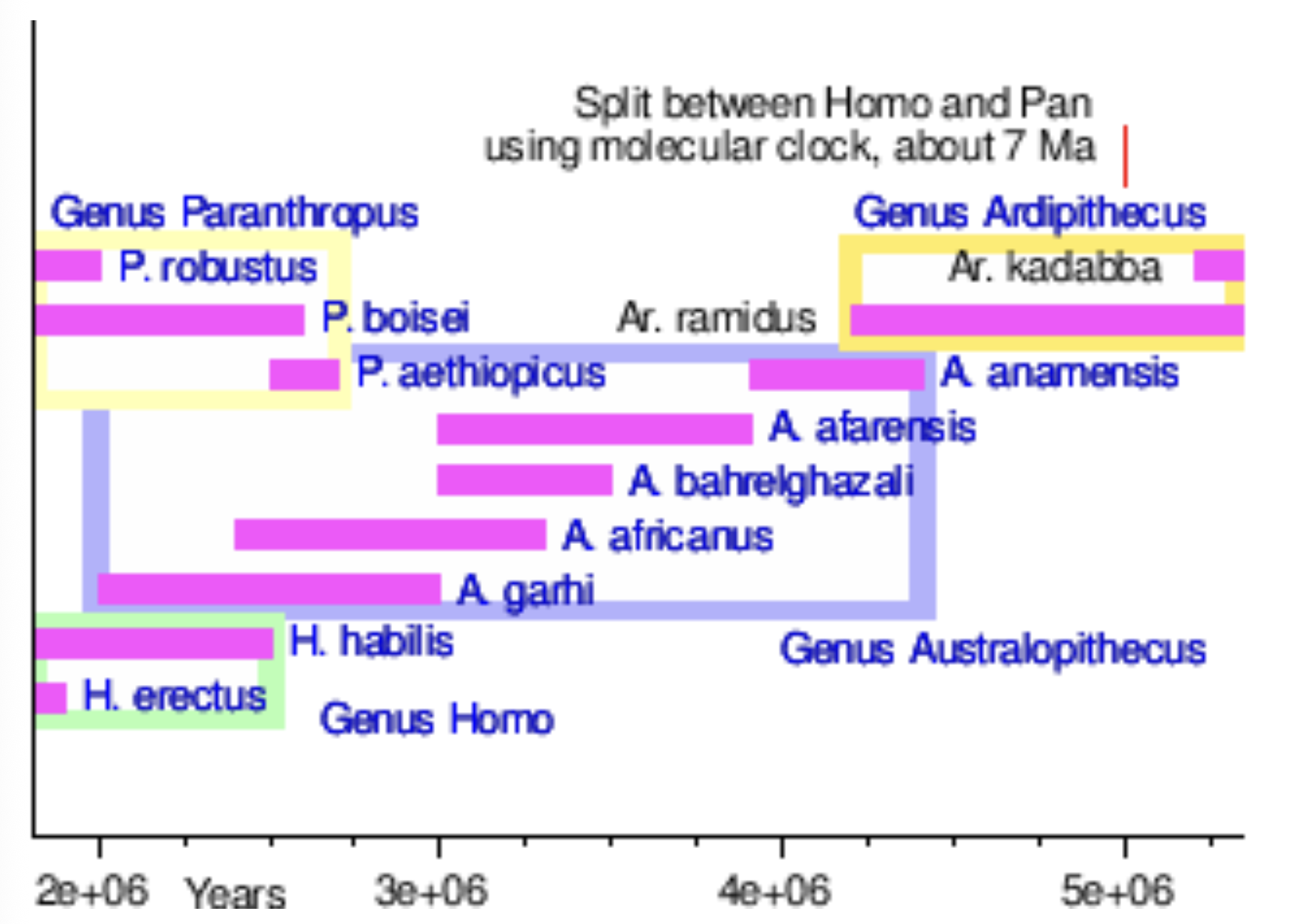 Human evolution during the Pliocene. Source: Wikimedia Commonsꜛ (license: public domain)
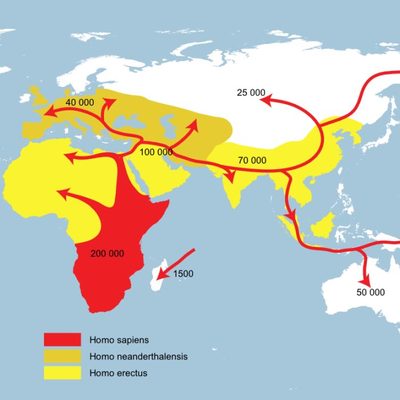
Lucy’s species, Australopithecus afarensis, is often regarded as close to the ancestral line that eventually gave rise to later hominins, including members of the genus Homo. Whether she herself belonged directly to that lineage remains debated. Evolution rarely provides neat boundaries. What is clear, however, is that eastern Africa became one of the great theaters of hominin evolution. Millions of years later, descendants of African Homo sapiens populations would disperse across the globe in the migrations described by the “Out of Africa” model.
Standing in front of Lucy in Frankfurt therefore placed the later history of human culture into a much older biological frame. Language, writing, philosophy, science, creativity, and social organization did not begin from nowhere. They were late developments in a much longer evolutionary history that had already been unfolding in Africa for millions of years.
Lucy and the “Out of Africa” story
When discussing the “Out of Africa” theory, it is easy to focus primarily on Homo sapiens. Yet Lucy reminds us that the story may have begun much earlier.
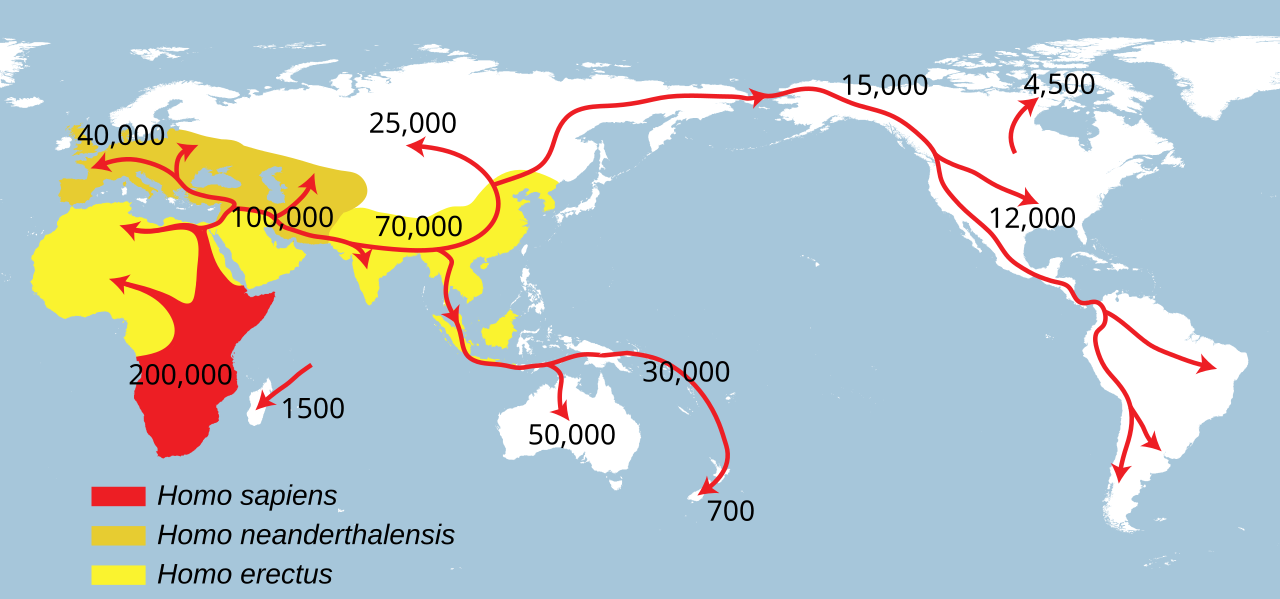 The “Out of Africa” theory (OOA) suggests that modern humans originated in Africa and migrated to other parts of the world. The map shows the approximate successive dispersals (labeled in years before present) of Homo erectus greatest extent (yellow), Homo neanderthalensis greatest extent (ochre), and Homo sapiens (red). Source: Wikimedia Commonsꜛ (license: public domain)
The emergence of upright walking, changing social structures, increasingly flexible behavior, tool use in later hominins, symbolic thought, eventually expressed in language and writing, philosophy, and religion all belong to a continuum extending across immense stretches of time. None of these developments appeared suddenly. They emerged gradually from biological and cultural processes unfolding over millions of years.

The same species that eventually produced mathematics, Buddhist philosophy, cathedrals, spacecraft, and quantum theory ultimately arose from populations of African primates adapting to changing ecological conditions.

Lucy stands near the beginning of that path. She was not a “missing link” in the sense of being a direct ancestor of modern humans. Instead, she was part of a diverse and branching hominin family tree.
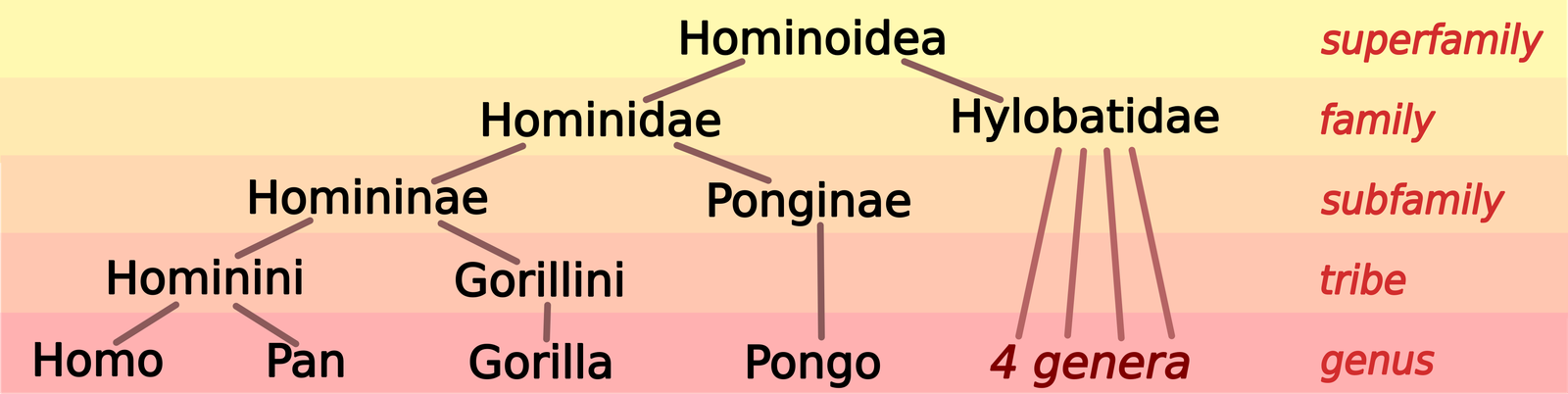 Taxonomic classification of the superfamily Hominoidea (hominoids), emphasizing the tribe Hominini. This tribe (lower left in graphic) comprises two genera, Homo and Pan; while gorillas are classified as separate from these — as the single genus Gorilla of tribe Gorillini; all of subfamily Homininae. Source: Wikimedia Commonsꜛ (license: CC BY-SA 3.0).
For me, this has implications for how we should think about human nature itself. Human civilizations often imagine themselves as separate from nature or elevated above it. We see ourselves as beings of reason, culture, and technology, and we often treat these capacities as if they separate us from the rest of biological life. Fossils like Lucy proof the opposite and point instead to continuity, gradual transformation, and the multi-faceted character of life. The distance between modern humans and early hominins is enormous in terms of culture and cognition, but the biological connection is direct.


If our species is the product of a long evolutionary process, then many traits we consider “human” may have deep roots in our primate ancestors. This includes not only physical traits but also social behaviors, cognitive capacities, and even emotional tendencies. If developed further, this thought even suggests that human identity becomes less fixed, less absolute, and more process-like. Humanity itself appears not as a static essence, but as an evolving, multi-faceted continuum.

A fossil and a mirror
What impressed me most about seeing Lucy was that, unlike many museum exhibits, she did not feel entirely distant or disconnected. Many museum exhibits remain clearly separated from us as objects of display. Lucy was different. Looking at her skeleton is, in a strange sense, looking into a very distant mirror. Not a mirror reflecting modern humanity, of course, but one reflecting deep ancestry, contingency, and emergence.

Lucy represents a stage in an evolutionary process that eventually gave rise to beings capable of language, art, philosophy, and science. The cognitive world of Australopithecus afarensis was perhaps vastly different from ours. Yet fossils like Lucy make clear that the roots of human existence reach far deeper into evolutionary time than civilization itself.
And perhaps this is ultimately what makes Lucy so fascinating. She is not important because she was “almost human”, but because she reminds us that humanity itself was never something fixed or sharply separated from the rest of nature. It emerged gradually, through countless generations of adaptation, variation, and change. Our species did not appear as a finished form, but emerged through a long dynamic process, and Lucy stands close to one of its early visible stages.
References and further reading
- Website of Senckenberg Natural History Museumꜛ
- Donald Johanson and Maitland Edey, Lucy: The Beginnings of Humankind, 1981, Simon & Schuster, ISBN: 978-0671724993
- Donald Johanson and Blake Edgar, From Lucy to Language, 1996/2006, Simon & Schuster, ISBN: 978-0743280648
- Ian Tattersall, Masters of the Planet: The Search for Our Human Origins, 2012, ST MARTINS PR, ISBN: 978-0230108752
- Chris Stringer, Lone Survivors: How We Came to Be the Only Humans on Earth, 2013, Griffin, ISBN: 978-1250023308
- Chris Stringer, The Origin of Our Species, 2012, Allen Lane, ISBN: 978-1846141409
- Richard Leakey, The Origin of Humankind, 1995, Basic Books, ISBN: 978-0521466769
- Daniel E. Lieberman, The Story of the Human Body: Evolution, Health, and Disease, 2014, Penguin, ISBN: 978-0141399959
- Robin Dunbar, Human Evolution: Our Brains and Behavior, 2016, Oxford University Press, ISBN: 978-0190616786
- Jean-Jacques Hublin and Shannon P. McPherron (Eds.), Modern Origins: A North African Perspective, 2012, Springer, ISBN: 978-9400729285
- Clive Gamble, Settling the Earth: The Archaeology of Deep Human History, 2013, Cambridge University Press, ISBN: 978-1107601079
- Peter Bellwood, First Migrants: Ancient Migration in Global Perspective, 2013, Wiley-Blackwell, ISBN: 978-1405189088
- Curtis Marean, The Most Invasive Species of All Time: The Colonization of the Globe by Modern Humans, 2015, Princeton University Press (in edited volume), doi: 10.1038/scientificamerican0815-32ꜛ
- Robin Dennell, The Palaeolithic Settlement of Asia, 2009, Cambridge University Press, ISBN: 978-1598744705
- Stephen Oppenheimer, Out of Eden: The Peopling of the World, 2004, Robinson Publishing, ISBN: 978-1841198941



















comments