Kloster Steinfeld: A visit to a monastery between history and the present
In June 2025, our lab retreat took us to Kloster Steinfeld in the Eifel. It was not a pilgrimage and not an attempt at spiritual proximity. It was simply a place that could host a group, provide rooms, and keep a schedule running.
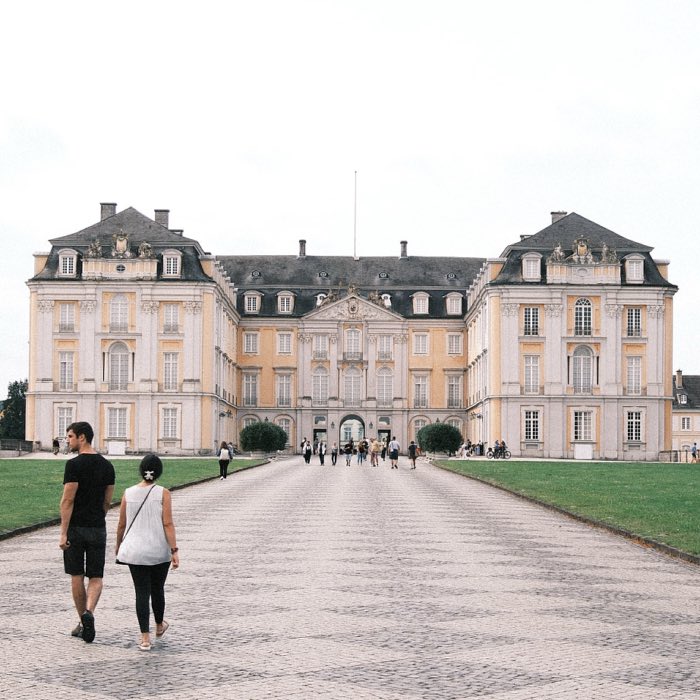
 Kloster Steinfeld, Kall, Eifel, Germany. Shown is the central building complex.
That is precisely what made the first hours there so striking. You walk into a complex shaped by monastic time and monastic aesthetics, and then you notice how seamlessly it has been overlaid with contemporary utility. The basilica is there, the cloister is there, the garden is there. And in the same breath there are seminar rooms and the guest housings. The site does not present itself as purely sacred. It does not present itself as purely secular either. It feels suspended between both.
After my post series on both Christianity and Buddhism last year, writing about our retreat location seemed like a fitting way to reflect on that post series. The monastery stands at the intersection of mythical origins and institutional entrenchment, of theological authority and practical repurposing. The stones still carry the claim of permanence, but the present day use quietly contradicts that claim. What remains is not only heritage, but a living example of how Christianity survives by changing its role. That tension is the real subject here I guess, and I hope it invites both historical curiosity and critical attention.
The origins and history of Kloster Steinfeld
Kloster Steinfeld sits on the edge of the Eifel as one of those places where you can feel time stacked in layers. The site has been used, rebuilt, and repurposed for close to a millennium. What began as a medieval religious foundation later became a school, a retreat venue, and a local landmark. Walking through it now, the historical timeline stops being abstract and turns into corridors, doors, and signs for modern facilities.
 Kloster Steinfeld, Kall, Eifel, Germany. View of one of the monastery buildings. In front, a statue, most likely of Franziskus Jordan, founder of the Salvatorians, which currently run the site.
Foundation and early history
The dates are easy to list, but they become more concrete once you have stood in the cloister and noticed how old the stone actually looks and how ordinary the daily routines around it have become. However, let’s start with the basics.
Although traces of religious activity in Steinfeld reach back to around 920, the first formal monastic settlement was established in 1070. The turning point came in 1130, when the Premonstratensians took over. They were a reform-minded order founded only a decade earlier, and Steinfeld quickly became one of their important footholds in the German-speaking regions of the Holy Roman Empire.
 Part of the cloister of the monastery complex.
Its location in the Eifel feels remote when you arrive, yet it is close enough to Cologne and other major centers to have mattered historically. In 1184, Steinfeld was granted abbey status, and from here the Premonstratensians built a network of daughter houses across Europe, including Strahov Monastery in Prague.
 Part of the cloister of the monastery complex. The walls are decorated with Christian iconography.
Medieval role and cultural significance
Over the centuries, Kloster Steinfeld became a regional spiritual center and a place of pilgrimage, particularly due to its association with St. Hermann Joseph, a mystic and member of the Premonstratensian order. Even if one may not share the devotional framework, the practical fact remains that his presence shaped the building. The tomb is still positioned and treated as a center of gravity inside the basilica, and you notice that immediately once you step into the nave.
 Remnants of a cross.
One detail I did not expect is how directly the monastery was plugged into an academic world that still feels familiar in structure. In Cologne, Steinfeld maintained the “Steinfelder Hof” near St. Gereon. In 1615, Abbot Christophorus Pilckmann founded the Collegium Norbertinum there, offering lodging and preparation for order members studying at the old University of Cologne. In other words, Steinfeld did not only produce prayer and ritual. It also produced trained personnel, institutional continuity, and a very concrete pipeline of education.
 Statue of a saint or important figure of the monastery.
Secularization and modern transformation
The history takes its most recognizable turn when the monastery stops being a monastery in the strict sense and starts becoming a site that can be reassigned. Like many monastic institutions, Kloster Steinfeld was secularized during the Napoleonic reforms in 1802, which marked the end of its continuous line of 44 abbots. While the church was preserved for parish use, the remaining buildings were repurposed for secular activities.
 Modern extension housing the seminar rooms.
In 1923, the Salvatorians acquired the site and established the Hermann Josef Kolleg, a secondary school initially meant to train future members of the order. Over time, the school opened to external students, and since 1971 also to girls. The boarding school closed in 2013. Since 2015, parts of the former dormitories have been converted into a guesthouse and a small art academy. This is the point where the place becomes easiest to read with modern eyes: the old architecture stays, but its functions shift into education, hospitality, and cultural use.
 A poster on the walls of the monastery, depicting a statue of Franziskus Jordan, the founder of the Salvatorians in 1881. The text reads: “Erfüllt von Gott mit Menschen unterwegs, damit alle Leben in Fülle haben.” (“Filled by God, on the way with people, so that all may have life in abundance.”)
 Cast image of Blessed Maria von den Aposteln, co-founder of the Salvatorians.
In March 2025, the spring assembly of the German Bishops’ Conference was held at Kloster Steinfeld, underlining the site’s ongoing relevance as a venue for ecclesiastical gatherings and dialogue. It is a slightly odd detail, but also a revealing one. Even after secularization and repurposing, the site still acts as an attractive stage for Church self-administration.
 Another wooden statue hanging on the walls of a hallway.
Monastic architecture and symbolism
Architecturally, Steinfeld feels like a timeline you can walk through. Romanesque weight, Gothic lines, and later Baroque additions sit next to one another without asking to be harmonized. Some transitions are elegant, others feel like practical patchwork. That mixture is part of the point: the complex does not only preserve a style, it preserves the history of changing needs.
Spatial layout and medieval structures
The architectural centerpiece of Kloster Steinfeld is the basilica, built between 1142 and 1150 by the Premonstratensians. This Roman Catholic order was founded in 1120 by Norbert of Xanten with the goal of combining contemplative monastic life with active pastoral work. Their presence at Steinfeld helped shape the monastery into a center of both spiritual rigor and ecclesiastical influence.
From the outside the basilica reads as massive and stable, but the interior feels more subtle. Light, stone, and the long perspective of the nave do much of the work that ornament later tries to amplify.
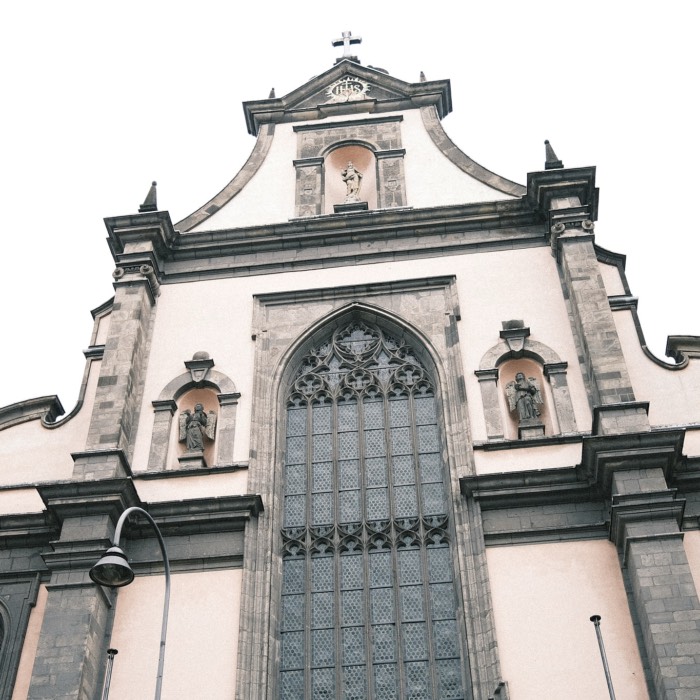
 The basilica of Kloster Steinfeld, Kall, Eifel, Germany.
It is one of the earliest vaulted churches in Germany and is dedicated to St. Potentinus and his sons Felicius and Simplicius, legendary figures of early Christian martyrdom venerated in parts of Western Europe. According to tradition, Potentinus was a Roman nobleman who, along with his sons, was martyred for his Christian faith. This symbolic dedication connects the basilica to themes of familial devotion and steadfast belief. While their shrine from the 13th century is now housed in the Louvre, the basilica retains strong connections to its historical devotional functions. It was elevated to the rank of Basilica minor by papal designation in 1960.
 Iron entrance door of the basilica, depicting the crucifixion of Jesus and ornaments.
The building itself is a composite of multiple architectural styles accumulated over the centuries. Its foundational Romanesque structure was expanded with Gothic elements, later supplemented by Renaissance and Baroque features. In more recent times, modern steel applications have been discreetly integrated, reflecting an ongoing process of architectural adaptation.
 Baroque or Rococo altar, most likely dedicated to the Virgin Mary.
 Confessional booth.
Inside, the basilica consists of eight bays and six side chapels, among them the Stephanus and Ursula chapels. The latter houses one of the oldest preserved frescoes in the church: a depiction from the late 12th century of Christ in Glory surrounded by angels, evangelist symbols, and a procession of Saint Ursula and her companions. Other surviving monumental wall paintings, such as a Crucifixion fresco from the 14th century featuring Margrave Wilhelm V of Jülich, underscore the religious and political messaging that was once integral to monastic art.
 View through a window in the antechamber, viewing into the main nave of the basilica, looking towards the altar.
 The main nave of the basilica.
 Another view into the main nave.
 One of the side aisles of the basilica.
 Sied view into the nave.
 The ceiling with ornamental frescoes.
One of the most significant devotional sites within the basilica is the grave of Hermann Joseph of Steinfeld, located at its center. Covered by an alabaster effigy from 1732 and a marble sarcophagus from 1701, the grave is traditionally adorned with apples, a nod to the legend in which Hermann Joseph offered an apple to the infant Jesus, who accepted it. This tomb continues to attract pilgrims and helps anchor the basilica’s reputation as a place of local veneration.
 Sunlight coming through small windows in the roof of the basilica.
The church also contains a noteworthy Pietà from 1420 carved in tuff, and three statues from the late 15th century in the “Soft Style,” depicting Potentinus, Hermann Joseph, and Mary with the Christ child.
 Small altar with a Pietà sculpture.
 A wooden sculpture of a saint.
A particularly fascinating feature is the baroque König organ, completed in 1727 by Balthasar König. Its layered construction began as early as the 16th century, evolving from a likely swallow’s nest organ to a monumental three-part ensemble with pedal towers. This instrument not only reflects the monastery’s musical heritage but also its capacity to adapt liturgical technologies over time.
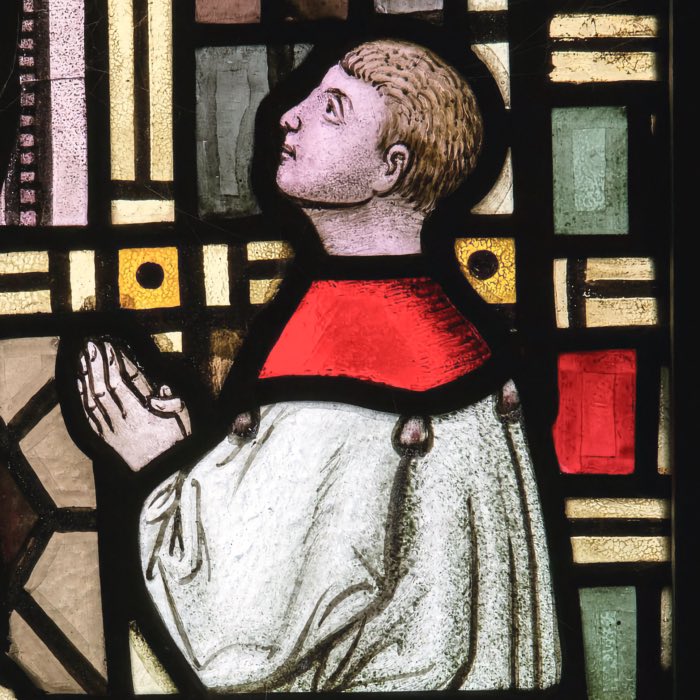
Behind the main gate, the Romanesque cloister was replaced between 1492 and 1517 with a new structure in Gothic style. Its stained glass windows, once a highlight of the ensemble, were sold off after the secularization and now reside mostly in England and in the Victoria and Albert Museum in London. Only two panes have returned to Steinfeld. One, donated by Johannes Hillen, shows the apostle Simon with a visible forearm relic, providing a rare glimpse into late medieval devotional practice and artistic patronage.
 Religious objects one can buy at the entrance of the basilica.
Small chapel
Appart from the pompous basilica, the monastery complex also houses a small chapel. In fact, I liked this one more than the largeer baroque-roccoco basilica, as it felt, in absence of elaborated ornaments, more pure and rustic. Unfortunately, I have no further information about this chapel, but here are some pictures of it:
 Nave of the small chapel.
 Wooden sculpture in a niche of the small chapel.
 Mary with child, wooden sculpture in the small chapel.
 A wooden statue of a priest in a niche of the small chapel.
 A modern depiction of the cross passage.
 Another panel of a modern depiction of the cross passage.
 Another panel of a modern depiction of the cross passage.
Outdoor spaces
The gardens were the part of Steinfeld where the monastery felt most convincing to me. Indoors, the basilica often performs its authority through scale and decoration. Outside, the site becomes quieter and more legible: paths, hedges, old walls, shade, and the simple fact that monastic life always had to include work. Historically, these spaces were functional as much as symbolic, used for gardening, herbs, and self-sufficiency, while also providing a controlled setting for silence and routine.
 View from a window into one of the gardens.
 The backside of a chapel, seen from the garden.
 Sideview of the chapel, seen from the garden.
Cloister garden
The green spaces in the cloister area provide a serene environment for reflection and spiritual practice. Monastic gardens were traditionally used to grow medicinal herbs, vegetables, and flowers, supporting the self-sufficiency of the monastic community. They also served as spaces for quiet contemplation, allowing monks to connect with nature and find solace away from the rigors of daily monastic duties.
 View into the cloister throm a window.
 Another view into the cloister throm a window.
 A baptismal font in the cloister.
 View from the cloister.
 View from the cloister.
 View from the cloister.
Labyrinth garden
Behind the modern extensions of the complex lies a cloister garden, that holds a round labyrinth made of boxwood hedges. Labyrinths have a long history in Christian monasticism, symbolizing the spiritual journey towards God. Walking the labyrinth was often used as a form of meditation and prayer, allowing monks to reflect on their faith while physically engaging with the space. In the center of this particular labyrinth stands an iron cross sculpture, adding a focal point for contemplation.
 The labyrinth in the cloister garden.
 In the center of the labyrinth stands an iron cross sculpture.
Garden of contemplation
One of the many gardens that I liked most could only be reached by descending a staircase, next to the labyrinth garden. This garden features an unique space dedicated to relaxation and contemplation, hosting large trees, wildflower meadows, a fountain, and seating areas.
 This garden stands out for its unspoiled natural beauty.
 The old fountain in the garden.
 Christian ornaments decorate the walls of the garden.
 Christian ornaments. Left: Marry with child. Right: Most likely St. Joseph.
 A detail view of the Marry with child ornament.
 A seating area in the garden.
Interior details
What I noticed indoors is how abruptly the atmosphere changes from room to room. Some corridors feel almost modern in their restraint: stone, plain walls, and light falling in through a single window at the end. Then you turn a corner and suddenly you are in a space that signals prestige, patronage, and Church wealth without subtlety. That contrast does not feel accidental. It feels like a record of what the institution valued at different times, and of how it wanted to be seen.
 A hallway in the monastery complex.
 Another shady hallway, drenched in sunlight by a window at the end.
 An old icon hanging on a wall in a hallway.
 Altar space in a niche of the cloister.
 Another view of the altar space in a niche of the cloister.
 A small wooden Pietà sculpture in the same niche.
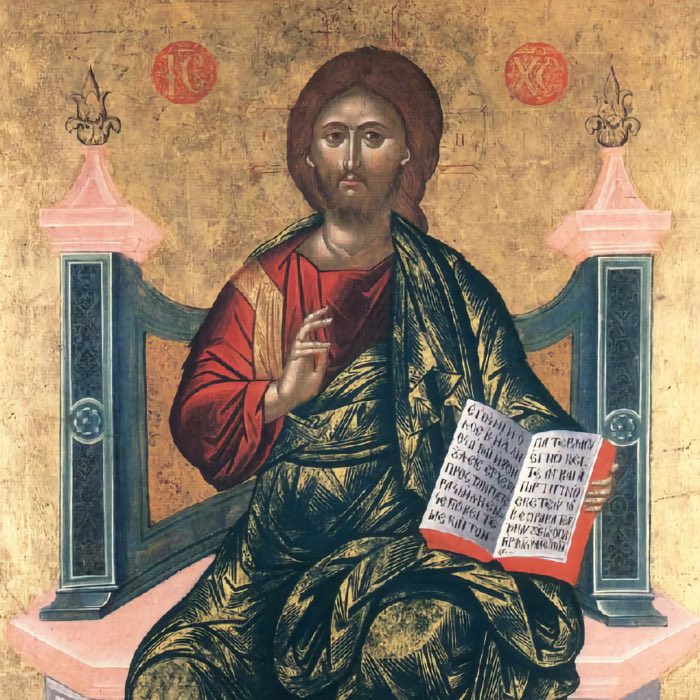
 Christus Pantokrator icon over a doorway.
 Wooden statue of Mary with child, decorated with gold ornaments.
 Panel from a woven depiction from the Gospel (Jesus rescuing seaman from the storm), hanging on a wall.
 Another panel from a woven depiction from the Gospel (Jesus entering Jerusalem on a donkey).
 Another panel from a woven depiction from the Gospel (The wedding at Cana most likely).
 A woven panel of Jesus as Pantokrator.
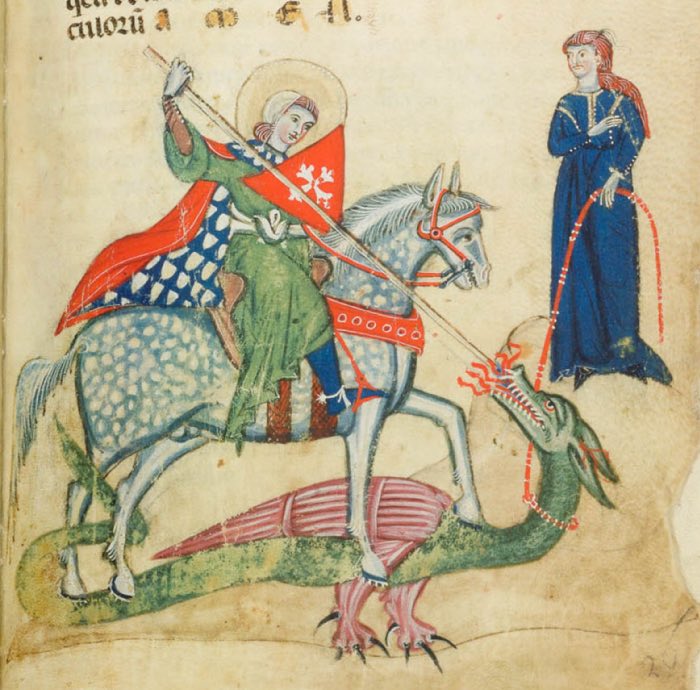
 Iron panel depciting St. George slaying the dragon.
 Iron panel showing Mary the Blessed Virgin on the left and Mary with child on the right.
 A modern painting of Marry with child.
 A modern painting of Adam and Eve in the Garden of Eden.
 Another modern painting of Adam and Eve in the Garden of Eden.
 One of the hallways in the seminary building. At its end, a full-size fresco of Marry with child.
 Religious illustrations decorating a wall of a hallway.
 View from a window into the garden.
 One of the hallways in the seminary building.
 A richly decorated saloon in the main cloister building.
 Another view of the richly decorated saloon.
 A painting showing a priest holding an angel or Baby Jesus, hanging in the saloon.
 Another view of the richly decorated saloon.
 Secretary desk in the richly decorated saloon.
Layers of ideology in stone
Religious architecture is never neutral. The basilica, cloister, and associated structures at Kloster Steinfeld were not only built for liturgical purposes but also as statements of power, permanence, and cosmological order. The scale of the basilica, the central positioning of the tomb of Hermann Joseph, and the elaborate iconography throughout the complex all serve to assert theological authority and social hierarchy. The building itself becomes an ideological medium: it communicates divine legitimacy, embeds memory in stone, and organizes the space of worship in a way that reinforces institutional control.
The visual language of the basilica, encompassing Romanesque solidity, Gothic ascent, and Baroque opulence, functions as a symbolic layering of tradition and continuity. These stylistic choices are not merely aesthetic; they correspond to evolving theological emphases and ecclesial ambitions across centuries. Even the physical journey through the church, from entrance to nave to choir to crypt, mirrors the spiritual journey of the believer, structured and mediated by ecclesiastical architecture.
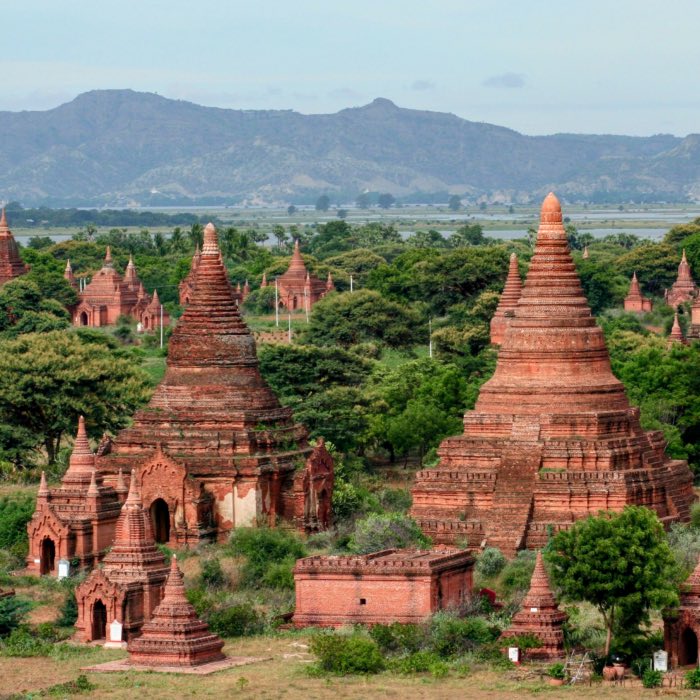
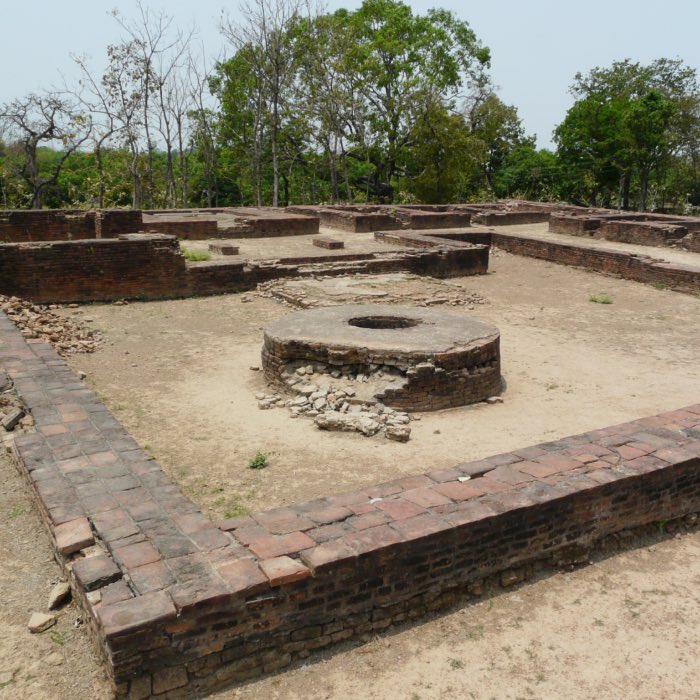
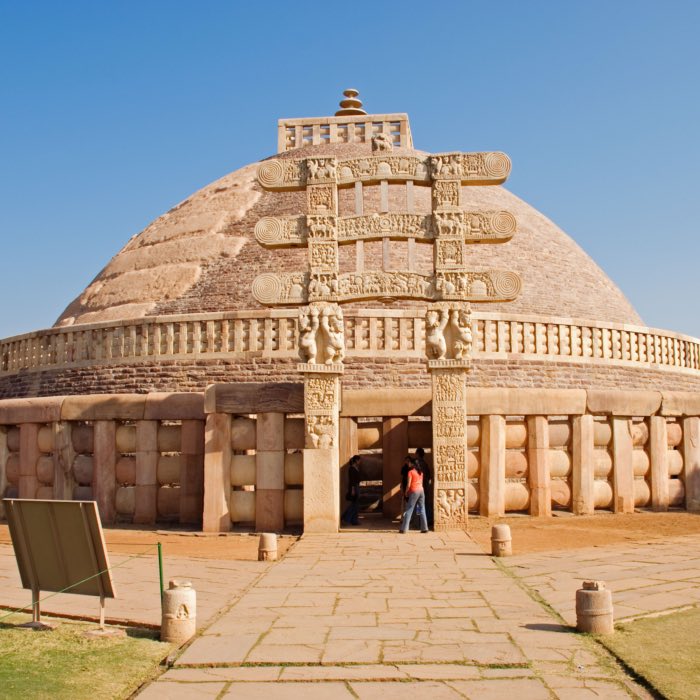
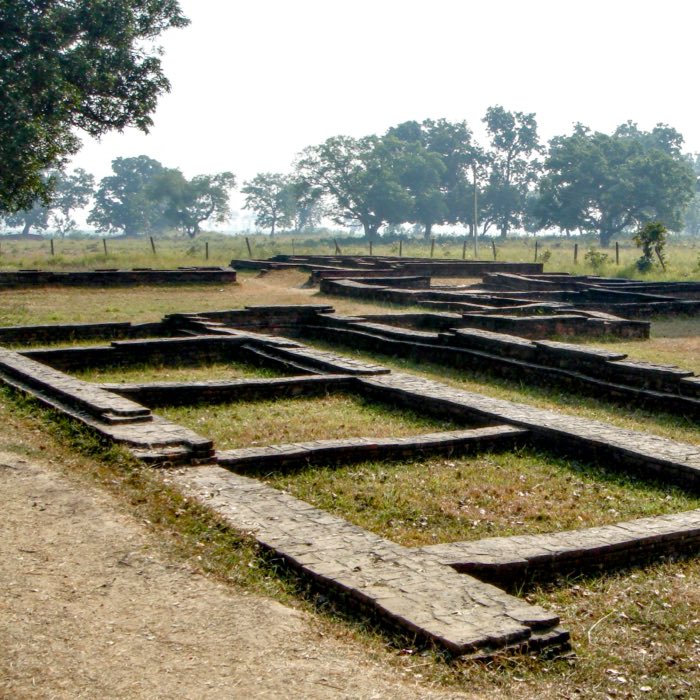
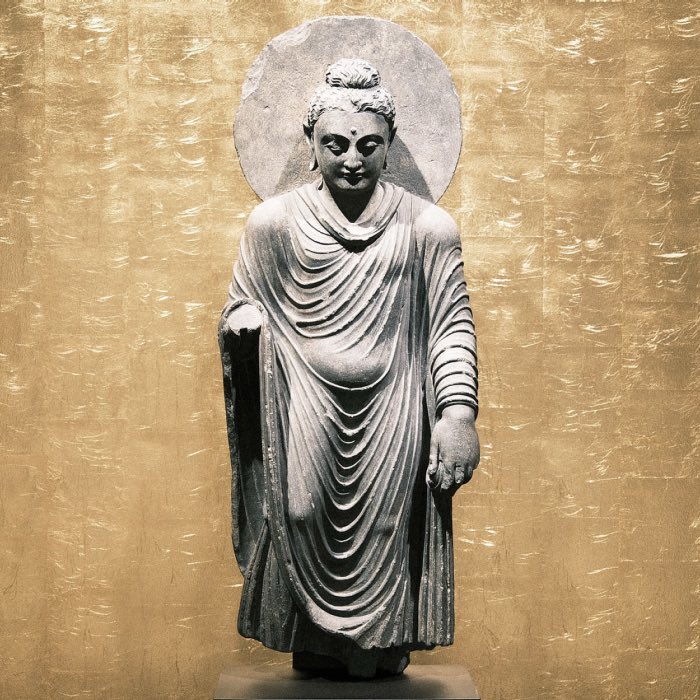
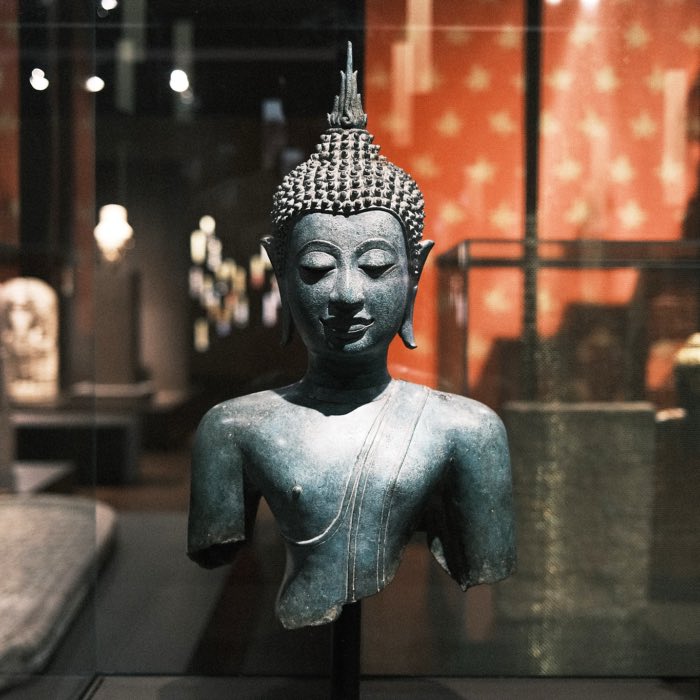
This dynamic is not exclusive to Christianity. A comparison with Buddhist sacred architecture, such as stūpas or monastic complexes like those found in Gandhāra or Bagan, reveals similar functions. There, too, space is ritually organized: the stūpa enshrines relics and symbolizes the universe; the circumambulatory path prescribes meditative movement; and the centrality of the Dharma Hall or Buddha image defines a doctrinal focus. Yet, significant differences exist. Buddhist architecture often emphasizes emptiness and noncentrality (e.g., the absence of a priestly altar), while Christian churches reinforce vertical hierarchy and the mediation of grace through ecclesiastical figures and sacraments.
In both cases, the sacred becomes architectural. Ideology is made spatial, and the visitor is not only observing symbols but moving through them, guided, instructed, and perhaps subtly indoctrinated by the very layout of stone and space.
Kloster Steinfeld today
Steinfeld today is not a monastery in the way it once was, but it is also not a museum. It is used. School life, guesthouse routines, and occasional Church events keep the buildings in motion. The result is a hybrid place that does not resolve the tension between sacred heritage and everyday function, but makes that tension visible.
 View from the cloister.
As a religious site
Despite the broad range of secular uses of the monastery complex today, Kloster Steinfeld continues to house a small religious community. While the number of active members has diminished over time, the continuation of monastic routines, liturgical services, and the spiritual rhythm of prayer maintains a visible link to its origins. This reduced form of religious life may not carry the institutional weight it once did, but it still anchors the site in its historical role as a locus of Christian devotion.
 View from the cloister.
The presence of this community, however small, allows the basilica to function not only as a historic monument but also as a living religious space. Daily prayers, periodic celebrations of the Eucharist, and occasional processions remind visitors that the site remains spiritually active. This quiet persistence of liturgical practice contrasts with the grander public events of the past, yet it sustains a sense of continuity amid profound institutional transformation.
 View from the cloister.
 A crucifix in the garden.
As a secular educational and cultural center
At the same time, Kloster Steinfeld has embraced a multifaceted secular role. The former monastic spaces now accommodate a secondary school, the Hermann Josef Kolleg, which has become an established educational institution in the region. Facilities such as a swimming pool and sports hall, used by local schools and communities, embed the monastery in the everyday life of the surrounding area.
 Modern extension housing the seminar rooms.
Beyond its educational role, the monastery also serves as a venue for conferences, retreats, and cultural events. Guesthouses on the grounds offer accommodation for visitors attending seminars, art workshops, or simply seeking a quiet stay. This combination of uses turns the monastery into a hybrid space: a site where heritage, learning, tourism, and contemplation intersect.
 Dining room.
What emerges is not a straightforward conflict between the sacred and the secular, but a more complex negotiation. The coexistence of schoolchildren and pilgrims, of art students and clerics, testifies to the site’s layered identity. Rather than undermining its religious past, the secular uses of Kloster Steinfeld reinterpret and extend its historical functions, anchoring it in the contemporary world without erasing its origins.
 A hallway in one of the guest houses.
 A hallway in one of the guest houses.
 The guest houses are partially decorated with religious art from the monastery.
Reflection: What remains of Christianity?
To visit Kloster Steinfeld today is to encounter a site where layers of history, ideology, and function converge. In my view, the monastery stands as a testament to the human impulse for spiritual expression, communal life, and architectural grandeur. Yet, it also prompts reflection on the nature of Christianity itself: what remains of this once-dominant religious tradition in a world increasingly marked by secularization, pluralism, and critical historical inquiry? Seen from that angle, Steinfeld becomes a convenient test case for a larger question: What, exactly, remains of Christianity once belief stops being the default and institutions have to justify themselves through new functions?
A myth transformed into stone
Richard Carrier’s mythicist thesis proposes that Jesus of Nazareth likely began as a celestial figure in Jewish apocalyptic thought and only later became historicized through narrative elaboration and institutional interest. Viewed through this lens, Christian monastic institutions such as Kloster Steinfeld appear as the sedimentation, over the long term, of a belief system originally built not on historical fact, but on theological myth.
And yet, even if one accepts the premise that Christianity arose from a mythologized figure, what stands in Steinfeld is more than just a monument to institutionalized belief. It is also a testament to the human impulse for transcendence, silence, and structure. The basilica, the cloister, the rhythmic cycle of prayers and processions, even in their reduced form, express a desire to shape space and time around the possibility of union with the divine.
At the same time, it must be acknowledged that the monastery’s enduring atmosphere of stillness and spiritual resonance did not emerge solely from theological doctrine or institutional design, but from the sincere devotion of countless individuals over centuries. Whatever the myths at the foundation, it was the everyday faith of monks, pilgrims, craftsmen, and caretakers that animated the space and sustained its presence through time. This stands in stark contrast to the darker legacy of the institutional Church, its violence, exclusions, and abuses, which were often committed in the name of the same religion. That tension is palpable at Steinfeld: a site where authentic spiritual striving coexists with the burden of a compromised legacy. The silence found here is not just meditative; it is also historical.
Kloster Steinfeld thus illustrates a paradox: that a spiritual tradition potentially born from fiction can still foster genuine practices of contemplation, ethical reflection, and community. The myth, once institutionalized, gave rise to architectural, artistic, and spiritual expressions that reach beyond the historical question of origins. Visitors today may not share the theological premises of the past, but many still respond to the atmosphere of stillness, beauty, and order that the monastery embodies. In this way, Steinfeld transcends the debate over historicity: it is not truth or falsity that remains palpable here, but the durable human yearning to experience meaning in embodied, communal, and spatial form.
From faith to function
The continued presence and operation of institutions like Kloster Steinfeld might seem puzzling in a time when the theological foundations of Christianity are increasingly scrutinized and, in many quarters, deconstructed. Historical and critical scholarship, such as that of Richard Carrier and others, has questioned the historicity of Jesus, the origins of core Christian dogma, and the authenticity of many Church traditions. Yet buildings like this monastery persist, not merely as relics, but as functioning parts of social, educational, and spiritual life.
This persistence raises a broader question: what makes such places valuable today, even when belief systems shift or dissolve? For some, the answer lies in aesthetics: the beauty of medieval architecture, the aura of preserved heritage, or the contemplative quiet of cloistered gardens. For others, the value is historical: these spaces provide insight into how past societies organized meaning, ritual, and power.
But beyond these perspectives, there is a subtler point. Even if Christian theology originated, at least in part, from myth rather than historical fact, the human impulses it gave shape to — communal belonging, the longing for transcendence, the structuring of time and space around sacred ideals — are not negated by that origin. Kloster Steinfeld functions today not only because of its institutional continuity, but because it still speaks to these impulses. It offers a space where people can encounter silence, ritual form, artistic memory, or spiritual symbolism, even if they do not accept the literal truth of the narratives on which it was once founded.
In that sense, its function has shifted, but not disappeared. The monastery no longer stands as a fortress of dogma but as a vessel for cultural memory and existential orientation. From faith to function is not a path of decline, but of transformation.
Comparative outlook
The transformation of Christian monasteries like Kloster Steinfeld and their Buddhist counterparts reveals both parallel patterns and fundamental contrasts. In both traditions, monasticism historically functioned as a vehicle for religious discipline, education, and cultural transmission. Yet while many Christian monasteries in the West were dissolved, repurposed, or heavily secularized, often due to political reforms or theological decline, numerous Buddhist monasteries in Asia maintained continuity through state support, lay patronage, or regional adaptation.
Still, both types of institutions have undergone profound changes in meaning and use. A Zen monastery in Japan today may host corporate mindfulness retreats, just as a European abbey might provide rooms for academic workshops. In both cases, the sacred structure survives by evolving its function, and by accommodating forms of spiritual or cultural engagement no longer bound to the doctrinal origins of the institution.
This transformation opens up an unexpected potential: these “postreligious” spaces offer not only heritage value, but contemporary relevance as places of quiet, memory, and reflection. They serve needs that are no longer strictly theological, but existential and psychological. They provide stillness in an accelerated world, a sense of continuity in a fragmented society, and a physical anchor for practices of inward attention.
In this light, Kloster Steinfeld illustrates a broader human dynamic. Even if its origins lie in a myth institutionalized into dogma, the site remains meaningful, not because of that dogma, but despite it. The yearning for stillness, order, and a connection to something beyond the self persists. As in many Buddhist settings, the outward form may remain while the inner meaning evolves. And perhaps that evolution is the more durable spiritual gesture: not in maintaining theological certainty, but in adapting sacred space to the needs of the present.
Conclusion
Visiting Kloster Steinfeld offered more than just an encounter with an architectural monument; it became an occasion to reflect on the long trajectory of religious traditions, their transformation, and their continued resonance. The monastery, with its layered architecture, hybrid usage, and quiet persistence of liturgy, encapsulates how a place once founded on religious myth can evolve into a space of cultural, educational, and existential significance.
From a critical standpoint, Steinfeld serves as a case study in how theological narratives, even those with mythical or fabricated origins, become embedded in enduring institutional structures. The myth of Jesus, as argued by Richard Carrier and others, may have begun as celestial speculation, yet it gave rise to communities, rituals, art, architecture, and forms of life that shaped entire epochs. Steinfeld is one of countless places where that legacy persists, though its function and meaning have shifted.
Yet there is more than deconstruction to be found. The visit underscored that even stripped of literal belief, such spaces retain the capacity to evoke reflection, silence, and a sense of depth. The basilica, the cloister, the grave of Hermann Joseph, they express a yearning for stillness, beauty, and transcendence that continues to speak to people regardless of their theological commitments.
In this way, Kloster Steinfeld exemplifies the transition from myth to modernity, from faith to function, and from dogma to a more open ended form of spiritual engagement. It invites neither blind reverence nor cynical dismissal, but a thoughtful recognition of what such places were, what they have become, and what they might still offer.






comments