Blog
Articles about computational science and data science, neuroscience, and open source solutions. Personal stories are filed under Weekend Stories. Browse all topics here. All posts are CC BY-NC-SA licensed unless otherwise stated. Feel free to share, remix, and adapt the content as long as you give appropriate credit and distribute your contributions under the same license.
tags · RSS · Mastodon · simple view · page 16/20
New Teaching Material: LaTeX Guide

I’ve added a LaTeX guide to the General Teaching Materials in the teaching section. It serves as a Getting started with LaTeX guide and as a LaTeX glossary.

The Weierstrass function and the beauty of fractals
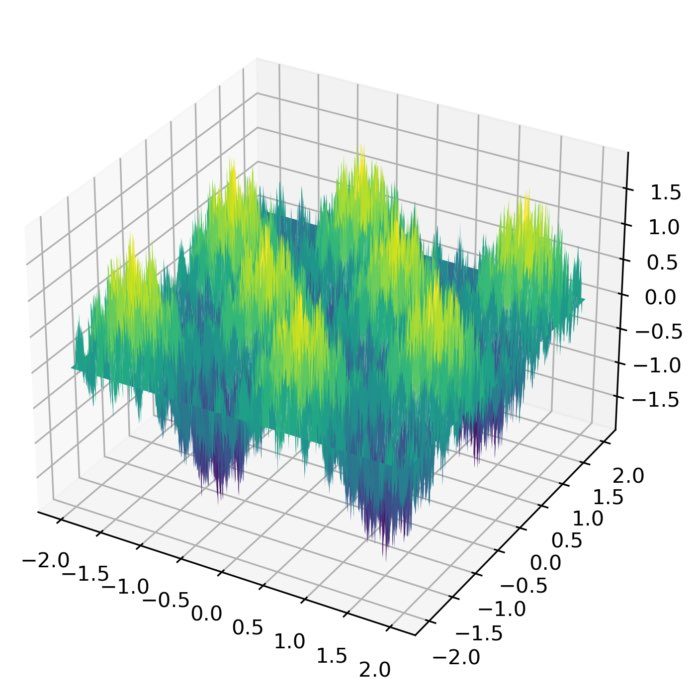
Fractals are captivating mathematical objects that exhibit intricate patterns and self-similarity at various scales. In this post, we explore the elegance and significance of the Weierstrass function, its relation to fractals and fractal geometry, and discuss other notable fractals. Through this journey, we will discover the fascinating world of fractal geometry and its beautiful and profound impact.

Running a personal website with Jekyll

I have redesigned my website and moved it to a new host as well: I’m running it as personal Jekyll website hosted on GitHub now.
Smithsonian National Air and Space Museum
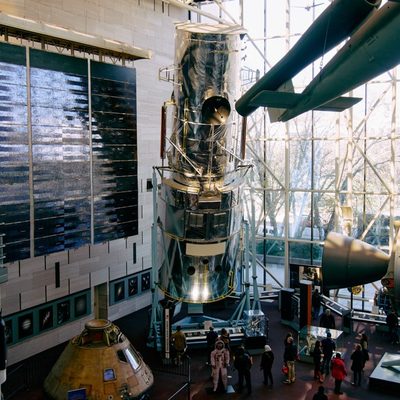
In 2015, I was lucky enough to visit the Smithsonian’s National Air and Space Museum in Washington, DC. My personal highlight was the full-scale Hubble Space Telescope (HST) model, since my doctoral work on Ganymede’s aurora relied on spectroscopic observations from Hubble’s Space Telescope Imaging Spectrograph (STIS). Seeing HST not as an abstract observatory where I simply got my data from, but as a large physical instrument in front of me was actually quite striking. I took several photographs during that visit which I’d like to share in this post.
Astropeiler Stockert
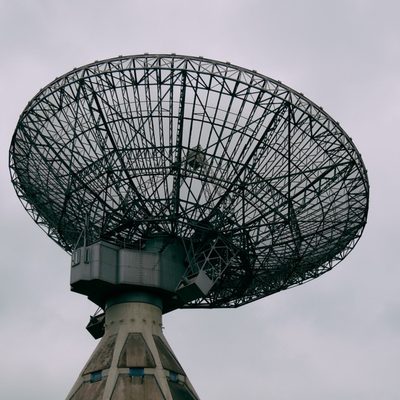
After rediscovering the photographs from our 2013 excursion to Effelsberg, I also found the images from another institute trip, this time to the Astropeiler Stockert in 2014. They too had originally been part of an earlier post on my website, and that post had also disappeared during the cleanup and restructuring of the site. I thought it was worth bringing it back as well, just as a way to preserve the memory of that day.
Effelsberg radio telescope
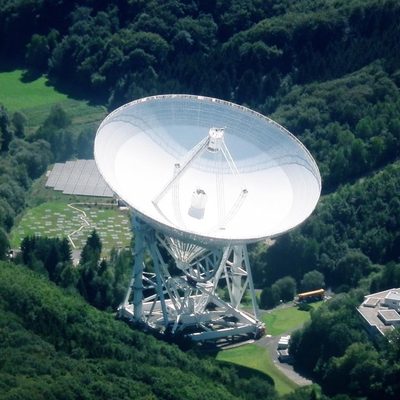
The Effelsberg radio telescope is one of the major instruments of European radio astronomy. It has contributed to a broad range of astrophysical research over more than five decades, and it continues to be scientifically productive across very different areas of astronomy. In 2013, I was lucky enough to visit the site during an institute excursion. I took a few photographs which I’d like to share here.
Atmosphere and ocean as hydrostatic fluids
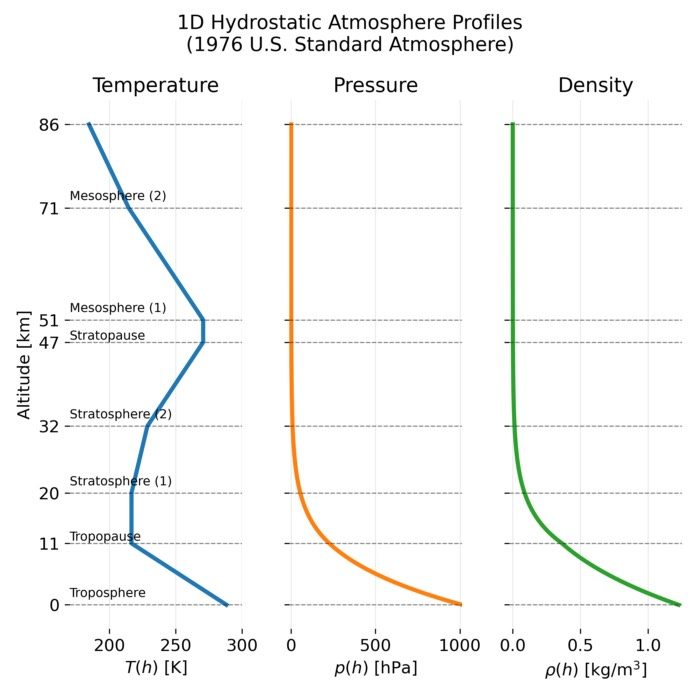
Although atmospheric physics is today a well established and highly specialized research field, much of its conceptual and mathematical foundation belongs to classical fluid dynamics. From a physical point of view, the Earth’s atmosphere is simply a fluid under gravity. Its composition, compressibility, and thermodynamic properties introduce important specific features, but the governing principles remain those of continuum mechanics. In this post, we develop simple hydrostatic models for the vertical structure of the atmosphere and the ocean for comparison.