Early Christianity as a Graeco-Roman Jewish mystery cult? A historical comparison
Christianity did not emerge in a vacuum, but within a complex religious landscape. In our previous post, we examined Greek mystery cults and their development within the Roman Empire, focusing on their central features: Initiation, personal salvation, ritual participation, and symbolic transformation through engagement with a divine narrative. These cults formed an important part of the religious environment of late antiquity.
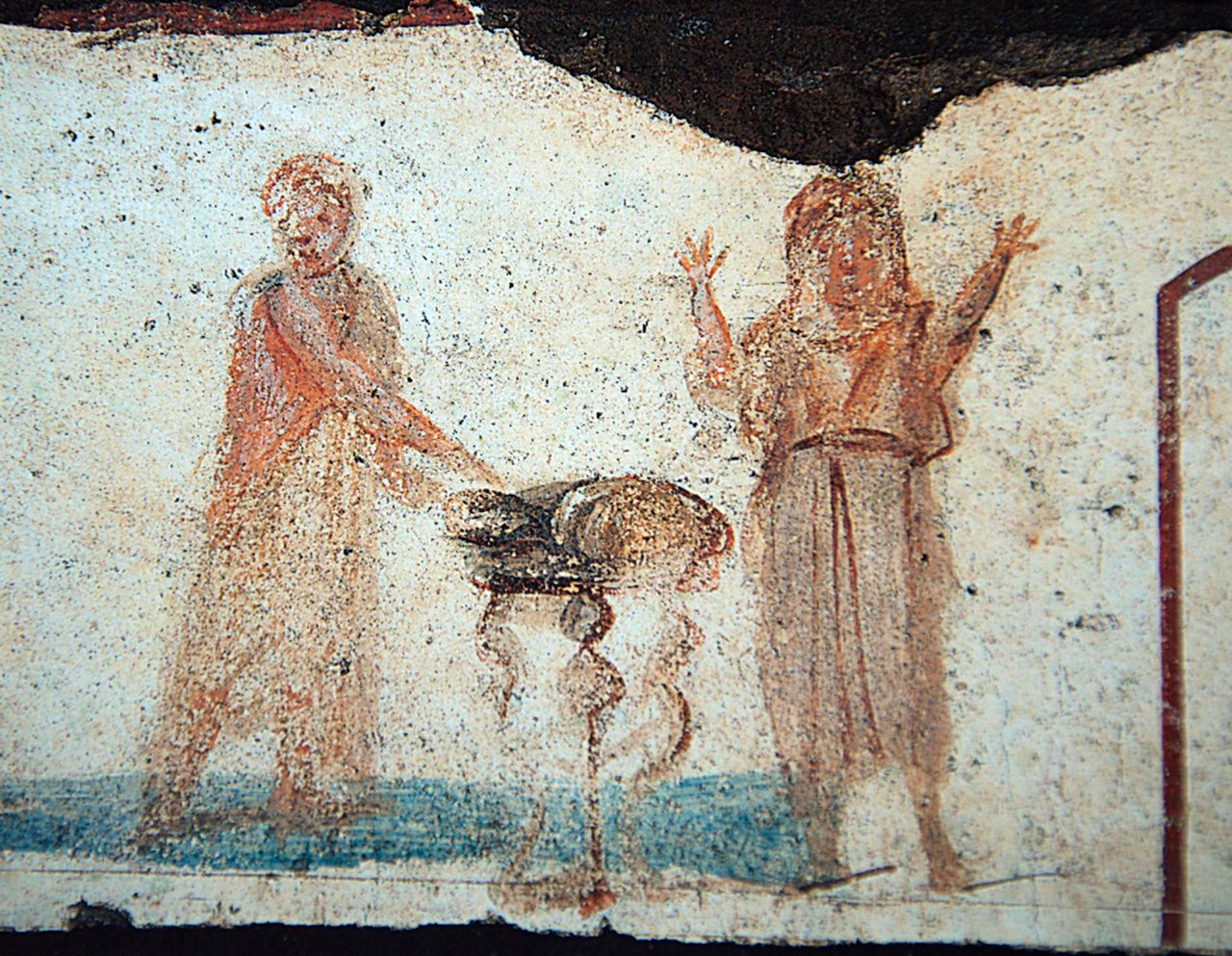
Painting of an Eucharistic scene in the Early-Christian catacomb of San Callisto, 3rd century CE. The Eucharist, or Lord’s Supper, is a central ritual in Christianity that involves the consumption of bread and wine, symbolizing the body and blood of Christ. In this post we will learn, that this practice has parallels in the sacred meals of Graeco-Roman mystery cults, which also served to establish communal identity and a connection to the divine. EucharisticSource: Wikimedia Commonsꜛ (license: CC BY-SA 3.0)
Within this context, early Christianity did not arise in isolation, but as one among several competing religious movements. This raises a more precise question. It is not sufficient to ask whether Christianity was influenced by mystery cults. I think, the more relevant question is whether Christianity itself can be described, in a strict historical sense, as a Graeco-Roman Jewish mystery cult.
Addressing this requires a clear definition of criteria, a systematic comparison, and a careful examination of both similarities and differences, which we will undertake in this post. We will also consider the implications of this analysis for understanding the historical development and eventual dominance of Christianity within the Roman Empire.
Greek mystery cults: Structure and features
Graeco-Roman mystery cults formed a widespread and influential part of the religious life of the ancient Mediterranean. Unlike the public civic cults dedicated to the Olympian gods, which were tied to the welfare of the polis and performed openly, mystery cults addressed the individual. They offered a more personal and transformative form of religious participation, often centered on the initiate’s relationship to a specific deity.
These cults typically operated as voluntary associations that one entered through initiation. Participation was not determined by birth, citizenship, or social status, but by the willingness to undergo ritual transformation. Initiates were integrated into a community defined not only by shared belief, but by shared experience. This experience often involved carefully staged rituals, symbolic acts, and engagement with a sacred narrative that structured the meaning of the cult.
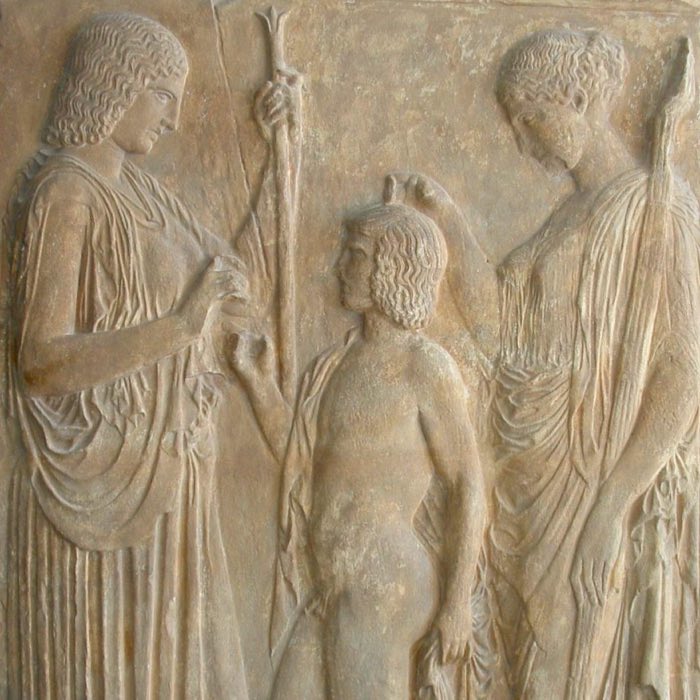
A central element of many mystery cults was a myth involving suffering, loss, death, and renewal. In the Eleusinian mysteries, the story of Demeter and Persephone articulated the cycle of descent and return, reflecting both agricultural renewal and the hope for a blessed afterlife. In Dionysian traditions, the dismemberment and restoration of Dionysus expressed themes of destruction and reintegration, often linked to ecstatic transformation and the dissolution of ordinary identity. In the cult of Isis and Osiris, the death and reassembly of Osiris by Isis symbolized the triumph over death and the promise of continued existence beyond it. In each case, the initiate encountered a divine pattern that could be ritually appropriated. Through initiation and participation, this myth was not merely told, but enacted and internalized.
At the same time, these cults existed within a broader polytheistic environment and were often highly flexible. They could integrate elements from different traditions, adapt to local contexts, and coexist with other religious practices. This syncretic character contributed to their wide diffusion across the Hellenistic and Roman worlds.
Despite their diversity across time and place, we can identify a set of core features that characterize ancient mystery cults:
- Initiation into a closed or semi-closed community
- Restricted or staged access to knowledge and ritual participation
- A central myth involving suffering, death, and transformation of a divine or semi-divine figure
- Ritual participation in this myth, often symbolizing death and rebirth
- Promise of personal salvation, immortality, or divine favor
- Communal rites, especially sacred meals
- A distinction between insiders and outsiders
- Flexibility and syncretism within broader polytheistic frameworks
These criteria do not define a single homogeneous system, but rather a pattern of family resemblance across multiple cults, including those of Demeter, Dionysus, Isis, Attis, and Mithras.
Early Christianity in its historical context
Early Christianity developed within the eastern Mediterranean under Roman rule, in a context characterized by intense religious pluralism. Alongside traditional civic cults, numerous voluntary religious associations and mystery cults flourished. These offered individuals a form of personal religious engagement that went beyond the obligations of the polis.
At the same time, Christianity was deeply rooted in Second Temple Judaism. Its conceptual vocabulary, including monotheism, messianism, sin, redemption, and eschatology, derives from Jewish traditions. This dual embeddedness is, in my view, essential: Christianity is neither reducible to Hellenistic religion nor fully explainable within Judaism alone. Rather, it represents a synthesis. Jewish theological content was expressed and ritualized in forms that were intelligible and compelling within the Graeco-Roman religious world, which facilitated its spread and appeal.
Structural parallels between Christianity and mystery cults
So, can Christianity be described as a Graeco-Roman Jewish mystery cult? Let’s examine the structural parallels in light of our criteria defined above.
Initiation and transformation
From its earliest phases, Christianity developed a clear initiation rite in the form of baptism. Entry into the community was not simply a matter of belief, but required a ritual act that marked a decisive transition in status. Baptism signified the passage from an old mode of existence to a new one, often framed in terms of death to the former self and rebirth into a transformed life within the community.
In early Christian texts, particularly in Pauline theology, this transformation is not merely symbolic. Baptism is understood as a real participation in the death and resurrection of Christ, through which the initiate becomes incorporated into a new ontological and communal reality.
This structure closely parallels initiation rites in mystery cults, where the initiate undergoes a symbolic death and rebirth that alters their status and establishes a new relationship to the divine. In the cult of Isis, for example, initiation involved ritual purification, including water-based rites that marked a transition into a new religious identity and a closer association with the divine. Similarly, in the Mithraic mysteries, initiates passed through graded stages of initiation, often accompanied by symbolic trials and acts of purification that signified transformation and incorporation into the cult. While these practices differ in form and theological interpretation, they share a common structural logic: Initiation as a transformative passage from one state of being to another.
Sacred meal and communal identity
Early Christian communities were likewise defined by a central communal ritual: The Eucharist. This shared meal was not simply a social gathering, but a structured and symbolically charged practice in which bread and wine were identified with the body and blood of Christ.
Participation in the Eucharist created a form of communion that was both social and theological. It established group identity, reinforced internal cohesion, and expressed a direct relationship between the participants and the divine. In many early interpretations, the ritual also carried salvific significance, linking the participant to the redemptive act of Christ.
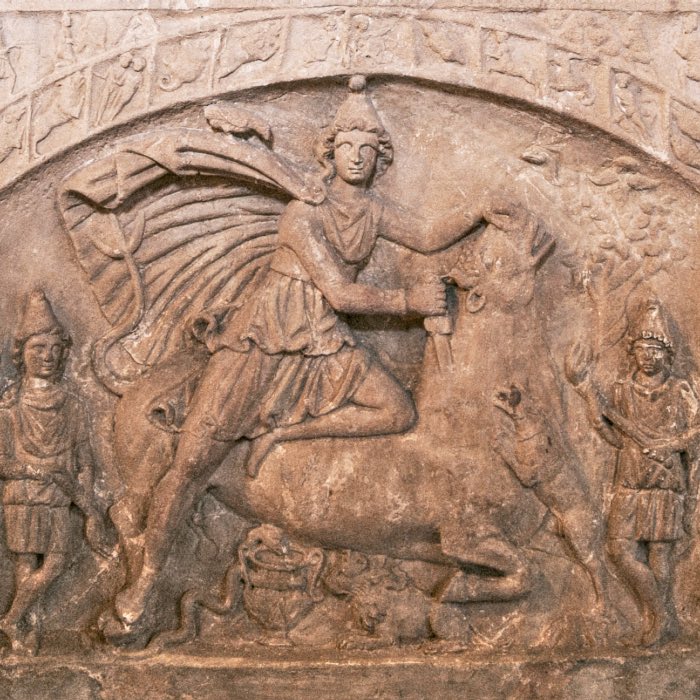
Comparable practices are found in many mystery cults, where sacred meals functioned as a means of establishing and maintaining a bond between initiates and their deity. In the Mithraic mysteries, for example, initiates participated in a communal meal that likely commemorated the shared banquet of Mithras and Sol, reinforcing both group identity and divine association. In the cult of Isis, ritual meals and offerings formed part of the devotional practice, expressing communion with the goddess and participation in her salvific power. Similarly, in Dionysian contexts, communal consumption of wine was not merely social, but symbolically linked to the presence and power of the god himself. While differing in form and theological interpretation, these practices share a common structure: the sacred meal as a medium of communion, identity, and participation in the divine.
Central myth of death and renewal
At the core of Christianity lies a structured narrative centered on the figure of Christ: Suffering, death, and resurrection. This narrative is not peripheral, but constitutes the theological and ritual foundation of the religion. It is repeatedly invoked in liturgy, doctrine, and communal practice, and serves as the interpretive key for understanding human existence, suffering, and salvation.
This type of narrative structure is not unique within the ancient world. In the cult of Osiris, the god is killed, dismembered, and reassembled, symbolizing the possibility of overcoming death and attaining continued existence. In Dionysian traditions, the god is torn apart and restored, expressing themes of destruction and renewal tied to ecstatic transformation. In the cult of Attis, the death of the god and his subsequent return to life were associated with cycles of regeneration and the promise of renewed existence.
Even outside the classical mystery cults, related motifs appear. The figure of Zalmoxis, described by Herodotus, is said to have disappeared and later returned, leading his followers to believe in a form of continued existence beyond death. While not a direct parallel, such traditions illustrate a broader pattern of narratives in which disappearance, death, and return function as a foundation for religious meaning.
Across these traditions, a common structure emerges: A divine or semi-divine figure undergoes suffering, death, or disappearance, followed by restoration, return, or transformation. These narratives provide a pattern that can be ritually appropriated by initiates.
What distinguishes Christianity is the historical framing of this narrative and its integration into a linear salvation history. However, the underlying pattern of death and renewal remains structurally comparable.
Esotericism and graded access
Although Christianity developed as a missionary and outward-facing religion, it nevertheless maintained internal distinctions between different stages of participation. Entry into the community was often preceded by a period of instruction, and full participation in central rites was restricted to those who had undergone initiation.
At the same time, early Christianity exhibited elements of esotericism, in the sense that certain teachings and ritual practices were not openly disclosed to outsiders. This did not take the form of absolute secrecy, but rather of controlled transmission. Knowledge was gradually introduced, and full understanding was considered appropriate only for those who had been properly initiated into the community.
In particular, the Eucharist was not accessible to all. Catechumens and outsiders were excluded from its performance, and certain teachings were reserved for those fully integrated into the community. This practice, later referred to as disciplina arcani, reflects both graded access and a moderated form of esotericism.
Such structures have clear parallels in other mystery cults. In the Eleusinian mysteries, initiates were bound by strict vows of silence regarding the rites, and non-initiates were excluded from the central ceremonies. Similarly, the Mithraic cult was organized into distinct initiatory grades, each associated with specific knowledge, symbols, and ritual roles that were not shared openly. In the cult of Isis, initiation likewise marked a transition into a more intimate and restricted relationship with the divine, accompanied by ritual knowledge not available to outsiders.
While the degree of secrecy in Christianity was less absolute than in many of these traditions, the combination of graded participation and controlled access to knowledge nonetheless parallels a central structural feature of ancient mystery religions.
Promise of salvation
Christianity, like many mystery cults, addressed fundamental questions of human existence: death, suffering, and the possibility of transcendence. It offered a form of personal salvation that was not tied to civic identity, ethnicity, or social status, but was in principle open to all individuals.
This salvation was understood in multiple, but related ways: forgiveness of sins, transformation of the self, and the promise of eternal life in communion with the divine. Importantly, it was not merely conceptual, but was mediated through participation in the community and its rituals.
In this respect, Christianity aligns closely with the soteriological orientation of mystery cults, which likewise offered initiates access to divine favor, protection, and a transformed existence beyond death. In the Eleusinian mysteries, initiates were promised a more blessed fate in the afterlife, in contrast to the uncertain or shadowy existence of the uninitiated. In the cult of Isis, devotees sought personal salvation through the goddess’s power, often expressed as protection, guidance, and the assurance of continued existence after death. Similarly, in Mithraism, initiation was associated with the soul’s ascent through cosmic spheres and eventual union with the divine order. Across these traditions, salvation was not merely a belief, but a transformation achieved through ritual participation and sustained affiliation with the cult.
Differences and limits of the comparison
Despite these parallels, we must acknowledge important differences in order to avoid oversimplification. The goal of our comparison is not to collapse distinct traditions into one another, but to identify both shared structures and meaningful divergences.
First, Christianity is fundamentally monotheistic in a strict and exclusive sense inherited from Judaism. The existence of only one true God was not merely a theological claim, but had practical consequences for religious life. Most mystery cults, by contrast, operated within a polytheistic framework in which participation in multiple cults was not only possible, but common. Initiation into the mysteries of Isis, Mithras, or Dionysus did not require abandoning other deities. Christianity, however, increasingly demanded exclusive allegiance, thereby transforming religious identity from a cumulative practice into a mutually exclusive commitment.
Second, Christianity is a scriptural religion in a way that most mystery cults were not. Authoritative texts, interpreted, transmitted, and eventually canonized, played a central role in shaping doctrine and communal identity. While myths and narratives were certainly present in mystery cults, they were typically fluid, locally adapted, and not fixed in a canon with normative authority. The emergence of a defined body of scripture in Christianity enabled a level of doctrinal coherence and institutional continuity that differed significantly from the more decentralized and adaptive nature of mystery traditions.
Third, Christianity developed a strong ethical and doctrinal dimension that extended beyond ritual participation. Entry into the community was not only marked by initiation, but by adherence to a comprehensive moral framework and a defined set of beliefs, such as the nature of God, the role of Christ, and the ethical implications of salvation. While mystery cults could include ethical elements, their primary focus was often on ritual experience and personal transformation rather than on a systematically articulated moral and theological system. Christianity, in contrast, integrated ritual, belief, and ethics into a unified structure that governed both communal and individual life.
Fourth, Christianity exhibited a universal and exclusive truth claim that distinguished it sharply from most mystery cults. Its message was not limited to a specific group, region, or social function, but was in principle addressed to all humanity. At the same time, it increasingly positioned itself as the sole legitimate path to salvation. Mystery cults, by contrast, were typically compatible with one another and could coexist within a pluralistic religious environment. The Christian claim to exclusivity, combined with its universal scope, contributed to a dynamic that eventually marginalized and delegitimized competing traditions.
These differences indicate that Christianity cannot be reduced to a mystery cult in a simple or reductive sense. At the same time, they do not negate the structural similarities we have identified above. Rather, they suggest, in my view, that early Christianity occupies a hybrid position: It adopts and adapts forms characteristic of mystery cults, while embedding them within a distinct theological, textual, and institutional framework derived from its Jewish origins and developed within the Graeco-Roman world.
Christianity as a synthesis
From a historical perspective, early Christianity can be thus understood as a synthesis of:
- Jewish theological content
- Graeco-Roman cultic forms
- Hellenistic modes of communication and organization
This synthesis allowed Christianity to translate a specifically Jewish message into a form that resonated across the diverse populations of the Roman Empire. Its success depended not only on its content, but on its compatibility with existing religious expectations and practices.
In this sense, describing Christianity as a Graeco-Roman Jewish mystery cult is not a reductive claim, but an analytical one. It situates Christianity within the spectrum of religious forms available at the time, rather than treating it as an isolated or sui generis phenomenon.
The question of historicity and radical interpretations
Some modern interpretations go further and argue that Christianity originated as a fully mythic mystery cult without a historical founder. If you are a regular reader of this blog, you may have already guessed that I am referring to Richard Carrier. Carrier interprets early Christian beliefs about a dying and rising savior as entirely derivable from existing religious patterns, later historicized in narrative form.
Carrier’s approach is explicitly framed as a probabilistic and evidence-based analysis of the historicity of Jesus. Drawing on methods inspired by Bayesian reasoning, he evaluates the available sources not as direct historical reports, but as literary and theological constructions that must be weighed in terms of prior probability and explanatory power. His central claim is not merely that the evidence for a historical Jesus is weak, but that the hypothesis of a non-historical, originally mythic figure better explains the earliest Christian data.
A key component of this argument is his reading of the earliest Christian texts, especially the Pauline epistles. Carrier emphasizes that in these writings, Jesus is presented less as a recent historical teacher and more as a cosmic or heavenly figure whose salvific actions take place in a supernatural realm. References to crucifixion, death, and resurrection are interpreted not as descriptions of recent historical events, but as theological claims embedded in a mythic framework. In this view, the earliest layer of Christianity lacks clear biographical detail and instead reflects a form of revelatory religion centered on a divine agent.
Carrier further argues that the Gospel narratives represent a later stage of development, in which this originally celestial figure was progressively historicized. According to this model, narrative elements such as geographical settings, interactions with named individuals, and a structured life story were added over time, transforming a mythic savior into a figure situated in recent history. This process of “euhemerization”, the transformation of a divine or mythic being into a historical person, is well attested in other ancient contexts and serves as a key explanatory mechanism in his theory.
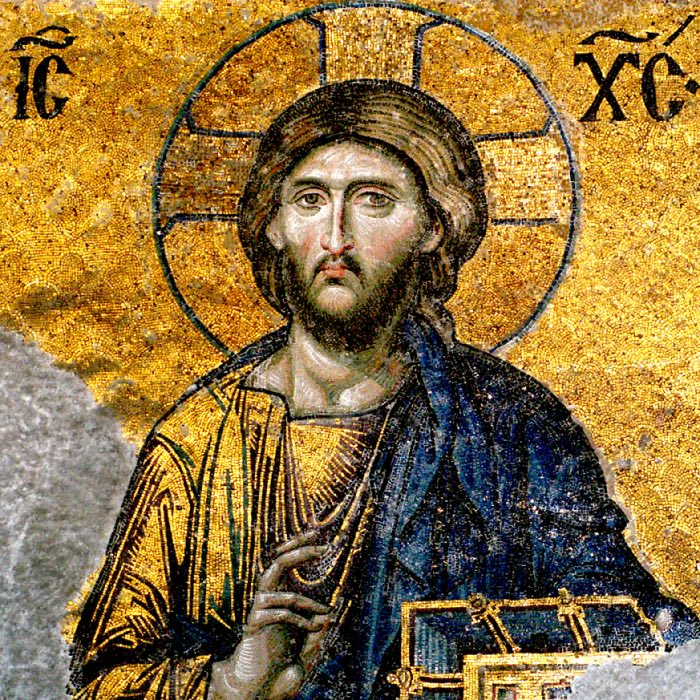
Within this framework, early Christianity can be understood as a Jewish variant of a mystery cult. It combines elements of Jewish apocalyptic expectation with Hellenistic religious forms, including a salvific figure, initiation through ritual, and participation in a divine narrative of death and exaltation. The figure of Christ functions analogously to other mystery deities, with the crucial difference that his story is eventually anchored in a historical setting and expanded into a biographical tradition.
Carrier’s reconstruction also addresses the social and intellectual conditions that may have enabled such a development. He points to the diversity of Second Temple Judaism, the prevalence of visionary and revelatory experiences, and the broader environment of Hellenistic religious syncretism. In such a context, the emergence of a cult centered on a heavenly redeemer figure would not be anomalous, but consistent with existing religious patterns.
Such views remain controversial and are not widely accepted in mainstream scholarship. Critics argue that Carrier’s interpretation underestimates the historical value of early sources, overextends the application of probabilistic reasoning, and relies on contested parallels with other religious traditions. Nevertheless, his work highlights an important point: The degree to which early Christianity can be analyzed within the broader framework of ancient religious thought, and the extent to which its central narratives may reflect patterns already present in the religious environment of the time.
The non-inevitability of Christian dominance
From our analysis, it should be clear that Christianity shares significant structural features with ancient mystery cults, while also exhibiting important differences. This dual nature helps explain both its initial appeal and its eventual transformation into a dominant religious tradition.
From the perspective of the 1st to 3rd centuries CE, Christianity was one religious movement among many. The religious landscape of the Roman Empire was highly pluralistic, populated by a wide range of cults, philosophical schools, and local traditions. There was no clear indication that Christianity would eventually dominate this environment. Other cults, including those of Isis and Mithras, were widespread, institutionally embedded, and in some regions at least as influential as early Christian communities.
At this stage, Christianity competed for adherents within a shared religious marketplace. Individuals could and often did participate in multiple cults simultaneously, seeking protection, meaning, or salvation through different religious frameworks. In this context, Christianity’s later exclusivity was not the norm, but an emerging and initially distinctive feature.
The eventual predominance of Christianity was therefore not the result of an inherent or self-evident superiority, but of a combination of historical factors that gradually reshaped the conditions of this competition.
- Universal accessibility: Christianity was, at least in principle, open to all individuals regardless of ethnicity, gender, or social status. This distinguished it from many cults with more limited or context-specific appeal.
- Strong internal organization: Early Christian communities developed stable and reproducible institutional structures, including defined leadership roles, mechanisms of communication, and systems of mutual support. This allowed for continuity and expansion across different regions of the empire. It also established social networks that guaranteed support and help in times of crisis, which could have contributed to its appeal and resilience in a competitive religious environment.
- Integration of ritual, belief, and ethical life: Christianity did not remain a purely ritual or initiatory system. It integrated doctrine, moral expectations, and communal identity into a unified framework that structured everyday life, increasing internal cohesion.
- Exclusive truth claims: Christianity increasingly rejected participation in other cults and demanded exclusive allegiance. While initially a disadvantage in a pluralistic environment, this exclusivity ultimately strengthened group identity and limited fragmentation.
- Adaptability within a shared cultural framework: Christianity was able to translate its message across linguistic and cultural boundaries, adopting Greek philosophical vocabulary while retaining its Jewish theological core.
- Alignment with imperial power: The most decisive shift occurred in the 4th century CE, when imperial authority began to support Christianity. The conversion of Constantine and subsequent policies under later emperors transformed Christianity from a marginal movement into an institution with political backing.
The involvement of imperial power fundamentally altered the religious landscape. From this point onward, the competition between cults was no longer symmetrical. Legal privileges, patronage, and eventually restrictive measures against other religious practices created conditions in which Christianity could expand not only through persuasion and organization, but also through structural advantage.
Seen from this perspective, the dominance of Christianity was not an inevitable outcome of its origins, but the contingent result of historical developments. Its rise reflects the interaction of religious innovation, social organization, and political power within the specific context of the late Roman Empire.
Conclusion
We have examined the question of whether early Christianity can be described as a Graeco-Roman Jewish mystery cult by systematically comparing its structure and historical context with those of ancient mystery traditions. Our comparison has shown that early Christianity shares a number of core features with mystery cults, including initiation through ritual, participation in a central salvific narrative, communal rites such as sacred meals, elements of esotericism, and a strong soteriological orientation. At the same time, it diverges in important respects, particularly in its strict monotheism, its development into a scriptural and doctrinal tradition, its comprehensive ethical framework, and its increasingly exclusive truth claims.
Describing Christianity as a Graeco-Roman Jewish mystery cult therefore does not reduce it to a mere variant of existing traditions, but provides an analytically useful framework for understanding its position within the religious landscape of antiquity. It highlights the extent to which Christianity emerges from and participates in shared religious patterns, while also transforming and reorganizing them in ways that would prove historically consequential. In this sense, Christianity can be understood as both continuous with and distinct from the broader family of mystery religions.
This perspective also has implications for how we can interpret the rise of Christianity. When situated within the pluralistic environment of the early Roman Empire, Christianity appears not as an isolated or uniquely destined phenomenon, but as one movement among many competing for adherents and legitimacy. Its eventual predominance cannot be explained solely by reference to its internal features or theological claims. Rather, it reflects the interaction of social organization, doctrinal development, cultural adaptability, and, crucially, political support.
The alignment with imperial authority in the 4th century then fundamentally altered the conditions under which religious traditions operated. What had previously been a competitive and relatively open religious environment became increasingly structured by legal, institutional, and political asymmetries. In this transformed context, Christianity was able to consolidate its position and marginalize alternative traditions.
Recognizing the contingency of this process allows us for a more precise and less teleological understanding of religious history. I believe, that the dominance of Christianity was not the inevitable outcome of its origins, nor the self-evident triumph of a uniquely true religion, but the result of specific historical developments. At the same time, acknowledging the structural parallels with mystery cults does not diminish the distinctiveness of Christianity, but situates it more accurately within the complex dynamics of religious change in the ancient world.
References and further reading
- Burkert, Walter, Ancient mystery cults, 1989, Harvard University Press, ISBN: 978-0674033870
- Mylonas, George Emmanuel, Eleusis and the Eleusinian mysteries, 2015, Princeton University Press, ISBN: 978-0691622040
- Graf, Fritz, Magic in the ancient world, 1999, Harvard University Press, ISBN: 978-0674541535
- Dillon, John, The Middle Platonists: 80 B.C. to A.D. 220, 1996, Cornell University Press, ISBN: 978-0801483165
- Bowden, Hugh, Mystery cults of the ancient world, 2023, Thames & Hudson Ltd, ISBN: 978-0500297278
- Jaime Alvar, Romanising Oriental Gods: Myth, Salvation and Ethics in the Cults of Cybele, Isis and Mithras, 2008, Brill, ISBN: 978-9004464186
- Andrew McGowan, Ancient Christian Worship, 2014, Baker Academic, ISBN: 978-0801097874
- Larry Hurtado, Lord Jesus Christ: Devotion to Jesus in Earliest Christianity, 2003, Eerdmans, ISBN: 978-0802831675
- Richard Carrier, On the historicity of Jesus – Why we might have reason for doubt, 2014, Sheffield Phoenix Press, ISBN: 9781909697492
- Richard C. Carrier, Proving History: Bayes’s Theorem and the Quest for the Historical Jesus, 2012, Prometheus Books, ISBN: 978-1616145590









comments