Living Images: Buddhist rituals in Chinese, Japanese, and Korean art
My visit to the Museum für Ostasiatische Kunst Köln in January 2026 also included the special exhibition Living Images. Buddhist rituals in Chinese, Japanese, and Korean art. Unlike many museum presentations that treat Buddhist objects primarily as stylistic or iconographic achievements, this show puts religious practice first. The works appear as objects made to be activated in time, handled, addressed, carried, copied, installed on altars, or brought into proximity with bodies. The exhibition’s core claim is simple and strong: much of East Asian Buddhist art is best understood not as representation, but as a component of ritual systems. In this post, I want to highlight some of the exhibition’s key ideas and exemplary objects.
 Living Images. Buddhist rituals in Chinese, Japanese, and Korean art – Exhibition view, Museum für Ostasiatische Kunst Köln, 2026. The special exhibition presents around 80 works from the museum’s collection that illustrate the ritual use of Buddhist images and objects in East Asia. The exhibition highlights how Buddhist art in East Asia is not only a visual expression of religious beliefs but also an active part of ritual life. – Shown here is one of the exhibitions rooms. Left: Bodhisattva Kshitigarbha of the Six Realms of Rebirth, Hanging scroll (kakemono), silk, ink, colours and gold applications, Nanbokuchō Period (1336-1392). Right: Bodhisattva Kshitigarbha (jap. Jizō Bosatsu), Hinoki wood, traces of different layers of coating, Japan, Kamakura Period (1185-1333), around 1300.
Concept of the exhibition
The exhibition frames Buddhism as a religion of repeated actions structured by calendars, spaces, and communities. Monks, nuns, and laypeople perform rituals for specific purposes: commemorating the historical Buddha Shakyamuni, purifying spaces and bodies, cultivating meditation, transferring merit to ancestors, protecting households, requesting health or prosperity, or negotiating the fate of the dead. The objects on display are therefore treated as components of ritual systems: images of Buddhas and bodhisattvas as cult images, implements such as vajra and bells for esoteric ceremonies, incense vessels for offering, and texts not only as carriers of doctrine but as powerful things whose production and copying create merit.
 One of the exhibition rooms.
What makes the exhibition especially coherent is its implicit structure. It moves from annual commemorations toward everyday worship, then toward specialized ritual tools such as esoteric implements, Pure Land practices, and the bureaucratic imagery of hell, and it culminates in a distinctly Korean consecration practice that makes the activation of images visible as a process.
The ritual year and commemorative images
A first anchor is the ritual calendar. Buddhist communities mark key days in the lunar year, and the exhibition highlights two that are directly tied to Shakyamuni.


 Buddha’s Entry into the Complete Nirvana, Hanging scroll (kakemono), ink, colours and gold on silk, Japan, Nanbokuchō Period (1336-1392), cyclically dated to 1392. This hanging scroll shows the death of the historical Buddha Shakyamuni, who lived in India in the 6th to 5th century BCE. His passing is understood not simply as death, but as liberation from rebirth and entry into complete nirvana, a state beyond desire and dualistic distinction. The Buddha is shown larger than life, lying with closed eyes on a richly ornamented platform. Around him gather beings from the six realms of existence: gods, bodhisattvas, humans including his ten disciples, animals, hungry ghosts, and demons. Their mourning reflects their degree of spiritual insight: the further they are from enlightenment, the more intensely they experience his death as a loss. Above the scene, Maya, the Buddha’s mother, descends on a cloud. Mist darkens the full-moon night, and the leaves of the sala trees on the right begin to wither. Paintings of this kind are still displayed and venerated in Japanese Buddhist temples on the 15th day of the second lunar month, the anniversary of the Buddha’s death.
One group of works addresses the commemoration of Shakyamuni’s death and entry into complete nirvana. A large Japanese hanging scroll depicts the death scene as a cosmic event in which the beings of the six realms gather around the reclining Buddha. The image is constructed as a didactic and affective field: grief is shown as graded by spiritual insight. Natural motifs such as the night sky and withering trees intensify the sense of transition. The same theme appears again as a smaller Japanese woodblock print intended for private devotion, which suggests how a major temple ritual can be mirrored in domestic practice.


 Buddha’s Entry into the Complete Nirvana, Woodblock print, ink, colours and gold on paper, Japan, Edo Period (1603-1868), 18th c. This small woodblock print adapts the familiar image of the Buddha entering complete nirvana for use in private worship. While large hanging scrolls of this subject belonged to temple ceremonies, a printed version on paper was easier to keep, hold, and use at home. The labels written in Japanese syllabary name the individual figures and point to an intended audience of lay practitioners. The print therefore shows how important ritual images also entered ordinary devotional life outside the temple.
A second group addresses Shakyamuni’s birth and birthday celebrations. In East Asia, the infant Buddha is ritually washed on the eighth day of the fourth lunar month, and the exhibition includes both a gilded bronze infant Buddha and a Japanese woodblock print that renders the mythic birth narrative and its ritual use. Here the museum’s framing matters: these works do not merely depict an event. They are designed to be integrated into annual acts of veneration.
 The newborn Buddha, Bronze, gilded, China, Qing Dynasty (1644-1911), 18th c. Figures of the infant Buddha are used in celebrations of his birthday on the eighth day of the fourth lunar month. In temple rituals, the image of the young Shakyamuni is placed in a basin, washed with scented water, and honoured with flowers. The pose refers to the birth legend: immediately after being born, the child is said to have walked seven steps and pointed to heaven and earth while proclaiming his sovereignty over the world.

 The Birth of the historical Buddha Shakyamuni, Woodblock print, hand-coloured, black lacquer, gold dust (Jap. beni-e), later mounted as hanging scroll, Japan, Edo Period (1603-1868), early 18th c. This early hand-coloured woodblock print presents the birth legend of the historical Buddha Shakyamuni. The newborn child is shown at the moment when, according to the story, he walked seven steps, pointed upward and downward, and announced his rule over the world. The scene also includes the dragon deities who pour water and the parents of the Buddha. Important figures are identified by cartouches written in Japanese syllabary, suggesting that this early red-brown beni-e print was intended for devotion among ordinary believers.
Cult images and the everyday altar
From the calendar the exhibition turns toward the everyday. Rituals also happen daily, in temple halls and private devotional spaces. The most imposing example is a Japanese sculpture of Dainichi Nyorai, the Buddha Vairocana, associated with esoteric Buddhist traditions and their mandalic cosmology. Such a figure is not primarily a sculpture to be viewed, but a presence to which offerings, recitations, and ritual gestures are directed.


 Elevenheaded Bodhisattva Avalokiteshvara (jap. Jūichimen Kannon Bosatsu), Wood, lacquer and gilding Japan, Heian Period (794-1185), 12th c. The multi-headed form of Avalokiteshvara goes back to Indian precedents within the Buddhist pantheon. In this Japanese form, Jūichimen Kannon Bosatsu, the ten smaller bodhisattva heads above the main face display different expressions, referring to the many ways in which Kannon answers the prayers of devotees with compassion and aid. The eleventh, central head represents Amitabha Buddha, in whose retinue Kannon appears. At the same time, the heads stand for the ten stages on the path toward enlightenment and Buddhahood. Jūichimen Kannon has been worshipped in Japan since the 9th century and is counted among the 31 forms of this bodhisattva named in the Lotus Sutra. Pilgrimages to the 33 temples associated with Kannon’s different manifestations remain among the major devotional practices of Japanese Buddhism.
 Dainichi Nyorai (Sanskrit: Maha Vairocana), Hinoki wood, traces of lacquer coating and gilding, Japan, Heian Period (794-1185), around 1100. Dainichi Nyorai, the “Great Sun Buddha”, occupies the central position in esoteric Buddhism and in its two principal mandalas: The Womb Mandala and the Vajra Sphere Mandala, known in Japanese as the Taizōkai- and Kongōkai-mandara. The figure’s mudra, or symbolic hand gesture, expresses the unity of opposites in this universal Buddha. Its refined style is associated with the culture of the Fujiwara elite, and the sculpture probably once stood as the main devotional image on the altar of a temple hall or pagoda.
The exhibition complements this with objects that imply domestic scale and repeated use. A small lacquered altar case for Fudō Myōō shows how devotion can be portable and intimate. The soot darkening on the figures is not damage in a purely negative sense. It is evidence of activation through incense and candle smoke. The object carries a trace of practice.
 Small private altar for Fudō Myōō, Wood, black lacquer, gold Japan, Meiji Period (1868-1912), 2nd half 19th c. This small private shrine opens from a black-lacquered exterior onto a gilded interior containing Fudō Myōō, the “Immovable Wisdom King”, with his two attendants. Fudō’s wrathful appearance represents firmness against temptation and the force that removes obstacles on the path toward enlightenment. The figures were once brightly painted, but devotional use has left them darkened by soot. Portable altar shrines of this kind were popular objects of worship and were often obtained during pilgrimages.
While the small altar for Fudō Myōō represents domestic devotion accessible to lay believers, another form of everyday Buddhist practice is embodied by the rakusu, which belongs to the disciplined routines of Zen monastic life. The rakusu is a reduced form of the full monk’s robe (kesa) and is worn during meditation, rituals, and formal activities. Rather than mediating between devotee and deity, it materializes ethical commitment, ordination status, and lineage affiliation. As a continuously worn object, it integrates Buddhist practice directly into the body of the practitioner.

 Zen-Buddhist monk’s robe (jap. rakusu), Silk gauze, lining fabric silk damask, Japan, Meiji Period (1868-1912), 2nd half 19th c. This pocket-like rakusu is a characteristic garment of Japanese Zen Buddhism. Worn like an apron across the front of the body, it is fastened with ties around the neck.
Texts as powerful objects
A major strength of the exhibition is that it treats scriptures not as neutral containers of meaning, but as ritually potent matter. Copying and sponsoring the copying of sutras is presented as an act that generates merit, supports deceased relatives, and links donors to the Buddha’s teaching through material labor.

 Copy of one chapter of the ‘Great Sutra of Perfected Wisdom’, scroll (emakimono), blue-dyed paper, gold, silver, Japan, Chuson-ji, Heian Period (794-1185), late 12th c. The Great Sutra of the Perfection of Wisdom (Dai hannya haramitta kyō in Japanese, Mahā-prajñāpāramitā Sūtra in Sanskrit) consists of 600 scrolls and is the most extensive form of the Wisdom Sutras, the same textual family that includes the shorter Heart Sutra and Diamond Sutra. Its Chinese translation was made by the Indian pilgrim and translator Xuanzang. This scroll preserves the 34th chapter from scroll 282. The manuscript is especially notable for its costly materials and decoration. The scripture text is written in gold on blue-dyed paper, while the title page is embellished with gold paint and gold powder. Its scene shows Buddha Shakyamuni preaching on Vulture Peak. The outer cover carries a rich Tang-style floral design known in Japanese as hōsōge. This copy probably formed part of the complete sutra canon donated to Chūson-ji in Hiraizumi in 1176. The commission was made by Hidehira, then head of the Northern Fujiwara family and a monk, to mark the twentieth anniversary of the death of his father Motohira.
A Japanese copy of a chapter from the Great Sutra of the Perfection of Wisdom is shown as an extreme case of costly devotion: gold writing on blue paper, a carefully designed title page, and a luxurious cover. The emphasis is not only on legibility but on splendor as an offering. The exhibition pairs this with a Chinese scroll of the Diamond Sutra dated to the seventh century, whose colophon makes donor intention explicit: copying as a deliberate ethical and soteriological act for parents and all beings. The underlying idea is that the scripture’s presence, and the act of producing it, can function like a relic.
 Another detail of the Copy of one chapter of the ‘Great Sutra of Perfected Wisdom’ scroll.
This perspective clarifies why East Asian Buddhism developed a rich spectrum of textual practices: copying, storing, enshrining, circulating, and visually staging texts. The scripture becomes an object that can be approached, possessed, and installed, not only read.

 Copy of one chapter of the ‘Diamond Sutra’, scroll, yellow-dyed hemp, ink China, Tang Dynasty (617/618-907), dated to 657. According to the colophon at the end of this nearly six-metre scroll, Jiang Shiren, an official in the imperial army, commissioned the copying of a chapter of the Diamond Sutra in 657. The merit of the act was dedicated to the enlightenment of his parents and of all living beings. The Diamond Sutra (Jingang jing in Chinese) is a translation of an Indian text dating from roughly the 2nd to 4th century. Together with the Heart Sutra and the Lotus Sutra, it became one of the most widely revered scriptures of East Asian Buddhism. This scroll preserves about half of chapter 577 from a text tradition comprising 600 chapters. In the sutra, the Buddha responds to questions from his disciple Subhuti concerning the path and duties of bodhisattvas, the emptiness of all existence, and the spiritual value of the Diamond Sutra itself. The scripture presents this value as immeasurable and comparable to the power of a bodily relic of the Buddha. This helps explain why copying and venerating Buddhist texts became such an important practice across East Asia.
The exhibition makes this material understanding of scripture especially tangible through containers designed to hold and protect Buddhist texts. A cylindrical lacquered container with mother-of-pearl inlay and a bronze sutra box from the Goryeo period exemplify how texts were treated as precious substances. Such containers were not neutral storage solutions. They defined where a text could be placed, who could access it, and how it participated in ritual space. In some cases, scriptures were deposited together with relics in pagodas or tomb foundations, effectively equating written teaching with bodily presence. The container thus becomes part of the ritual economy: it stabilizes the text’s power by enclosing it, preserving it, and assigning it a fixed location within devotional architecture.
 Cylindrical Sutra container, Wood, black lacquer with mother of pearl inlays, Korea or Japan, 16/17th c. This long cylindrical container was probably made to hold a Buddhist sutra scroll. Its elaborate mother-of-pearl decoration forms a turtle-shell pattern with possible precedents in either Korea or Japan. Because the lid is later and was added in Japan, the original place of production cannot be determined with certainty.
 Container for Buddhist Texts, Bronze, Korea, Goryeo Dynasty (918-1392), 13th c. Made from thin sheets of bronze, this conical container has a simple decoration of two horizontal lines and a domed lid with a bud-shaped knob at the centre. Objects of this type were used to enclose Buddhist texts. Such texts could be deposited as votive offerings in the foundations of pagodas or tombs, either alongside bodily relics of the Buddha or in their place.
Votive images and the logic of merit transfer
The exhibition also includes objects that sit between text and image: votive works commissioned to generate and transfer religious merit. A Tang dynasty Buddhist votive stele exemplifies this logic. Its carved image program is paired with a donor inscription that names the commissioner and states the intended purpose of the act: the accumulation of merit for ancestors and living family members.
 Buddhist Votive Stele, Sandstone, China, Tang Dynasty (617/618-907), cyclically dated to 664.
The stele does not function primarily as representation. It materializes a transaction. By fixing donor, image, and intention in stone, it stabilizes an otherwise intangible exchange between human action and cosmic order. The combination of image, inscription, and ritual context turns the object into a durable node within a social and religious network.

 The stele is arranged around a main image niche. At its centre stands a Buddha, accompanied by monks and bodhisattvas; below them, two devotees kneel before an incense burner. The upper section is filled with heavenly flying beings, or apsaras, who hold heavy strings of pearls that twist around one another. At the centre, a pagoda rises above a supporting demon mask, perhaps referring to the future Buddha Maitreya, while another Buddha figure is enthroned among the garlands. The scene is probably connected with the Descent of Maitreya Buddha, shown across both earthly and celestial realms. Inscriptions along the bottom and sides date the stele to 664 and name Zhai Baicheng as the donor, who commissioned the votive image to gain religious merit for his ancestors and for living members of his family. The rather awkward calligraphy and the style of the figures point to a provincial workshop.
The provincial execution of the figures and script underscores that such merit economies were not confined to imperial or elite contexts. They operated across regions through standardized visual and epigraphic forms, anticipating later practices in which images were ritually activated, installed, and authorized.
 Another view of the central image niche.
Pure Land devotion and the promise of descent
Another cluster of objects centers on the Pure Land traditions focused on Amitabha Buddha. Here ritual is organized around an accessible practice: reciting Amitabha’s name, with the promise of rebirth in the Western Paradise.


 Descent of Amitabha Buddha (jap. Amida Raigō), Wood, gold leaf, Japan, Early Muromachi Period (1336-1573), around 1400. This group represents the Japanese Amida Raigō, the descent of Amitabha Buddha at the moment of death. In this belief, Amida appears with his attendants to those who recite his name in their final hour and leads them to paradise. The triad consists of Amida together with the two bodhisattvas Kannon and Seishi. The three sculptures were not originally made as a single set, but they all date to the early Muromachi period and correspond closely in style and scale. Amida joins his thumb and ring finger in the mudra of the highest level of rebirth. Kannon and Seishi bend slightly, giving the impression that they are descending. Seishi holds his hands in prayer, while Kannon originally carried a small lotus pedestal on his extended arms, now lost, to receive the soul of the deceased.
The exhibition includes imagery of the Western Paradise in the Taima Mandara idiom, where the Pure Land is rendered as an architectural and cosmological order populated by bodhisattvas, lotus ponds, and reborn devotees. Closely related is the theme of Amida Raigō, the descent of Amitabha at the moment of death. Sculptural triads and pictorial representations translate an existential concern into visual form: the hope for a guided transition.


 The ‘Western Paradise’ of the Amitabha Buddha, Woodblock print, ink, colours and gold on paper, Japan, Edo Period (1603-1868), 18th c. This hanging scroll shows the Western Paradise of Buddha Amitabha, called Amida in Japan: the Pure Land of the West, or Sukhāvatī in Sanskrit and Jōdo in Japanese. The composition follows the model of the Taima Mandara. Amida sits enthroned on the terrace of a palace complex, surrounded by bodhisattvas, while believers are reborn from lotus flowers in the waters of the lotus pond. The name “Taima Mandara” derives from the earliest Japanese example of this type, an 8th-century tapestry kept at Taima-dera near Nara, of which fragments still survive. In later centuries, the term came to be used more generally for paradise images based on that model. Along three sides of the mandala appear scenes from the Sutra of Meditation on the Buddha of Infinite Life: on the left, the story of Queen Vaidehi; on the right, meditative practices connected with reaching the nine grades of rebirth in paradise. The image expresses the central promise of the Pure Land School: even a single recitation of Amida’s name can lead to rebirth in his paradise.
One embroidered depiction goes further by representing the deities through Sanskrit syllables rather than bodies, turning the image into a meditation device that is simultaneously textual and iconic. The use of human hair in such works indicates an intensely personal mode of dedication, where the donor’s body participates in the offering.

 Descent of Amitabha Buddha (jap. Amida Raigō), Embroidered scroll painting (J. shūbutsu), silk, human hair, pigments, Japan, Muromachi Period (1333-1573). This embroidered scroll presents the Amida Raigō, the descent of Amitabha Buddha, in a highly abstract form. Amida, Seishi, and Kannon are not shown as figures, but through embroidered Sanskrit syllables. Such images were used to support meditation. The inclusion of human hair in the embroidery gives the work a strongly personal devotional character.


 ‘The Western Paradise of Amitabha Buddha’ at the entrance of the ‘Great Wild Goose Pagoda’, Stone rubbing, ink on paper, China, Relief: Tang Dynasty (617/618-907), dated 652, rubbing: 1950s. This ink rubbing reproduces a Tang-period stone relief at the entrance of the Great Wild Goose Pagoda in Xi’an. The image shows Amitabha Buddha with attendant bodhisattvas, set within palace architecture. Before his throne, newly reborn beings kneel on lotus flowers. From the 7th century onward, devotees increasingly connected such imagery with the hope of rebirth in Amitabha’s Western Paradise. The relief forms the western tympanum of a group of four decorations on the Great Wild Goose Pagoda, the relic pagoda of the Great Temple of Compassion and Mercy (Da Ci’ensi) in Xi’an, the former Tang capital. The temple was founded in 648 by Emperor Taizong in memory of his mother and later housed the Buddhist texts, relics, and images brought back from India by the famous monk and pilgrim Xuanzang. During the Ming dynasty, the pagoda required extensive renovation. The relief had by then suffered heavy damage, and the non-Buddhist inscriptions on it date from that later period. As Buddhist monuments, pagodas are places where the Buddha’s teachings, relics, scriptures, and images are honoured. Devotees circumambulate them clockwise, so that both figural and non-figural traces of the Buddha become active supports for merit-making and progress toward enlightenment.
Kshitigarbha, hell kings, and ritual economies of the dead
The exhibition’s most socially direct materials concern the afterlife and the moral economy of judgment. Kshitigarbha, known in Japan as Jizō and in Korea as Jijang Posal, appears as a central savior figure associated with the ten hells. The exhibition includes both sculpture and painting that present him as a judge-like presence embedded in a bureaucratic cosmos populated by kings of hell, assistants, registers, and punishments.

 Bodhisattva Kshitigarbha (jap. Jizō Bosatsu), Hinoki wood, traces of different layers of coating, Japan, Kamakura Period (1185-1333), around 1300. Jizō is one of the most frequently depicted bodhisattvas in Japan, as he is venerated as the saviour from the ten hells. He is the only bodhisattva depicted with a shaved head and in monk’s attire, consisting of a skirt, outer garment and a robe (jap. kesa) draped over both his shoulders. Like a wandering monk, he holds a staff in his right hand, the six rattles of which symbolize the six realms of rebirth. This was added later. The wish granting jewel on his left hand, as well as his long earlobes and the wisdom eye (Sanskrit: urna) on his forehead, identify him as an enlightened being. Sculptures of Jizō can be found not only in temples in Japan, but also at numerous crossroads, carved from stone and draped on red attire, to commemorate deceased children.
A Japanese sculpture of Jizō emphasizes his monk-like identity and his role as mediator across the six realms. Korean materials intensify the institutional dimension: monumental paintings with detailed consecration inscriptions list donors and ritual participants, making visible how ritual is socially organized and financially supported. Sculptural attendants and judges of hell, sometimes with frightening features and official attire, demonstrate how Confucian political imagery and Buddhist cosmology merge. Particularly striking is the explicit depiction of donation as a counterweight to transgressions, an almost accounting-like model in which offerings and sutra donations can mitigate the duration of suffering.

 Bodhisattva Kshitigarbha of the Six Realms of Rebirth, Hanging scroll (kakemono), silk, ink, colours and gold applications, Nanbokuchō Period (1336-1392). This kakemono presents Kshitigarbha, known in Japan as Jizō, in his role as ruler over the six realms into which beings are reborn before enlightenment. These realms are shown above him on brightly coloured cloud bands: Hell, hungry ghosts, animals, demons, humans, and gods. Jizō occupies a throne and appears in the posture of a judge. He is attended by two figures holding scrolls and by two kings of hell. In the lower part of the image stands the legendary monk Daoming, shown with his lion and with his father Mingong. Daoming was traditionally regarded as the author of the Chinese Sutra of the Ten Kings of Hell (Shiwang shengqi jing). His lion, understood as a manifestation of Bodhisattva Manjushri, is said to have enabled him to overcome hell. Daoming and his father, who gave away all his wealth, are both described as having reached enlightenment.

 Bodhisattva Kshitigarbha and the Ten Kings of Hell (kor. Jijang Posal), Hanging scroll, hemp or coarse silk, ink and colour, Korea, Joseon Dynasty (1392-1910), dated 1764. This large Korean hanging scroll shows Kshitigarbha, known in Korea as Jijang Posal, together with the Ten Kings of Hell and their attendants. In front appear the monk Daoming with his lion and, opposite him, his father Mingong. The forceful use of colour suits the religious setting of late Joseon Korea. By this period, Confucianism dominated the court, while Buddhist monasteries had lost much of their former political importance. The inscription reflects this context through its dating system: it gives the year as Jiashen, corresponding to 1764, within the Qianlong reign period of the Qing dynasty. A long consecration text records the foundation ritual for the image, which was installed on the central altar of the Naewonam sub-temple of Changosa Temple. It names not only the principal donors, but also the scribes, nuns and monks responsible for the chanting, temple guardians, and other assistants who took part in the ceremony. A second inscription, placed to the left outside the cartouche, refers to a later purification ritual after the painting had been restored and again lists the people involved.
This section also makes clear that Buddhist ritual is not only contemplative. It is also administrative, communal, and ethically disciplinary. The artworks function as pedagogical instruments that shape conduct by staging consequences.
 The Eighth King of Hell (detail), Hanging scroll, ink, colours on hemp, Korea, Joseon Dynasty (1392-1910), 16th/17th c. Korean Buddhist temples often include special halls devoted to the hell realms. These realms are governed by ten kings with their attendants; after death, each person passes through them, and the conditions of the next rebirth are determined there. Paintings like this hanging scroll of the Eighth King of Hell were placed behind nearly life-size sculptures of the same judges and their assistants. In the lower section, the dead are shown being assessed: their wrongdoings are weighed against donations of money and sutras made either during their own lifetime or later by their descendants. This balance determines how long they must remain in each hell.
 Seated Assistant to a Judge of Hell, Stoneware, glazed China, Ming Dynasty (1368-1644), c. 1488-1521. Figures associated with the ten Buddhist hells often combine the dress of Confucian officials with a deliberately fearsome appearance: staring eyes, tense brows, and a greenish complexion. This seated attendant seems to be presenting a record of a deceased person’s offenses, held in his left hand, to the judge of hell. Such figures, sometimes made almost life-size, stood in special temple halls together with painted scenes showing the punishments of the different hells. They served as vivid reminders to follow Buddhist moral discipline. At the same time, these halls offered worshippers a place to seek mercy and a quicker passage through hell for themselves or their ancestors through prayers and donations.
 Child attendant with phoenix (kor.: Deongje), Pine wood polychrome pigments, Korea, Joseon Dynasty (1392-1910), 17th/18th c. This well-preserved, finely carved pine-wood figure shows a young attendant holding a phoenix and once formed part of a larger ensemble linked to the Ten Kings of Hell. In Korean Buddhist temple halls concerned with hell, figures of this kind stood between the kneeling devotee and the more intimidating images of judges and punishments. Their childlike form made the scene less threatening, while the ritual purpose remained serious: through offerings and prayers, worshippers sought to reduce the time their deceased relatives would spend in hell.
Luohan cults and the authority of reproduced images
Between cult images of Buddhas and bodhisattvas and the bureaucratic imagery of hell, the exhibition introduces another important ritual figure: the Luohan, the enlightened disciples of Shakyamuni. Unlike Buddhas or bodhisattvas, Luohan are not cosmic saviors. They are exemplary witnesses of the teaching, figures whose authority derives from proximity to the historical Buddha and from their continued presence in the world after his passing.
 Seven of the group of Eighteen Luohan, Chalkstone, traces of colour coating China, Song Dynasty (960-1279).
A group of Chinese stone sculptures representing seven of the Eighteen Luohan illustrates how this authority was materialized. These figures were not conceived as isolated artworks but as parts of ritual ensembles, likely installed in temple halls or cave sanctuaries. Their slightly individualized features and expressive postures reflect a tradition in which Luohan were imagined as active, almost uncanny presences endowed with extraordinary powers. Ritual festivals explicitly invited them to descend and partake in offerings, and images served as the necessary points of address for such encounters.


 Seven of the group of Eighteen Luohan, Chalkstone, traces of colour coating China, Song Dynasty (960-1279). The Luohan, known in Sanskrit as arhats, are enlightened disciples who followed the historical Buddha on the Buddhist path. Early Buddhist tradition first emphasized individual disciples such as Ananda and Kashyapa, and later grouped them in sets of four or ten. A group of sixteen Luohan became authoritative through the Record of the Abiding Law (Fazhuji), translated by the Indian pilgrim Xuanzang. From the Song dynasty onward, this set was enlarged to eighteen. The two added figures show Daoist influence and are accompanied by a dragon and a tiger, symbols of the eastern and western directions. Around the same period, devotion to the Luohan became more prominent. They were credited with extraordinary powers, including flight and the preservation of the body after death, and images of them were used in ritual feasts to which the Luohan were invited. Caves also became associated with Luohan worship. This idea was strengthened by the legend of the monk Zhu Tanyou, who was said to have encountered a mythical arhat in a cave. Comparisons with Luohan figures from the Feilaifeng cave temples near Hangzhou suggest that these seven museum figures may originally have belonged to a similar sacred setting.
The exhibition then shifts from sculptural presence to reproduction as a mode of ritual authority. Stone rubbings after Luohan depictions by the Tang dynasty monk painter Guanxiu demonstrate how copying functions not as a loss of authenticity, but as its multiplication. By transferring relief images into ink impressions on paper, the Luohan could circulate across regions, contexts, and generations. The exhibition’s comparison between black and vermilion rubbings reveals that such reproductions were embedded in political and imperial practices as well. Emperor Qianlong’s inscriptions and commissions assert control over lineage, authorship, and sacred heritage, while at the same time extending the ritual reach of the images.
 Four Luohan Depictions after Guanxiu, Stone rubbing, black ink on paper, China, Reliefs: 18th c., rubbings: early 20th c. These black-ink rubbings reproduce reliefs connected with the famous Luohan images attributed to the Tang painter Guanxiu. In the 18th century, the Qing emperor Qianlong had stone versions of these Luohan made for Shengyinsi Temple in Hangzhou, and many later rubbings were taken from such reliefs. Recent research has shown, however, that the Hangzhou set was not the only one. A second, identical series of reliefs also existed in the Ningshougong, the Palace of Tranquil Longevity, within Qianlong’s garden in the Forbidden City in Beijing. The exhibition therefore compares four early 20th-century black rubbings with a vermilion rubbing made in the second half of the 20th century. The comparison suggests that the museum’s vermilion Luohan rubbing may not come from Shengyinsi, as once thought, but from the Ningshougong reliefs. In the black rubbing of Panthaka, a break in the stone appears in the upper part, whereas the later red version does not show it. The red rubbing also has rounded upper corners, probably reflecting the arched frames used for the Ningshougong reliefs. By contrast, the relief panels on the Shengyinsi lantern were fitted together without frames. The two sets also differ in their numbering and in the transcription of the Luohan names.
What emerges is a model of religious efficacy that does not depend on singular originals. Authority is stabilized through repetition, standardization, and controlled variation. The Luohan remain ritually present not because one original image survives, but because their forms can be faithfully reactivated through copying. In this sense, the Luohan section deepens one of the exhibition’s central claims: Buddhist images do not merely represent sacred figures. They are ‘technologies’ for producing presence, even when that presence is mediated through reproduction.


 Luohan Depictions after Guanxiu, Stone rubbing, vermilion-red ink on paper, China, Reliefs: 18th c., rubbings: 2nd half 20th c. Unlike the usual black-ink technique, these stone rubbings from the “Sixteen Luohan” series were made with auspicious vermilion pigment. In a rubbing, ink is tapped onto paper laid over the carved surface; the raised areas take the colour, while the recessed relief remains white. The images go back to the celebrated Luohan paintings of the monk and painter Guanxiu, whose unusual portrayals of the Indian disciples of the Buddha became famous in China. Beside the sixteenth Luohan, Nandimitra, appears a long inscription written and sealed by the Qing emperor Qianlong. It records his visit to Shengyinsi Temple in Hangzhou in 1757, where he saw the original hanging scrolls and was so impressed that he ordered sixteen stone reliefs to be made. The names and character descriptions of the Luohan were added above each figure, to the right or left. A further inscription by the Shengyinsi abbot Mingshui appears at the lower right of the Nandimitra image. It states that the sixteen relief panels were mounted on the outer sides of a lantern in a separate hall.
The Luohan thus anticipate what becomes fully explicit in the Korean consecration practices shown later: images gain authority not by being made once, but by being ritually activated, reproduced, and institutionally anchored.
Ritual tools
The exhibition treats objects such as incense vessels, vajras, and bells as instruments rather than ornaments. A lotus-shaped incense container embodies the logic of sensory offering: fragrance as a medium of devotion.
 Incense-container in the shape of a Lotus bouquet, Bronze, Japan, Meiji Period (1868-1912). The two lotus buds on this bronze incense container can be opened and served as chambers for burning incense. In Buddhist symbolism, the lotus has a central place: it grows from muddy ground, yet its flowers emerge clean and luminous on the surface of the water.
In esoteric Buddhism, the vajra and bell function as paired tools that materialize cosmic principles and are used in specific ritual sequences. The exhibition includes a rare nine-pronged vajra and bell with elaborate animal motifs, as well as a one-pronged vajra with demon masks that can be read as intensifications of elemental power. The point is not to decode every symbol, but to understand that these objects were designed to be held, sounded, and coordinated with mantras and gestures. They presuppose a choreography of practice.

 Nine-pronged ‘scepter’ and bell (Sanskrit: vajra), Bronze, China, Yuan Dynasty (1279-1368). The vajra and bell are among the key ritual implements of esoteric Buddhism, appearing in different forms according to the ritual context. Used together, they express complementary cosmic principles, including masculine and feminine, joined in a transcendent unity. The vajra also has an active protective function: it overcomes harmful forces and brings beneficial effects into being. This nine-pronged vajra is an unusual type in Japan. Together with its matching bell, it was used in rites of the Wisdom King Yamantaka, known in Japanese as Daiitoku Myōō. The form is more common in Tibet and was also known in China during the Song and Yuan dynasties. Its elaborate points are shaped as paired dragons and phoenixes, and the bell handle follows the same design. Although the set was made in China, Frieda Fischer, collector and former director of the Museum of East Asian Art in Cologne, recorded that it was acquired in Japan on Mount Kōyasan, the sacred centre of the esoteric Shingon school.
 One-pronged ‘scepter’ (Sanskrit: vajra), Bronze, fire gilding, blue-green patina, Japan, Kamakura Period (1185-1333). With its sharp, weapon-like form, the vajra is also known as a “scepter” or “thunderbolt”. Together with the ritual bell, it belongs to the central implements of esoteric Buddhist practice and stands for the force that breaks through obstacles. The demon masks at the centre may represent the elemental deities of earth, water, fire, and air, intensifying the object’s ritual power.
 Another vajra.
Protective deities, childbirth, and household concerns
A smaller but conceptually important group of works concerns ritual requests and protections within ordinary life. The Mother of Demons, Hariti, appears in sculptural and painted form as an example of a deity whose narrative transformation from threat to protector becomes a guarantee of efficacy. The scroll format that combines image and ritual instructions suggests that such works operated as manuals and devices, not only as depictions.

 The Mother of Demons (jap. Kishibōjin; Sanskrit: Hariti), Wood, colours and gold applications, Japan, Edo Period (1603-1868). This carefully carved sculpture is richly decorated with colourful patterns and gold. An inscription on the base, not yet deciphered, connects the work with the tradition of a well-known Japanese family of master carvers. Hariti, known in Japan as Kishibōjin, originated as a Hindu deity and was described as the mother of thousands of demons who preyed on human children. After her conversion by the Buddha, she became transformed into a protective figure. Her foreign origin is suggested by her flowing, brightly coloured robes, which recall Chinese dress, and she holds an infant in her arms. In Japan, Kishibōjin continues to be worshipped in many temples as a guardian of children, families, and pregnant women.
Related household concerns appear again in the Chinese porcelain depiction of Songzi Guanyin, Avalokiteshvara as a bringer of children. Here the exhibition quietly shows how Buddhist devotion intersects with family structure, gender expectations, and the desire for continuity. Even when modern viewers resist these social assumptions, the objects remain valuable evidence for what people wanted, feared, and prayed for.
 The Mother of Demons (jap. Kishibōjin; Sanskrit: Hariti), Hanging scroll (kakemono), ink, colours on paper, Japan, Edo Period (1603-1868). This coloured sketch comes from what was once a longer ritual manuscript showing individual deities in their proper liturgical setting, probably within the Shingon or Tendai tradition. Hariti, known in Japan as Kishibōjin, had once been a Hindu child-devouring deity before being converted by the Buddha and absorbed into the Buddhist pantheon as a guardian of children and families. Here she appears among her offspring and holds a pomegranate, a symbol of fertility. The lined sheets attached to both sides preserve ritual instructions and mantras for recitation. Although the image was made for ritual practice, it was probably later mounted as a kakemono for the art market.
Apart from the Mother of Demons motif, a very common focus of household devotion in East Asia concerns fertility and childbirth through the figure of Avalokiteśvara. In China, this bodhisattva was venerated in the specific form of Songzi Guanyin, Guanyin as a giver of children. The porcelain figure from Dehua shows Avalokiteśvara seated calmly with a child in her lap, accompanied by youthful attendants. Such images addressed concrete, socially embedded concerns: the hope for offspring, family continuity, and security within the household.

 Bodhisattva Avalokitesvara with a Child (chin. Songzi Guanyin Pusa), Porcelain, cold painting, China, Dehua, Fujian province, Qing Dynasty (1644-1911), 18th c. In China, Avalokitesvara was often approached by women seeking a safe birth and, ideally, a son. From the Song dynasty onward, popular texts and images increasingly presented the bodhisattva in female form. Here Guanyin appears as Songzi Guanyin, the child-giving Guanyin, with a child seated on her lap. She sits on a rocky, dragon-entwined throne and is accompanied by her two child attendants, Longnü and Shancai. The setting refers to Putuo Shan near Shanghai, Guanyin’s Chinese sacred island and one of the major pilgrimage sites devoted to this bodhisattva.
The popularity of Songzi Guanyin reflects a broader transformation of Avalokiteśvara in Chinese religious culture. From the Song dynasty onward, the bodhisattva was increasingly perceived as female in popular devotion, particularly in contexts related to compassion, protection, and childbirth. While rooted in canonical Buddhist tradition, these images respond directly to everyday anxieties rather than abstract soteriological goals. The rocky throne and dragon motifs refer to Guanyin’s abode on Mount Putuo, situating domestic devotion within a wider pilgrimage landscape.
Together with the Hariti images, Songzi Guanyin illustrates how Buddhist ritual practice extended deeply into private life. These works were not primarily intended for doctrinal contemplation, but for repeated acts of address, offering, and hope. They demonstrate how Buddhist imagery mediated between religious cosmology and lived social realities, making divine compassion available within the intimate space of the household.
The Bulbokjang consecration and the making of a “living image”
The exhibition culminates in a Korean practice that makes the activation of images explicit: the Bulbokjang ceremony, an eye-opening or consecration ritual that transforms an artwork into a powerful cult image. The key idea is that a Buddhist image becomes effective through ritual installation of sacred contents and accompanying acts performed in a spatial order aligned with the cardinal directions.

 Votive Bag for the ‘Enshrined Objects’ (kor. bokjang), Various textiles, Korea, modern. This modern bokjang bag illustrates the form and range of textiles used for Korean consecration bags (kor. bokjang translates to “consecrated objects”). Once ritually filled, such bags are placed with Buddhist sculptures or paintings as “enshrined objects”. Their historical contents are still not fully understood, since ritual manuals and archaeological finds do not always correspond. They regularly include small bottles in the five colours of the cardinal directions, filled with medicinal or aromatic substances; relics and Buddhist texts may also be added. Consecration rites, i.e., Bulbokjang ceremonies, also known as eye-opening ceremonies, make an image into an active Buddhist cult object. On 17 May 2025, the Museum of East Asian Art in Cologne hosted a Korean Bulbokjang ritual, the “Consecration of Objects in a Buddhist Image”. This form of ceremony is today preserved only in Korea. In an altar space arranged according to the five cardinal directions, precious substances, texts, and relics are prepared in a consecration bag, accompanied by secret ritual actions. The filled bag is then inserted into the hollow interior of a Buddhist sculpture or attached to the reverse of a Buddhist painting. The Cologne ceremony was conducted by Master Gyeongam together with nine other monks. The image consecrated was a copy of the Yeongsanhoisang-do, the “Sermon of Buddha Shakyamuni at Vulture Peak”. A second copy displayed in the exhibition shows that seed syllables in siddham script can also be attached to the back of the painting in order to empower the deity.
The exhibition presents modern examples of votive bags and related materials, facsimiles of paintings used in consecration contexts, and rubbings of esoteric texts connected to the ritual. Particularly instructive is the attention to the back side of paintings, where inscriptions and seed syllables can be applied. This reveals something that museum display often hides: the ritual “engineering” of images includes what is not meant to be seen frontally.


 Sermon of Buddha Shakyamuni at Vulture-peak Mountain (kor. Yeongsanhoisang-do), Facsimile, Korea. Original hanging scroll: Haeinsa temple (Joseon Dynasty 1392-1910) dated 1729. This facsimile reproduces a 1729 Korean painting of Buddha Shakyamuni preaching at Vulture Peak, known in Korean as Yeongsanhoisang-do. The original was made by the monk painter Euigyeom, celebrated as a master and remembered by the epithet “brush wizard” (Hoseom). Shakyamuni is shown touching the earth with his right hand, calling it to witness the truth of his enlightenment. Around him gathers a vast assembly of bodhisattvas, monks, and deities. A long inscription beneath the throne records the donors and the participants in the consecration ritual of 1729. The original hanging scroll was painted for a hall of Haeinsa Temple and is now preserved in the temple museum. Haeinsa is also famous for housing the woodblocks of the 13th-century Korean Buddhist canon, the Tripitaka Koreana.
This final section reframes the entire exhibition. A cult image is not simply made by an artist and then used. It is manufactured, filled, empowered, and only then allowed to function as a living node in a network of rituals.


 Another facsimile of the Sermon of Buddha Shakyamuni at Vulture-peak Mountain (kor. Yeongsanhoisang-do), Korea. Original hanging scroll: Haeinsa temple (Joseon Dynasty 1392-1910) dated 1729. This second facsimile of the Yeongsanhoisang-do shows the reverse of the image. On the back, sacred formulae are inscribed, revealing a part of the consecration practice normally hidden from view.

 Copies of Esoteric-Buddhist Texts, Rubbing, red ink on paper, Korea, Rubbing: modern. Original text: Haeinsa printing blocks, 13th c. The study of the Bulbokjang ceremony has not yet been completed. Ritual texts such as different versions of the Chosang kyŏng, the “Sutra on the Production of Buddhist Images”, give instructions for the consecration of images, but surviving objects do not always follow these prescriptions, and the rules themselves can be open to interpretation. For this reason, the Society for the Preservation of the Bulbokjang Ceremony is also examining which scriptures, sayings, formulas, and protective texts were commonly placed inside consecration bags. The three red-ink rubbings shown here reproduce esoteric Buddhist texts and amulets from the Haeinsa printing blocks, containing mantras and dharanis that Master Gyeongam was able to identify as elements of the Bulbokjang ritual.
Conclusion
Let’s recap what the exhibition reveals about the relationship between Buddhist art and ritual practice in East Asia.
What surprised me is that across China, Korea, and Japan, Buddhist art seems to have developed in close and sustained entanglement with ritual practice. Images, texts, and objects were not primarily conceived as autonomous works, but as components of structured actions unfolding in time and space. Calendrical commemorations, daily offerings, funerary rites, esoteric ceremonies, and household devotions all relied on material supports that made religious concepts operational. Art, in this context, functioned less as representation than as infrastructure.
Despite regional differences, I see kind of a shared logic behind these practices. Sculptural and pictorial images of Buddhas and bodhisattvas were not “just” art objects, but served as focal points of presence. They anchored (ritual) attention as well as bodily orientation.
Scriptures operated simultaneously as teachings and as “powerful” objects whose copying, storage, and installation was and is meant to generate merit. And reproduction, whether through woodblock printing, stone rubbings, or manuscript copying, did not weaken their (spiritual) authority but extended it, allowing ritual efficacy to circulate across distance and generations. Even bureaucratic visions of hell and judgment translated moral concepts into administrable systems that linked ethical conduct, donation, and communal responsibility.
 One of the exhibitions rooms. Here: The Seven of the group of Eighteen Luohan (China, Song Dynasty (960-1279)). See further images in the text for a more detailled caption.
At the same time, the exhibition makes clear that East Asian Buddhist ritual culture was never monolithic. Esoteric ritual technologies centered on mandalas, mantras, and implements coexisted with accessible devotional practices such as Pure Land recitation. Public temple rituals intersected with domestic concerns, including childbirth, protection, and memorialization (i.e., funerary rites). In Korea, consecration practices such as Bulbokjang foregrounded the process by which images were ritually “activated”, making explicit what elsewhere often remained implicit: That an image became effective not by virtue of form alone, but through structured acts of installation, filling, and authorization. We can find similar Buddhist practices in other regions of Asia as well.
A brief comparison with Western religious traditions may help to get a closer perspective on this. Christian ritual objects such as relics and reliquaries, icons, or consecrated altars likewise derive their significance not primarily from artistic originality, but from ritual authorization, proximity to the sacred, and repeated liturgical use. Yet in many Western art-historical contexts, these objects are more readily separated from their ritual functions and reclassified as artworks, symbols, or historical artifacts. The East Asian materials assembled in this exhibition resist such a separation more strongly. Here, ritual activation, reproduction, and material handling remain visibly integral to meaning, making it harder to abstract the object from the practices that sustain it. Something that I really enjoyed during the exhibition.
Taken together, the exhibition raises important questions about the relationship between materiality, ritual, and meaning in the Buddhist context. It invites us to look beyond the “front” of an image and to consider how objects were made to function in a network of practices that extended across time and space. As for other spiritual contexts, Buddhist objects were made to last, but more importantly, they were made to be used. Their meaning emerged not in isolation, but through ritual cycles that structured memory, ethics, and hope across centuries and across regions. And we can find such practices in other religious traditions as well, including Christianity, Islam, and Hinduism. The exhibition thus offers a valuable case study for understanding how material culture can be deeply intertwined with religious life, and how objects can serve as active participants in the ongoing creation of meaning and community.
References and further reading
- Website of the exhibitionꜛ
- Adele Schlombs, Christel Schürzeberg, Dieter Schürzeberg, Helwig Schmidt-Glintzer, Werner Krüger, Michael Oppenhoff, Shunsuke Nakayama, Imke Mees, Caroline Stegmann-Rennert, Alles unter dem Himmel - das Museum für Ostasiatische Kunst in Köln, 2019, Museum für Ostasiatische Kunst, ISBN: 9783981261059
- Daniel Suebsman, Shao-Lan Hertel, Malte Sprenge, 50 Jahre - 50 Schätze. Zum Goldjubiläum der Orientstiftung zur Förderung der ostasiatischen Kunst, 2024, Herausgeber: Museum für Ostasiatische Kunst, Gesamtherstellung: Druck & Verlag Kettler GmbH, Erschienen im Eigenverlag, ISBN: 978-3-9812610-9-7
- Uta Werlich, Entdeckung Korea! - Schätze aus deutschen Museen, 2011, The Korea Foundation, ISBN: 9788986090413
- Behrendt, Kurt A., The Art of Gandhara in the Metropolitan Museum of Art, 2007, The Metropolitan Museum of Art, ISBN: 978-0300120271 (read onlineꜛ)
- Kurt A. Behrendt, How To Read Buddhist Art, 2019, Metropolitan Museum of Art, ISBN: 978-1588396730
- Boardman, J., The Diffusion of Classical Art in Antiquity, 2023, Princeton University Press, ISBN: 978-0691252834
- Foucher, Alfred, The Beginnings of Buddhist Art and Other Essays in Indian and Central-Asian Archaeology, 1917/1996, Asian Educational Services, ISBN: 978-8120609020
- Marshall, John, Taxila: An Illustrated Account of Archaeological Excavations, 1997, Cambridge University Press (3 Volumes); read it online at archive.orgꜛ
- Richard Salomon, The Buddhist Literature of Ancient Gandhara: An Introduction with Selected Translations, 2018, Wisdom Publications, ISBN: 978-1614291688
- Errington, Elizabeth & Cribb, Joe (eds.), The Crossroads of Asia: Transformation in Image and Symbol in the Art of Ancient Afghanistan and Pakistan, 1992, Ancient India and Iran Trust, ISBN: 978-0951839911
- Nehru, Lolita, Origins of the Gandhāran Style: A Study of Contributory Influences, 1989, Oxford University Press, ISBN: 978-0195624724
- Rosenfield, John M., The Dynastic Arts of the Kushans, 1967, University of California Press, ISBN: 978-0520010918
- David Jongeward, Buddhist Art of Gandhara: In the Ashmolean Museum, 2019, Ashmolean Museum, ISBN-13: 978-1910807224
- John Guy & Vincent Tournier, Tree and Serpent: Early Buddhist Art in India, 2023, Book, Metropolitan Museum of Art, ISBN: 9781588396938
- Heather Elgood, Hinduism and the Religious Arts, 2000, A&C Black, ISBN: 9780304707393
- Denise Patry, Donna K. Strahan, & Lawrence Becker, Wisdom Embodied: Chinese Buddhist and Daoist Sculpture in the Metropolitan Museum of Art, 2010, Metropolitan Museum of Art New York, ISBN: 9780300155211
- John Boardman, The Greeks in Asia, 2015, National Geographic Books, ISBN: 9780500252130
- Richard Foltz, Religions of the Silk Road: Premodern Patterns of Globalization, 2010, Palgrave Macmillan, ISBN: 978023062125
- Christopher I. Beckwith, Greek Buddha: Pyrrho’s Encounter with Early Buddhism in Central Asia, 2015, Princeton University Press, ISBN 10: 0691166447
- Thomas C. McEvilley, The Shape of Ancient Thought: Comparative Studies in Greek and Indian Philosophies, 2001, Allworth, ISBN: 978-1581152036
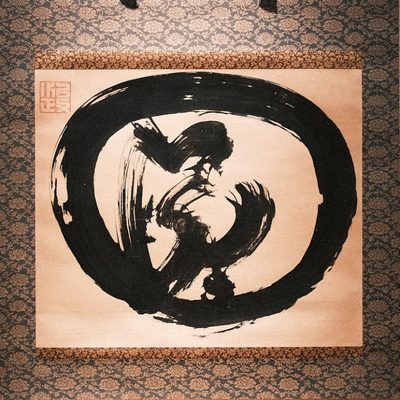
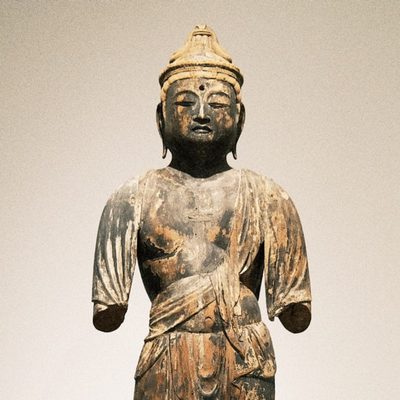
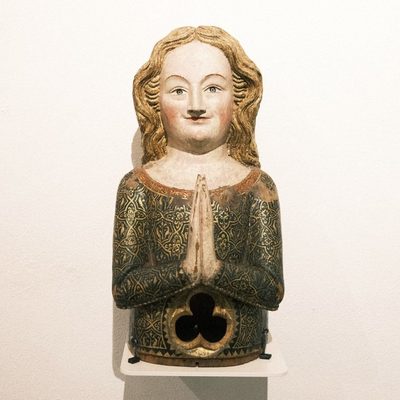
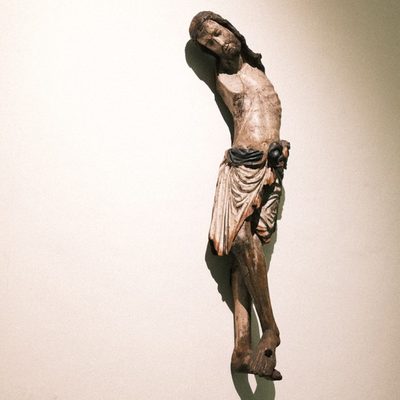
Further recommended reading: In our post From Gothic to Zen: Comparing medieval Western and Eastern wooden sculptures, we have previously compared how wooden sculptures were used in medieval Christian and Buddhist contexts. If you want to learn more about this topic, have a look at that post as well.
comments