Natural ethics in Bankei’s Zen
What makes an action ethical? Is it the fact that we follow certain rules, or does it have more to do with why we act the way we do? We can, for example, be right about something and still treat another person disrespectfully. We can follow moral rules quite strictly and at the same time develop a sense of superiority over those who do not. Bankei Yōtaku addresses this problem in his remarks on the Buddhist precepts. While he acknowledges their usefulness, he shifts our attention from the rules themselves to the way in which harmful behavior arises in the first place. What I find especially worth exploring here is the idea that ethical conduct may come more naturally when we stop seeing every situation primarily from the perspective of our own interests, fears, and wounded pride. But does this mean that someone living in the unborn Buddha-mind no longer needs moral rules? And how do we distinguish natural conduct from simply acting on our impulses? In this post, I want to take a closer look at the ethical side of Bankei’s Zen and what his teaching can tell us about morality, compassion, and the way we treat others in everyday life.
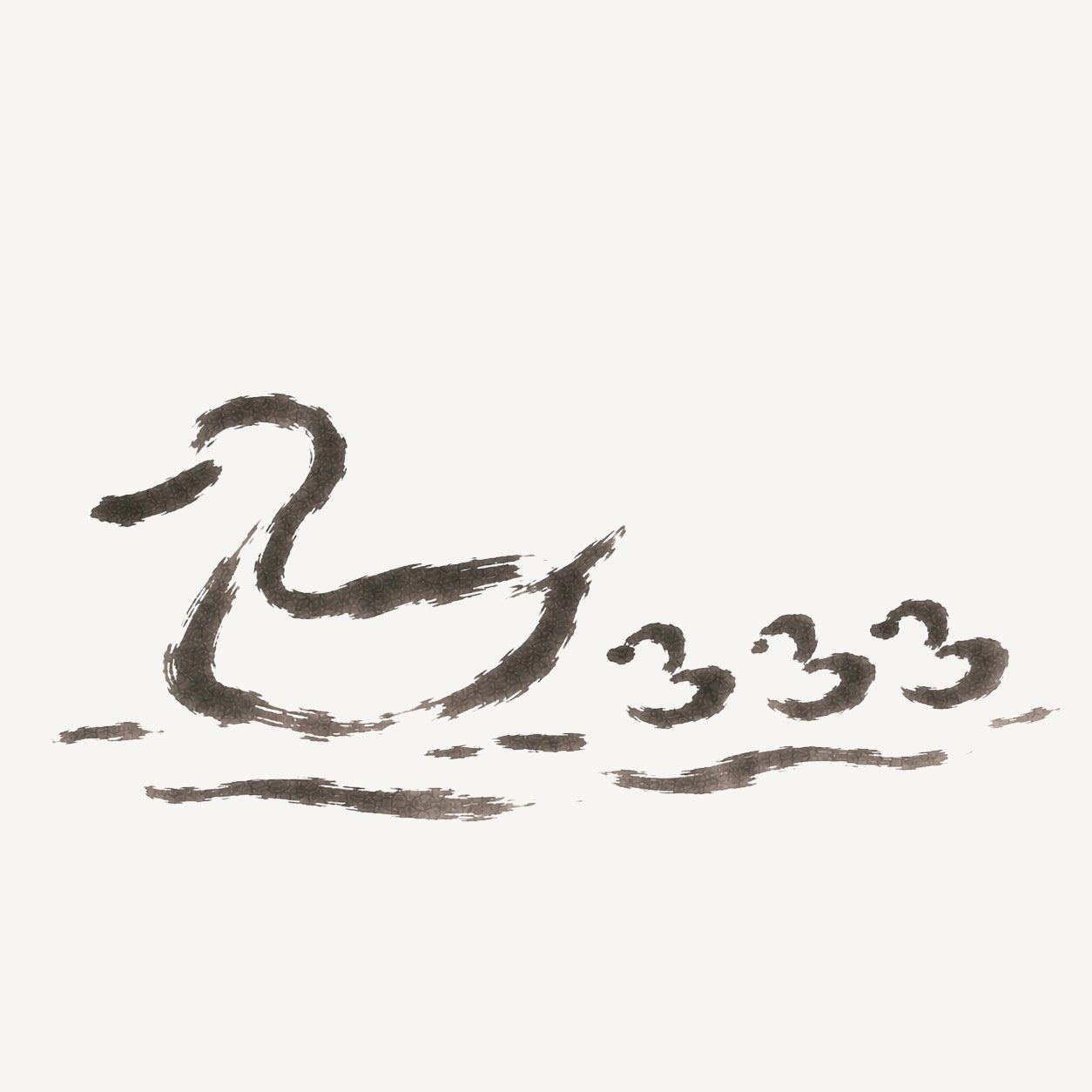
A mother duck swimming with her three ducklings. Her natural care for her offspring serves as a metaphor for Bankei’s understanding of ethics: Compassionate conduct arising naturally, without moral self-display or attachment to virtue. AI-generated illustration with DALL•E 2, rendered in the style of Japanese Zenga ink painting.
Introduction
Bankei Yōtaku’s teaching of the Unborn is not usually presented as an ethical system. He does not formulate a systematic theory of duties, virtues, social obligations, or moral law. His sermons begin elsewhere, with the claim that every person possesses the unborn Buddha-mind. Yet precisely because of this starting point, his teaching has in my view a clear ethical dimension. Bankei’s question is not primarily which rule should govern conduct, but how conduct changes when the mind is not transformed into anger, fear, craving, pride, self-defense, or delusion.
This becomes especially clear in his comments on precepts. Bankei does not reject precepts as useless. Nor does he deny that discipline can have practical value. But he sharply criticizes the pride that can arise from rule-observance. In his encounter with priests of the Disciplinary School, he tells them that observing the precepts is not wrong and is indeed a good thing, but not the highest point. His criticism is directed at the moment when moral discipline becomes identity, status, or a badge of spiritual superiority.
Bankei’s ethics can therefore be described as natural ethics, but only if “natural” is understood carefully. It does not mean acting on every impulse. It does not mean that spontaneous desire is automatically good. It means that ethical conduct arises more directly when the mind is not distorted by self-centered fabrication. Anger, fear, craving, and pride are not natural in Bankei’s sense. They are produced when the Buddha-mind is transformed into delusion. Ethical life begins where this transformation is seen and no longer continued.
Ethics from the Buddha-mind
Bankei’s ethical thought follows from his basic anthropology. He repeatedly says that every person already has the unborn Buddha-mind at birth, and nothing else. Anger, fear, craving, jealousy, pride, resentment, and deceit are not treated as original nature. They arise later through habit, imitation, thought, attachment, and self-partiality. And this has direct ethical consequences. If harmful conduct grows from delusion, then ethical practice cannot begin only at the level of external rule-following. It must address the production of delusion itself. Harsh speech, aggression, deceit, envy, manipulation, and resentment do not appear from nowhere. They are prepared by prior movements of the mind. Before harsh speech, there is usually self-defense. Before deceit, there is fear, gain, or self-protection. Before resentment, there is the story of injury. Before aggression, there is the transformation of a situation into a conflict centered on “me”.
Bankei’s own sermons often make this point through ordinary examples. He warns that after leaving the lecture hall, someone may be pushed or insulted, or that at home a family member may say something unpleasant. If one then becomes agitated and takes sides for oneself, the Buddha-mind is transformed into a fighting spirit. The ethical problem begins before outward action. It begins in the mind’s partiality toward itself.
This gives Bankei’s ethics its specific shape. The issue is not only whether one follows a rule after a situation has already been interpreted through egoic reaction, but whether one produces the delusion from which harmful conduct arises. In this sense, Bankei’s ethics is inwardly precise, but not merely inward. Conduct changes because the root from which conduct arises is changed.
Precepts as supports, not badges
Bankei’s most explicit discussion of ethical rules occurs in his encounter with priests of the Disciplinary School. These priests emphasized the observance of the monastic precepts and asked whether this would lead them to Buddhahood. Bankei’s response is balanced but critical. He does not say that observing precepts is wrong. He says that it is good, but not the best.
The reason lies in the way rule-observance can become self-conscious. Bankei argues that precepts were originally established because monks violated the Dharma. They functioned as corrective measures against misconduct, giving them practical value. A rule against theft matters where theft is a real danger. A rule against lying matters where false speech must be restrained. A monastic community needs forms of discipline. But Bankei objects when precepts become a source of identity. If one begins to say, in effect, “we are the school of discipline”, then the precepts have become a mark of distinction. They no longer simply restrain harmful conduct, but help construct a self-image of being disciplined, pure, superior, or more serious than others. In this movement, ethical practice becomes another form of attachment.
Bankei’s point is not antinomian. He is not saying that ethical rules are meaningless. He is saying that precepts are secondary to the Buddha-mind. A person who naturally does not steal does not need to build an identity around not stealing. A truthful person does not need to boast of a rule against lying. When conduct is already aligned with the Buddha-mind, the distinction between keeping and breaking precepts is no longer the central point.
The ethical value of a precept therefore lies in its function, not in its display. If it prevents harm, it is useful. If it becomes an object of pride, it has already been appropriated by the self.
The origin and function of precepts
Bankei’s explanation of the origin of precepts is important because it prevents a simplistic reading of his position. He does not deny that rules can serve a necessary function. Precepts arise because people violate the Dharma. They are responses to concrete forms of misconduct. They restrain, remind, and structure communal life. In this respect, Bankei’s view remains compatible with a broader Buddhist understanding of ethics. Precepts are not arbitrary commands. They are practical forms designed to reduce harm, stabilize conduct, and support liberation. A person who is prone to lying may need a rule against lying. A person tempted by intoxication may need a rule against intoxication. A community requires shared boundaries.
Yet Bankei’s emphasis lies elsewhere. The deepest ethical life does not consist in continually displaying one’s obedience to rules. It consists in living in such a way that the harmful roots of misconduct are not produced. If greed, hatred, and delusion are not being generated, then the precepts are fulfilled more naturally. If these roots remain active, then even strict rule-observance may become another form of self-deception. This is why Bankei can say that observance is good, but not the best. The best is not lawlessness. It is conduct arising from a mind no longer governed by self-centered fabrication.
Natural conduct and non-delusion
The phrase “natural ethics” can be misleading unless it is clearly defined I believe. Bankei’s naturalness is not ordinary impulsiveness. It does not mean doing whatever one happens to feel. Ordinary impulses are often precisely the problem. Anger may feel natural. Fear may feel natural. Craving may feel natural. Pride may feel natural. But for Bankei, such states are not original nature. They are transformations of the Buddha-mind into delusion.
Natural conduct means conduct arising when these distortions are not produced. It is natural not because it follows impulse, but because it no longer needs the egoic constructions that usually distort perception and action. When the mind is not taking sides for itself, it can respond more appropriately to the situation. When fear does not dominate perception, conduct becomes less defensive. When craving does not organize the world around acquisition, others are less likely to become instruments. When pride is not protected, speech becomes less aggressive.
Bankei’s example of the woman sewing while speaking with a friend illustrates this broader principle. As long as she remains in the Unborn, she can sew and listen naturally. When thought clings to one task, the other is obstructed. The example is not primarily moral, but it shows how Bankei understands undistorted functioning. The mind acts freely when it is not narrowed by fixation.
Ethical conduct, in this framework, is not a heroic achievement of the ego. It is the more direct functioning of the mind when anger, fear, craving, and self-defense do not take command.
Not taking sides for oneself as ethical practice
Bankei’s instruction not to take sides for oneself is one of his clearest ethical teachings. Much harmful conduct begins with this shift. Someone criticizes us, and we defend. Someone contradicts us, and we become hostile. Someone succeeds, and we become envious. Someone obstructs us, and we become aggressive. Someone threatens our image, and we distort the situation to protect it. The ethical failure begins already before the actual outward action. It begins in perception. The other person is no longer seen as they are, they become an obstacle, rival, threat, inferior person, or object of resentment. Once this distortion occurs, harmful speech and action become easier.
Bankei’s warning about being pushed, insulted, or offended after leaving the hall is therefore more than a casual moral instruction. It identifies the practical point at which delusion becomes ethical failure. The mind takes sides for itself, and the Buddha-mind is transformed into a fighting spirit.
Not taking sides for oneself does not mean passivity. It does not mean that one never corrects falsehood, refuses harm, draws boundaries, or opposes injustice. It means that action should not arise from egoic partiality. One may still speak firmly. One may still refuse. One may still protect oneself or another person. But the action need not be fueled by wounded selfhood.
This makes Bankei’s ethics demanding because it applies precisely where moral self-justification is easiest. One must examine not only what one does, but from where one acts.
Anger and moral self-justification
Anger often appears to justify itself. A person may say “I am angry because I am right, because the other person is wrong, because the situation demands it”. Sometimes the factual basis may indeed be real. A wrong may have been done. A boundary may have been crossed. A correction may be necessary. Bankei’s teaching does not imply that every conflict should be avoided or that every opposition is deluded. His question is actually more precise: “Where does the anger come from?”” In the encounter with the monk who claims to have a hot temper, Bankei does not ask whether the monk’s anger sometimes has a cause. He asks whether the anger is his original nature. Since it appears only under certain conditions, Bankei treats it as produced.
This distinction is crucial here. One may be factually right and still act from self-attachment. One may oppose a real wrong and still transform the Buddha-mind into a fighting spirit. A correction can be necessary, but it can also be humiliating. A refusal can be clear, but it can also be aggressive. Criticism can clarify, but it can also serve pride. Bankei’s ethics is therefore not moral relativism. It does not say that all positions are equal. It says that the state of the mind matters. The same outward action can arise from clarity or from delusion. The ethical question is not only what is done, but also how the act is produced.
Fear, craving, and ethical distortion
Fear and craving distort conduct as much as anger does. Bankei’s response to the woman afraid of thunder shows how fear can be interpreted as a construction of thought. The thunder itself is not the whole cause of her terror. Her mind adds interpretation, projection, and belief. In ethical life, the same mechanism can produce defensive, controlling, or avoidant behavior.
When fear is taken as reality, one acts from it. One protects imagined threats, projects danger onto others, clings to certainty, and one may become harsh in the name of security. Seeing fear as something created does not eliminate practical caution, that is true, but it prevents fear from becoming the master of conduct.
Craving works similarly. Desire appears. That is not yet the whole ethical problem. The problem begins when desire becomes necessity, when the object of desire becomes central, when others become means, and when the self organizes around lack. Then conduct becomes distorted. One no longer sees things as they are. One sees them primarily as objects of acquisition. Bankei does not usually analyze craving in scholastic terms, but his general structure applies clearly. When the Buddha-mind is transformed into grasping, conduct becomes narrowed. The ethical task is not merely to obey rules externally while fear and craving remain untouched. The task is to see the roots from which distorted conduct grows.
Compassion without moral performance
Bankei does not often develop his teaching through the explicit vocabulary of karuṇā, compassion. Nevertheless, his view of human beings has compassionate implications. If all beings possess the unborn Buddha-mind, then no being is reducible to their delusion. The angry person is not merely anger. The fearful person is not merely fear. The wrongdoer is not permanently identical with wrongdoing. This is especially clear in Bankei’s claim that even a serious wrongdoer can become a living Buddha if he recognizes his wrong and begins to live in the Buddha-mind. The point is not to excuse harm. It is to deny that harmful conduct defines a person’s final nature. Since delusion is produced, it can cease. Since Buddha-mind is present, transformation remains possible.
This in fact supports a sober form of compassion. It does not deny responsibility, does not remove the need for correction or boundaries. It refuses to reduce people to their worst formations. A person may act from delusion and still not be identical with that delusion.
Compassion in Bankei’s sense does not need to be performed as a moral pose. It arises from seeing beings without reducing them to anger, fear, desire, or judgment. This is why his accessibility to laypeople, women, the uneducated, the fearful, and the angry is not incidental. It follows from the structure of his teaching.
The danger of moral identity
Bankei’s critique of precept-pride can be extended to moral identity more generally. It is possible to become attached not only to Buddhist precepts, but also to being disciplined, pure, compassionate, wise, critical, traditional, ascetic, tolerant, or spiritually advanced. Any moral quality can become an ego-object. The danger is subtle. A person may begin with sincere practice, but gradually turn practice into self-image. They no longer simply act truthfully, they become someone who is truthful. They no longer simply refrain from harm, but become someone who is morally superior. They no longer simply practice, but become someone who possesses practice.
Bankei’s encounter with the Disciplinary School priests again illustrates the problem. The issue is not that precepts are bad. The issue is that a practice intended to reduce delusion can become a form of self-display. Discipline can become pride. Purity can become attachment. Moral seriousness can become identity. Bankei’s teaching cuts through this by returning ethics to the Buddha-mind. Natural conduct does not require self-display. If one is truly not stealing, not lying, not harming, and not acting from anger, there is no need to turn this into identity. The moment virtue becomes possession, it has already been compromised by self-attachment.
Precepts and the Unborn
A balanced interpretation should preserve in my view the value of precepts. Precepts can be useful, especially because most people do not live continuously from the Unborn. They provide orientation. They restrain harmful behavior. They support community. They remind practitioners of the shape of awakened conduct. Bankei’s criticism is not that precepts are false. His criticism is that precepts are not ultimate. They are secondary to the Buddha-mind. If one follows precepts while remaining proud, angry, judgmental, or self-attached, then the precepts have not reached the root. If one lives from the Unborn, ethical conduct expresses itself more naturally, and the precepts become descriptions of such conduct rather than external badges of status.
The relation can be put this way: Precepts are useful where the Unborn is obscured, and they are naturally fulfilled where the Unborn is lived. They become dangerous only when one clings to them as signs of superiority or as substitutes for realization.
This also explains why Bankei’s ethics is not lawless. The absence of precept-pride is not the absence of ethical seriousness. It is an ethical seriousness directed at the roots of harmful action.
Natural ethics and ordinary life
Bankei’s ethics is tested in ordinary situations. It is not primarily tested in grand moral declarations. It appears in how one responds to irritation, criticism, illness, fear, desire, family conflict, fatigue, and daily work.
When someone speaks sharply, does one immediately retaliate? When a mistake is pointed out, does one defend the self-image? When one feels ignored, does resentment form? When one desires recognition, does one manipulate speech? When pain appears, does one become hostile to the world? When rules are followed, does pride arise?
These are ethical moments because they show whether the Buddha-mind is being transformed into delusion. Bankei’s examples are deliberately ordinary: A quarrel, a fear, a thought, a sickness, a family remark, a sleeping monk, a person proud of discipline. This ordinariness is not accidental, but reflects his view that practice and ethics begin where delusion actually arises.
Natural ethics therefore belongs to everyday conduct. It is not an abstract moral doctrine, but the concrete discipline of not producing the self-centered formations from which harm grows.
Ethics as manifestation, not achievement
In Bankei’s Zen, ethical conduct is not an achievement of the ego. It is a manifestation of the Unborn. This distinction is very important because moral achievement easily strengthens the very self that Buddhism seeks to analyze and release. If one becomes proud of virtue, virtue has been appropriated. If one becomes attached to discipline, discipline has become self. If one becomes superior through purity, purity has become another form of delusion. Ethics as manifestation means that conduct expresses the Buddha-mind without becoming a possession. One acts without turning action into spiritual identity. One speaks truthfully without constructing an identity around truthfulness. One refuses harm without hatred. One observes precepts without pride. One helps without self-display. One corrects without aggression. This is not passivity. It is the natural activity of the Buddha-mind when it is not narrowed by self-attachment.
Relation to Buddhist ethics more broadly
Bankei’s natural ethics fits within the broader Buddhist framework. Buddhist ethics is not primarily obedience to divine command. It concerns the transformation of intention, perception, and action through wisdom, non-attachment, and compassion. Harmful conduct arises from greed, hatred, and delusion. Liberated conduct arises from the weakening of these roots. Bankei’s language differs, but the structure is comparable. Greed, hatred, and delusion are transformations of the Buddha-mind. They are not original nature. When they are not produced, conduct becomes clearer. Ethics follows from awakening, and awakening expresses itself ethically.
The precepts, in this broader view, are not arbitrary rules. They describe forms of conduct that reduce harm and support liberation. Bankei accepts their usefulness, but he refuses to let them become the center. The center is the unborn Buddha-mind. Without it, precepts can become empty moralism. With it, precepts become natural expressions of a non-deluded life.
Conclusion
Bankei’s teaching contains a strong vision of natural ethics, although he does not present it as a formal ethical system. Ethical conduct does not arise primarily from pride in rules, identity as a disciplined person, or external moral performance. It arises when the Buddha-mind is not transformed into anger, fear, craving, pride, self-defense, and delusion. This is why Bankei criticizes precept-pride. Precepts are useful, but they are not the highest point. They can restrain misconduct, guide conduct, and support community. But when they become badges of merit, they reinforce the self. A rule intended to reduce delusion can itself become delusion if it becomes an object of attachment.
Bankei’s ethics is therefore neither lawless nor moralistic. It does not abolish precepts, but it refuses to absolutize them. It does not excuse harmful conduct, but it seeks its root in self-centered fabrication. It does not perform virtue, but asks whether conduct arises from the Buddha-mind or from delusion.
The practical test is simple and demanding: Does one’s practice reduce self-partiality, anger, fear, craving, deceit, pride, and harm? If it does, ethics is alive. If it merely produces a more spiritual self-image, it has moved away from the Unborn. For Bankei, ethical life begins where the need to display virtue ends.
References and further reading
- Norman Waddell (Herausgeber), Bankei Eitaku, Die Zen-Lehre vom Ungeborenen. Leben und Lehre des großen japanischen Zen-Meisters Bankei Eitaku (1622 - 1693), 1988, ISBN-10: 3502640505
- Peter Haskel (Übersetzer), Yoshito Hakeda (Herausgeber), Mary Farkas (Vorwort), Bankei Zen - Translations From The Record Of Bankei, 1994, Grove Press, ISBN: 9780802131843
- Oliver Bottini, Das große O.-W.-Barth-Buch des Zen, 2002, Barth im Scherz-Verl, ISBN: 9783502611042
- Heinrich Dumoulin, Geschichte des Zen-Buddhismus, Band 1+2, 2019, 2., durchgesehene und erweiterte Auflage, Francke A. Verlag, ISBN: 9783772085161
- Hans-Günter Wagner, Buddhismus in China: Von den Anfängen bis in die Gegenwart, 2020, Matthes & Seitz Berlin, ISBN: 978-3957578440
- Jr. Buswell, Robert E., Jr. Lopez, Donald S., Juhn Ahn, J. Wayne Bass, William Chu, The Princeton dictionary of Buddhism, 2014, Princeton University Press, ISBN: 978-0-691-15786-3











comments