Time and timelessness in Zen
Time, for most of us, is something linear. It seems to move forward in steady increments, separating past, present, and future. We plan, remember, regret, hope, and worry according to this unfolding sequence. The clock gives this structure a numerical form. The calendar gives it a social form. Biography gives it a narrative form. We are born, grow older, remember what has passed, anticipate what has not yet arrived, and often imagine life as something that unfolds along a line. Buddhism does not simply deny this conventional structure of time. It would be absurd to deny that days, seasons, aging, death, memory, and anticipation exist as meaningful aspects of human life. But Buddhist thought repeatedly questions whether this ordinary experience of time reveals reality as it actually is. In Buddhist thinking, linear time can easily become a framework for suffering: Regret fixes the self to a past that no longer exists, anxiety projects the self into a future that has not yet arrived, and craving turns the present into a mere instrument for later satisfaction. The present is then no longer fully lived. It becomes a transitional point, a waiting room, or a deficit to be overcome.
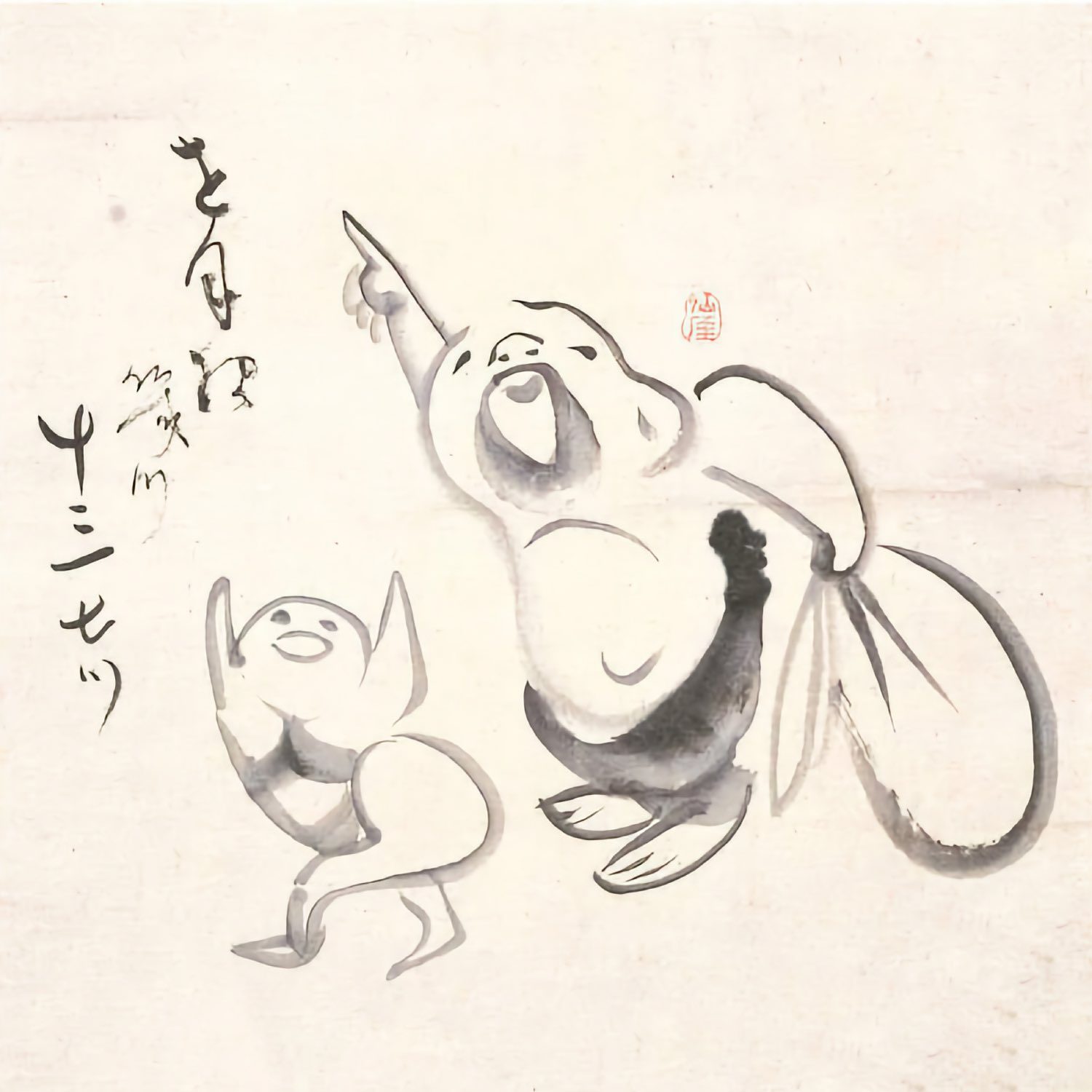
Which month is it?, Sengai, before 1838. “Which month is it?”, a question that is no question at all. In this playful zenga (Zen painting), Sengai confronts the absurdity of temporal fixation through humor. The figures gesture skyward, puzzled or proclaiming, yet the real teaching lies in their spontaneity. Time, like self, dissolves in the immediacy of the moment. There is no “right” season, only suchness, right here, now. Source: Wikimedia Commonsꜛ (license: public domain; modified)
Zen offers a particularly radical way of rethinking this problem. Rather than treating time as an external container through which beings move, Zen asks how time is actually encountered in lived experience. Time is not merely “out there”. It appears as this body, this action, this breath, this memory, this expectation, this moment of practice. This does not mean that time disappears. It means that time is no longer understood as a neutral line outside the person. Time is inseparable from being.
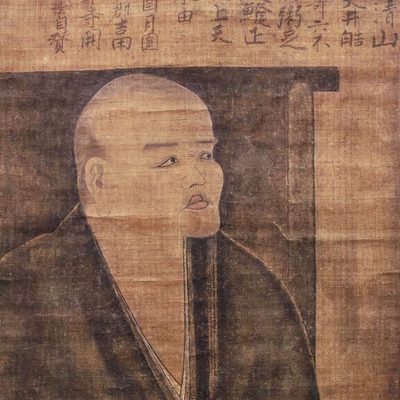
In this post, we explore how Zen, especially through the thought of Eihei Dōgen and the practice of zazen, reconfigures the understanding of time. The central point will be Dōgen’s concept of uji (有時), usually translated as “being-time”. Uji is not merely a theory about time. It is a way of interpreting impermanence, non-self, dependent arising, practice-realization, and ordinary life through the concrete temporality of existence.
The illusion of linear time
The ordinary view of time treats it as a sequence. One moment passes away, another arrives, and a third is expected. This model is useful, as it allows human beings to coordinate their lives in the world: Work, remembering appointments, preserving history, measuring change, and organizing shared life. Buddhism does not need to deny this conventional function of time. The problem begins when this conventional model is mistaken for the whole structure of reality.
In ordinary experience, linear time easily becomes bound to the illusion of a stable self. The self imagines itself as something that remains identical while moving through time: I was there in the past, I am here now, and I will continue into the future. Memory and anticipation then support the impression of a permanent center. Yet from the perspective of anattā, this self is not a fixed essence moving through temporal containers. It is a changing process, composed of body, sensation, perception, formations, consciousness, memory, expectation, and relation. What appears as “I across time” is a continuity of conditioned processes, not an unchanging substance. This is why time is not merely a metaphysical problem in Buddhism. It is also a practical and existential problem. Dukkha often depends on how the self relates to time. Regret arises when the self clings to what has passed. Anxiety arises when the self projects itself into what has not yet arrived. Craving arises when the present is treated as insufficient and meaningful only as a bridge toward future satisfaction. Upādāna, clinging, is therefore not only attachment to things, it is also attachment to temporal narratives: What should have happened, what must happen, what I was, what I will become.
Zen challenges this structure not by denying past and future, but by examining how they exist. The past appears now as memory. The future appears now as expectation, fear, plan, or projection. Neither is accessible outside the present field of experience. This does not make the past unreal in a trivial sense. Past events have causal effects. They shape bodies, habits, institutions, languages, and relationships. But the past is not available as a separate place to which the self can return. Likewise, the future is not a place already waiting ahead. It appears through intention, imagination, probability, and uncertainty. The present, however, should also not be misunderstood as a thin mathematical point between past and future. In Zen, the present is not merely the smallest slice of clock time. It is the concrete situation in which body, mind, world, memory, action, and possibility appear together. The present is not empty in the sense of being nothing. It is empty in the Buddhist sense: Without independent, fixed essence, yet full of relations and conditions. It is the field in which dependent arising becomes experience.
This has direct implications for practice. If practice is understood linearly, it becomes a means to a later result. One practices now in order to become awakened later. Dōgen’s Zen does not simply reject maturation, discipline, or gradual transformation. But it rejects the idea that practice is merely a deficient present aiming at a complete future. In Dōgen’s language, practice and realization are not two. Practice is not outside realization, waiting to become it later. Practice is the concrete temporal form of realization now. This is the background for Dōgen’s concept of uji, being-time. The point is not simply that “only the present exists”, which would be too simple and philosophically misleading. The deeper claim is that every being is temporal through and through, and every moment is a complete expression of being. Time is not a neutral line along which things move. Things themselves are time. A person is time as body, time as perception, time as memory, time as action, time as aging, time as practice. A mountain is time as mountain. Bamboo is time as bamboo. The question is therefore not how beings exist in time, but how beings are time. This give our conventional definition and perception of time a fresh and radical twist. Time is not something that we are in. It is something that we are.
Dōgen’s Uji (有時): Being-time
Uji (有時), usually translated as “being-time”, is one of the most philosophically dense fascicles of Dōgen’s Shōbōgenzō. It was delivered at Kōshō-hōrin-ji in 1240 and later copied by Ejō during the summer training of 1243. The text belongs to the same broader intellectual world as Genjō Kōan and Bendōwa, but its focus is more specific: It asks how being and time are related.
The title itself is already ambiguous. U (有) means being, existence, or having. Ji (時) means time. The compound can be read as “being-time”, “existence-time”, or “for the time being”. Dōgen uses this ambiguity deliberately. He does not merely claim that beings exist in time. He says that being itself is time, and that every being is a moment of time. This is not a doctrine of timeless eternity. It is also not a simple doctrine of time as mere passing. It is a radical interpretation of impermanence: Because beings are impermanent, they are not things that persist inside time. They are temporal events.
This makes Uji central for understanding the Buddhist view of time. Early Buddhist analysis already treats phenomena as conditioned, impermanent, and without self. Mahāyāna thought deepens this through emptiness: Phenomena have no independent essence because they arise through relations. Dōgen gives these ideas a distinct temporal form. If things are empty, conditioned, and impermanent, then their being cannot be separated from their time. A thing is not first a thing and then later temporal. To be is to be time.
The text is also relevant for Dōgen’s account of practice. If every being is time, then practice is not something added to a temporal life from outside. Practice is a moment of being-time. Realization is not a future state placed at the end of a temporal line. It is a present temporal enactment. In this sense, Uji provides one of the philosophical foundations for Dōgen’s teaching of practice-realization.
Uji
To get a better impression of what we are talking about, let’s look actual text of Uji:
Uji
An eternal Buddha says:
There is the time of standing on the highest peak.
There is the time of walking on the bottom of the ocean.
There is the time of three heads and eight arms.
There is the time of the sixteen-foot or eight-foot golden body.
There is the time of the staff and the whisk.
There is the time of the pillar and the stone lantern.
There is the time of Zhang’s third son and Li’s fourth son.
And there is the time of the great earth and empty space.
In the words “there is the time”, time is already being, and all being is time. The sixteen-foot golden body of the Buddha is itself time. Because it is time, it has the magnificent and radiant clarity of time. You should study this as the twelve hours of today. “Three heads and eight arms” are themselves time. Because they are time, they must be completely identical with the twelve hours of today. No one can measure how long and distant or how short and urgent twelve hours are, and yet we call them “the twelve hours”. The direction and traces of time that comes and goes are so clear that we human beings do not doubt them. But not doubting them does not mean that we understand them. Living beings naturally have doubts about things and facts they do not understand. Since doubts have no lasting substance, earlier doubts do not always coincide with present doubts. For the moment, we can only say that doubts themselves are nothing other than time.
We arrange ourselves in time and see ourselves as the whole universe. But we should also see that every person and every thing in this whole universe is, by itself, an individual moment of time. No thing obstructs another thing, and no moment obstructs another moment. Therefore many awaken the mind in the same moment of time, and there are moments of time in which many awaken the same mind. The same applies to the practice and realization of the truth. We arrange ourselves in time and we recognize ourselves. Such is the fundamental truth that we ourselves are time. Because of this truth, there are hundreds of concrete things and thousands of phenomena on earth, and each thing and each phenomenon is, by itself, the whole earth. You must learn this and experience it in yourselves. It is the first step of practice.
When you have arrived in the realm of unfathomable reality, there is only one thing and only one phenomenon, beyond understanding and not understanding things, and beyond understanding and not understanding phenomena. Because only this one moment is real, all moments of being-time are the whole of time, and all existing things and phenomena are moments of time. The whole of being and the whole universe exist in each of these individual moments of time. Let us pause and consider whether, in this whole being and in this whole universe, there is anything that exists outside the present moment.
Ordinary people who do not study the Buddha-Dharma have their own views and opinions about time. When such people hear the words “being-time”, they think: “At one time in the past I was like a temple guardian with three heads and eight arms. At one time in the past I was the sixteen-foot or eight-foot golden Buddha body. It was as if I had crossed a river or climbed a mountain. The mountain and the river may still be there. But now that I have crossed the river and climbed the mountain and live in a palace adorned with jewels and vermilion towers, they are as far from me as heaven is from earth.”
But the truth is not limited to this one view. For at the time when I climbed the mountain and crossed the river, I was there in time, and time must have been in me. And I am now, so time cannot have left me. If I leave time in the form of coming and going, then the time of climbing the mountain is the present of being-time. And if I keep time in the form of coming and going, then the present of being-time exists in me, and this is “being-time”.
How could the past time when I climbed the mountain and crossed the river not swallow and spit out again the present time in which I live in this palace adorned with jewels and vermilion towers? “Three heads and eight arms” were yesterday’s time; “the sixteen-foot or eight-foot golden body” is today’s time. And yet the Buddhist principle of “yesterday” and “today” refers precisely only to the moments when I am now going into the mountains and looking out over thousands and tens of thousands of peaks. It does not speak of something that would be “past”. Three heads and eight arms pass, moment by moment, as the time of my being. Although they seem far away, they are always moments of now. The sixteen-foot or eight-foot golden body passes, moment by moment, as the time of my being. Although it seems far removed, it is always a moment of now.
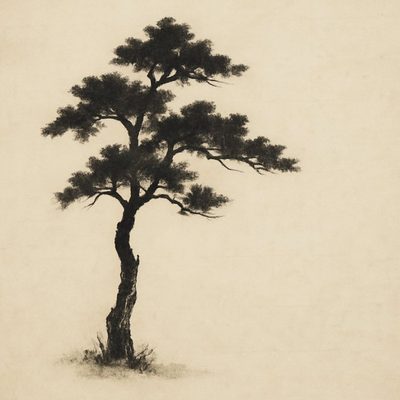
Since this is so, pine trees are time, and bamboo stalks are time. Do not understand time only as something that “flies away”. Understand that “flying away” is not its only function. If we only let time fly away, there could be gaps. Whoever does not experience and recognize the teaching of being-time in themselves can understand time only as something that passes.
The essential point is this: Everything that exists in this whole universe is a sequence of moments, and it is at the same time individual moments of time, standing by themselves. And since time is always being-time, it is the time of my own being. Being-time has the quality of a sequence of moments that follow one another. This means that time goes from today, in a sequence of moments, to tomorrow; from today it goes, in a sequence of moments, to yesterday; from yesterday it goes, in a sequence of moments, to today; from today it goes, in a sequence of moments, to today; and from tomorrow it goes, in a sequence of moments, to tomorrow. Because the continuity of separate moments is a quality of time, past and present moments cannot build upon one another and also cannot be connected with one another. Therefore the masters Seigen, Ōbaku, Baso, and Sekitō are time. Because we ourselves and the world are already time, practice and experience are also moments of time. Wading through mud and water in everyday life is also time.
What a person recognizes “today” is their own subjective view and the causes and conditions of that view, but this is not the reality of themselves. It is nothing other than reality that, in the present moment, determines the causes and conditions of the person. And because the person understands this time and this being of their own as something other than reality, they think: “The sixteen-foot golden body has nothing in common with me.”
But even when they think, “I can never be the sixteen-foot golden body”, and thus flee from reality, this too is a spark and flash of being-time in a person who has still to experience and trust the time of their being. Even the horse and sheep hours that order the world temporally are rising and falling of being-time, which cannot be grasped and which takes its place in the Dharma. The rat and the tiger are time, living beings are time, and buddhas are time. This time experiences the whole universe by using the three heads and eight arms, and this time experiences the whole universe by using the sixteen-foot golden body of a Buddha. The expression “to realize completely” means that the whole universe uses the whole universe to realize itself all-inclusively. When the sixteen-foot golden body uses the sixteen-foot golden body to realize itself as the mind of awakening, as practice, as bodhi, and as nirvana, this is precisely being, and it is time. It is the complete realization of all time as all being, and in this there is nothing added. And because nothing can be added, even the half-realized being-time that is only half-complete is a complete realization of half-being-time. Even times when you seem to be groping in darkness are your being. If you entrust yourselves fully to this being, even the moments before and after take their place in the Dharma.
To take your place in the Dharma through the power of action: this is being-time. Do not be disturbed by its “non-being”, but also do not excessively call it “being”. Because, with regard to time, you only want to understand its unstoppable passing, you cannot understand that time has not yet come. Your intellectual understanding is indeed time, but it is guided by nothing other than your intellect. Human skin bags understand time only as something that comes and goes, but no one has ever fully understood being-time that takes its place in the Dharma. How much less could anyone pass through the gate of its realization? Who could put into words the unfathomable reality that we have already attained from the beginning? This is difficult even for those who know the place of time in the Dharma. Even those who have long claimed that they have attained the truth are still searching in the dark for the true face of the reality before them. Even if you leave bodhi and nirvana as they appear in the being-time of ordinary people, that is, as forms that come and go, they are being-time.
In short: being-time realizes itself despite all limitations and obstacles. The rulers and inhabitants of heaven who appear to our right and left are the being-time in which we now exert all our strength. Countless beings of being-time realize themselves in other realms, lands, and seas through our efforts here and now. The many kinds of living beings who live as being-times in light and darkness all realize themselves because we give our best, moment by moment. You must experience in yourselves that without the continuity of your efforts, moment by moment, not a single dharma, not a single thing, could realize itself and pass from one moment to the next.
But you must by no means understand this continuity of time from one moment to another as if something like wind or rain were moving east or west. The whole universe neither moves nor stands still, and it strives neither forward nor backward. It simply goes from one moment to the next. Spring is an example of the passing of time from one moment to the next. In spring there are countless different phenomena that we call “the passing of time”.
You should experience and investigate for yourselves that time passes from one moment to the next without the cooperation of anything outside time. The passing of time from one moment to the next, for example, unfailingly passes through spring itself. The passing of time is not “spring”, but because spring is the passing of time, passing time has already realized the truth of springtime. You must investigate this thoroughly, taking it up and letting it go again and again. If you speak about this passing of present moments and believe that things and phenomena are separate from time, then this is never the study and experience of the Buddha Way. The same applies if you think that “something” moves from moment to moment for hundreds and thousands of kalpas through hundreds and thousands of worlds toward the east.
Once the great master Yakusan, taking up a suggestion from Master Sekitō, asked Zen Master Baso: “I have essentially understood the three vehicles and the twelve teachings. But what was the meaning of Bodhidharma’s coming from the West?”
Zen Master Baso answered: “There is the time that makes him raise his eyebrow and wink with one eye, and there is the time that does not make him raise his eyebrow and does not make him wink with one eye. There is the time when it is good to make him raise his eyebrow and wink with one eye, and there is the time when it is not good to make him raise his eyebrow and wink with one eye.”
When Yakusan heard this, he realized the great awakening and said to Baso: “In the order of my master Sekitō, I was like a mosquito climbing an iron ox.”
What Baso says above is not the same as what others say. His eyebrows and eyes may be mountains and oceans, because mountains and oceans are his eyebrows and eyes. When he says that time makes him raise his eyebrow, he may be looking at the mountains. When he says that time makes him wink with one eye, the oceans may guide him. When Baso says, “It is good”, this good is familiar to him; he lets himself be guided by Buddha’s teaching. When Baso says, “It is not good”, this does not mean that time does not make him do something, and not making him do something also does not mean that non-doing is “not good”. All this is being-time. Mountains are time, oceans are time. Without time, mountains and oceans could not exist. You should never deny that time exists here and now in the mountains and in the oceans. If time is destroyed, mountains and oceans are destroyed. If time is not destroyed, mountains and oceans are not destroyed. In accordance with this truth, the bright morning star appears, the Tathāgata appears, the eye appears, and the holding up of the flower occurs, and this is time. If there were no time, this could not be.
Zen Master Kishō of the Shōken district was a Dharma heir of Rinzai and the authentic successor of Shuzan. Once he taught before a great assembly:
There is the time when the intention is there, but the words are not there.
There is the time when the words are there, but the intention is not there.
There is the time when both are there, intention and words.
And there is the time when neither intention nor words are there.
Intention and words are both being-time. Being there and not being there are both being-time. The time of being there is not yet finished, and already the time of not being there comes. The intention is a donkey and the words are a horse. We call the horse “words” and the donkey “intention”. The time of being there has nothing to do with “having come”, and the time of not being there is something other than “not yet having come”. Such is being-time.
Being is limited only by being, never by non-being. Non-being is limited only by non-being, never by being. Intention is limited only by intention, and it recognizes itself. Words are limited only by words, and they recognize themselves. Limitation is nothing other than limitation, and it recognizes itself. Limitation limits itself. This is time. All things and phenomena of this world limit themselves, but there is no limitation by which things and phenomena could be restricted. I meet a person, a person meets a person, I meet myself, and a phenomenon meets a phenomenon. If there were no time, this could not be. Furthermore, “intention” is the time when the universe realizes itself. “Words” are what concretize intention. Being is the time of liberation from the body, and non-being is the time of concrete facts: clinging to this and letting go of this. Investigate time in this way. Be being-time yourselves. The venerable masters of the past have already said this, but how could we not also say something?
One could express it like this:
The half-being of intention and words is being-time.
The half-non-being of intention and words is being-time.
Exactly in this way you should experience and investigate being-time.
It is the half-being-time that makes you raise your eyebrow or wink with one eye.
It is the being-time of errors that makes you raise your eyebrow or wink with one eye.
It is the half-being-time that does not make you raise your eyebrow and wink with one eye.
It is the being-time of errors that does not make you raise your eyebrow and wink with one eye.
When you experience coming and going, being and non-being in such a way, this time is being-time.
Shōbōgenzō Uji
Delivered at Kōshō-hōrin-ji on the first winter day of the first year of Ninji, 1240.
The copy was made during the summer training of the first year of Kangen, 1243. Ejō.
In the following subsections, we will unpack some of the key ideas in this text. We will not attempt to give a comprehensive commentary on every line. Instead, we will focus on the main themes and their implications for understanding time in Zen. And as always, this is not meant to be a definitive interpretation. Dōgen’s writing is famously dense and open-ended, and different readers may find different meanings in it. The goal here is to provide one possible reading that highlights the philosophical and practical significance of Uji. It’s a starting point for further exploration and reflection.
The opening poem: Everything has its time, but time is not a container
The text begins with a poem attributed to an “eternal Buddha”:
There is the time of standing on the highest peak.
There is the time of walking on the bottom of the ocean.
There is the time of three heads and eight arms.
There is the time of the sixteen-foot or eight-foot golden body.
There is the time of the staff and the whisk.
There is the time of the pillar and the stone lantern.
There is the time of Zhang’s third son and Li’s fourth son.
And there is the time of the great earth and empty space.
At first, this sounds like a simple statement that different things occur at different times. There is a time for standing on a mountain, a time for walking under the sea, a time for ordinary persons, a time for mythic forms, a time for objects, a time for earth and space. Read conventionally, the poem might appear to describe the diversity of events within a temporal sequence. Dōgen’s interpretation moves in a different direction. The repeated phrase “there is the time” does not mean that there is a neutral time in which these things appear. It means that each being or event is itself a mode of time. The highest peak is time as highest peak. The ocean floor is time as ocean floor. The staff, the whisk, the pillar, the stone lantern, the ordinary sons of Zhang and Li, the great earth, and empty space are all time. Time is not a background. It is the temporality of concrete being.
The examples also cut across several registers of reality. Some are natural, such as mountain and ocean. Some are ritual or monastic, such as staff and whisk. Some are architectural, such as pillar and stone lantern. Some are mythic or iconographic, such as three heads and eight arms or the golden Buddha body. Some are ordinary human beings. Dōgen thereby avoids restricting being-time to extraordinary spiritual states. Being-time includes Buddhas, ordinary people, tools, places, bodies, and the earth itself.
Thus, the poem sets the stage for the main claim of Uji: Being and time are not separate. Time is not a container in which things exist. Things are not fixed substances that persist through time. Instead, each thing is a temporal event, a moment of being-time. This challenges the common assumption that time is something that happens to things. Instead, things are time itself.
“All being is time”: The central claim
Dōgen immediately gives the key interpretation:
In the words “there is the time”, time is already being, and all being is time. The sixteen-foot golden body of the Buddha is itself time. Because it is time, it has the magnificent and radiant clarity of time.
This is the central thesis of Uji. Being and time are not two separate categories. Time is not added to being from outside. Being is not something that first exists and then later undergoes time. To be is to be time. Every being is a temporal expression.
This claim should not be confused with the trivial statement that everything exists at some time. Dōgen is making a stronger claim. A thing’s being is its time. A being is not a fixed substance that persists beneath temporal change. It is a temporal event, a momentary configuration of conditions. In this sense, Uji is a specifically “Dōgenian” development of impermanence and dependent arising.
The golden body of the Buddha is a useful example for this because it might tempt one to imagine an eternal sacred form beyond time. Dōgen rejects that move. The Buddha body is not beyond time. It is time. Its radiance is not timeless in the sense of being outside temporality. It is the radiance of time itself. This is why Dōgen’s view should not be reduced to a metaphysics of eternity. He does not place the Buddha outside time. He temporalizes even Buddhahood.
The twelve hours of today: Conventional time and lived time
Dōgen then says:
You should study this as the twelve hours of today. “Three heads and eight arms” are themselves time. Because they are time, they must be completely identical with the twelve hours of today.
The “twelve hours” refer to a traditional East Asian division of the day. Dōgen uses this ordinary temporal measure to make a philosophical point. Even conventional time should not be dismissed. The hours of today are not false. They are the practical form in which time is measured and lived. But their meaning is not exhausted by measurement. No one can finally measure whether twelve hours are long or short, distant or urgent. The same duration can feel brief in one situation and endless in another. Clock time gives one structure. Lived time gives another. Dōgen does not oppose these in a simple way. He suggests that what we call “twelve hours” is already being-time. It is not merely a unit on a temporal scale. It is the concrete temporality of existence today.
This helps clarify the relationship between Buddhist practice and everyday life. Zen does not require one to abandon ordinary temporal structures. Meals, work, sleep, seasons, ceremonies, and sitting periods all occur through conventional time. But practice changes how this time is experienced. The twelve hours are no longer merely units passing away. They are the concrete field in which being-time is enacted.
Doubt is also time
Dōgen writes:
The direction and traces of time that comes and goes are so clear that we human beings do not doubt them. But not doubting them does not mean that we understand them. Living beings naturally have doubts about things and facts they do not understand. Since doubts have no lasting substance, earlier doubts do not always coincide with present doubts. For the moment, we can only say that doubts themselves are nothing other than time.
This passage is important because Dōgen does not treat confusion as outside time. Doubt is not a timeless defect that blocks time. Doubt itself is time. It arises, changes, and disappears. Earlier doubts differ from present doubts because the person doubting is also being-time. This has a practical implication. In Buddhism, ignorance is not an eternal stain. Avidyā is conditioned. It appears through particular formations, views, habits, and situations. Because it is conditioned, it can change. Dōgen’s statement that doubt is time prevents the practitioner from treating doubt as a fixed identity. One is not “a doubter” in essence. Doubt is a temporal formation.
This also fits the broader Buddhist analysis of the five aggregates. Mental states arise and pass. They are not the self. Dōgen radicalizes this by saying that they are being-time. Doubt is not outside the path; it is one of the temporal forms through which the path is encountered.
Each thing is an individual moment of time
Dōgen then states:
We arrange ourselves in time and see ourselves as the whole universe. But we should also see that every person and every thing in this whole universe is, by itself, an individual moment of time. No thing obstructs another thing, and no moment obstructs another moment.
This passage gives one of the most important structures of Uji. Every person and thing is an individual moment of time. This does not mean that things are isolated. It means that each thing is complete as its own temporal position. This is close to the logic of Dōgen’s firewood and ash passage in Genjō Kōan. Firewood is fully firewood. Ash is fully ash. Each has its before and after, but each occupies its own Dharma position. Here, the same logic is applied to time. Each thing is a temporal position. One thing does not obstruct another thing because each is complete as its own being-time. One moment does not obstruct another moment because each is complete as its own time. This is not a denial of causality. It is a rejection of reducing one moment to a mere incomplete step toward another.
Dōgen continues:
Therefore many awaken the mind in the same moment of time, and there are moments of time in which many awaken the same mind. The same applies to the practice and realization of the truth.
Practice and realization are also temporal positions. Many can awaken in the same moment, and many can awaken the same mind through different temporal situations. This means that there is no single “right time” for awakening. There is no fixed sequence of practice leading to realization. Each moment of practice and realization is complete in itself. This also means that the path is not a linear progression. It is a field of temporal positions, each with its own integrity.
This prevents a privatized understanding of practice. Practice is personal, but not isolated. Each practitioner is an individual being-time, yet each participates in the whole field of time.
One moment as the whole of time
Dōgen writes:
Because only this one moment is real, all moments of being-time are the whole of time, and all existing things and phenomena are moments of time. The whole of being and the whole universe exist in each of these individual moments of time.
This passage is one of the densest in the text. Dōgen is not merely saying that the present is important. He is saying that each individual moment is the whole of time. This seems paradoxical only if time is imagined as a linear container composed of parts. In that model, one moment is only a small piece of the whole. But if each being is time, then each moment is not a fragment of an external line. It is the full temporal manifestation of its conditions.
This does not mean that all moments are identical. Dōgen is not flattening difference. Rather, each moment fully manifests the whole field from its own position. A moment of sitting, a moment of doubt, a moment of walking, a moment of aging, a moment of hearing rain, and a moment of seeing the morning star are all individual moments of being-time. Each is complete, but none is independent.
This is where Uji connects deeply with Huayan style thinking about interpenetration. Each phenomenon reflects the whole without ceasing to be particular. But Dōgen’s emphasis is temporal: Each moment is the whole of time without ceasing to be this moment.
Against the simple view that the past is gone
Dōgen criticizes the ordinary view of past and present through the image of climbing a mountain and crossing a river:
At one time in the past I was like a temple guardian with three heads and eight arms. At one time in the past I was the sixteen-foot or eight-foot golden Buddha body. It was as if I had crossed a river or climbed a mountain. The mountain and the river may still be there. But now that I have crossed the river and climbed the mountain and live in a palace adorned with jewels and vermilion towers, they are as far from me as heaven is from earth.
This is the ordinary narrative model of time. Something happened in the past, and now it is gone. The person has moved on. The past becomes distant, like a mountain or river left behind. Dōgen does not deny that experience appears this way. But he says that truth is not limited to this one view. He continues:
For at the time when I climbed the mountain and crossed the river, I was there in time, and time must have been in me. And I am now, so time cannot have left me.
This is not a simple claim that the past still exists somewhere. Dōgen’s point is subtler. The past moment was not an external object through which a permanent self passed. It was a being-time of the self. Because the self is not separate from time, the past cannot be understood as a discarded container. It remains part of the temporal structure of the person, but not as a fixed object. It remains as conditioning, memory, body, habit, and present configuration.
Dōgen then writes:
Three heads and eight arms were yesterday’s time; the sixteen-foot or eight-foot golden body is today’s time. And yet the Buddhist principle of “yesterday” and “today” refers precisely only to the moments when I am now going into the mountains and looking out over thousands and tens of thousands of peaks. It does not speak of something that would be “past”.
Here Dōgen undermines the ordinary separation between yesterday and today. Yesterday is not a dead container behind us. Today is not an isolated container in front of us. Both are ways of naming temporal positions in the present functioning of being-time. This is not a denial of sequence. It is a reinterpretation of sequence through the present actuality of time.
Pine trees are time, bamboo is time
Dōgen states:
Since this is so, pine trees are time, and bamboo stalks are time. Do not understand time only as something that “flies away”. Understand that “flying away” is not its only function.
This is one of the most concise summaries of the text. Pine trees are not in time. They are time. Bamboo does not merely endure through time. It is time as bamboo. A tree is time as growth, bending, shade, aging, decay, relation to soil, wind, rain, and perception. A bamboo stalk is time as hollow segment, green growth, seasonal change, use, sound, and disappearance.
The warning is equally important: Do not understand time only as something that flies away. Ordinary time-consciousness is dominated by loss. Time escapes, passes, runs out. Dōgen does not deny passing, but he says that passing is not time’s only function. Time also manifests, holds, differentiates, actualizes, and situates.
This is crucial for Buddhist practice. If time is understood only as loss, impermanence becomes depressing. Everything vanishes. Life becomes a race against disappearance. But if time is understood as being-time, impermanence is also the very condition under which things appear at all. The pine is pine because it is time. The bamboo is bamboo because it is time. A person is a person because they are time. Impermanence is not only destruction; it is manifestation.
Continuity without a permanent substance
Dōgen writes:
The essential point is this: Everything that exists in this whole universe is a sequence of moments, and it is at the same time individual moments of time, standing by themselves. And since time is always being-time, it is the time of my own being.
This passage preserves both continuity and discontinuity. Everything is a sequence of moments, but each moment also stands by itself. Dōgen avoids two extremes. He does not reduce time to disconnected instants, which would make causality and practice impossible. But he also does not treat time as a continuous substance that carries things along. This is structurally close to the Middle Way. Dōgen avoids eternalism because there is no permanent self or substance moving through time. He avoids nihilism because moments are not meaningless fragments. They are concrete expressions of being-time. This becomes especially clear when he says:
Because we ourselves and the world are already time, practice and experience are also moments of time. Wading through mud and water in everyday life is also time.
Practice is time. Experience is time. Ordinary difficulty is time. “Wading through mud and water” suggests the messy reality of life and practice. Time is not found only in elevated states, sacred icons, or philosophical clarity. It is also the time of fatigue, confusion, work, difficulty, and daily effort.
Even fleeing from reality is being-time
Dōgen examines the person who thinks:
The sixteen-foot golden body has nothing in common with me.
This is a familiar structure of alienation. The practitioner imagines Buddha, awakening, or truth as something remote and unrelated to ordinary selfhood. Dōgen answers:
But even when they think, “I can never be the sixteen-foot golden body”, and thus flee from reality, this too is a spark and flash of being-time in a person who has still to experience and trust the time of their being.
Even mistaken separation is being-time. Even the thought “this has nothing to do with me” arises as time. Dōgen thereby avoids placing delusion outside reality. Delusion is not an independent substance opposed to truth. It is a temporal event within reality, a conditioned moment that can be recognized and transformed. This is important for understanding practice. The practitioner does not need to first become pure before entering time. Confusion itself is time. Doubt is time. Error is time. Searching in darkness is time. This does not mean that confusion is equivalent to realization in a careless sense. It means that confusion is not outside the field of practice. It can take its place in the Dharma when it is recognized and practiced.
The whole universe realizes itself
Dōgen writes:
The expression “to realize completely” means that the whole universe uses the whole universe to realize itself all-inclusively. When the sixteen-foot golden body uses the sixteen-foot golden body to realize itself as the mind of awakening, as practice, as bodhi, and as nirvana, this is precisely being, and it is time.
This passage extends Dōgen’s account beyond individual experience. Realization is not the private achievement of an isolated self. The whole universe realizes itself through each concrete form. The Buddha body realizes itself as Buddha body. The practitioner realizes the Dharma through this body, this posture, this time.
This connects Uji with Bendōwa, where Dōgen says that when a person sits in zazen, the whole Dharma-world takes on the Buddha posture. Both texts reject a purely private model of practice. The practitioner is not separate from the world. The world is not a passive background. Practice is a temporal event in which being-time manifests through the whole field of conditions.
Dōgen then adds:
Even times when you seem to be groping in darkness are your being. If you entrust yourselves fully to this being, even the moments before and after take their place in the Dharma.
This sentence is especially important because it prevents perfectionism. Being-time is not only the time of clarity. It is also the time of groping in darkness. Practice does not require pretending that confusion is absent. It requires entrusting oneself to the concrete being-time in which confusion appears, without turning it into a permanent self.
Time has not yet come
Dōgen writes:
Because, with regard to time, you only want to understand its unstoppable passing, you cannot understand that time has not yet come.
This is one of the most difficult statements in the text. If time is always passing, how can it have “not yet come”? Dōgen is criticizing the assumption that time is exhausted by movement from past through present to future. If one only sees time as passing, one cannot see time as the present actualization of being. “Time has not yet come” does not mean that time is absent. It means that the ordinary model of time as already knowable through passing has not reached the truth of being-time. This helps explain why intellectual understanding is insufficient:
Human skin bags understand time only as something that comes and goes, but no one has ever fully understood being-time that takes its place in the Dharma.
“Skin bags” is a blunt Zen expression for human beings. Dōgen’s point is not that human beings cannot understand anything. It is that ordinary human understanding reduces time to coming and going. Being-time requires a different kind of realization, one that is tied to practice and direct experience.
Effort, continuity, and realization
Dōgen writes:
Countless beings of being-time realize themselves in other realms, lands, and seas through our efforts here and now. The many kinds of living beings who live as being-times in light and darkness all realize themselves because we give our best, moment by moment.
This passage gives Uji a practical and even ethical dimension. Being-time is not only a metaphysical concept. It is connected to effort. Moment-by-moment effort participates in the realization of countless beings. Again, this should not be read as an empirical claim in a narrow causal sense. It expresses Dōgen’s nonseparation of practice and world. The key statement is:
You must experience in yourselves that without the continuity of your efforts, moment by moment, not a single dharma, not a single thing, could realize itself and pass from one moment to the next.
Dōgen does not use being-time to justify passivity. If everything is time, one might think that everything simply happens. Dōgen’s answer is different: Being-time is enacted through effort. The continuity of practice matters. Moment-by-moment exertion is not outside time. It is time’s functioning as practice.
This connects directly to right effort. Effort is not egoic forcing, but the sustained enactment of the path. The practitioner does not create time, but participates in being-time through practice.
The passing of spring
Dōgen warns:
But you must by no means understand this continuity of time from one moment to another as if something like wind or rain were moving east or west. The whole universe neither moves nor stands still, and it strives neither forward nor backward. It simply goes from one moment to the next.
This passage rejects a spatialized image of time. Time is often imagined as something moving through space, like wind traveling east or rain moving west. Dōgen says this is misleading. The universe does not move forward like an object. It also does not stand still. It “goes from one moment to the next”, but this going is not the movement of a thing outside time. He gives spring as an example:
Spring is an example of the passing of time from one moment to the next. In spring there are countless different phenomena that we call “the passing of time”.
Spring is not an object moving through time. Spring is time passing as blossoms, rain, warmth, birdsong, growth, decay, and human recognition. The passing of time is not separate from spring’s phenomena. Dōgen writes:
The passing of time is not “spring”, but because spring is the passing of time, passing time has already realized the truth of springtime.
This is typical Dōgen. He avoids simple identity and simple separation. Passing time is not merely identical with spring as a concept. But spring is also not separate from passing time. Spring realizes the truth of passing time as spring.
Baso, Yakusan, and the time of action
The dialogue between Yakusan and Baso shifts the discussion from ontology to action:
There is the time that makes him raise his eyebrow and wink with one eye, and there is the time that does not make him raise his eyebrow and does not make him wink with one eye. There is the time when it is good to make him raise his eyebrow and wink with one eye, and there is the time when it is not good to make him raise his eyebrow and wink with one eye.
At first glance, this sounds like a Zen paradox about action and non-action. Dōgen reads it as a statement of being-time. Raising the eyebrow is time. Not raising the eyebrow is time. It being good is time. It not being good is time. Action, non-action, appropriateness, and inappropriateness are all temporal positions. This is important because it prevents being-time from becoming abstract. Time is not only mountains, oceans, Buddhas, and spring. It is also gesture, response, timing, action, and non-action. A raised eyebrow is not a trivial event. It is a moment of being-time.
Dōgen then writes:
Mountains are time, oceans are time. Without time, mountains and oceans could not exist.
This returns to the central claim. Mountains and oceans are not timeless substances. They are being-time. But now this is connected with action. Mountains and oceans are Baso’s eyebrows and eyes because action, body, world, and time are not separate fields. Gesture and cosmos interpenetrate.
Intention, words, being, and non-being
The final part of the text reflects on a teaching by Zen Master Kishō:
There is the time when the intention is there, but the words are not there.
There is the time when the words are there, but the intention is not there.
There is the time when both are there, intention and words.
And there is the time when neither intention nor words are there.
This passage applies being-time to language and meaning. However, it also has the structure of the Buddhist catuṣkoṭi, the fourfold logic or tetralemma known especially from Madhyamaka thought: One term is affirmed, the other is negated; the second is affirmed, the first is negated; both are affirmed; both are negated. Here, the terms are intention and words. There is intention without words, words without intention, both intention and words, and neither intention nor words. Dōgen’s use of this structure is significant because he does not treat the four alternatives as abstract logical positions. He temporalizes them. Each alternative is introduced as “there is the time”. The point is therefore not simply that language and intention can stand in four logical relations. The point is that each relation is a concrete moment of being-time. Intention without words is time. Words without intention are time. Intention and words together are time. The absence of both is also time.
This gives the passage a double function. On the one hand, it reflects a broader Buddhist suspicion toward fixed conceptual positions. Meaning cannot be reduced to the presence of words, because intention may be present without them. Meaning cannot be reduced to intention alone, because words may appear without matching intention. Meaning is also not secured by the presence of both, because even this relation is a temporal event rather than a stable essence. Finally, the absence of both is not outside the field either. It too is a moment of being-time.
On the other hand, the passage is relevant for Dōgen’s own writing. Dōgen is deeply aware that words can both reveal and obscure. A phrase can be alive in one moment and dead in another. The same words can be misunderstood intellectually and later realized directly, as in the story of Hōgen and Soku in Bendōwa. The meaning of a phrase is therefore not a fixed object contained in the words. It depends on the temporal situation of speaker, listener, intention, practice, and realization. Intention and words are not fixed entities. They are temporal events.
Dōgen then develops a logic of self-limitation:
Being is limited only by being, never by non-being. Non-being is limited only by non-being, never by being. Intention is limited only by intention, and it recognizes itself. Words are limited only by words, and they recognize themselves.
This is difficult, but the basic point is that each temporal position is itself. Being is not defined from outside by non-being. Non-being is not defined from outside by being. Intention is not completed by words from outside, and words are not completed by intention from outside. Each takes its own place in time. This again resembles the firewood and ash logic of Genjō Kōan: Firewood is not merely defined by ash, and ash is not merely defined by firewood. Each occupies its own Dharma position.
The catuṣkoṭi structure therefore does not lead to a final logical conclusion. Dōgen does not say that one of the four options is correct and the others are false. He also does not dissolve all four into abstract emptiness. Instead, he reads each as a temporal position. This is a distinctively Dōgenian move: The fourfold logic is not only a tool for negating fixed views, but a way of showing that even affirmation, negation, both, and neither are being-time.
The closing instruction is direct:
Investigate time in this way. Be being-time yourselves.
This is not a merely theoretical conclusion. Uji is not asking the reader only to understand a doctrine or master a logical form. It asks the practitioner to experience being-time directly. To be being-time oneself means to realize that this body, this mind, this confusion, this effort, this sitting, this action, this speech, and this silence are not outside time. They are time.
Core aspects of Uji
The central claims of Uji can be summarized as follows:
- Being and time are inseparable.
Dōgen does not say merely that beings exist in time. He says that all being is time. A thing is not first a thing and then temporal. To be is to be time. - Every being is an individual moment of time.
A mountain, pine tree, bamboo stalk, Buddha body, ordinary person, doubt, gesture, word, and silence each occupies its own temporal position. Each is complete as its own being-time. - Time is not only passing away.
Dōgen does not deny that time passes, but he rejects the reduction of time to passing. Time also manifests, situates, differentiates, and actualizes. - Past and present are not simple containers.
The past is not a place left behind by a permanent self. The past is a temporal position of being, still functioning as conditioning, memory, and present configuration. - Each moment contains the whole of time.
A moment is not a fragment of an external time line. Each individual moment is the whole of time from its own position. - Practice and realization are time.
Practice is not a method inside time that later produces realization. Practice and realization are moments of being-time. - Confusion and doubt are also time.
Dōgen does not place delusion outside reality. Doubt, error, and searching in darkness are temporal formations within the field of practice. - Time is enacted through effort.
Being-time is not passivity. Moment-by-moment effort participates in the realization of things. - Ordinary life is being-time.
Wading through mud and water, spring unfolding, words appearing, gestures occurring, and daily actions are all forms of being-time. - The teaching must be practiced, not only understood.
Dōgen does not present Uji as abstract metaphysics. The final instruction is to investigate time and to be being-time oneself.
In summary, Uji is a profound exploration of time as the very structure of being. It challenges ordinary assumptions about time as a linear container and invites practitioners to realize that they are time itself. Time is understood not only as passing but as the full manifestation of being in each moment. This has deep implications for practice, realization, and the experience of life itself.
The relevance of Uji for Buddhist time
Uji is important because it gives a distinctively “Dōgenian” form to Buddhist temporality. Early Buddhist teachings already deny a permanent self and describe phenomena as impermanent and conditioned. Dōgen’s contribution is to interpret this not merely as a theory of change, but as a theory of being-time. If there is no fixed self and no independent essence, then beings cannot be understood as substances moving through time. They are temporal configurations.
This makes Uji a philosophical deepening of anicca. Impermanence is not only the fact that things perish. It is the positive structure through which things are what they are. Pine trees are time. Bamboo is time. Spring is time. Practice is time. The self is time. Time is not the enemy of being. Time is the way being appears.
Uji also deepens anattā. The self is not a permanent subject moving through temporal stages. The self is a temporal process. Memory, anticipation, perception, body, and action are all moments of being-time. This does not make personal continuity meaningless. It means that continuity is conditioned and temporal, not substantial.
Finally, Uji provides a temporal basis for Dōgen’s teaching of practice-realization. If each moment is a full expression of being-time, then practice cannot be merely a present lack aiming at future fullness. Practice is the present temporal enactment of realization. This is why zazen is not waiting, and why ordinary life can be the field of the Dharma. Time is not an obstacle to awakening. Time is the very form in which awakening is practiced.
Zazen and the collapse of time
After having laid out the theory of being-time, let’s turn to practice itself. How does Uji affect the experience of time in practice? What does it mean to be being-time in the moment of sitting?
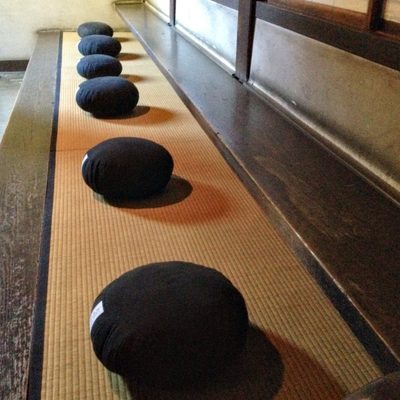
In zazen, seated meditation, the practitioner sits without trying to manipulate experience toward a future spiritual object. This does not mean that zazen has no discipline, form, or effort. It means that its effort is not organized around gain. One sits upright, breathes, allows thoughts to arise and pass, and returns again and again to the concrete posture of practice.
This changes the experience of time. In ordinary activity, time is often structured by intention: This is done in order to reach that. The present becomes a means. In zazen, this structure is weakened. Sitting is not a means toward a later possession. In Dōgen’s terms, practice and realization are not two. The moment of sitting is not a deficient moment waiting to be completed by future awakening. It is already the temporal form of practice-realization. This does not mean that the practitioner enters a trance or loses consciousness. Nor does it mean that time literally stops. Rather, the narrative pressure of time relaxes. Past and future still arise as memory, regret, plan, or anticipation, but they are seen as mental events appearing now. They are no longer automatically believed as the whole structure of reality. In this sense, zazen does not abolish time. It reveals time as experience.
Dōgen’s Uji helps clarify this. In zazen, the practitioner is not someone outside time observing time. The practitioner is being-time sitting. The body is time as posture. Breath is time as breath. Thought is time as thought. Distraction is time as distraction. Returning is time as returning. Even failure is time, if it is recognized and practiced. This gives zazen a very different structure from ordinary goal-directed activity.
The “collapse” of time in zazen therefore should not be misunderstood as escape from temporality. It is the collapse of the illusion that time is merely a line leading away from the present toward a more meaningful future. What remains is not static timelessness, but the full temporal density of the present. Each moment stands as its own Dharma position. Each moment is not a stepping stone but a complete occasion of practice.
This is why zazen can be understood as an enactment of uji. It is not a practice performed inside time in order to later reach timeless awakening. It is being-time practicing being-time. Sitting does not create the Dharma, but it lets the Dharma become concrete as body, mind, posture, and awareness.
Everyday implications: Timelessness in action
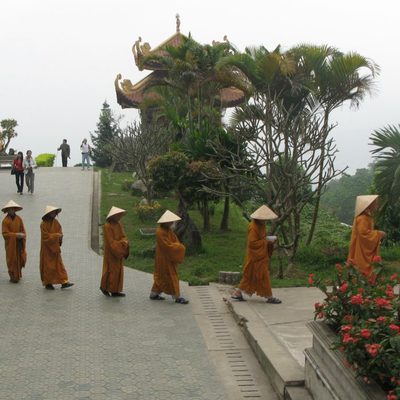
Zen’s view of time has implications beyond formal meditation. If each moment is a complete temporal position, ordinary actions cannot be reduced to mere means. Washing dishes, answering an email, making tea, folding laundry, walking to work, speaking with another person, or watching rain are not automatically “lesser” moments because they are ordinary. They are the concrete field in which being-time appears.
This does not mean that every action is automatically awakened. Dōgen would not support such a careless interpretation. Ordinary life can be lived in distraction, clinging, resentment, and self-centeredness. The point is not that everything is already practice in a passive sense. The point is that everything can become the field of practice because nothing stands outside being-time. The everyday implication is therefore: Life should not be postponed into a future imagined moment of completion. The present action is not merely preparation for a real life that begins later. The act itself is the place where the Dharma can be enacted. This is the practical meaning of Dōgen’s repeated claim that practice and realization are not two. Practice does not wait for ideal circumstances. It takes place as this situation.
This also affects how one understands work, responsibility, and ordinary duties. In Bendōwa, Dōgen argues that worldly responsibilities do not automatically obstruct the Dharma. In Uji, this claim receives a temporal basis. Worldly life is not outside sacred time. It is being-time. The question is not whether one can escape ordinary time, but whether one can practice within the time one actually is.
There is also an ethical dimension here. If the present moment is not merely a disposable transition, then how one acts now matters. Speech, attention, care, anger, indifference, patience, and kindness are all temporal enactments. They do not simply vanish into the past. They become conditions. They shape the field of future being-time. In this sense, Dōgen’s understanding of time remains connected to karma, not as mechanical fate, but as the conditioned continuity of action.
The reverence for ordinary life in Zen should therefore not be romanticized. It is not the claim that washing dishes is automatically sacred or that making tea is automatically awakening. It is the claim that no moment is too ordinary to be practiced. Each action is a temporal event through which self and world are enacted. The ordinary is not sacred because it is aesthetically pleasing. It becomes the field of awakening when it is met without grasping, avoidance, or self-centered narrative.
Beyond permanence and impermanence
Zen’s understanding of timelessness is often misunderstood. It does not mean escape from time into a fixed eternal realm. It also does not mean denial of time in favor of a mystical present detached from causality. Dōgen’s Uji rejects both interpretations. Time is not a prison to be escaped, and timelessness is not a metaphysical place outside change. What Zen calls timelessness is closer to the full inhabiting of time without reducing it to past, future, gain, loss, and narrative selfhood.
This requires a careful relation to impermanence. In many contexts, impermanence is experienced as loss. Things decay. People die. Youth passes. Relationships change. Plans fail. This is real, and Buddhism does not soften it into consolation. But Dōgen’s view shows that impermanence is not only the destruction of things. It is also their appearing. If things were not temporal, they could not arise, act, change, relate, or be experienced. Time is not merely what takes things away. Time is also the way they become what they are. This also avoids the opposite extreme of permanence. Dōgen does not save meaning by positing an eternal self or timeless essence behind change. His critique of immortal mind theory in Bendōwa is relevant here. The Buddhist path does not require a permanent soul outside time. It requires seeing that body and mind, life and death, practice and realization all arise within one indivisible field. In Uji, this field is articulated as being-time.
The term “timelessness” is therefore useful only if understood carefully. It does not mean absence of time. It means freedom from the ordinary fixation on time as something that only comes and goes. The timeless present is not a frozen point. It is the present as complete being-time. It includes memory, anticipation, action, effort, causality, and change, but it is not reduced to linear striving.
In this sense, Zen moves beyond both permanence and impermanence as abstract positions. It does not cling to an eternal realm, and it does not collapse into mere disappearance. It asks how each moment is fully actual, fully conditioned, fully changing, and fully the place of practice. Time is neither denied nor worshiped. It is practiced.
Conclusion
Zen’s understanding of time challenges the habitual assumption that time is simply a linear sequence through which a stable self moves. This ordinary model is useful for practical life, but it can become a source of suffering when it supports regret, anxiety, craving, and the postponement of life into an imagined future. From a Buddhist perspective, the self that claims to move through time is not a permanent essence. It is itself a temporal process. Dōgen’s Uji gives this insight one of its most radical formulations. Being and time are not two separate categories. Every being is time, and every moment is a complete expression of being-time. Mountains are time, oceans are time, pine trees are time, bamboo is time, doubt is time, practice is time, and realization is time. Time is not merely something that passes away. It is the way beings appear, act, relate, and take their place in the Dharma.
This view deepens several core Buddhist concepts. Impermanence is not only loss, but the temporal structure of manifestation. Non-self means that there is no fixed subject standing outside time. Dependent arising means that each temporal moment appears through relations and conditions. Emptiness means that no moment possesses an independent essence, yet each moment fully manifests its own Dharma position.
Zazen embodies this view in practice. Sitting is not a technique performed now in order to obtain awakening later. It is the present enactment of practice-realization. In sitting, the practitioner does not step outside time. The practitioner becomes intimate with time as body, breath, thought, effort, distraction, and return. The collapse of linear time in zazen is therefore not an escape from temporality. It is the loosening of the illusion that the present is merely a means toward a later goal. The same logic extends into ordinary life. Making tea, walking, speaking, working, resting, and meeting others are all moments of being-time. They are not automatically awakened, but they are never outside the field of practice. This gives Zen’s view of time its practical force. Awakening is not elsewhere, but neither is it automatic. It is enacted in the present situation through attention, effort, and embodied practice.
Dōgen’s account of time avoids both nihilistic impermanence and fixed eternity. Time is not merely disappearance, and timelessness is not an escape into a static realm. The present is not a thin point between past and future. It is the concrete field in which the whole of being-time appears. To practice Zen is therefore not to conquer time, escape time, or merely accept that time passes. It is to realize time as this body, this mind, this world, this action, and this moment.
References and further reading
- Oliver Bottini, Das große O.-W.-Barth-Buch des Zen, 2002, Barth im Scherz-Verl, ISBN: 9783502611042
- Heinrich Dumoulin, Geschichte des Zen-Buddhismus, Band 1+2, 2019, 2., durchgesehene und erweiterte Auflage, Francke A. Verlag, ISBN: 9783772085161
- Hans-Günter Wagner, Buddhismus in China: Von den Anfängen bis in die Gegenwart, 2020, Matthes & Seitz Berlin, ISBN: 978-3957578440
- Jr. Buswell, Robert E., Jr. Lopez, Donald S., Juhn Ahn, J. Wayne Bass, William Chu, The Princeton dictionary of Buddhism, 2014, Princeton University Press, ISBN: 978-0-691-15786-3
- Oliver Freiberger, Christoph Kleine, Buddhismus - Handbuch und kritische Einführung, 2011, Vandenhoeck & Ruprecht, ISBN: 9783525500040
- Rupert Gethin, The Foundations Of Buddhism, 1998, Oxford University Press, ISBN: 9780192892232
- Oliver Bottini, Das grosse O.W. Barth-Buch des Buddhismus, 2004, Ebner & Spiegel GmbH, ISBN: 9783502611264



comments