Bendōwa: The heart of Dōgen’s Zen
Bendōwa (辨道話), often translated as Talk on pursuing the Way, Negotiating the Way, or On the endeavor of the Way, is one of Dōgen Zenji’s earliest and most important writings. It was composed in 1231, shortly after Dōgen returned from China, where he had studied under the Chinese Caodong master Tiantong Rujing, known in Japanese as Tendō Nyojō. The text therefore belongs to the beginning of Dōgen’s attempt to articulate, in Japan, what he understood to be the authentic transmission of the Buddha-Dharma.
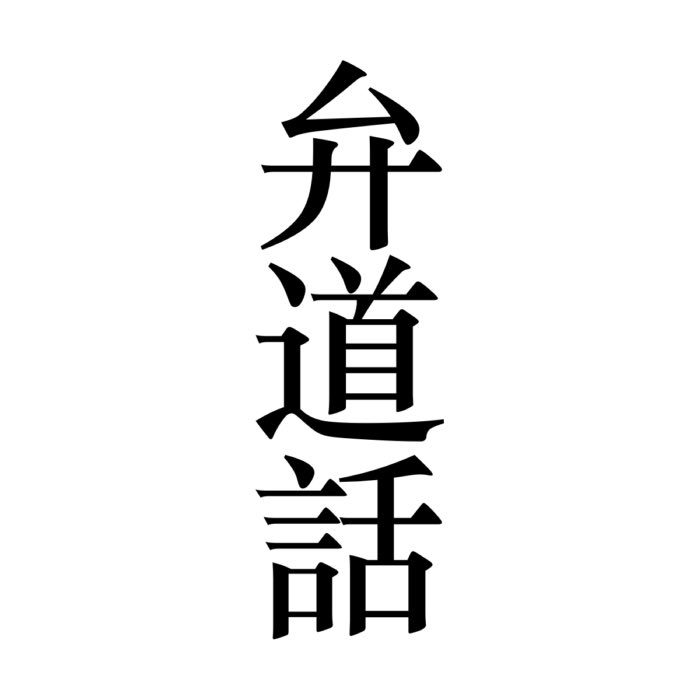
The kanji 談道和, reading bendōwa, can be understood as a discussion of the Way. The title points to a reflective, argumentative, and dialogical text in which Dōgen explains why zazen is not merely one practice among others, but the concrete enactment of the Buddha-Dharma itself.
Compared with some later fascicles of the Shōbōgenzō, Bendōwa is unusually programmatic. It does not unfold primarily through isolated poetic images, as Genjō Kōan often does. Instead, it combines doctrinal exposition, autobiographical legitimation, criticism of misunderstandings, and a long question-and-answer section. Dōgen speaks as someone who has returned from China with a specific claim: The authentic practice transmitted by the buddhas and ancestors is zazen, and zazen is not a technique for producing awakening later. It is the activity in which awakening is already enacted.
The central problem of Bendōwa can be stated directly: If the Dharma is already present, why practice? If all beings already possess Buddha-nature, why sit? If the truth cannot be grasped by concepts, why write a text defending a specific form of practice? Dōgen’s answer is consistent with the broader structure of his Zen: What is already present must still be enacted. The Dharma is not created by practice, but without practice it does not become manifest in one’s own life.
This makes Bendōwa a foundational text for Dōgen’s later thought. It introduces several themes that will become central throughout his work: The unity of practice and realization, the critique of purely intellectual understanding, the importance of a true teacher, the rejection of a permanent soul or immortal mind, the inclusion of laypeople and women in the possibility of practice, and the insistence that direct realization is possible in the present age.
In this post, we will examine Bendōwa as a programmatic statement of Dōgen’s Zen. We will first clarify the meaning and context of the text, then analyze its main arguments through selected passages, and finally map its central claims onto core Buddhist concepts.
Meaning of the title
The title Bendōwa is usually explained through the components ben, dō, and wa. Dō (道) means the Way, the path, or the Buddhist path. Ben (辨) can refer to discourse, discussion, or clarification. Wa (話) can mean talk, conversation, or harmonious discussion. The title therefore suggests a discussion or exposition of the Way. It is not merely a poetic title. It describes the structure of the text itself: Bendōwa is a discussion about how the Way should be practiced, understood, and transmitted.
This is important because the text is not simply a meditation manual. Dōgen had already written Fukan zazengi, a more direct set of instructions for sitting meditation. Bendōwa, however, has a different purpose. It explains why zazen matters, why it is central, why it should not be reduced to quiet sitting, why practice remains necessary if Buddha nature is already present, and why realization cannot be replaced by intellectual knowledge, ritual recitation, or doctrinal classification.
The title also makes clear that Dōgen is addressing an audience. He is not only describing his own experience. He is speaking to possible practitioners, skeptical readers, monks, laypeople, and members of a Japanese Buddhist culture shaped by Tendai, Shingon, Pure Land devotion, ritual practice, scholastic learning, and various forms of Zen. The dialogical structure of the text exactly reflects this purpose. Dōgen anticipates objections and answers them one by one.
The term “Way” is therefore not abstract. In Bendōwa, the Way means the concrete practice through which the Buddha-Dharma is realized. For Dōgen, this practice is not primarily recitation, ritual, philosophical debate, or devotional reliance. It is zazen, understood not as a technique for calming the mind, but as the embodied enactment of awakening.
Historical context
Bendōwa was written in 1231, shortly after Dōgen returned from Song China. This biographical context is central to the text. Dōgen had begun his training in Japan and had studied within the orbit of the Kennin-ji community, associated with Eisai and the Rinzai lineage. He then traveled to China, visited teachers connected to several Chan lineages, and finally studied under Tendō Nyojō. In Bendōwa, Dōgen presents this encounter as the completion of the “great task” of his life of practice and study.
Dōgen’s self-presentation is not merely autobiographical. It establishes authority. He claims to have seen with his own eyes the discipline, procedures, and practice of Chinese Chan monasteries, and he presents his writing as an attempt to transmit what he received. The text therefore has a strong justificatory function. It answers the question why a Japanese monk should introduce and defend a specific practice after returning from China.
Dōgen describes his motivation in striking terms. He worries that sincere students in Japan might be misled by false teachers, might lose sight of the authentic Dharma, and might sink further into confusion. He therefore writes for those who are “receptive to the truth” and who wish to learn through practice. Bendōwa is thus not a detached philosophical essay, but a document of transmission, reform, and clarification.
The religious environment in which Dōgen wrote was complex. Japanese Buddhism already included Tendai scholasticism, Shingon esotericism, Pure Land devotion, monastic discipline, ritual practice, and older forms of meditation. Dōgen does not simply reject all of this as false. But he does argue that the authentic heart of the Buddha-Dharma is not found in doctrinal ranking, ritual accumulation, or verbal knowledge. It is found in direct practice under a true teacher.
The structure of Bendōwa
Bendōwa has three broad parts. First, Dōgen gives an opening exposition of zazen as the true gate of the Dharma and as the samādhi in which one “receives and uses oneself”. Second, he explains his own transmission lineage from Siddhartha Gautama through Mahākāśyapa, Bodhidharma, the Chinese ancestors, and finally Nyojō. Third, he presents a long series of questions and answers that defend zazen against misunderstandings.
The question-and-answer section is especially important. It is not an appendix. It is the argumentative core of the text. The questions are not trivial objections, but they name real problems in Buddhist thought and practice:
- If there are many gates to the Dharma, why emphasize zazen?
- If all beings possess Buddha nature, why practice?
- If reciting sutras and [Buddha] names can produce merit, why simply sit?
- If other Mahāyāna schools are profound, why privilege this practice?
- If dhyāna is only one of the traditional Buddhist practices, why call this the whole Dharma?
- If someone has already awakened, why continue to sit?
- If this is the age of Dharma decline, can practice still work?
- If one already knows that one’s mind is Buddha, is practice still necessary?
- If body dies but mind is eternal, is liberation not just the recognition of immortal mind?
- Can laypeople, women, and people with worldly responsibilities practice?
- Can people in Japan, outside India and China, realize the Dharma?
These questions show that Bendōwa is not only about meditation technique. It is about the philosophical status of practice, the relation between concept and realization, the nature of self, the meaning of Buddha nature, the role of lineage, and the possibility of awakening in ordinary human conditions.
Bendōwa
Below is the full text of Bendōwa:
Bendōwa
Introduction
When the Buddha Tathāgatas, who transmit the wondrous Dharma from one to another, experience complete awakening, they all make use of a wondrous method that is supreme and realizes itself naturally. They transmit this method exclusively from Buddha to Buddha, without ever deviating from it. Its standard is the samādhi in which one receives and uses oneself. In order to enjoy this samādhi, they established the practice of Zen in the upright sitting posture as the true gate to the Dharma.
Every person possesses this Dharma in abundance, but if one does not practice it, the Dharma cannot reveal itself, and if one does not experience it within oneself, it cannot be realized. When we open our hands, they are already filled with the Dharma. How could this be called “one” or “many”? When we speak, the mouth is already filled with the Dharma: it has no limits. When the Buddhas continually dwell within it and preserve it, their thinking and perception never remain in partial aspects. When living beings continually use this state, reality does not reveal itself to them through partial thinking and partial perception.
The pursuit of truth in zazen, which I now teach, makes the ten thousand dharmas real in experience and completes the unity of reality through the way of liberation. How could this be expressed in words, precisely at the moment when all barriers are crossed and everything falls away from us?
The Dharma lineage from Buddha Shakyamuni to Dōgen
When I stood at the beginning of my search for truth, I went to teachers throughout the country. Soon I encountered Myōzen at Kennin monastery. Under him I learned a little about the customs of the Rinzai lineage. Nine years quickly passed in this way. Myōzen was the most outstanding among the disciples of the venerable founding master Eisai. The highest Buddha Dharma was transmitted to him alone, and no one could compare with him.
After that, I went to the great realm of the Song, sought out teachers in the east and west of Zhejiang, and heard the teachings of the five schools. Finally, I encountered Zen Master Nyojō on Mount Dai-byaku-hō, and there I was able to complete the great task of my life of practice and study.
At the beginning of the Shōjō era in the realm of the Song, I then returned to my homeland, Japan, determined to spread the Dharma there and liberate living beings. It lay like a heavy burden on my shoulders. But while I waited for an impulse that might lighten the weight of my task, I thought for a time of drifting around like a cloud, stopping here and there like a floating water plant, as I had heard of the ancient sages.
Yet if there truly were serious students who valued the will for truth above all else and regarded reputation and gain as insignificant, they might be misled by false teachers, and the true understanding of the Dharma would remain hidden from them. They would lose themselves in self deception and sink forever into ignorance. How could the right seed of wisdom ripen in them, and how could they have the opportunity to complete the Way? If I now let myself drift like a cloud, how could they know which mountains and rivers they should seek out?
Because I experienced this state as extremely painful, I resolved to collect and write down the customs and rules that I had seen with my own eyes in the Zen monasteries of the great realm of the Song, as well as the profound instructions of venerable teachers that I had experienced and preserved there. I leave these records to all those who are receptive to truth and wish to learn through practice, so that they may recognize the true Dharma of the Buddha transmission. This may be my true life task.
In the sūtras it is said that the great master Shakyamuni transmitted the Dharma in his order on Vulture Peak to Master Mahākāśyapa. Then the Dharma was authentically transmitted from ancestor to ancestor and reached the venerable Bodhidharma. The venerable one himself went to China and transmitted the Dharma there to the great master Huike. This was the first transmission of the Buddha Dharma in the eastern land.
In this way, the Dharma was transmitted from one master to another, and the Dharma came in a natural chain to Zen Master Daikan, the sixth ancestor. At the time when the true Buddha Dharma flourished in the eastern land, it became clear that this Dharma is beyond all words.
The sixth ancestor had two outstanding disciples, Ejō of Mount Nangaku and Gyōshi of Mount Seigen. Both received and preserved zazen as the seal of Buddha practice and became guides for humans and gods. Through these two streams, the Dharma grew and unfolded, and the five schools, called Hōgen, Igyō, Sōtō, Ummon, and Rinzai, were founded. Today, in the great realm of the Song, only the Rinzai school is widespread throughout the country. Although there are five schools, there is only one posture that bears the seal of the Buddha mind.
Dōgen's motivation for writing
Although the Indian scriptures had already spread throughout China since the late Han dynasty and had left their traces, no one, even in the great land of the Song, was able to say which of them were insignificant and which were important. Only after our ancestor master Bodhidharma came from the West and cut through the roots of confusion with a single stroke could the pure, unadulterated Buddha Dharma of zazen unfold. It would be desirable for this to happen in our country as well.
In the sūtras it is written that countless Buddhas and ancestors who dwell in the Dharma and preserve it all rely on the practice of upright sitting in samādhi and recognize it as the proper way to realize awakening. The people who awakened to truth in the western heaven and in the eastern land all practiced in this way. This practice rests on the personal and authentic transmission of the wondrous method from master to student, who receives and preserves it as the essence of the teaching.
In the authentic transmission of our teaching, it is said that this Buddha Dharma of zazen, transmitted unadulterated and directly from mind to mind, is the highest among the highest.
What is zazen?
After the first encounter with a true teacher, it is not necessary to burn incense, bow down to the ground, recite the Buddha’s name, confess one’s own errors, or read sūtras. Just sit correctly and attain the state in which you let body and mind fall away. If a person sits upright in samādhi even for a single moment and reveals the Buddha posture in body, speech, and mind, then the entire Dharma world assumes this posture, and infinite, boundless space awakens.
Thus this practice increases the Dharma joy that is the original domain of all Buddha Tathāgatas and strengthens the radiance of their realization. Furthermore, the living beings of the three and the six realms in the Dharma worlds of the whole universe become clear and pure in body and mind in a single moment; they experience the state of great liberation, and their original face becomes manifest.
Then countless dharmas experience and recognize true realization, and millions of things use their Buddha body. All at once they cross the limits of ordinary experience and knowledge. They sit upright like the king beneath the Bodhi tree and, in a single moment, turn the Great Dharma Wheel, which has no equal in its perfect balance, and they pour forth the unsurpassed, intentionless, and deep prajñā.
Such balanced and true realization acts back upon the one sitting in a direct and familiar way, so that the person sitting in zazen truly lets body and mind fall away, shakes off the impure thoughts and views accumulated over a long time, and thus naturally experiences and understands the pure Buddha Dharma.
The practitioner advances the work of Buddha even to the countless tiny places of truth of the Buddha Tathāgatas and also has a far reaching effect on those who possess the higher gifts of a Buddha. He contributes to raising them to a higher level of reality.
At this time, the things, the ground, the earth, the grasses and trees, the fences, the walls, the bricks, and the pebbles in the ten directions of the universe perform the works of Buddha. People who experience the benefits of wind and water arising in this way all receive an inexplicable support through the wondrous effect of the Buddhas, far beyond thought, and these people themselves attest this immediate realization.
Since all living beings who receive and use this fire and water pass on what they have received from Buddha in the original state of experience, those who live and speak together with them are also endowed with the boundless virtues of Buddha. Their activity radiates into very wide spheres, so that they permeate the inner and outer parts of the entire universe with boundless, never ending, inconceivable, and immeasurable Buddha Dharmas.
This effect is not clouded by the beings’ own consciousness, for in stillness, without deliberate action, there is only the direct experience of reality beyond all concepts. If, however, we divide practice and experience into two steps, as if practice were the cause and experience the result, in accordance with conventional thinking, then we can perceive and think of the two parts separately. But if perception and thought are mixed with this indivisible experience, this no longer corresponds to the principle of direct experience, which is beyond delusive feelings.
Even when, in stillness, the mind and the external world enter into this experience of awakening and come out of awakening again, zazen is the domain in which the practitioner receives and uses himself. Therefore, mind and external world do not move a single grain of dust and do not impair any form, but accomplish the great and far reaching work of Buddha, and they have this deep and wondrous effect.
Wherever this effect appears, the grasses, trees, earth, and ground shine in bright light and proclaim the deep and exalted Dharma for all time. The grasses, trees, hedges, and walls proclaim it to all beings, ordinary and holy, and conversely all beings, ordinary and holy, proclaim it to the grasses, trees, hedges, and walls.
In zazen, the world of our own awareness and the world of the awareness of the external world are without error: both already possess the form of this real experience, and when it is present, it permits not a moment of carelessness.
Even if only one person practices for a single moment, zazen enters into mystical communion with all dharmas, permeates all times, and completes the eternal work of Buddha in the past, future, and present within the boundless universe. For everyone, it is the same practice and the same experience.
The practice is not limited only to sitting. It permeates space and reverberates like the wondrous sound of a bell before and after it is struck. How could this practice be limited only to this place? All concrete things have this original practice as their original face: it is beyond our intellectual comprehension.
Remember that even if the countless Buddhas of the ten directions, innumerable as the grains of sand in the Ganges, tried with all their power and Buddha wisdom to measure the merit of the zazen of one person, they would not even come close to doing so.
Why zazen?
Question: We have just heard how great and exalted the merit of this practice of zazen is. Yet an ignorant person might doubt and ask: “There are so many gates to the Buddha Dharma. Why do you praise only sitting in zazen?”
Answer: “Because it is the true gate to the Buddha Dharma.”
Why is zazen the only true gate?
Question: “Why do you regard zazen as the only true gate?”
Answer: “The great master Shakyamuni directly transmitted to us this wondrous method for attaining truth. In addition, all Tathāgatas of the three times awakened through zazen. Thus this true gate was transmitted from one to another and received from one to another. Not only this: all ancestors of the western heaven and the eastern land completed the Way through zazen. Therefore I now teach this true gate to humans and gods.”
What does one gain from sitting idly?
Question: “To receive the wondrous method of the Tathāgata correctly and to follow in the footsteps of the ancient ancestors is truly something beyond the thinking of ordinary human beings. But reading the sūtras and reciting the names of Buddhas are causes and conditions of great awakening. How can one attain awakening merely through idle sitting and without any activity?”
Answer: “If you now believe that the samādhi of all Buddhas, the great, unsurpassed Dharma, is only idle sitting in inactivity, then you are someone who disparages the Mahāyāna. The root of such ignorance is deep. It is the same as if someone swimming in the ocean claimed that there were no water.
In zazen we already sit firmly and gratefully in the samādhi of the Buddhas, in which we receive and use ourselves. Is this not the universal and great activity of a Buddha? How regrettable that your eyes are not yet open and your mind is unclear.
In general, the realm of the Buddhas is inconceivable and cannot be grasped by thought. How much less could doubters and small minded people understand it? Only people of high capacity who have true trust can enter there. Even if doubters are instructed, it is difficult for them to accept the teaching. Even on Vulture Peak there were disciples to whom the Buddha said: ‘If you wish to leave, I will not hold you back.’
When true trust awakens in the heart, you should train yourselves and experience and investigate yourselves. Otherwise, it is better to wait for a while. You may well regret it, but from ancient times the Dharma has been without ornament.
Do you know of any merit that can be gained through practices such as reading the sūtras and reciting the names of Buddhas? It saddens me to think that merely moving the tongue and raising the voice should function as the activity of a Buddha.
Such things are far removed from the Buddha Dharma. Moreover, we read the sūtras in order to understand the standards of practice for sudden and gradual awakening that the Buddha taught. Those who practice in accordance with the teaching will certainly enter the domain of direct experience of reality. This is something entirely different from trying to attain truth through exercises based on intellect and imagination.
Whoever believes that Buddhahood can be attained merely by having the mouth recite the same thing thousands upon thousands of times is like someone who hopes to reach the southern land of Etsu in a cart traveling north, or who thinks that he can insert a square peg into a round hole.
If someone merely recites phrases and has no clarity about the way of practice, it is the same as if someone studied medicine but had forgotten how to apply the remedy. What use would that be? Those who endlessly recite are like frogs sitting in the rice paddies in spring and croaking from morning until night. In the end, this is all meaningless.
It is even harder for people to free themselves from this error when they cling to fame and gain. Because the profit seeking mind is so deeply rooted in human beings, it has existed from ancient times. How could this mind not be present today? This is regrettable.
What you must above all understand is this: when the student follows a master who has himself attained the truth and clarified the mind, and when the student unites with this mind, attains it, and intuitively understands it, then the wondrous Dharma of the seven ancient Buddhas appears immediately and is preserved in this way. This goes far beyond the understanding of Dharma teachers who merely study words.
Therefore end these doubts and delusions. Follow the teaching of a true master. Experience and complete the samādhi of the Buddhas through the way of the practice of zazen, in which you receive and use yourself.”
What about the other schools?
Question: “The school of the Dharma Flower and the teaching of the Garland Sūtra, which have already been brought to our country, are both peaks of the Mahāyāna. The teaching of the Shingon school was transmitted directly from the Tathāgata Vairocana to Vajrasattva, so the transmission from master to student was not accidental. In the principles developed by this school, ‘the mind here and now is Buddha’ and ‘this mind becomes Buddha,’ it says that the true enlightenment of the five Buddhas can be attained in a single sitting, without passing through countless kalpas of training. We can call this the highest perfection of the Buddha Dharma. What is so extraordinary about the practice of which you now speak, that you recommend only it and exclude all others?”
Answer: “You must know: Buddhists do not discuss the superiority and inferiority of the respective teachings and do not distinguish between superficiality and depth in the Dharma. They are concerned only with recognizing whether practice is genuine or false.
Some have entered the stream of Buddha truth through grasses, flowers, mountains, and rivers. Others have received and preserved the Buddha seal by intuitively grasping earth, stones, sand, and pebbles. Furthermore, the vast and great meaning is present in still richer measure than the ten thousand phenomena: in a single grain of dust, the turning of the great Dharma wheel is revealed.
Therefore words such as ‘the mind here and now is Buddha’ are only the image of the moon in water, not the moon itself, and the thought ‘sitting now is becoming Buddha’ is also only a reflection in the mirror. Do not let yourselves be caught by verbal subtleties.
By now teaching you the concrete practice through which bodhi can be directly realized, I hope to show the wondrous truth that the Buddhas and ancestors transmitted from master to student, and thereby to make you a person of true reality.
As for the transmission of the Buddha Dharma, you should take as teacher only someone who has realized this himself. It is not enough to take as teacher a scholar who merely strings words together. This is the same as one blind person leading another blind person.
In the continuous lineage of authentic transmission through the Buddhas and ancestors, we venerate all venerable masters who have seen the truth and realized it themselves. We let them dwell in the Buddha Dharma and preserve it in this way.
Therefore, when Shintoists of yin and yang come and devote themselves to the Dharma, and when arhats who have experienced the fourth fruit ask about the Dharma, we unfailingly place in each of their hands the method for clarifying the mind. In other schools, one has never heard of this. Students of Buddha should learn only the Buddha Dharma.
Consider further that the highest truth, prajñā pāramitā or hannya haramita, has never been lacking in us from the beginning. We continually receive and use it. But because we are not capable of advancing directly to the highest truth, we tend to live in abstract ideas, which we pursue as if they were real, and thus we pass by the great truth.
Through these ideas, the most diverse flowers grow in empty space: the twelvefold chain of causation and the twenty five spheres of existence, the three and five vehicles, or the question of whether Buddha nature exists or not. But you should not believe that this kind of learning is the correct way of Buddha practice.
If, rather, you devote yourselves exclusively to the practice of zazen, entrust yourselves now to exactly the same sitting posture as Buddha, and lay down the countless personal things, then you go far beyond delusion and awakening, feeling and thinking, and worldly and holy ways become meaningless. All at once you wander calmly in the world beyond all boundaries, and you can receive and use the great truth. How could those who are caught in the net of words compare with you?”
Why is it called the zazen school or Zen school?
Question: “The practice of balance belongs to the three studies in the Buddha Dharma, and dhyāna, the practice of zazen, is one of the six pāramitās. From the beginning, bodhisattvas learn both, whether they are knowledgeable or ignorant. The zazen that you now teach must be one of these two practices. On what do you rely when you say that only zazen among these practices contains the true Dharma of the Tathāgata?”
Answer: “Your question has arisen because this treasure of the true Dharma eye, which is the unsurpassed great method and the one great matter of the Tathāgata, has been called the ‘Zen school’. But you must know that this name arose in China and in the East. It was never heard in India.
When the great master Bodhidharma first stayed in the Shaolin monastery in the Song mountains and sat facing the wall for nine years, monks and laypeople in China did not yet know the true Buddha Dharma, and so they called Bodhidharma a Brahman who practiced the teaching of zazen. Thereafter, many generations of ancestors without interruption devoted themselves to zazen.
Ignorant laypeople who saw this and did not know the reality of the Buddha Dharma then carelessly spoke of a ‘zazen school’. Today, ‘za’ is omitted and people speak only of the ‘Zen school.’ This explanation follows clearly from the records of the ancestors.
You should not regard zazen as the dhyāna of the six pāramitās or as one of the three studies. Our ancestors, without exception, had clarity that it was the legitimate purpose to transmit this Buddha Dharma of zazen from master to student.
At the time when the Tathāgata on Vulture Peak transmitted this treasure of the true Dharma eye and the wondrous mind of nirvāṇa, which rests on this unsurpassed high method of zazen, solely to Master Mahākāśyapa, heavenly beings who now dwell in higher worlds witnessed the event. Do not doubt this. These heavenly beings, whose striving never slackens, will protect and preserve the Buddha Dharma at all times.
Recognize above all one thing: this zazen contains the whole truth of the Buddha Dharma. Nothing can be compared with it.”
Why is sitting so important?
Question: “Why do Buddhists advise us to practice dhyāna balance only through sitting when they speak of entering the state of experience, even though sitting is only one of the four modes of conduct?”
Answer: “It is difficult to measure how the Buddhas of ancient times trained themselves and entered the state of experience. If you seek a reason, recognize that what Buddhists practice has its reason in itself. You should seek no other reason.
An old master praised sitting with the words: ‘Zazen is the Dharma gate of peace and joy.’ From this it follows that sitting among the four modes of conduct is the most peaceful and joyful.
Furthermore, not merely one or two Buddhas trained themselves in zazen, but all Buddhas and ancestors chose this way of practice.”
Must awakened people still practice zazen just like those who have not yet awakened?
Question: “The practice of zazen can enable those who have not yet experienced and understood the Buddha Dharma to come to this experience when they seek the truth. But what should those who have already clarified Buddha’s true Dharma hope for from zazen?”
Answer: “One does not tell dreams in the presence of a fool, and one can hardly hand an oar to a mountain climber. Nevertheless, I must instruct you.
Only people outside the Buddha Way believe that practice and experience are separate. In the Buddha Dharma, practice and the experience of reality are not two different things. To practice now is the same as practicing in the state of experience, and therefore the striving of a beginner in zazen is already the whole of the experience of the origin.
For this reason, in the practical instructions on practice that have been handed down to us, it is taught not to expect this experience outside practice. The reason for this may be that this experience of the origin reveals itself directly in practice itself.
Because practice is already experience, experience has no end; and because experience is practice, practice has no beginning. The Tathāgata Shakyamuni and the venerable ancestor Mahākāśyapa were both endowed with this practice, which is direct experience of reality, and both used it. The great master Bodhidharma and the great ancestor Daikan Enō were also drawn by and carried by this practice, which is experience.
All those who dwelled in the Buddha Dharma and preserved it left such traces. This practice, inseparable from experience, is present now, and because a part of this wondrous practice is fortunately transmitted directly to us beginners when we seek the truth, we too come directly into the enjoyment of this experience, provided only that we are free of intention, mushotoku.
You must know that the Buddhas and ancestors have taught us again and again not to slacken in zazen, because they wished to prevent us from clouding the pure experience inseparably bound to practice. For when we do not think of the wondrous practice and forget it, our hands are already filled with the experience of the origin, and when our body leaves behind the experience of the origin, it is completely permeated by the wondrous practice.
I saw with my own eyes in the great Song China that throughout the country, in the monasteries, zazen halls, zendō, were built that could hold five or six hundred, sometimes even one thousand or two thousand monks. The monks were encouraged to practice zazen day and night. The abbot of such a monastery, Master Tendō Nyojō, was a true master who had received the seal of the Buddha mind. When I asked him about the great meaning of the Buddha Dharma, I was able to learn from him that practice and experience are not two successive steps.
Therefore he encouraged everyone, in accordance with the teachings of the Buddhas and ancestors, to follow a true master and walk the way of zazen. He recommended this not only to the practitioners of his order, but to all noble followers who seek the Dharma, and to all beings who hope to find true reality in the Buddha Dharma.
One should also not distinguish between beginners and advanced practitioners, nor between ordinary and holy people. Have you not heard the words of an ancient ancestor: ‘It is not that practice and experience do not exist, but they cannot be defiled’? Another master said: ‘Someone who recognizes the Way practices the Way.’ Remember that even if you have already awakened to the truth, you must continue practicing.”
Why was the true treasure not taught earlier?
Question: “Those masters who transmitted the teachings to the earlier generations of our country all went to Tang dynasty China and received the Dharma transmission. Why did they leave aside this principle of zazen and transmit only abstract teachings?”
Answer: “The earlier teachers of human beings did not transmit this method because the time for it had not yet come.”
Question: “Did these masters of earlier times understand this method?”
Answer: “They would have taught this method if they had understood it.”
What benefit can one hope for from just sitting? And are body and mind separate from one another?
Question: “It is said that we should not regret our life and death, because there is a quick way to free ourselves from life and death. One only has to recognize the truth that the essence of our mind is eternal.
This means that this physical body, which is born, inevitably moves toward death, but this mind essence never dies. Once we have recognized that this mind essence, which does not depend on birth and death, dwells within our own body, we can regard it as our original nature. Thus the body is only a form that passes away: here it dies, there it is born, never constant. The mind, however, is eternal and independent of past, future, or present. To know this means ‘to free oneself from life and death.’
Those who know this principle will end the eternal cycle of life and death forever, and their body will enter the ocean of spiritual worlds. While they dwell in these spiritual worlds, they will gain wondrous virtues like those of the Buddhas and Tathāgatas. Even if we understood this truth now, our body would still remain the one shaped by our ignorant actions in past times, and we could not be like the holy ones. Whoever does not know this principle is forever delivered over to the cycle of birth and death.
Therefore we should hurry to recognize the truth of the immortality of the mind. If we spent an entire life merely sitting idly, what benefit could we hope for from that? And the thesis presented here is truly in accord with the truth of all Buddhas and ancestors, is it not?”
Answer: “What you have just formulated is never the Buddha’s teaching. It is the view of the Brahmin Senika.
According to this teaching, which does not belong to the Buddha Dharma, there is within our body a knowing mind. When this knowing mind meets certain circumstances, it can distinguish between pleasant and unpleasant, right and wrong. It knows pain and discomfort, suffering and joy: all of these are the capacities of this knowing mind.
When this body dies, the mind casts off the skin and is born in another world. Therefore, although the mind seems to die here, it lives on there, and for this reason it is called immortal and eternal. This is the view of a person outside the Buddha Way.
If, however, we take this to be the Buddha Dharma, then we are more foolish than someone who picks up a roof tile or pebble and believes it to be a golden treasure. Such a delusion would be so ridiculous that no comparison could do it justice. National Teacher Echū, the great master of the Tang dynasty in China, explicitly warned against such theories.
Is it not foolish to equate the false view that the body perishes while the mind remains eternal with the wondrous Dharma of the Buddhas, and to think that we could escape life and death while we ourselves first create the original cause of life and death through this view? This would truly be regrettable.
Since we know that this is the mistaken view of people outside the Buddha Way, we should not listen to it. I cannot help but warn you against this error out of deep compassion.
You must know: In the Buddha-Dharma, body and mind have from the beginning been one indivisible reality; therefore, the statement that essence and form are not separate has been recognized both in the western heaven and in the eastern land. We should not presume to claim the opposite.
Furthermore, in the Buddhist schools that teach eternal existence, all dharmas have the quality of always existing: body and mind are not separated there. And in the schools that teach non-existence, all dharmas have the quality of not existing: essence and form are likewise not separated there.
How could we claim, in contrast, that the body is mortal but the mind is immortal? Would this not violate correct thinking?
Furthermore, we must understand that nirvāṇa is nothing other than our life and death. Buddhists have never regarded nirvana as something that exists outside life and death.
Even if we were mistakenly to imagine that the mind freed from the body were immortal, and to regard this as the Buddha wisdom that should free us from life and death, this idea itself would arise and perish from moment to moment, and for that reason alone it could not be immortal.
Is the thesis of the immortality of the mind not questionable? You should reflect on this and realize it for yourselves.
The principle that body and mind are one indivisible reality has always been taught in the Buddha Dharma. How could it be that the body arises and perishes while the mind neither arises nor perishes? If body and mind were one at one time and separate at another, we could easily conclude that the Buddha’s teachings were false.
If we further believe that we must free ourselves from life and death, then we may be making the serious error of hating the reality that Buddha taught.
Remember: the school of the true Dharma says that in the Buddha Dharma the essence of mind is one with all forms. The one great Dharma world is included in this. Essence and form are not separated, and no discussions are made about arising and perishing. There is no form of existence, not even bodhi or nirvāṇa, that is not itself this mind. All dharmas, the ten thousand phenomena, and the gathering of all things are, without exception, only this one undivided mind.
The various Dharma schools all insist that all forms of existence are nothing other than this balanced, one, undivided mind. Apart from this, there is nothing else.
We students of Buddha understand the essence of mind in this way. Why, then, should we split this one reality into body and mind, into life, death, and nirvāṇa? We are students of Buddha and should therefore not listen to the sounds of the tongues of fools who spread views that do not belong to the Buddha’s teaching.”
What about the Buddhist precepts?
Question: “Must someone who devotes themselves to this zazen always keep the precepts flawlessly?”
Answer: “Keeping the precepts and flawless conduct are the rule in the Zen schools and in the ordinary daily life of the Buddhas and ancestors. Yet zazen also benefits those who have not yet received the precepts or who have broken them.”
What about visualization techniques in *zazen*?
Question: “Do mantras and the practice of silent contemplation hinder the practice of zazen?”
Answer: “When I was in China, I received the true essence of the teachings from a venerable master. He said that he had never heard of an ancestor who had received the Buddha seal and who also practiced such additional methods, neither in the western heaven nor in the eastern land, neither in the past nor in the present. Whoever does not devote themselves completely to one thing will not attain perfect wisdom.”
What about lay followers and women?
Question: “Should this practice of zazen also be practiced by laypeople, men as well as women, or only by ordained monks and nuns?”
Answer: “One heard an ancient master say that, with regard to understanding the Buddha Dharma, one should not distinguish between man and woman, high and low.”
What does zazen look like for lay followers?
Question: “People who have become monks or nuns and have left their former home immediately free themselves from all bonds and can devote themselves unhindered to zazen and the Buddha Way. But how is it possible for busy laypeople to devote themselves completely to training and become one with the intentionless Buddha truth?”
Answer: “The Buddha, in his immeasurable compassion, left the great and wide gate of kindness open for all, so that all living beings can realize the truth and enter it. What human being or god would not wish to enter?
If we look at past and present in this way, there are numerous examples. Daiso and Junso, for example, were occupied with important affairs of state in their imperial positions. Nevertheless, they practiced zazen and realized Buddha’s great truth. Minister Li and Minister Bo, who were indispensable to the entire country as important advisers to the emperor, both practiced zazen and themselves experienced the great Way of the Buddhas and ancestors.
Practice and experience depend only on whether the will for truth is strong or not; they do not depend on whether the body remains at home or enters a monastery.
Whoever moreover goes deeply enough and can distinguish what is higher from what is lower will naturally trust.
Whoever thinks that worldly duties obstruct the Buddha-Dharma merely thinks that the Buddha-Dharma does not exist in this world; they do not yet know that for a Buddha there are no worldly dharmas.
Recently, in the great Song China, there was a man called Minister Hyō. He was a high ranking government official who had completed Buddha’s truth. In his later years he wrote the following poem:
When government duties allow it, I gladly sit in zazen;
Rarely did my side touch the bed;
Although I am now first minister,
My reputation as an old practitioner reaches beyond the four seas.
This was someone whose government duties actually left him no time, and who nevertheless could experience the truth because he was firmly determined.
In the same way, you should reflect on yourselves in comparison with those times. In the great kingdom of the Song, the present generation of kings and ministers, officials and citizens, men and women, without exception direct their minds toward Buddha’s truth. Both the class of warriors and the class of literati practice Zen with determination and study the Buddha Way. Many of those who are determined will undoubtedly attain clarity.
From this we can clearly conclude that worldly duties do not hinder the Buddha Dharma. When the true Buddha Dharma spreads through the land, Buddhas and gods protect this land permanently, and it is thereby governed peacefully. When the emperors govern the land peacefully, the Buddha Dharma also gains strength.
During the lifetime of Shakyamuni, even people who had committed serious offenses or held false views attained the truth. In the order of the ancestors, even hunters and old woodcutters attained realization; how much more should this be true of other people?
We must only investigate the teaching and the Way of a true teacher.”
Does zazen still make sense in this age of decline?
Question: “Is it still possible, in the present age of the decline of the Dharma, to realize the truth through the practice of zazen?”
Answer: “The theorists have occupied themselves with such concepts and formalizations of the Dharma. But the true teaching of the Mahāyāna does not distinguish between the true, the imitation, and the final Dharma. It says that all who practice zazen enter the truth.
Moreover, in this true Dharma, which has come directly to us from Buddha, we always receive and use the treasure within ourselves. In this way we become one with the Dharma and go beyond the body. Thus those who practice can spontaneously recognize whether they are in the state of experience or not. Just as someone can tell whether water is warm or cold when they use it.”
We are already 'Buddha', so why still practice zazen?
Question: “It is said that, in the Buddha Dharma, we lack nothing once we have clearly recognized the principle that our mind here and now is Buddha. This is said to be true even if our mouth does not recite sūtras and our body does not practice the Way. The mere knowledge that the Buddha Dharma originally dwells within ourselves would already contain the whole realization of truth. Therefore it would not be necessary to seek anything from others. Must we then still make an effort in the Way of zazen?”
Answer: “These statements are highly questionable. What wise person could not understand this principle immediately if it were explained to them and if what you say were true?
But remember that we learn the Buddha-Dharma only when we stop distinguishing between the one who knows and the knowledge itself. If the mere knowledge that we ourselves are already Buddha were the realization of the highest truth, then Shakyamuni in the past would not have needed to exert himself to teach the way of ethics. I would like to show this through the subtle standard of the ancient ancestors.
The story of Hōgen and Soku
Long ago there was a monk named Soku in the order of Zen Master Hōgen. One day the master asked him: “Chief administrator Soku, how long have you been in my order?”
Soku said: “I have served in the master’s order for three years already.”
The Zen master asked: “So you have not been here very long. Why do you never ask me questions about the Buddha Dharma?”
Soku answered: “Master, I would like to tell you the truth: I had already realized the state of peace and joy in the Buddha Dharma earlier, when I was in the order of Zen Master Seibō.”
The master asked: “Through what words were you able to enter the Buddha Dharma?”
Soku answered: “Once I asked Master Seihō: ‘Who is this student who is “I”? Who am I?’ Seihō said: ‘The children of fire come seeking fire.’”
Master Hōgen said: “Beautiful words. But it may be that you have not truly understood them.”
Soku said: “The children of fire belong to fire. I understood that they seek fire although they themselves are fire. This is the same as when I seek my ‘I’, although I myself ‘am’ the I.”
Master Hōgen said: “Now I am certain that you have not understood the Buddha Dharma. If this were the Buddha Dharma, it would never have been transmitted to us until today.”
These words brought Soku into great embarrassment. In despair, he stood up and left. On the way he said to himself: “Zen Master Hōgen is revered throughout the land as a good teacher. He instructs five hundred students with great mastery. His criticism of my error may be justified.”
Therefore he returned to Zen Master Hōgen, confessed his error, and prostrated himself before him.
Then he asked: “Who is this student who is ‘I’?”
Master Hōgen answered: “The children of fire come seeking fire.”
Upon hearing these words, Soku realized the Buddha Dharma.
It is obvious that the Buddha-Dharma cannot be grasped through intellectual understanding that we ourselves are Buddha. Zen Master Hōgen would not have instructed his student with the words reproduced above, nor would he have corrected him, if this kind of understanding were the Buddha Dharma.
At the first meeting with a good teacher, you should indeed ask about the criteria of practice and concentrate exclusively on practice, without leaving even a single thought or half a concept in your mind. Then the wonderful method of the Buddha-Dharma will become fruitful.”
Is there a difference between awakening in zazen and awakening through other methods?
Question: “As we hear from stories from India and China, past and present, there was a person there who realized the truth when he heard the sound of a bamboo pipe. Another one’s mind became clear at the sight of peach blossoms. Our great master Shakyamuni experienced the truth when he saw the bright morning star, and the venerable Ānanda realized the Dharma when a flagpole in the monastery fell to the ground.
In the five schools of Zen that proceeded from the sixth ancestor, there were also many whose minds became clear through a single word or half a verse. Did all of them without exception seek the truth through zazen?”
Answer: “You should know that those people of past and present whose minds became clear through seeing forms and who realized the truth through hearing sounds all practiced zazen without the slightest intellectual doubt, and in the moment of realization there was no split into two parts of the person.”
Can people outside India also awaken?
Question: “In India and China, people are by nature uncomplicated and straightforward. They are this way because they live at the center of a highly developed culture. When they are instructed in the Buddha Dharma, they quickly understand it and enter it.
In our country, people have lacked virtue and wisdom from ancient times; it is difficult for us to gather the seeds of purity. We are this way because we are wild barbarians. How could we not regret this? Furthermore, the monks and nuns of this country stand even below the laypeople of great nations.
Our entire society is ignorant, our mind is narrow and limited. We are fixated on the result of our actions and love the good only in its superficial form. Can even people like us hope to experience the Buddha Dharma immediately when we sit in zazen?”
Answer: “As you say, virtue and wisdom are rare among the people of this country; some are indeed unteachable. Even if we teach them the true and direct Dharma, they will turn this sweet nectar into poison. People cling to fame and gain and find it difficult to free themselves from their delusions. Therefore, in order to enter the Buddha Dharma, we must not always rely on the worldly knowledge of humans and gods and use it as a raft for crossing the world.
During the lifetime of Buddha, an old monk experienced the fourth fruit when he was struck by a ball, and a prostitute clarified the great truth after putting on a kesa as a joke. Both were limited people and simple, foolish creatures. But thanks to their deep trust they were able to free themselves from their delusions.
Furthermore, there was the case of a devout woman who attained realization while she was preparing the midday meal and saw a limited old monk sitting in stillness. This was not based on her knowledge and was not due to words and speeches; only true trust helped her.
Moreover, not even two thousand years have passed since the teachings of Shakyamuni unfolded in the three thousand worlds. The countries have great diversity; not all possess virtue and wisdom. How could all their peoples be clever and wise and able to hear and see clearly?
If people practice zazen with true trust, the wise and the foolish alike will attain the truth without distinction. Do not think that we cannot realize the Buddha-Dharma because our country lacks virtue and wisdom and its people are limited. All people possess the seeds of prajñā in abundance. It may be, however, that only few of us have directly realized this wisdom and that we are not yet ripe to receive and use it.”
Closing words
The questions and answers above came and went, and the conversation between guest and host may perhaps have been confusing. How many times did I let flowers grow into empty space where there are no flowers? On the other hand, it should be considered that the fundamental truth according to which we pursue the truth through the practice of zazen has not yet reached our country. Those who wish to learn it would regret this.
Therefore I have collected what I saw and heard abroad. I have written down the deep secrets of an awakened master so that practicing students who wish to hear them may hear them. In addition, there are standards and rules for monasteries and temples that cannot be taught now because there is not enough time for this. We must not proceed hastily in this matter.
In principle, it was a great blessing for the people of our country that the Buddha Dharma of the West came to us in the East during the Kinmei and Yōmei eras, although our country lies east of the Dragon Sea and very wide fields of clouds and mist lie between. Yet with regard to the concepts and forms, facts and circumstances of the Buddha Dharma, confusion has become excessive, and therefore one must be concerned about the practice of zazen.
At present, we must make do with patched robes and repaired eating bowls, and weave reeds in order to sit and train ourselves at blue cliffs and white rocks. Then the realm beyond Buddha will immediately reveal itself, and we will quickly master the great matter of a life of practice and study.
These are the instructions of Ryūge and the legacy of Mount Kukkutapāda. The form and guidelines for sitting in zazen can be practiced according to the Fukan zazengi, which I compiled in the Karoku era.
Since we are now spreading the Buddha teaching throughout the land, we should actually wait for the corresponding imperial command. But if, on the other hand, we think of the inheritance of Vulture Peak, then at that time kings, nobles, ministers, and military leaders without exception accepted Buddha’s command. They now live in hundreds of millions of spheres. They were born because they did not forget their wish from a previous life to protect and preserve Buddha’s teaching.
What place within the boundaries of the spread of this teaching would not be the Buddha land? Therefore, if we wish to spread the truth of the Buddhas and ancestors, it is not always necessary to settle on one place or wait for special circumstances.
Should we not begin today? Therefore I have written this text and leave it to the wise teachers whose concern is the Buddha Dharma. I also leave it to the pure stream of practitioners who wish to investigate the truth and who resemble drifting clouds and floating water plants.
On the 15th day of the 8th lunar month in the third year of the Kanki era, 1231.
Written down by the monk Dōgen, who went to the great realm of the Song and received the transmission of the Dharma there.
Shōbōgenzō Bendōwa
In-depth analysis of the text
The following analysis reads Bendōwa as a programmatic argument for Dōgen’s understanding of Zen practice. The aim is not to treat all of Dōgen’s claims as self evident, but to reconstruct how the text builds its case. The analysis therefore focuses on selected passages that express the core structure of the text. Several concepts are especially important. First, Dōgen assumes the Buddhist analysis of impermanence, non-self, and dependent arising. Second, he uses Mahāyāna concepts such as Buddha nature, emptiness, and universal awakening. Third, he gives these ideas a specifically Zen form by identifying zazen with the enactment of realization itself. Thus, when reading the text, it is important to keep in mind that Dōgen is not simply making a series of isolated claims. He is building a systematic argument that connects these concepts together. The text and each passage is in fact multi-layered and requires careful reading to unpack its meaning. The following analysis is therefore not meant to be exhaustive, but to highlight some of the key passages that illustrate the structure of Dōgen’s argument. The serve as a starting point for your own reading and interpretation of the text.
The opening claim: The Dharma is abundant, but it must be practiced
Every person possesses this Dharma in abundance, but if it is not practiced, the Dharma cannot reveal itself, and if the person does not experience it within themselves, it cannot be realized. When we open our hands, they are already filled with the Dharma.
The opening of Bendōwa already contains the central tension of the whole text. Dōgen states that every person possesses the Dharma in abundance. The Dharma is not absent. It is not something imported from outside. It is not a foreign object acquired through accumulation. Yet he immediately adds that, without practice, it cannot reveal itself, and without personal experience, it cannot be realized.
This is the same structure that later appears in Genjō Kōan through the image of the fan. Air is present, but it must be fanned. Here, the Dharma is present, but it must be practiced. Dōgen is therefore not presenting practice as a means of producing something that was missing. He is also not saying that the mere fact of possession is enough. Presence and realization are different. To possess the Dharma “in abundance” is not yet to live it. Here, the image of opening the hands is important:
When we open our hands, they are already filled with the Dharma.
The hand does not create what it receives. But if it remains clenched, what is already available cannot be used. The metaphor suggests that practice is not grasping but release. The Dharma is not gained by acquisition, but by opening. This fits Dōgen’s broader critique of self centered striving. The problem is not that the Dharma is lacking. The problem is that grasping, conceptual fixation, and self attachment obstruct its manifestation.
This passage also explains why Bendōwa cannot be reduced to a doctrine of innate enlightenment. Dōgen does not say, “Because everyone already has the Dharma, practice is unnecessary”. He says the opposite: Precisely because the Dharma is already present, practice is the way it reveals itself. This is the basic logic of practice-realization.
Zazen as the true gate of the Dharma
After the first encounter with a true teacher, it is not necessary to burn incense, prostrate, recite the Buddha’s name, confess one’s faults, or read sutras. Just sit correctly and attain the state in which you let body and mind fall away. If a person sits upright in samādhi even for a single moment and manifests the Buddha posture in body, speech, and mind, the entire Dharma world takes on this posture, and the infinite, boundless space comes to awakening.
This is one of the most programmatic statements in Bendōwa. Dōgen contrasts zazen with several other religious practices: Burning incense, bowing, reciting the Buddha’s name, confession, and reading sutras. The passage should not be read as a simple rejection of all ritual or textual practice. Dōgen himself knew sutras, cited texts, respected lineage, and worked within monastic forms. His point is more specific: None of these practices can replace the direct enactment of the Buddha-Dharma in zazen.
The phrase “just sit correctly” does not mean casual sitting or passivity. It refers to zazen as a disciplined bodily practice. For Dōgen, sitting upright is not a neutral posture. It is the bodily form in which the Buddha Way is enacted. The posture is not merely symbolic. It is the practice itself.
The phrase “let body and mind fall away” links this passage to the later concept of shinjin datsuraku. Body and mind dropping away does not mean bodily disappearance or mental blankness. It names the loosening of the dualistic structure in which “my body and mind” stand over against “the world”. In Bendōwa, this is not described as a rare mystical event separate from practice. It is what zazen itself enacts.
The most striking claim is unquestionably the last one:
If a person sits upright in samādhi even for a single moment and manifests the Buddha posture in body, speech, and mind, the entire Dharma world takes on this posture, and the infinite, boundless space comes to awakening.
This should not be read as an empirical claim about physical causation. It is a religious and philosophical claim about nonseparation. Because the practitioner is not isolated from the Dharma world, a single act of genuine practice is not merely private. It belongs to the entire field of reality. Dōgen’s language is deliberately expansive because he wants to prevent the reader from reducing zazen to individual mental exercise. Sitting is not introspective self improvement. It is participation in the whole Dharma world.
At the same time, this also includes a personal dimension. The practitioner is not a passive recipient of the Dharma. They “manifest the Buddha posture in body, speech, and mind”. This is not a matter of imitating an external model. It is the spontaneous expression of the practitioner’s own being in harmony with the Buddha Way.
The self receiving and using itself
In stillness, without deliberate action, there is only the direct experience of reality beyond all concepts. If we divide practice and experience into two steps, as if practice were the cause and experience the result, according to ordinary thinking, then we can perceive and think of the two parts separately. But if perception and thought are mixed with this indivisible experience, it no longer corresponds to the principle of direct experience that is beyond delusive feelings. Even in stillness, when mind and the external world enter this experience and emerge from awakening again, zazen is the realm in which the practitioner receives and uses themselves.
One of the distinctive expressions in Bendōwa is the samādhi in which one “receives and uses oneself”. This phrase is difficult because it does not fit ordinary psychological categories. It does not mean self expression in the modern individualistic sense. It also does not mean annihilation of the person. It describes a mode of practice in which the practitioner is no longer split into an observing self that possesses experience and an objectified practice that produces a result.
The passage begins with stillness:
In stillness, without deliberate action, there is only the direct experience of reality beyond all concepts.
Dōgen’s “without deliberate action” should not be mistaken for inactivity. The posture is disciplined, and the practice is precise. The point is that zazen is not organized around intentional gain. It is not a project in which the self tries to obtain a future spiritual object. This is why Dōgen can call it direct experience beyond concepts. Conceptual distinctions still exist, but they no longer govern the practice as its goal.
The next sentence criticizes a cause-and-effect model:
If we divide practice and experience into two steps, as if practice were the cause and experience the result, according to ordinary thinking, then we can perceive and think of the two parts separately.
Here Dōgen identifies the basic error he wants to overcome. Ordinary thinking treats practice as cause and realization as effect. One does something now in order to obtain something later. Dōgen does not deny temporal development in practice, but he rejects the idea that practice and realization are ultimately two separate things. If they are split too sharply, realization becomes an object of desire, and practice becomes a technique of acquisition.
The final formulation,
zazen is the realm in which the practitioner receives and uses themselves.
means that in zazen the practitioner is not trying to become something else. The practitioner receives this body, this mind, this situation, and this life, and uses them as the field of the Dharma. The self is neither rejected nor possessed. It is practiced. This anticipates the logic of Genjō Kōan: To study the self is to forget the self, and to forget the self is to be actualized by the ten thousand things.
Practice and realization are not two
Only people outside the Buddha Way believe that practice and experience are separate. In the Buddha-Dharma, practice and experience are not two different things. To practice now is the same as practicing in the state of experience, and therefore the beginner’s striving in zazen is already the whole of original experience.
This is one of the central statements of Dōgen’s thought. It is often called the unity of practice and realization, or practice-realization. The passage appears in response to a question: If someone has already clarified the true Dharma, why continue to practice zazen? Dōgen’s answer is that the question itself assumes a false separation between practice and realization. The key sentence is:
In the Buddha-Dharma, practice and experience are not two different things.
Dōgen is not saying that beginners and mature practitioners are identical in every ordinary sense. He is also not saying that training, discipline, or development do not matter. Rather, he rejects a linear model in which practice is merely preparation and realization is a later possession. Practice is already the enactment of realization, even when the practitioner is a beginner. This is why he adds:
the beginner’s striving in zazen is already the whole of original experience.
This does not romanticize beginner practice. It gives it ontological and religious dignity. The beginner’s practice is not a deficient imitation of later awakening. It is already participation in original realization, precisely because practice and realization are not two. This also means that awakening does not terminate practice. If realization were a final possession, practice could end. But if realization is practice, then practice has no final closure. Dōgen makes this point even more explicitly:
Because practice is already experience, experience has no end; and because experience is practice, practice has no beginning.
This sentence rejects two assumptions at once. First, realization has no end because it is not an object completed and stored. Second, practice has no beginning because it is not merely a personal project initiated by the ego. Practice participates in the timeless functioning of the Buddha-Dharma. The practitioner enters it, but does not create it.
Zazen is not idle sitting
If you now believe that the samādhi of all buddhas, the great and unsurpassed Dharma, is merely idle sitting in inactivity, then you are someone who belittles the Mahāyāna. The root of such ignorance is deep. It is the same as someone who swims in the ocean and claims that there is no water.
Dōgen anticipates an obvious objection: How can simply sitting lead to awakening? The question assumes that zazen is inactivity. Dōgen’s reply is sharp. To call zazen idle sitting is, in his view, to misunderstand both the practice and the Mahāyāna. The analogy of someone swimming in the ocean while denying the presence of water makes this clear. It suggests that the objector is already inside what they fail to recognize. They ask what zazen can produce, while standing within the Dharma that zazen enacts. The problem is not absence of the Dharma, but failure to perceive the field one is already in.
Dōgen’s criticism is not anti-intellectual. He does not oppose study. He opposes a kind of understanding that remains outside practice. If one evaluates zazen only from the standpoint of external productivity, it appears idle. But from Dōgen’s standpoint, this very judgment is conditioned by a mistaken model of practice. It assumes that worthwhile action must visibly produce an external result.
The passage also helps clarify the difference between stillness and passivity. Zazen is still, but not passive. It is without gaining idea, but not without discipline. It is noninstrumental, but not meaningless. Dōgen’s claim is that the deepest activity of practice may not look like activity from the outside.
Sutra recitation, ritual, and verbal knowledge
If someone merely recites phrases and has no clarity about the way of practice, it is the same as someone who studies medicine but has forgotten how to use the remedy. What benefit would this have? Those who endlessly recite are like frogs sitting in the rice paddies in spring, croaking all day and night. In the end, all this is meaningless.
This is one of Dōgen’s strongest criticisms in Bendōwa. The target is not scripture as such. Dōgen knows and uses sutras. The target is a practice culture in which verbal recitation substitutes for direct realization. The medical analogy makes this clear: Studying medicine is useful only if one knows how to apply medicine. Similarly, reading sutras is useful if it clarifies practice. If it becomes a replacement for practice, it loses its function. This perspective we also encounter in the teachings of Bankei by the way. The point is not that sutras are useless. The point is that they cannot replace the direct experience of the Dharma.
Dōgen further expands with the frog image. Endless recitation without realization is compared to meaningless noise. The point is not that sound, chanting, or liturgy are intrinsically worthless. The point is that repetition alone cannot substitute for transformative practice. Dōgen is criticizing religious activity that remains external, mechanical, or oriented toward merit accumulation without direct clarification of the Way.
This passage should also be read in historical context. Dōgen is writing within a Buddhist culture where recitation, devotional practice, and ritual merit were widespread. His criticism is therefore polemical. He wants to draw a sharp distinction between practices that may have conventional religious value and the practice he identifies as the authentic gate of the Dharma.
The deeper philosophical point here is that truth is not realized by manipulating signs. Words can point, but they cannot replace direct experience. This does not make language useless. Bendōwa itself is written language. But Dōgen uses language to push the reader toward practice, not to make language the final site of realization. This should also be a warning for readers of Bendōwa and Dōgen’s teachings in general. The text is not a philosophical treatise or a doctrinal manual. It is also not sanctified scripture. It is a programmatic argument for a particular understanding of Zen practice. Further more, it should only be read when practice is already underway and the first glimpse of realization has been experienced. If it is read as a theoretical text before, it may encourage the very kind of intellectualism that Dōgen criticizes.
The true teacher and authentic transmission
As for the transmission of the Buddha-Dharma, you should take as teacher only someone who has realized it themselves. It is not enough to take as teacher a scholar who merely strings words together. This is like a blind person leading another blind person.
Dōgen repeatedly emphasizes the importance of a true teacher. This is not accidental. If the Dharma cannot be reduced to doctrines, then a teacher must be more than a learned interpreter. A true teacher is someone who has realized and embodied the practice.
The contrast between a realized teacher and a word scholar is sharp. Dōgen does not deny the value of learning. But he does not equate learning with realization. The scholar who merely “strings words together” may know terminology, classifications, and texts, but this does not necessarily mean that they can transmit the living practice of the Dharma. The image of the blind leading the blind therefore clarifies the danger. Without realization, teaching can mislead precisely because it looks like knowledge. This connects to Dōgen’s motivation for writing Bendōwa: Sincere practitioners might be misdirected by false teachers and remain trapped in self deception. The problem is not simply ignorance. It is misrecognized authority.
Authentic transmission in Bendōwa therefore has two aspects. It is historical, because Dōgen traces a lineage from Siddhartha Gautama through Mahākāśyapa, Bodhidharma, the Chinese ancestors, and Nyojō. But it is also practical, because transmission is not merely the passing on of names. It is the living continuity of practice.
The critique of doctrinal ranking
Buddhists do not discuss the superiority or inferiority of particular teachings and do not distinguish between superficiality and depth in the Dharma. They are concerned only with recognizing whether practice is genuine or not.
This passage appears in response to a question about other Buddhist schools, including traditions associated with the Lotus Sutra, the Avataṃsaka tradition, and Shingon. Dōgen’s answer is subtle. On the one hand, Bendōwa clearly privileges zazen. On the other hand, Dōgen says that Buddhists should not merely debate which teaching is superior or inferior. The key distinction is between doctrinal comparison and genuine practice. Dōgen is not interested in ranking Buddhist systems at the level of abstract doctrine. He asks whether practice is authentic. This allows him to criticize scholastic or verbal superiority without denying that different beings may enter the Dharma through different conditions. He writes:
Some entered the stream of Buddha truth through grasses, flowers, mountains, and rivers; others received and preserved the Buddha seal by intuitively grasping earth, stones, sand, and pebbles.
This passage broadens the field of realization. Awakening can occur through flowers, mountains, rivers, stones, and sand. Dōgen is therefore not claiming that truth is locked inside a single verbal formula. His insistence on zazen is not a narrow technique cult. It is an insistence that realization must be enacted rather than merely discussed.
The passage also has an anti-sectarian dimension, though within a strongly sectarian claim. Dōgen rejects superficial school ranking, but he still presents his transmitted practice as the authentic gate. This reveals a certain tension within Bendōwa: Bendōwa is both universal and polemical. It says that the Dharma is not owned by doctrinal systems, yet it also argues that without true practice those systems remain incomplete, which is a strong claim on the other hand. The tension is not necessarily a problem. It reflects the fact that Dōgen is writing for a specific audience of practitioners who are already committed to the Dharma but may be confused about how to practice it. On a general level, i.e., within Buddhist thought, there is both no single “right” or false technique or school nor a differentiation between “superior” and “inferior” teachings. This is a dualistic perspective that falls into the very kind of abstract ranking that Dōgen criticizes.
Against abstract views: The highest truth is already present
Consider further that the highest truth, prajñā pāramitā, has never been lacking from us since the beginning. We receive and use it continually. But because we are not able to go directly toward the highest truth, we tend to live in abstract ideas, chasing after them as if they were real, and thus we pass by the great truth.
This passage directly criticizes abstraction. Dōgen’s problem is not thought as such, but a mode of thought that chases conceptual constructions and mistakes them for reality. The highest truth, prajñā pāramitā, is not absent. The problem is that people pursue ideas about truth while missing the truth enacted in practice.
The phrase “we receive and use it continually” is close to the earlier phrase about receiving and using oneself. The Dharma is not merely an object of knowledge. It is something that is already functioning. However, this functioning is obscured when the practitioner remains caught in conceptual elaboration.
The expression “flowers in empty space” is common expression in Dōgen’s teachings and describes the critique of conceptual proliferation. These abstract flowers may include doctrinal systems, cosmological classifications, and debates about Buddha nature. Such concepts are not necessarily wrong in every context. But they become misleading when they replace practice. They are like flowers in empty space because they have no real grounding. They are not rooted in the concrete field of reality that practice enacts. And Dōgen’s alternative here is direct:
If you devote yourselves exclusively to the practice of zazen, entrust yourselves now to the same sitting posture as Buddha, and lay aside countless personal concerns, then you go far beyond delusion and awakening, feeling and thinking, and worldly and holy paths become meaningless.
This is not a rejection of all distinctions in ordinary life. It is a statement about the nondual field of zazen. In practice, one is not trying to arrange concepts correctly from the outside. One enters the posture of Buddha and lays aside personal agendas. The result is not possession of a new doctrine, but movement beyond the dualities that usually structure experience.
Why call it the Zen school?
You should not regard zazen as the dhyāna of the six pāramitās or as one of the three studies. Recognize above all that this zazen includes the whole truth of the Buddha-Dharma. Nothing can be compared with it.
This passage addresses a possible classification problem. In traditional Buddhist frameworks, meditation or dhyāna can be treated as one component among others: One of the six pāramitās or one of the three trainings (ethical conduct (śīla), meditative concentration (samādhi), and wisdom (prajñā)). Dōgen rejects this reduction. The zazen he teaches is not one item within a larger list. In his view, it is the full enactment of the Buddha-Dharma. This Dōgen central claim in all his teachings, as it elevates zazen from a practice category to the concrete form of realization itself. To make this clear: Dōgen is not saying that ethical conduct, wisdom, and other practices are irrelevant. Rather, he claims that properly understood, zazen includes them because it is the body-mind enactment of the whole Dharma.
However, Dōgen also considers this argument from a different perspective. He argues that “Zen school” is a later name that arose in China and should not be misunderstood as a separate sect defined by a narrow practice category. In his view, what is called Zen is not merely one school among schools. It is the Buddha-Dharma itself, transmitted directly from Siddhartha Gautama, through Mahākāśyapa and all the subsequent Indian patriarchs, all the way to Bodhidharma, the six Chinese patriarchs, and on to Dōgen’s teacher Nyojō. The name “Zen” is a later label for this lineage, but the lineage itself is, in Dōgen’s view, the authentic transmission of the Dharma.
This helps explain the polemical tone of Bendōwa. Dōgen is not trying to introduce one optional meditation method. He is trying to redefine what counts as the authentic practice of Buddhism. Whether one accepts this claim or not, it is the structural center of the text.
Why continue to practice after awakening?
Because practice is already experience, experience has no end; and because experience is practice, practice has no beginning.
The question behind this passage is simple: If someone has already awakened, why practice further? Dōgen answers by dissolving the premise. Practice is not a ladder discarded after reaching a goal. Awakening does not terminate practice because practice is the form in which awakening lives.
This is one of the most important differences between Dōgen’s model and a simple teleological model of liberation. In a teleological model, practice is a means, awakening is the end, and once the end is reached, the means can be left behind. Dōgen rejects this structure. If practice and realization are not two, then practice is not a preliminary stage. It is the continuing expression of realization. He makes the practical point explicit:
Remember that even if you have already awakened to the truth, you must continue to practice.
This sentence prevents any misunderstanding. The unity of practice and realization does not mean that practice is unnecessary. It means the opposite: Realization does not remove practice. It deepens it. The awakened person does not step outside the Way, they practice the Way.
This also protects Dōgen’s teaching from a common danger in doctrines of original enlightenment or Buddha nature. If awakening is already present, one might assume that effort is unnecessary. Dōgen’s answer is that already present awakening is not passivity. It is enacted through ongoing practice.
Against immortal soul theory
What you have just formulated is never the Buddha’s teaching. It is the view of the Brahmin Senika.
This passage responds to a view that Dōgen rejects sharply: The idea that the body dies but an eternal mind essence survives unchanged. The questioner presents this view as a possible way to escape life and death. Dōgen identifies it as non-Buddhist.
The rejected view claims that the physical body is temporary, but an inner knowing mind is immortal. When the body dies, this mind continues into another world. Liberation would then consist in recognizing the immortality of this mind essence. Dōgen sees this as a fundamental misunderstanding. He states:
In the Buddha-Dharma, body and mind have from the beginning been one indivisible reality; therefore, the statement that essence and form are not separate has been recognized both in the western heaven and in the eastern land.
This is a crucial passage. Dōgen rejects dualism between body and mind. He does not accept an immortal mental substance that survives independently of the body. The Buddhist teaching of non-self cannot be reconciled with such an eternalist view. Body and mind are not two separable substances, one perishing and the other permanent. They are one indivisible reality. And he continues:
How could we claim, in contrast, that the body is mortal but the mind is immortal? Would this not violate correct thinking?
The point is both doctrinal and philosophical. If one posits an immortal mind essence, one recreates precisely the kind of permanent self that Buddhism rejects. Dōgen regards this as not merely a minor error but as a reproduction of the cause of bondage. He also states:
Buddhists have never regarded nirvana as something that exists outside life and death.
This sentence is decisive. Nirvana is not an escape into a separate metaphysical realm where an immortal mind survives. Nirvana is not outside life and death. This is close to Mahāyāna nonduality: Samsara and nirvana are not two separate worlds. Liberation is not hatred of life and death, but the transformation of how life and death are understood and lived. Dōgen’s critique of immortal mind theory is therefore directly connected to anattā. The self is not an eternal consciousness hidden inside the body. Body, mind, life, death, and nirvana belong to one field of reality. To split them into perishing body and immortal mind is, for Dōgen, to abandon the Buddha-Dharma.
Practice beyond monastic exclusivity
The Buddha, in his immeasurable compassion, left the great and wide gate of kindness open for all, so that all living beings can realize the truth and enter it.
Dōgen also addresses the question whether zazen is only for monks and nuns or also for laypeople, men and women. His answer is inclusive: The gate is open to all. This does not mean that he denies monastic discipline or the importance of formal training. But he refuses to restrict the possibility of realization to a specific social class, gender, or institutional status. A related passage is especially important here:
Practice and experience depend only on whether the will for truth is strong or not; they do not depend on whether the body remains at home or enters a monastery.
This is one of the clearest statements in Bendōwa against a purely institutional understanding of practice. Leaving home can support practice, but it is not the ultimate criterion. The decisive factor is the strength of the will for truth. Dōgen uses examples of rulers, ministers, lay officials, hunters, woodcutters, and people with heavy responsibilities to argue that worldly conditions do not automatically prevent realization. He also states:
Whoever thinks that worldly duties obstruct the Buddha-Dharma merely thinks that the Buddha-Dharma does not exist in this world; they do not yet know that for a Buddha there are no worldly dharmas.
This is a powerful nondual claim. It does not mean that worldly duties are always harmless or that distractions do not exist. It means that the distinction between sacred practice and worldly life cannot be treated as absolute. If the Buddha-Dharma were absent from worldly life, it would not be the Buddha-Dharma. Practice must be possible in the concrete conditions in which beings actually live. And the practical conclusion is simple:
We must only investigate the teaching and the Way of a true teacher.
For Dōgen, the issue is not whether one is lay or ordained, male or female, busy or secluded. The issue is whether one encounters genuine practice, follows a true teacher, and practices with sincerity. This is a radical democratization of practice. It does not mean that all conditions are equally conducive to practice. It means that the possibility of practice is not limited to a specific social or institutional category. The gate is open to all who have the will for truth.
Practice in the age of Dharma decline
The true teaching of the Mahāyāna does not distinguish between the true, the imitation, and the final Dharma. It says that all who practice zazen enter the truth.
The question of mappō, the age of Dharma decline, was important in medieval Japanese Buddhism. Many traditions argued that the present age was too degenerate for difficult practices and that reliance on easier devotional methods was necessary. Dōgen rejects this logic in relation to zazen.
He does not deny that people and societies vary in capacity. But he rejects the idea that historical decline invalidates practice. The true Mahāyāna teaching, he says, does not ultimately depend on the division between true Dharma, imitation Dharma, and final Dharma. Whoever practices zazen enters the truth. Dōgen uses a concrete analogy to explain this point:
Just as someone can tell whether water is warm or cold when they use it, those who practice can spontaneously recognize whether they are in the state of experience or not.
The analogy emphasizes direct verification. One does not need to prove water’s temperature through abstract theory when one uses it. In the same way, Dōgen presents practice as self-verifying through experience. This does not mean private subjectivism. It means that the Dharma is not merely a doctrine one hears about. It is known through practice.
This passage also shows why Dōgen rejects fatalism. The age may be corrupt, people may be confused, and teachers may be unreliable. But the possibility of practice remains. The true issue is not historical pessimism, but whether one practices in the present moment and full self-responsibility and self-verification.
Already Buddha, yet still practicing
Remember that we learn the Buddha-Dharma only when we stop distinguishing between the one who knows and the knowledge itself.
This passage addresses a subtle error: The claim that since “mind here and now is Buddha”, practice is unnecessary. Dōgen does not simply reject the formula. Rather, he rejects the way it is understood as intellectual possession. Knowing that “I am already Buddha” is not the same as realizing the Buddha-Dharma. He illustrates the point with the story of Hōgen and Soku. Soku believes he has understood the phrase “children of fire come seeking fire”. His first interpretation is purely conceptual: Since the children of fire already belong to fire, their search for fire must mean that the seeker is already what he seeks. Applied to himself, Soku understands this as “I am already the self I seek” or “I am already Buddha”. This is exactly the kind of understanding Dōgen criticizes. It turns the teaching into a conclusion that can be possessed by thought. Hōgen rejects this interpretation because it would make seeking unnecessary. If Soku’s understanding were correct, practice would collapse into a mere statement of identity: Fire is already fire, Buddha is already Buddha, therefore there is nothing to do. But for Dōgen, this misses the whole point. The fact that fire is fire does not abolish the movement of seeking. The fact that Buddha nature is already present does not abolish practice. Rather, practice is the way this already present reality becomes actual. The same words therefore function differently when Soku returns and asks again. He no longer hears “children of fire come seeking fire” as an abstract doctrine about already being what one seeks. He hears it as the living structure of practice itself. The seeker is not separate from what is sought, but this does not make seeking meaningless. On the contrary, the seeking is the concrete enactment of what was never absent.
Dōgen draws the conclusion:
It is obvious that the Buddha-Dharma cannot be grasped through intellectual understanding that we ourselves are Buddha.
This is one of the central warnings of Bendōwa. A doctrine of inherent Buddha nature can become an obstacle if it is turned into conceptual self assurance. The problem is not the doctrine itself. The problem is identification with a thought about the doctrine. If one thinks, “I already am Buddha, therefore practice is unnecessary”, one has not realized Buddha nature. One has merely acquired a concept. This is why Dōgen says:
At the first meeting with a good teacher, you should indeed ask about the criteria of practice and concentrate exclusively on practice, without leaving even a single thought or half a concept in your mind. Then the wonderful method of the Buddha-Dharma will become fruitful.
The solution is not more abstract affirmation. It is practice under a true teacher. The “already Buddha” teaching only becomes meaningful when it is enacted, not when it is possessed as an idea.
Awakening through sounds and forms
Those people of past and present whose minds became clear through seeing forms and who realized the truth through hearing sounds all practiced zazen without the slightest intellectual doubt, and in the moment of realization there was no split into two parts of the person.
Dōgen addresses another possible objection: Many awakening stories describe realization triggered by hearing a sound, seeing blossoms, observing the morning star, or hearing a phrase. Does this mean that zazen is not necessary?
His answer is that such awakenings did not occur apart from practice. The sound or form was the occasion, not the whole cause. Those who awakened through forms and sounds had already practiced without doubt. The moment of realization was not a random sensory event detached from training. It was the ripening of practice.
The phrase “there was no split into two parts of the person” is important here as it expresses that realization occurs when the division between observer and observed, practitioner and object, self and world is not functioning in the ordinary dualistic way. This is consistent with Dōgen’s broader account of perception. Sound and form can be occasions of awakening because they are not external objects standing apart from the practitioner. They are part of the field of practice.
This passage thus prevents a romantic misunderstanding of Zen awakening. Dōgen does not endorse the idea that one can simply wait for a beautiful sensory moment to produce enlightenment. The sensory event becomes transformative only within the discipline and openness of practice.
Japan, capacity, and the universality of practice
If people practice zazen with true trust, the wise and the foolish alike will attain the truth without distinction. Do not think that we cannot realize the Buddha-Dharma because our country lacks virtue and wisdom and its people are limited. All people possess the seeds of prajñā in abundance.
The final questions address cultural and geographical doubt. Can people in Japan, far from India and China, with less virtue and wisdom, realize the Dharma? Dōgen’s answer is affirmative. The Dharma is not the property of one country, social class, intellectual elite, or historical center.
This passage is therefore significant because it combines realism and universality. Dōgen does not flatter his audience. He admits that many people are attached to fame and gain, and that some turn the Dharma into poison. But he rejects the conclusion that awakening is impossible. The true Dharma has its own power, and when the time is ripe, it unfolds. The key condition is “true trust”, which does not mean blind belief. It means confidence sufficient to practice. For Dōgen, trust is not mere assent to doctrine. It is enacted in zazen. Without trust, practice is undermined by doubt, calculation, and the search for gain. With trust, both the wise and the foolish can enter the Way.
This passage also supports the broader ethical and social implication of Bendōwa. Dōgen’s Zen is demanding, but it is not elitist in the sense of being restricted to the learned, the powerful, or the monastic elite. The decisive question is not birth, country, gender, intelligence, or status. It is whether one practices the true Dharma. Thus, we again see Dōgen democratic understanding of the Dharma and practice. Dharma and practice do not differentiate between people. They are open to all who have the will for truth.
Bendōwa in a nutshell
Bendōwa can be read as Dōgen’s early manifesto for the practice of zazen. The text does not merely recommend sitting meditation. It argues that zazen is the concrete enactment of the transmitted Buddha-Dharma. The main themes can be summarized as follows:
- The Dharma is already present, but it must be practiced.
Dōgen begins from the claim that everyone possesses the Dharma in abundance. But this does not make practice unnecessary. Without practice, the Dharma does not reveal itself. Presence and realization are not the same. - Zazen is the true gate of the Dharma.
Dōgen presents zazen not as a preparatory exercise, nor as another additional “tool”, but as the direct gate through which the Buddha-Dharma is enacted. Sitting upright is not merely symbolic. It is the bodily form of practice-realization. - Practice and realization are not two.
The central doctrine of Bendōwa is that practice is not the cause of a later realization. Practice is already realization in its active form. The beginner’s sitting is therefore not separate from original realization. - Realization does not end practice.
Because practice is realization, realization has no endpoint. Because realization is practice, practice has no absolute beginning. Even those who have awakened must continue to practice. - Zazen is not idle sitting.
Dōgen rejects the idea that zazen is inactivity. It may appear still from the outside, but it is the samādhi of the buddhas. The deepest activity of practice may not resemble ordinary productive action. - Ritual and recitation cannot replace realization.
Dōgen criticizes mechanical recitation and empty verbal knowledge. Sutras and doctrines can guide practice, but they are not substitutes for direct practice. - A true teacher is necessary.
Transmission requires someone who has realized the Dharma, not merely someone who knows words. Dōgen’s emphasis on lineage is therefore practical, not only institutional. - Doctrinal ranking is secondary.
Dōgen does not primarily ask which Buddhist school is theoretically superior. He asks whether practice is genuine. The issue is not verbal classification, but realized practice. -
Buddha nature is not an excuse for passivity.
The claim that one is already Buddha becomes misleading if it remains intellectual. Already-present Buddha nature must be enacted through practice. - Body and mind are not separable substances.
Dōgen rejects the view that the body dies while an immortal mind remains. Such a view contradicts the Buddhist teaching of non-self. Body and mind are one indivisible reality. Thus, actual acting in the world of the 10.000 things is not separate from the mind’s realization of the Dharma; it is the most direct expression of it. - Nirvana is not outside life and death.
Liberation is not escape into a separate realm of immortal spirit. Dōgen insists that nirvana has never been understood as something outside life and death. It is not a separate world. It is the transformation of how life and death are lived and understood. This is consistent with Mahāyāna nonduality: Samsara and nirvana are not two separate realms, but one field of reality. - Practice is open to laypeople and women.
Dōgen rejects the idea that realization is restricted to monks, men, or those without worldly duties. The decisive factor is the will for truth and genuine practice. Therefore, there is no discrimination between people based on social status, gender, or institutional affiliation. The gate of practice is open to all. - Worldly duties do not automatically obstruct the Dharma.
If one thinks worldly life excludes the Dharma, one has misunderstood the Dharma. For Dōgen, practice must occur within the concrete conditions of life, thus, worldly duties do not prevent practice. On the contrary, the world is the very field of the Dharma and practice. The true issue is not whether one has worldly duties, but whether one practices with sincerity and self-responsibility in the conditions one actually lives in. - The age of Dharma decline does not invalidate practice.
Dōgen rejects fatalism about any perceived historical decline. Whoever practices zazen can enter the truth, regardless of the age. Practice is liberated from real or just imagined external conditions. - Awakening through sounds and forms still presupposes practice.
Stories of sudden awakening do not prove that practice is unnecessary. Such moments become transformative because practice has already prepared the field. - The Dharma is universal, but practice is concrete.
Dōgen argues that people in Japan, no less than those in India or China, can realize the Dharma. The Dharma is not limited by geography, status, or intellectual capacity.
In this sense, Bendōwa is not merely a defense of meditation alone. It is a theory of Buddhist practice as the very enactment itself. Dōgen’s central claim is that the Way is not realized by possessing correct ideas, reciting sacred words, or waiting for future attainment. It is realized by practicing here and now with the whole body and mind.
Bendōwa and core Buddhist concepts
Although Bendōwa is clearly a Zen text, its structure remains deeply connected to core Buddhist ideas. Dōgen does not abandon fundamental Buddhist concepts, he (re-)interprets them through zazen as embodied practice.
So, let’s briefly look at how some of the core Buddhist concepts are expressed in Bendōwa:
- Impermanence (anicca)
Bendōwa does not emphasize impermanence through images such as firewood and ash, as Genjō Kōan does. But impermanence is present in Dōgen’s rejection of a fixed attainment and a permanent identity. Practice has no final possession. Realization is not a static state. It continues as activity. - Non-self (anattā)
Dōgen’s critique of immortal mind theory is one of the clearest expressions of non-self in Bendōwa. The body does not perish while an eternal mind remains. Body and mind are one indivisible reality. The self is not an immortal substance hidden inside the body. When the body dies, the self dies. When the body lives, the self lives. - Dependent arising (paṭicca-samuppāda)
Practice in Bendōwa is always relational. The practitioner, teacher, posture, lineage, body, mind, and world are not isolated units. Zazen functions because the practitioner is already within the Dharma world. This is dependent arising expressed as practice. - Emptiness (śūnyatā)
Dōgen’s critique of concepts, doctrinal rankings, and verbal formulas reflects the logic of emptiness. Words such as “mind here and now is Buddha” are not wrong as expressions, but they become misleading when treated as fixed truths possessed by the intellect. All dharmas are inherently empty of fixed essence, including the Dharma itself. The true Dharma is not a concept to be grasped, but a practice to be enacted. - Buddha nature (tathāgatagarbha)
Bendōwa strongly affirms that the Dharma is already present and that beings possess the capacity for awakening. But Dōgen refuses to turn Buddha nature into passive possession. Buddha nature becomes meaningful only when enacted in practice. Anything less is a misunderstanding. - Suchness (tathatā)
Suchness appears in Bendōwa as direct experience beyond concepts. In stillness, without gaining idea, zazen allows reality to be encountered not as an abstract doctrine, but as what is immediately present. The so-being of each dharma is revealed in both the practice of sitting and the practice of living within the world of the 10.000 things. - Suffering (dukkha)
Dōgen does not analyze suffering systematically in Bendōwa, but his critique of grasping, gain seeking, fame, profit, and conceptual attachment points to the practical roots of dukkha. Practice loosens the self centered structures that generate suffering, and, thus, is the path of liberation from it. - Craving and clinging (taṇhā and upādāna)
Dōgen repeatedly warns against seeking attainment, fame, profit, or conceptual possession. These are forms of clinging. Zazen is practiced without gaining idea, which means that practice is not organized around acquisition. Instead, it is organized around presence and enactment. This is a direct way to loosen the grip of craving and clinging. - The Middle Way
Dōgen avoids two extremes. He rejects eternalism by denying an immortal mind essence. He also rejects nihilism by affirming the concrete reality of practice, body, mind, and Dharma. His practice-realization is therefore a Zen formulation of the Middle Way, which avoids both the extreme of grasping for a future attainment and the extreme of rejecting practice as futile. The Middle Way is the path of practicing realization here and now, without clinging to concepts or seeking future gain. - Right effort and right practice
Dōgen does not reject effort. He rejects self centered effort directed toward possession. Practice must be sincere, disciplined, and wholehearted, but without instrumental grasping. This gives his teaching a unique flavor of right effort. It is not the effort to produce a future result, but the effort to practice realization in the present moment. This is also a form of right practice, which is not defined by following rules or rituals, but by practicing with true trust and sincerity. - Liberation
Liberation in Bendōwa is not escape from life into a separate realm. It is the enactment of the Dharma within body, mind, posture, and world. Dōgen’s statement that nirvana is not outside life and death is central to this interpretation. Liberation is the transformation of how life and death are lived and understood, not the escape from them. This is consistent with Mahāyāna nonduality, which sees samsara and nirvana as not two separate realms, but one field of reality. - Compassion and universality
Dōgen’s insistence that laypeople, women, the busy, the foolish, and people outside India and China can practice gives Bendōwa a very inclusive dimension. The gate of practice is open because the Dharma is not limited to a special class of beings. This is a powerful expression of compassion and the universality of the Buddha-Dharma.
Read in this way, Bendōwa is not a separate Zen deviation from Buddhism. It is Dōgen’s attempt to interpret core Buddhist principles through one central claim: The truth of Buddhism becomes real only as practice. Doctrine, lineage, Buddha nature, and realization all converge in zazen. And zazen is not simply understood as sitting in stillness. It is the concrete enactment of the Buddha-Dharma in body, mind, and world. Zazen does not end with the sitting posture. It extends into the whole of life as the practice of realizing the Dharma in the world of the 10.000 things.
Philosophical implications
Bendōwa offers a radical account of practice. It rejects the ordinary instrumental model in which practice is a means and realization is a later result. For Dōgen, this division already falsifies the structure of the Buddha-Dharma. Practice is not a tool for producing awakening. Practice is awakening in enacted form.
This has important consequences for how one understands spiritual progress. Dōgen does not deny training, discipline, or maturation. But he denies that realization is a future object possessed by the ego. The beginner’s practice is already participation in original realization, and the awakened person’s practice does not end. This gives practice an open, nonfinal structure. The path is not a linear progression toward a fixed goal, but an ongoing enactment of the Dharma in the present moment. This is a very different model of spiritual development than the common idea of “progress” toward a future attainment.
The text also offers a critique of intellectualism. Dōgen does not reject thought, writing, or study. He himself proves the opposite: Bendōwa itself is an intellectually sophisticated text. But he rejects the substitution of concepts for realization. Phrases such as “mind here and now is Buddha” or “Buddha nature is already present” become misleading when they are possessed as doctrines rather than enacted as practice. True understanding is not intellectual understanding, maybe at least not alone. True understanding is only realized through direct, willful practice. This is a powerful critique of any religious or spiritual attitude that treats concepts, holy scriptures, or intellectual knowledge as the essence of the path. These remain all empty without the practice that enacts the true Dharma in d very world we live in.
Inside Bendowa, we also find core Buddhist concepts such as impermanence, non-self, dependent arising, emptiness, Buddha nature, suchness, suffering, craving and clinging, the Middle Way, right effort, and liberation. But these are not presented as abstract doctrines. They are interpreted through the logic of practice-realization. For example, the critique of immortal mind theory is a direct application of the Buddhist teaching of non-self. The rejection of seeking attainment is a direct application of the teaching on craving and clinging. The insistence that practice is realization is a direct application of the Middle Way. This shows that Bendōwa is not a departure from core Buddhist ideas, but a creative interpretation of them through the lens of practice.
The ethical implications are also important. If practice is not separate from ordinary life, then one’s body, speech, work, duties, and relationships become the field of practice. This does not dissolve all distinctions between monastic and lay life, but it prevents the Dharma from being confined to a special religious space. Dōgen’s claim, that worldly duties do not automatically obstruct the Dharma, makes practice concrete and socially situated.
Finally, Bendōwa presents a distinctive form of nonduality. It does not dissolve all differences into vague unity. It keeps distinctions active: True and false teachers, genuine and ungenuine practice, realization and mere intellectual understanding, zazen and idle sitting. Yet it refuses to reify oppositions such as practice and realization, body and mind, nirvana and life and death, sacred and worldly. Dōgen’s nonduality is therefore not flattening. It is practical, discriminating, and enacted.
Conclusion
Bendōwa is one of the clearest early statements of Dōgen’s Zen. Its importance lies not only in its historical position shortly after Dōgen’s return from China, but also in the way it formulates the basic logic of his later thought. The text presents zazen not as one meditation technique among many, but as the concrete enactment of the transmitted Buddha-Dharma.
The central argument of the text is that the Dharma is already present, but not automatically realized. Everyone possesses the Dharma in abundance, yet without practice it does not reveal itself. This structure prevents two misunderstandings at once. Dōgen does not present practice as the production of something absent. But he also does not allow already-present Buddha nature to become an excuse for passivity. Presence requires enactment. This is why the unity of practice and realization stands at the center of Bendōwa. Practice is not a preliminary cause and realization is not a later effect. Practice is realization in its active form. For this reason, the beginner’s zazen is not separated from original realization, and the awakened person must still continue to practice. Realization is not a possession that ends the Way. It is the Way enacted.
The text is also a critique of substitutes for realization. Dōgen criticizes empty recitation, merely verbal scholarship, abstract doctrine, sectarian ranking, and the intellectual claim that one is already Buddha. None of these is rejected simply because it involves words or concepts. They become problematic when they replace practice. Dōgen’s target is not thought itself, but thought that remains outside the transformation of body and mind.
His rejection of immortal mind theory gives the text a particularly important philosophical edge. Dōgen explicitly refuses the idea that liberation consists in recognizing an eternal mind essence that survives the death of the body. For him, body and mind are one indivisible reality, and nirvana is not outside life and death. This keeps his Zen firmly connected to the Buddhist rejection of a permanent self, among other core teachings that are fully present in the text. It also gives his teaching a distinctive nonduality, which does not dissolve all differences into vague unity, but keeps distinctions active while refusing to reify them.
At the same time, Bendōwa is not narrowly monastic or culturally exclusive. Dōgen argues that laypeople, women, busy officials, and people in Japan can practice and realize the Dharma. The determining factor is not social rank, gender, geography, or intellectual brilliance, but sincere practice, preferably under the guidance of a true teacher. The gate is wide, but it is not vague. It is entered through practice and enacted through both sitting and living. This is a powerful expression of the universality of the Buddha-Dharma and the compassionate inclusivity of Dōgen’s vision.
Bendōwa therefore functions as an early manifesto for Dōgen’s entire lifework. It preserves core Buddhist insights while giving them a concrete and radical practical form. Buddha nature is not a doctrine. Non-self is not an abstract thesis. Nirvana is not elsewhere. Practice is not a means toward a later spiritual object. What matters is whether the Dharma is enacted here and now, through this body, this mind, this posture, and this life.
The force of Bendōwa lies in this uncompromising claim: To sit in zazen is not to wait for awakening. Zazen is awaking. It is to enact the Buddha-Dharma itself.
References and further reading
- Oliver Bottini, Das große O.-W.-Barth-Buch des Zen, 2002, Barth im Scherz-Verl, ISBN: 9783502611042
- Heinrich Dumoulin, Geschichte des Zen-Buddhismus, Band 1+2, 2019, 2., durchgesehene und erweiterte Auflage, Francke A. Verlag, ISBN: 9783772085161
- Hans-Günter Wagner, Buddhismus in China: Von den Anfängen bis in die Gegenwart, 2020, Matthes & Seitz Berlin, ISBN: 978-3957578440
- Jr. Buswell, Robert E., Jr. Lopez, Donald S., Juhn Ahn, J. Wayne Bass, William Chu, The Princeton dictionary of Buddhism, 2014, Princeton University Press, ISBN: 978-0-691-15786-3
- Oliver Freiberger, Christoph Kleine, Buddhismus - Handbuch und kritische Einführung, 2011, Vandenhoeck & Ruprecht, ISBN: 9783525500040
- Dogen Zenji, Shobogenzo – Die Schatzkammer des wahren Dharma-Auges, 4 Bände, 2013, Verlage: Kristkeitz Werner, Übersetzung: Ritsunen Gabriele Linnebach, Gudo Wafu Nishijima, ISBN: 9783921508909
- Dogen Zenji, Unterweisungen zum wahren Buddha-Weg. Shobogenzo Zuimonki (2011), Verlage: Kristkeitz Werner, ISBN: 9783932337680
- Dogen Zenji, Hōkyōki, 2020, Angkor Verlag, Übersetzung: Guido Keller, Taro Yamada, Hidesama Iwamoto, ISBN: 9783943839821
- Dogen Zenji (Autor), Guido Keller (Übersetzer), Taro Yamada (Übersetzer), Eihei Shingi - Regeln für die Zen-Gemeinschaft, 2022, BoD – Books on Demand, ISBN: 9783988040008
- Dogen Zenji (Autor), Guido Keller (Übersetzer), Eihei Kôroku, 2017, Angkor Verlag, ISBN: 9783936018936
- Shohaku Okumura, Die Verwirklichung der Wirklichkeit - «Genjokoan» - der Schlüssel zu Dogen-Zenjis Shobogenzo, 2014, Kristkeitz, ISBN: 9783932337604
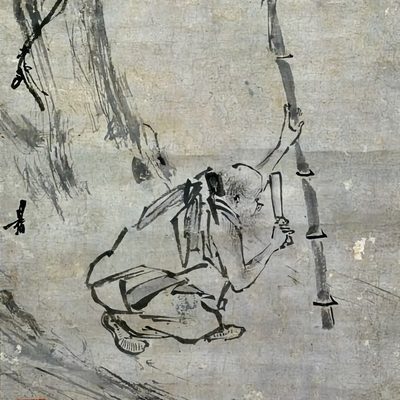
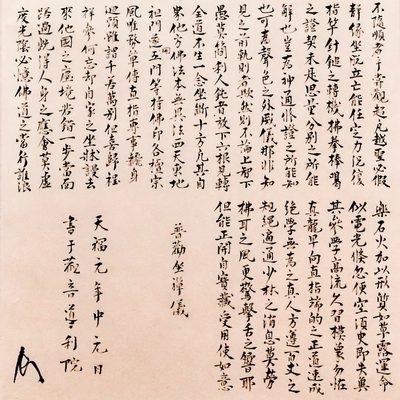
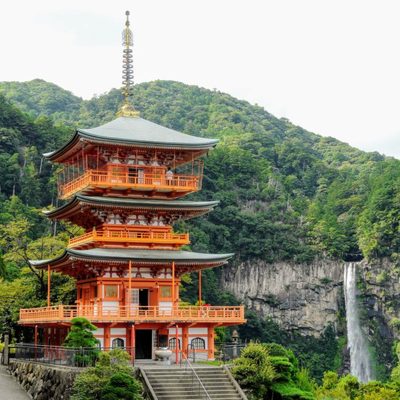
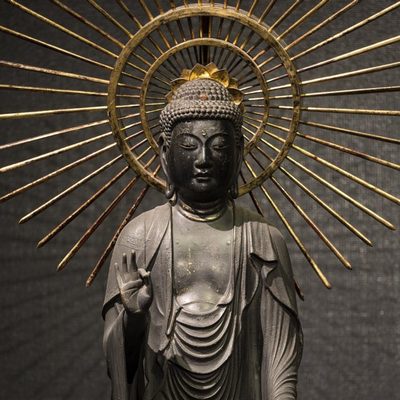
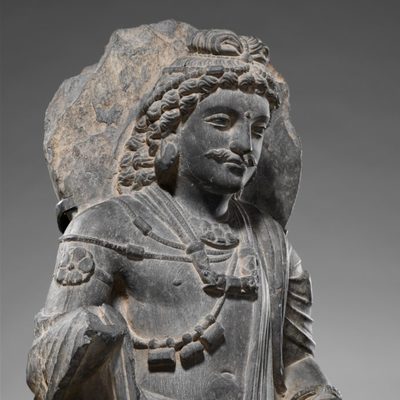
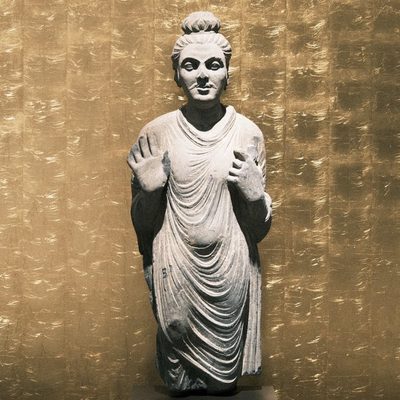
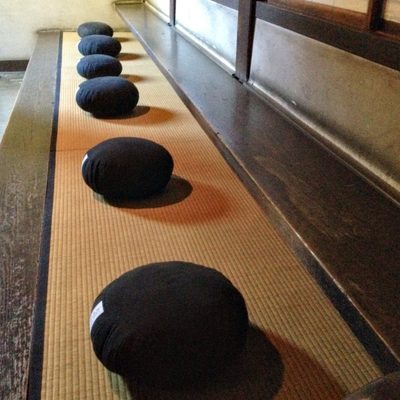
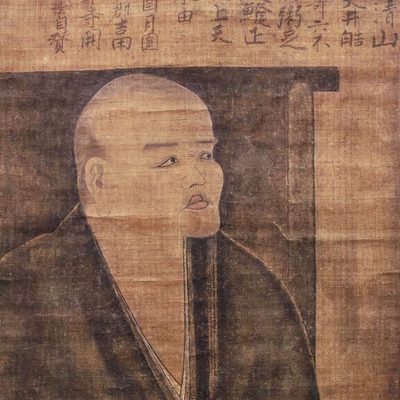
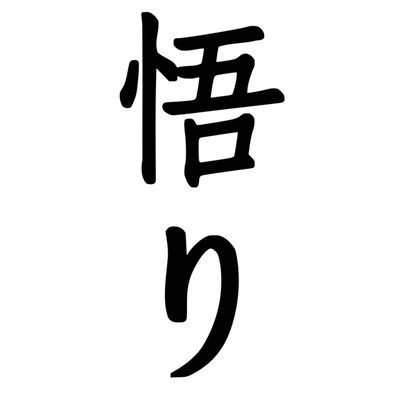
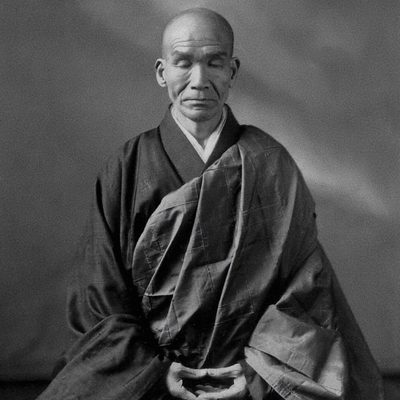
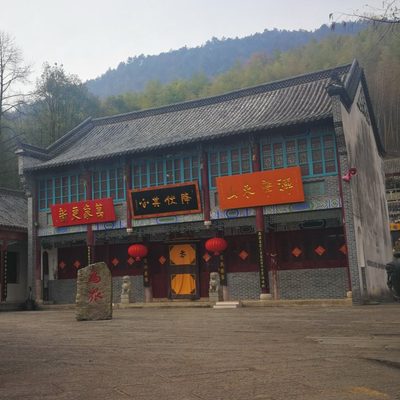
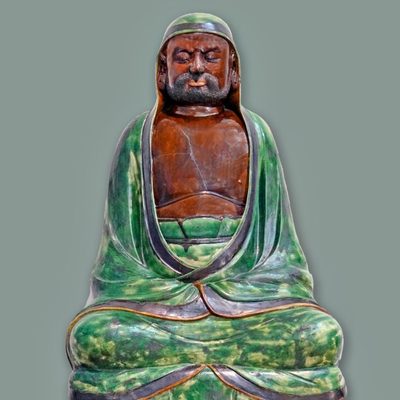
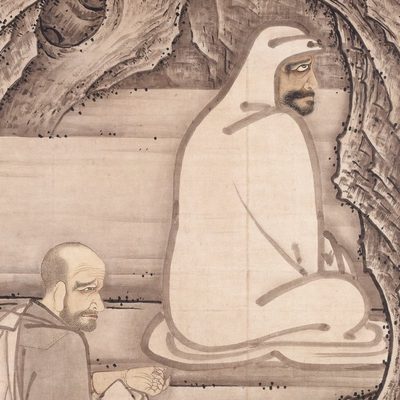

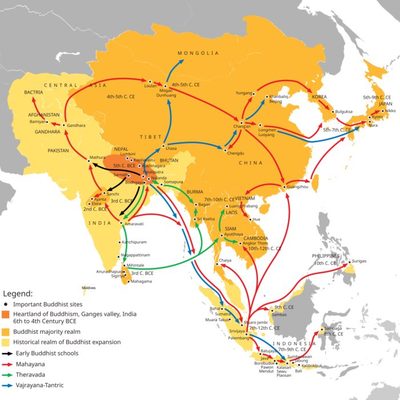
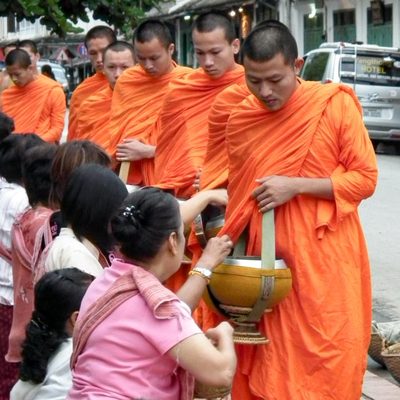
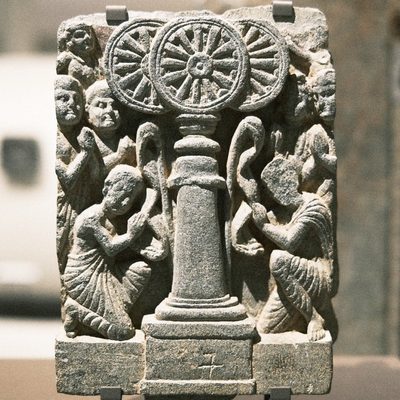

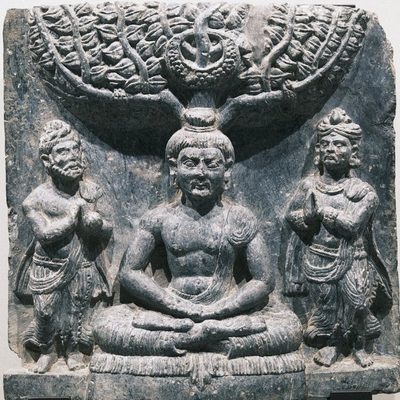
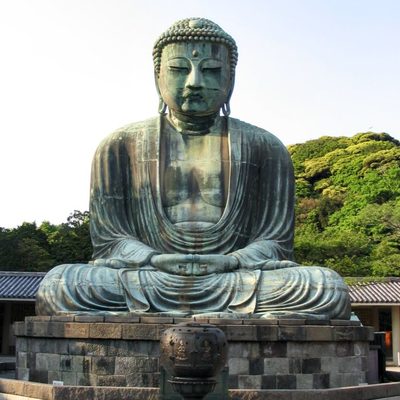
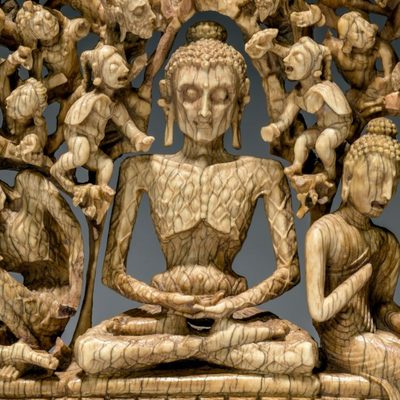
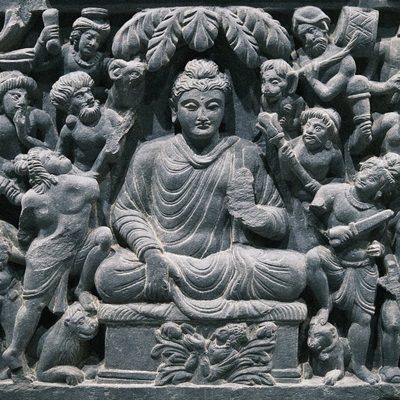
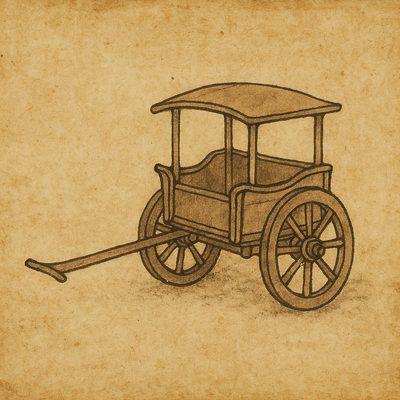
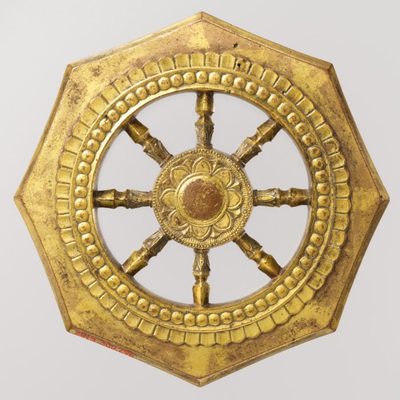
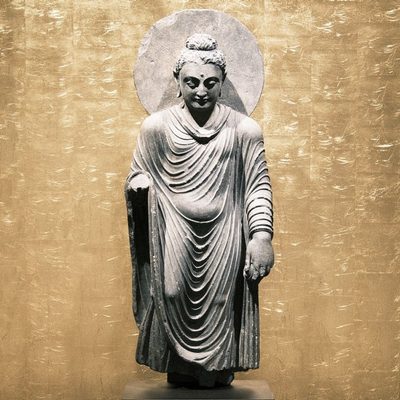
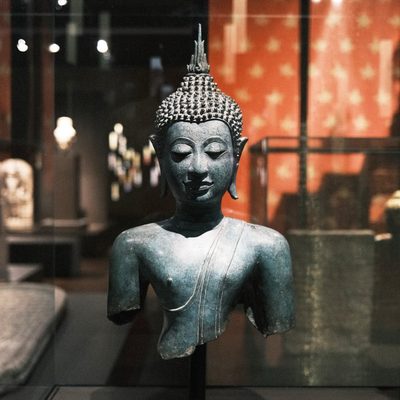

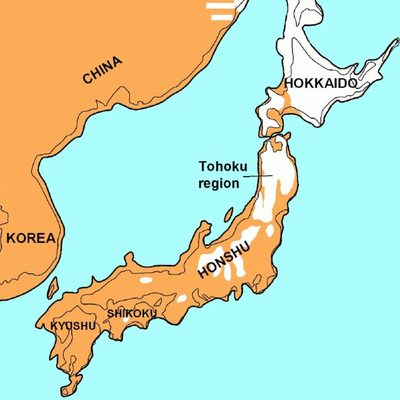
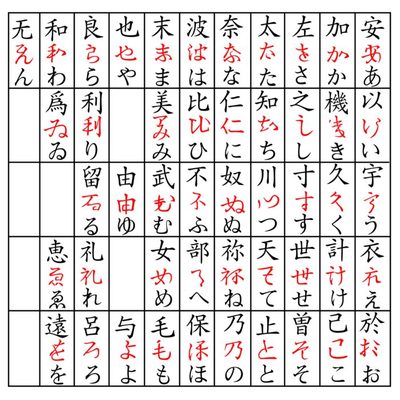
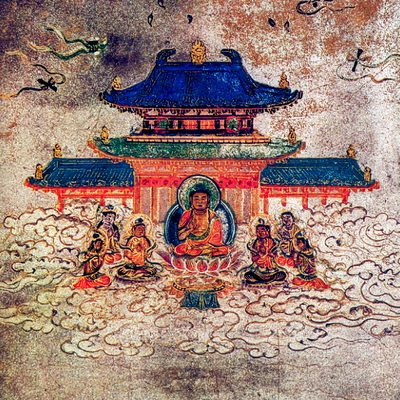
comments