Genjō Kōan: Dōgen and the manifestation of reality
Among the many fascicles of Dōgen Zenji’s Shōbōgenzō, Genjō Kōan (現成公案) occupies a special position. It was written in 1233, early in Dōgen’s teaching career, and later edited in 1252. In the versions of the Shōbōgenzō that Dōgen himself arranged, Genjō Kōan always stands at the beginning. This placement suggests that Dōgen regarded the text not as a marginal reflection. It turns out that we can treat it as a condensed entrance into the whole structure of his teaching.
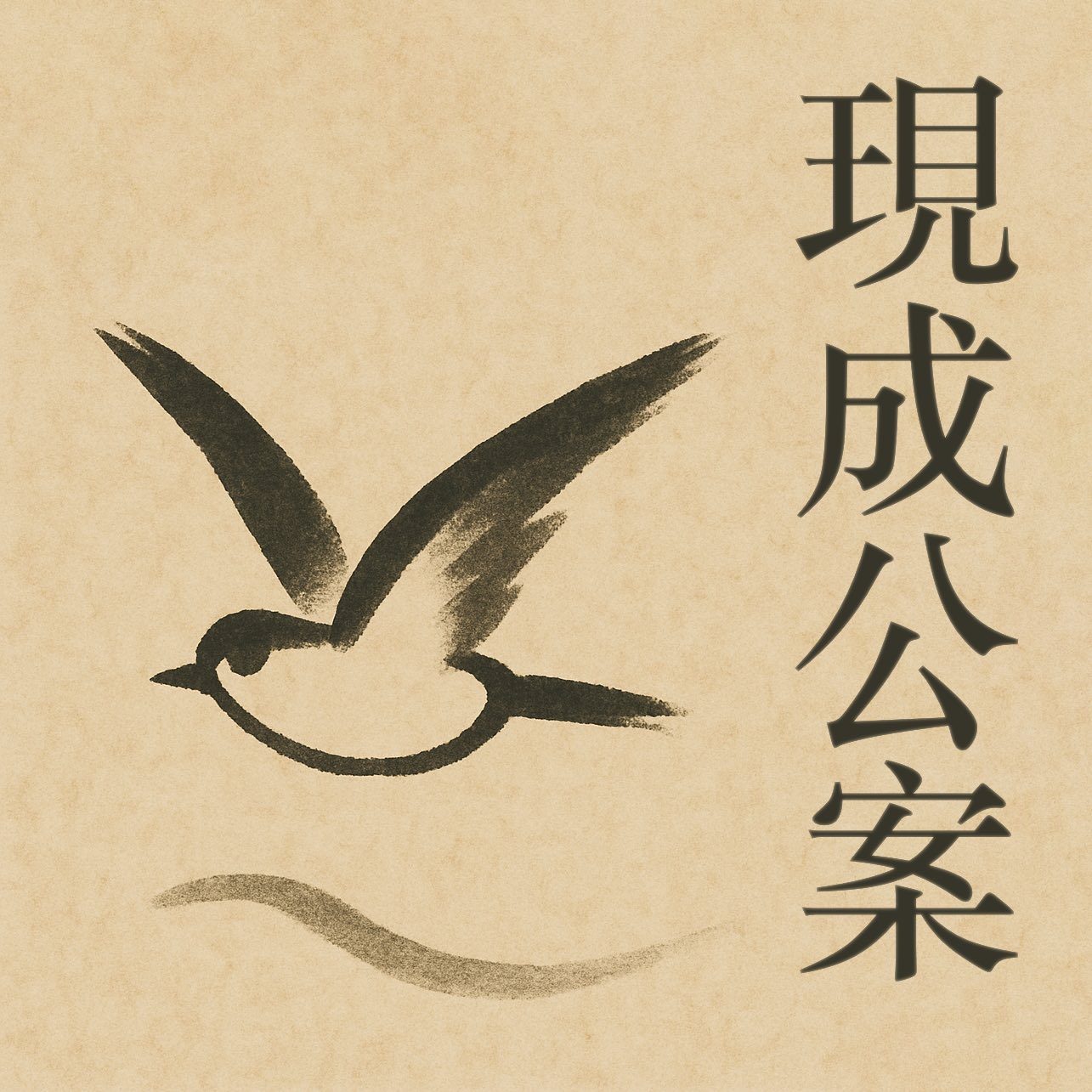
Zenga (Zen painting), interpreted by DALL•E, showing a bird in flight, reflecting the dynamic and non-dual nature of reality as expressed in Genjō Kōan.
At the same time, Genjō Kōan is not an easy text. It is short, poetic, and highly compressed. It does not present Dōgen’s thought as a systematic doctrine in the style of a scholastic treatise. Instead, it unfolds through images, contrasts, and shifts of perspective. Its language can sound simple at first, but many of its passages become difficult precisely because they do not separate philosophical analysis from lived experience. Dōgen does not explain reality from a distance. He describes how reality is encountered, practiced, and actualized in concrete life.
Already the title itself points to this central concern. Genjō can be understood as manifestation, actualization, or becoming present. Kōan refers not only to a Zen case, but also to the concrete situation in which truth is encountered. Genjō Kōan is therefore concerned with the manifestation of reality as it appears in the immediacy of experience. The text asks how the Buddha-Dharma is realized not apart from ordinary life, but through it.
This makes Genjō Kōan one of the most important texts for understanding Dōgen’s interpretation of Zen practice. It brings together several of his major themes: Practice and realization, the study and forgetting of the self, impermanence, the absence of a permanent self, the relation between self and world, and the transformation of ordinary activity into the expression of awakening. These themes are not treated as abstract doctrines, they are presented as aspects of how human beings perceive, misunderstand, and may come to participate more clearly in reality.
In this post, we will explore the structure and meaning of Genjō Kōan as a key to understanding Dōgen’s teaching. We will see how the text unfolds as a continuous argument, how its poetic language conveys profound insights, and how it points to the practical implications of Dōgen’s vision of reality.
Meaning of the title
The title Genjō Kōan is already a compact statement of Dōgen’s teaching. Genjō can be translated as manifestation, actualization, or becoming present. It points to reality as it appears and functions here and now. It is not reality as a distant metaphysical principle, nor reality as an object waiting to be grasped by thought. It is reality as it is enacted, encountered, and expressed in a concrete situation. Kōan, on the other hand, usually refers to a public case, often a record of a dialogue or encounter used in Zen training. In this title, however, it has a broader sense. The kōan is not merely a riddle to be solved. It is the actual situation itself, the concrete case of being alive here and now. Every situation is a kōan because every situation asks how reality is to be met, enacted, and understood without reducing it to self centered interpretation. Thus Genjō Kōan does not mean that reality is hidden and must be uncovered by a special mystical insight. It means that reality is already manifest, but its manifestation is usually distorted by clinging, aversion, fixed concepts, and the assumption of a separate permanent self. The question is not how to reach reality elsewhere. The question is how to participate in the reality already presenting itself.
This is exactly why Genjō Kōan is also a text about practice. For Dōgen, practice is not a method that leads to awakening as a later result. Practice is the way awakening is enacted. The central Sōtō Zen idea of practice realization, shushō ittō (修證一等), means that practice and realization are not two separate stages. One does not first practice and then, at some later point, possess awakening as an object. Practice is the concrete confirmation of realization, and realization is expressed only through practice. The whole text can therefore be read as an answer to a basic question: If the Buddha Dharma is already present, why practice? Dōgen’s answer is subtle but consistent: Precisely because the Buddha Dharma is present, it must be enacted. Precisely because the wind is everywhere, the fan must be used.
Genjō Kōan
Before we analyze the text, let’s read it in its entirety:
Genjō Kōan
When we think of all phenomena (dharmas) as the Buddha-Dharma, there are delusion and awakening, practice, life and death, buddhas and living beings.
When we perceive each of the ten thousand things (dharmas) as separate from ourselves, there is no delusion and no awakening, no buddhas and no living beings, no life and no death.
From the beginning, the Buddha Way is beyond abundance and lack; therefore, moment by moment, there are life and death, delusion and awakening, living beings and buddhas.
Even though all this is so, flowers fall although we regret it, and weeds grow although we dislike it.
It is delusion when we compel ourselves to practice and experience the ten thousand things by deliberate effort. It is awakening when the ten thousand things naturally practice and experience the self. Those who fully awaken with regard to their delusions are buddhas. Those who are completely deluded with regard to awakening are ordinary living beings. Furthermore, there are people who awaken beyond awakening, and there are people who, within delusion, continually produce new delusions. When buddhas are truly buddhas, they do not need to recognize themselves as buddhas. And yet they experience Buddha, and Buddha continues to experience them.
When we use body and mind to see forms and hear sounds, this seeing and hearing is never like an image reflected completely in a mirror, and never like the moon reflected in water, even when we immediately recognize forms and sounds as forms and sounds. When we experience one side, the other remains in darkness.
To investigate the Buddha Way is to investigate the self. To investigate the self is to forget the self. To forget the self is to be one with the ten thousand things. To be one with the ten thousand things is to let fall the body and mind of the self and the body and mind of the world around us. The traces of awakening rest hidden, and the traces of awakening resting hidden unfold over a long period of time.
When a person first seeks the Dharma, he is still miles away from it. But as soon as the person and the Dharma become one, the person is immediately one with his original nature. For example, if someone rides in a boat and looks from there at the shore, he believes that the shore is moving, but this is an error. If he looks directly at the boat, he knows that the boat is moving. It is the same when body and mind are confused and we try to understand the ten thousand things; then we mistakenly think that our mind and our nature are something permanent. But when we act directly and return to the concrete situation in the present moment, the truth becomes clear that the ten thousand things are without a permanent self.
Firewood becomes ash, and ash can never again become firewood. Nevertheless, we should not regard the ash as what comes later and the firewood as what came before. You must understand that firewood, in the Dharma, occupies its own place as firewood. It has a before and an after, but nevertheless the before exists independently of the after. Ash, in the Dharma, occupies its own place as ash. It has a before and an after.
Just as firewood, once it has become ash, cannot become firewood again, human beings also cannot live again after death. Therefore, in the Buddha-Dharma it has always been taught that death does not become life, and so we speak of “non-arising” (fushō). And according to the transmitted words of the buddhas, life does not become death, and so we speak of “non-perishing” (fumetsu). Life is the state of one moment. Death is the state of one moment. The same is true, for example, of winter and spring. In the Buddha-Dharma we do not think that winter becomes spring, and we do not say that spring becomes summer.
A person who has attained awakening is like the moon reflected in water: the moon does not become wet, and the water is not disturbed. Although the moonlight shines broadly and far, it is reflected on a tiny surface of water. The whole moon and the whole sky are reflected in a single dewdrop on a blade of grass and in a single drop of water. Awakening does not alter the person, just as the moon does not alter the water. The person does not obstruct awakening, just as the dewdrop does not obstruct the sky and the moon. To sound the depth of awakening and measure its height: investigate the length and brevity of this moment in oceans and streams. Observe the vastness and narrowness of the sky and the moon.
When the Dharma does not yet fill body and mind, we believe that it is already sufficient. When body and mind are completely filled by the Dharma, we feel that something is still lacking. For example, when we sail far out into the sea in a boat, where we can no longer see land, and then look in the four directions, the sea appears to us simply round, without any other form. Yet the sea is neither round nor square. It has many different features: for fish it is like a palace, and for gods it is like a necklace of pearls. But as far as our eye reaches, the sea appears only round. It is the same with the ten thousand things. This world of dust and the Buddha-world are infinitely manifold, but we recognize and understand them only insofar as our practice, our study, our view, and our strength allow. But if we wish to know how the ten thousand things are in their natural state, we should consider that the characteristics of oceans and mountains are countless and boundless, regardless of their round or square appearance. Moreover, there are worlds in the four directions. Remember that not only what surrounds us is thus manifold, but also the present moment and also a single drop of water.
When fish swim in water, the water has no boundaries for them, however far they swim. When birds fly in the sky, the sky has no boundaries for them, however far they fly. Therefore fish have never left the water, and birds have never left the sky. Only when their activity is great do they use water and sky on a great scale, and when the need is small, they use them on a small scale. In this way every fish and every bird realizes itself within its limits and moves completely freely in every place.
But if a bird leaves the sky, it dies at once, and if a fish leaves the water, it perishes at once. We can understand this as follows: the water is life, and the sky is life. Birds are life, and fish are life. And it may be that life itself is the birds and the fish. And beyond this there could still be further development. It is the same with their practice and experience, with their lifetime, and with their life as such. But if a fish had resolved to investigate the water comprehensively before swimming in it, and a bird to fathom the sky completely before flying, then the fish and the bird could never find their way and their place in water or sky. When we find this place, this action naturally realizes the whole universe; and when we find this way, this action consequently is the realized universe itself. This way and this place are neither large nor small, neither ourselves nor the world around us. The way and the place are present just as they are, because they were neither there before nor do they now appear.
The same is true when a person truly practices and experiences the Buddha-truth. When he attains a dharma, he understands it in that very moment; and when he encounters an action, he carries it out in that very moment. Because the place in this state truly exists and the way penetrates the whole universe, what he knows in this moment is not clearly recognizable to himself. This is because this knowing and the complete realization of the Buddha-Dharma are the same: They appear together and are experienced together. Do not think that you are necessarily conscious of what you have attained, or that you can name it with the intellect. The experience of the highest is realized in a fraction of a moment, but at the same time its hidden being is not necessarily visible realization. Realization itself is indeterminable.
Zen Master Hōtetsu of Mount Mayoku was fanning himself. A monk came by and asked: “It is the nature of air to be always present, and there is no place it does not reach. Why, then, does the master use a fan?”
The master said: “You have only understood that it is the nature of air to be always present. But you do not know the truth that there is no place it does not reach.”
The monk asked: “What is the truth that there is no place it does not reach?”
The master simply continued to fan himself. The monk bowed down before him.
Such is the concrete experience of the Buddha-Dharma and the powerful way of the true transmission. Whoever says that we need not use a fan because the air is always present, or claims that we could still feel the air without using the fan, does not understand what “being always present” concretely means, and does not know the nature of air. Precisely because it is the nature of air to be “always present,” the everyday actions of Buddhists transform the great earth into pure gold, and the long river of the Milky Way matures into a delicious milk drink.
Shōbōgenzō Genjō Kōan
This was written in mid-autumn of the first year of the Tenpuku era (1233) and presented to the lay disciple Yō Kōshū from Chinzei.
Edited in the fourth year of the Kenchō era (1252).
In-depth analysis of the text
The following analysis reads Genjō Kōan as a compact philosophical and religious argument within Dōgen’s Zen Buddhism. The aim is not to treat Dōgen’s claims as self evident truths, but to reconstruct how the text works: Which Buddhist concepts it presupposes, how it reshapes them, and how it connects doctrine with practice. And several concepts are especially important for this reading. First, Dōgen assumes the broader Buddhist analysis of impermanence, non-self, and dependent arising. Second, he develops these ideas through Mahāyāna concepts such as emptiness, suchness, and the nonduality of self and world. Third, he gives these ideas a specifically Zen form through the unity of practice and realization. The text therefore does not merely explain Buddhist doctrine. It shows how Dōgen interprets doctrine as something enacted in concrete life.
All following explanation only serve as one possible reading of the text. Dōgen’s writing is often deliberately ambiguous and open to multiple interpretations. The text does not present a single, fixed meaning, but invites readers to engage with it in different ways. The following analysis is therefore just a starting point for your own exploration of Genjō Kōan.
The opening: Three perspectives on reality
When we think of all phenomena as the Buddha-Dharma, there are delusion and awakening, practice, life and death, buddhas and living beings.
When we perceive each of the ten thousand things as separate from ourselves, there is no delusion and no awakening, no buddhas and no living beings, no life and no death.
From the beginning, the Buddha Way is beyond abundance and lack; therefore, moment by moment, there are life and death, delusion and awakening, living beings and buddhas.
Even though all this is so, flowers fall although we regret it, and weeds grow although we dislike it.
The actual opening of Genjō Kōan already contains a rich and deep perspective on reality and is typical for Dōgen’s style of writing. It is structured as a sequence of perspectives, where the first describes reality through familiar Buddhist terms: Delusion and awakening, practice, life and death, buddhas and living beings. Then he shifts the perspective towards emptiness, where these distinctions no longer stand as fixed and separate realities. Finally, he returns to ordinary experience: Flowers fall, although we regret it, and weeds grow, although we dislike it. This opening already shows the basic “movement” of the text: Dōgen does not remain in doctrine, and he does not remain in emptiness as abstraction. He always brings both back into concrete life.
The first sentence,
When we think of all phenomena as the Buddha-Dharma, there are delusion and awakening, practice, life and death, buddhas and living beings.
seems to present a basic structure of reality, at least as we conventionally tend to perceive and organize it. There is delusion and awakening, life and death, buddhas and living beings. It generally shows, that there is duality: Object and subject, self and other, samsara and nirvana. There are also the categories of practice and realization, which are not necessarily opposed, but can be seen as different aspects of the same process.
Dōgen does not simply reject this structure as false. He treats it as the ordinary way we understand reality when we approach it through conceptual distinctions, and as such it gives us a framework for orientation. At the same time, he does not treat it as ultimate truth. These distinctions are not presented as fixed divisions within reality itself. They arise because we interpret experience through categories, names, contrasts, and oppositions. Dōgen thus begins with this ordinary structure of conventional understanding not only to provide a starting point for his argument, but also to show that it is already shaped by the discriminating mind. The categories of delusion and awakening, life and death, buddhas and living beings are not inherent divisions in reality. They are ways in which we organize and understand our experience of reality.
The second sentence shifts the perspective:
When we perceive each of the ten thousand things as separate from ourselves, there is no delusion and no awakening, no buddhas and no living beings, no life and no death.
This introduces the logic of emptiness. From the standpoint of emptiness, none of the previously named categories possesses independent, fixed, self existing status. Delusion and awakening are not two substances. Buddhas and living beings are not two metaphysically separate classes of beings. Life and death are not absolute entities. They are relational designations that arise within experience, language, practice, and interpretation. This is important because emptiness does not mean that nothing exists. It means that nothing exists as an isolated, permanent, self grounded thing. A phenomenon exists only through conditions, relations, perception, naming, and change (pratītya-samutpāda). Delusion exists as a pattern of misunderstanding, but not as an independent essence. Awakening exists as a transformation of seeing and acting, but not as a fixed possession. Life and death exist as real events within lived experience, but not as two absolute containers between which a permanent self moves.
As such, the structure of the second sentence resembles the logic of the Heart Sutra, where form is emptiness and emptiness is form. The point is not that form disappears into emptiness, but that form is empty precisely because it is relational, conditioned, and impermanent. In the same way, Dōgen is not abolishing distinctions as practical tools. He is relativizing their ontological status. They remain meaningful in conventional experience, but they should not be mistaken for final divisions within reality itself.
The third sentence then complicates any simple opposition between distinction and emptiness:
From the beginning, the Buddha Way is beyond abundance and lack; therefore, moment by moment, there are life and death, delusion and awakening, living beings and buddhas.
Dōgen here rejects the idea that emptiness means absence or negation in a crude sense. The Buddha Way is “beyond abundance and lack”, meaning that reality does not need to be supplemented by something extra, nor purified by removing something from it before it can be understood as Dharma. Yet within this very nondual field, life and death, delusion and awakening, living beings and buddhas still appear. In other words, Dōgen places form and emptiness in a dynamic relation. Emptiness does not erase the world; it redefines how the world is to be understood.
The fourth sentence brings this discussion back into the human condition:
Even though all this is so, flowers fall although we regret it, and weeds grow although we dislike it.
This sentence is decisive because it prevents Genjō Kōan from becoming abstract metaphysics. Even if one understands the nondual relation between distinction and emptiness, ordinary human experience remains structured by preference, loss, frustration, and attachment. Loved things disappear. Unwanted things arise. Dōgen’s point is not that insight removes this basic condition of life. Rather, his text asks how practice takes place within it.
The opening therefore establishes the central movement of Genjō Kōan. Dōgen does not ask the reader simply to choose between relative distinctions and nondual emptiness. He stages their mutual dependence. Distinctions are necessary for practice, but they must not be reified. Emptiness is necessary for insight, but it must not become a way to bypass concrete life. Practice begins exactly where flowers fall and weeds grow.
Delusion and awakening as directions of movement
It is delusion when we compel ourselves to practice and experience the ten thousand things by deliberate effort. It is awakening when the ten thousand things naturally practice and experience the self. Those who fully awaken with regard to their delusions are buddhas. Those who are completely deluded with regard to awakening are ordinary living beings.
The next section turns from categories to relational movement. In many Buddhist contexts, delusion is not merely a mistaken proposition in the intellect. It is a distorted mode of experiencing reality, usually structured by grasping, aversion, ignorance, and the assumption of a stable self. Dōgen formulates this in relational terms: Delusion and awakening differ according to how the self stands in relation to the ten thousand things. The first sentence states:
It is delusion when we compel ourselves to practice and experience the ten thousand things by deliberate effort.
This should not be read as a rejection of effort in general. Dōgen’s own tradition is strongly disciplined and practice oriented. The issue is a particular kind of effort: Effort organized around the self as controller, interpreter, or possessor. In this reading, delusion is the movement by which the self pushes itself toward the world in order to grasp, master, or confirm it. Practice can itself become distorted when it is turned into a project of self assertion.
The second sentence reverses the direction:
It is awakening when the ten thousand things naturally practice and experience the self.
Here Dōgen describes awakening as a reversal of subject centered control. The ten thousand things come forward and “practice” the self. This does not mean that the self vanishes into passivity. It means that the self is no longer the sovereign center that imposes its agenda on reality. The self becomes the site where reality is encountered, received, and enacted. This is an important “Dōgenian” transformation of the Buddhist concept of non-self: The self is not simply negated, but decentered.
The next sentences define buddhas and ordinary beings through their relation to delusion and awakening:
Those who fully awaken with regard to their delusions are buddhas. Those who are completely deluded with regard to awakening are ordinary living beings.
Dōgen does not define a buddha as someone who has no relation to delusion. Rather, a buddha is one who is awake to delusion as delusion. An ordinary being is not outside realization in a metaphysical sense, but is deluded within the field of realization. This is characteristic of Dōgen’s nondual style: He does not place buddhas and ordinary beings into two permanently separate ontological domains. The difference lies in how delusion and awakening are enacted.
Dōgen then develops this further:
Furthermore, there are people who awaken beyond awakening, and there are people who, within delusion, continually produce new delusions. When buddhas are truly buddhas, they do not need to recognize themselves as buddhas. And yet they experience Buddha, and Buddha continues to experience them.
This passage warns against turning awakening into self possession. “Awakening beyond awakening” can be understood as awakened activity that does not need to represent itself as awakened. If one grasps awakening as an identity or achievement, it becomes absorbed into the very self structure that Buddhist practice seeks to examine.
Dōgen’s statement that buddhas do not need to recognize themselves as buddhas is therefore not a decorative paradox. It criticizes spiritual self certification. In this model, awakened activity is not defined by the thought “I am awakened”, but by a mode of functioning in which action is no longer governed by egoic self confirmation. The passage therefore avoids both moral perfectionism and mystical self inflation. Awakening is not treated as a permanent psychological possession. It is a mode of response.
Seeing, hearing, and the limits of perception
When we use body and mind to see forms and hear sounds, this seeing and hearing is never like an image reflected completely in a mirror, and never like the moon reflected in water, even when we immediately recognize forms and sounds as forms and sounds. When we experience one side, the other remains in darkness.
This section introduces perception as a central philosophical problem. Buddhist thought often analyzes perception because suffering is not merely caused by external events, but by how those events are apprehended, interpreted, and appropriated by the self. Dōgen’s text does not reject sensory experience. Instead, it treats seeing and hearing as embodied, situated, and incomplete. The first sentence states:
When we use body and mind to see forms and hear sounds, this seeing and hearing is never like an image reflected completely in a mirror, and never like the moon reflected in water, even when we immediately recognize forms and sounds as forms and sounds.
Dōgen rejects the model of perception as complete representation. Perception is not a mirror that passively contains the whole object. It is an embodied event involving body, mind, object, situation, and interpretation. This is important because Dōgen’s analysis of awakening does not require abandoning sensory life. It requires understanding sensory life as partial and relational.
The second sentence,
When we experience one side, the other remains in darkness.
is a concise statement of perspectival limitation. Every act of seeing illuminates one side while leaving another unilluminated. This is not skepticism in the modern philosophical sense. Dōgen is not simply claiming that reality is unknowable. Rather, he argues that knowing is always situated. One does not see from nowhere. One sees from a body, a mind, a history, and a practice.
This also prepares the later sections on the boat, the ocean, fish and birds, and the fan. In each case, Dōgen uses an image to show that human beings mistake partial appearance for complete reality. The practical implication is not paralysis, but humility. One acts from what is present while remaining aware that one’s view is not identical with the whole of reality.
Studying the self and forgetting the self
To investigate the Buddha Way is to investigate the self. To investigate the self is to forget the self. To forget the self is to be one with the ten thousand things. To be one with the ten thousand things is to let fall the body and mind of the self and the body and mind of the world around us. The traces of awakening rest hidden, and the traces of awakening resting hidden unfold over a long period of time.
This is the best known passage of Genjō Kōan, and most-likely the most quoted passage in Dōgen’s entire corpus. While it is often treated as a single statement, however, it is also often quoted in a way that obscures its structure. It is not simply a poetic statement about selflessness. It is a sequence: Study of the Buddha Way leads to study of the self; study of the self leads to forgetting the self; forgetting the self leads to being actualized by or becoming one with the ten thousand things; this leads to what Dōgen calls the “dropping away of body and mind” (shinjin datsuraku).
The first sentence states:
To investigate the Buddha Way is to investigate the self.
Dōgen begins with the self because Buddhist practice is not an abstract theory of the universe. It is a discipline that examines the processes of experience, suffering, grasping, and perception. To study the Buddha Way is therefore to study how this “I” is constructed and maintained. This is close to the Buddhist analysis of the five aggregates: Body, feeling, perception, formations, and consciousness. The self is not treated as a permanent substance, but as an organized process.
The second sentence states:
To investigate the self is to forget the self.
This does not mean self hatred, self destruction, or psychological dissociation. Dōgen’s point is actually more precise: When the self is examined deeply, it is no longer experienced as an independent and fixed center. “Forgetting the self” means that the self ceases to function as the absolute reference point of experience.
The third sentence states:
To forget the self is to be one with the ten thousand things.
This does not require mystical fusion. It means that the boundary between self and world is no longer understood as an absolute divide. The self is seen as relational, dependent, and co-constituted by the ten thousand things. This is Dōgen’s Zen formulation of non-self and dependent arising.
The fourth sentence states:
To be one with the ten thousand things is to let fall the body and mind of the self and the body and mind of the world around us.
This is Dōgen’s shinjin datsuraku, body mind dropping away. In a more objective phrasing, this concept names a transformation in how self and world are experienced. It does not mean that body, mind, or the world literally disappear. It means that they are no longer grasped as opposed substances: “my” body and mind against an external world. The dualistic structure itself loosens.
The final sentence adds an important temporal and practical dimension:
The traces of awakening rest hidden, and the traces of awakening resting hidden unfold over a long period of time.
Dōgen does not present awakening as necessarily spectacular or immediately self recognizable. Its traces may remain hidden. Its effects may unfold slowly through conduct, perception, and relation. This point is important as it shows that Dōgen’s concept of realization is not reducible to a single intense experience. It is also temporal, practical, and behavioral.
The boat: The illusion of a fixed self
When a person first seeks the Dharma, he is still miles away from it. But as soon as the person and the Dharma become one, the person is immediately one with his original nature. For example, if someone rides in a boat and looks from there at the shore, he believes that the shore is moving, but this is an error. If he looks directly at the boat, he knows that the boat is moving. It is the same when body and mind are confused and we try to understand the ten thousand things; then we mistakenly think that our mind and our nature are something permanent. But when we act directly and return to the concrete situation in the present moment, the truth becomes clear that the ten thousand things are without a permanent self.
This section develops Dōgen’s critique of a permanent self through an analogy of perception. The broader Buddhist background is the doctrine of non-self: What we call the self is not an unchanging essence, but a contingent process. Dōgen gives this doctrine a concrete phenomenological form. He does not begin with abstraction, but with a familiar perceptual error.
The first sentence introduces the problem of seeking:
When a person first seeks the Dharma, he is still miles away from it.
This can be read as a critique of objectifying the Dharma. If the Dharma is treated as something distant, external, or future oriented, the seeker begins by separating themselves from what they seek. Dōgen’s point is not that seeking is useless, but that seeking can be distorted by the assumption that the Dharma is elsewhere. To further illustrate this, he uses the image of a person in a boat looking at the shore:
For example, if someone rides in a boat and looks from there at the shore, he believes that the shore is moving, but this is an error. If he looks directly at the boat, he knows that the boat is moving.
The image illustrates how easily a standpoint is mistaken for stability. The person in the boat may perceive the shore as moving because the motion of the boat is not properly taken into account. Dōgen applies this to self perception. The self seems permanent because it is the standpoint from which experience is organized. But this felt stability may itself be a perceptual and conceptual construction. The central philosophical application follows in the next sentence:
It is the same when body and mind are confused and we try to understand the ten thousand things; then we mistakenly think that our mind and our nature are something permanent.
Here Dōgen connects perceptual error with ontological error. The mind mistakes its own continuity for permanence. Memories, habits, preferences, and narratives create a sense of identity, but this continuity is not the same as an unchanging essence. In this sense, the self is like the moving boat: It functions, but it is not fixed. The corrective statement to this is:
But when we act directly and return to the concrete situation in the present moment, the truth becomes clear that the ten thousand things are without a permanent self.
Dōgen’s solution is not purely intellectual. He emphasizes direct return to the concrete situation. This fits his broader view that insight is enacted in practice, not merely held as a doctrine. The passage therefore presents anattā not as an abstract metaphysical thesis, but as something clarified through attention to present experience.
Firewood and ash: Each moment as its own Dharma position
Firewood becomes ash, and ash can never again become firewood. Nevertheless, we should not regard the ash as what comes later and the firewood as what came before. You must understand that firewood, in the Dharma, occupies its own place as firewood. It has a before and an after, but nevertheless the before exists independently of the after. Ash, in the Dharma, occupies its own place as ash. It has a before and an after.
The passage on firewood and ash is one of Dōgen’s most compressed reflections on time, causality, and impermanence. The relevant background is the Buddhist doctrine of impermanence, but Dōgen does not simply say that things change. He analyzes how each moment is complete as its own Dharma position while still standing within causal sequence.
Let’s break this down. The opening statement affirms ordinary transformation:
Firewood becomes ash, and ash can never again become firewood.
Dōgen does not deny empirical causality. Firewood burns and becomes ash. Once transformed, it does not return to being firewood. This is the ordinary sequence.
The next sentence complicates how this sequence should be understood:
Nevertheless, we should not regard the ash as what comes later and the firewood as what came before.
Dōgen is not denying chronological order. Rather, he is resisting a reduction of each moment to a mere point in a linear chain. If firewood is understood only as “what comes before ash”, then firewood is no longer encountered in its own completeness. It becomes merely a transitional stage. The key statement is:
You must understand that firewood, in the Dharma, occupies its own place as firewood.
This is the concept often discussed as a Dharma position. A Dharma position is the concrete actuality of a thing, being, or moment. Firewood is fully firewood. Ash is fully ash. Each has its own before and after, but each also stands completely in its own moment. Dōgen’s analysis thereby combines impermanence and presence: things change, yet each moment is not merely incomplete.
Dōgen then applies this logic to life and death:
Just as firewood, once it has become ash, cannot become firewood again, human beings also cannot live again after death. Therefore, in the Buddha-Dharma it has always been taught that death does not become life, and so we speak of “non-arising” (fushō). And according to the transmitted words of the buddhas, life does not become death, and so we speak of “non-perishing” (fumetsu). Life is the state of one moment. Death is the state of one moment. The same is true, for example, of winter and spring. In the Buddha-Dharma we do not think that winter becomes spring, and we do not say that spring becomes summer.
This passage is philosophically difficult because it seems to deny what ordinary language affirms: That life becomes death, winter becomes spring, and spring becomes summer. Dōgen’s point is more subtle. He warns against treating life and death as fixed substances that pass into one another. Life is a Dharma position. Death is a Dharma position. Winter is winter. Spring is spring. The sentence
Life is the state of one moment. Death is the state of one moment.
summarizes the point. Life and death are not metaphysical containers through which an unchanged self passes. They are concrete configurations of being and time. This also prevents a simplistic interpretation of rebirth as the survival of a permanent soul. Dōgen does not teach an eternal self that remains unchanged through death. At the same time, the passage does not imply a crude nihilism. What remains central is transformation, causal continuity, and the dynamic functioning of reality.
The practical implication is that practice cannot take place in an abstract past or future. It occurs only in the present Dharma position. One practices as firewood when firewood, as ash when ash, as winter when winter, as spring when spring. This is a distinctly “Dōgenian” way of joining impermanence with the full actuality of the present.
Moon and water: Realization does not erase the person
A person who has attained awakening is like the moon reflected in water: the moon does not become wet, and the water is not disturbed. Although the moonlight shines broadly and far, it is reflected on a tiny surface of water. The whole moon and the whole sky are reflected in a single dewdrop on a blade of grass and in a single drop of water. Awakening does not alter the person, just as the moon does not alter the water. The person does not obstruct awakening, just as the dewdrop does not obstruct the sky and the moon.
This section addresses a common misunderstanding of nonduality: The idea that awakening dissolves particularity into a vague unity. Dōgen’s image suggests the opposite. Realization is not the erasure of individuality. It is the appearance of awakening through a particular person, moment, and situation.
The first sentence states:
A person who has attained awakening is like the moon reflected in water: the moon does not become wet, and the water is not disturbed.
In many Buddhist contexts, the moon traditionally symbolizes awakening or realization. Water symbolizes the concrete person or situation in which realization appears. The moon does not become water, and the water does not cease to be water. The image therefore rejects mystical fusion as an adequate model. Awakening and person are intimately related, but not collapsed into one undifferentiated substance.
Dōgen then radicalizes the image of scale:
The whole moon and the whole sky are reflected in a single dewdrop on a blade of grass and in a single drop of water.
The whole can appear in the smallest particular. This is close to the Mahāyāna and Huayan idea that each phenomenon reflects the totality without losing its particularity. In the context of Genjō Kōan, the point is also practical. No situation is too small to express realization. A minor action, a brief encounter, or a simple response can fully manifest the Dharma.
The next sentence clarifies the relation between realization and personhood:
Awakening does not alter the person, just as the moon does not alter the water.
Dōgen does not present awakening as the destruction of personality, history, or individuality. A person does not become an abstract enlightened entity without temperament or limitation. Rather, awakening is expressed through this particular life. This is important because it prevents an idealized and unrealistic view of realization.
The final sentence adds the reverse relation:
The person does not obstruct awakening, just as the dewdrop does not obstruct the sky and the moon.
Particularity is not an obstacle to realization. The smallness of the dewdrop does not prevent the moon from appearing. Likewise, the finite, limited, embodied person is not excluded from awakening. Dōgen’s view therefore holds together universality and particularity: Realization is universal in scope, but it appears only through concrete forms.
The ocean: The limits of one’s view
When the Dharma does not yet fill body and mind, we believe that it is already sufficient. When body and mind are completely filled by the Dharma, we feel that something is still lacking. For example, when we sail far out into the sea in a boat, where we can no longer see land, and then look in the four directions, the sea appears to us simply round, without any other form. Yet the sea is neither round nor square. It has many different features: for fish it is like a palace, and for gods it is like a necklace of pearls. But as far as our eye reaches, the sea appears only round. It is the same with the ten thousand things.
This section turns to the problem of limited perception. Dōgen uses the image of the ocean to show that what we see from one position can appear complete, even when it is only one partial view. A person far out at sea sees the ocean as a round horizon, which understandable from that position. But this is not the whole nature of the ocean. The ocean has many forms, depths, movements, and meanings that are not visible from this one standpoint. The Buddhist background here is closely related to emptiness. Things do not appear from nowhere and they are not perceived from nowhere. What we see depends on our body, our position, our capacities, our habits, and our practice. The ocean looks one way to a human being on a boat, another way to a fish, and another way to a god. Dōgen uses this contrast to make a broader point: Reality is richer than the form in which it appears to us at any given moment. This does not mean that our view is useless. It means that our view is limited. We can only see as far as our current “eye of study and practice” allows. The problem begins when we mistake this limited view for the whole. In this sense, the ocean passage continues the earlier warning about perception: When one side is illuminated, another side remains dark.
Dōgen is not asking us to distrust experience completely. He is asking us to notice that every experience is situated, partial, and open to further practice and understanding.
Let’s deconstruct this passage. The first sentence criticizes premature certainty:
When the Dharma does not yet fill body and mind, we believe that it is already sufficient.
Dōgen suggests that shallow understanding often produces overconfidence. One thinks the Dharma has been grasped precisely because one has not yet seen the depth of what remains ungrasped. This is a recognizable pattern in religious, philosophical, and especially in scientific contexts alike: Partial knowledge can appear complete when its limits are not yet understood. The second sentence reverses this:
When body and mind are completely filled by the Dharma, we feel that something is still lacking.
In Dōgen’s account, deeper practice does not produce final closure. It does not lead to the feeling that one has now understood everything, reached the end of the path, and can rest in possession of the Dharma. Rather, deeper practice makes the inexhaustibility of reality more visible. The more one sees, the more one also sees that there is always more that remains unseen. The feeling that “something is still lacking” therefore does not necessarily indicate a real deficiency. It does not mean that the Dharma is incomplete, or that practice has failed. It means that the practitioner no longer mistakes a partial understanding for the whole. Once body and mind are “filled by the Dharma, one becomes more aware of the depth, multiplicity, and openness of each situation. Reality cannot be exhausted by one insight, one doctrine, one experience, or one achievement.
This is important for Dōgen’s understanding of practice. If practice and realization are one, then realization is not a final possession that ends practice. Realization opens practice further. Each moment presents a new Dharma position, a new relation, a new need, a new possibility of response. The sense that something remains “lacking” is therefore not a failure of realization, but a sign that realization has not hardened into self satisfaction. It keeps practice open, active, and responsive.
The ocean analogy then explains why:
When we sail far out into the sea in a boat, where we can no longer see land, and then look in the four directions, the sea appears to us simply round, without any other form. Yet the sea is neither round nor square.
From the standpoint of a human observer on a boat, the ocean appears round. This appearance is not false in the sense of being meaningless. It is true from that position. But it is not the whole truth of the ocean. Dōgen uses this image to criticize the absolutization of perspective.
He then expands the plurality of perspectives:
It has many different features: for fish it is like a palace, and for gods it is like a necklace of pearls.
Different beings encounter the same ocean differently. This does not necessarily imply simple relativism, as if all descriptions were interchangeable. Rather, Dōgen shows that the form in which reality appears depends on the embodied and existential position of the perceiver. The concluding sentence generalizes the point:
But as far as our eye reaches, the sea appears only round. It is the same with the ten thousand things.
Human understanding is limited by the reach of the eye, and by extension by the reach of practice, study, and capacity. Dōgen continues:
This world of dust and the Buddha-world are infinitely manifold, but we recognize and understand them only insofar as our practice, our study, our view, and our strength allow. But if we wish to know how the ten thousand things are in their natural state, we should consider that the characteristics of oceans and mountains are countless and boundless, regardless of their round or square appearance. Moreover, there are worlds in the four directions. Remember that not only what surrounds us is thus manifold, but also the present moment and also a single drop of water.
This passage makes the epistemological point explicit. We understand only as far as our practice, study, view, and strength allow. The “ten thousand things” are not exhausted by their appearance to us. Even a single drop of water has depth, relation, and multiplicity.
The consequence for practice is humility. Dōgen’s text encourages attention rather than certainty. It also gives the teaching an ethical dimension. If one’s own perspective is partial, then listening, restraint, and openness become necessary modes of practice.
Fish and birds: Practice as one’s own element
When fish swim in water, the water has no boundaries for them, however far they swim. When birds fly in the sky, the sky has no boundaries for them, however far they fly. Therefore fish have never left the water, and birds have never left the sky. Only when their activity is great do they use water and sky on a great scale, and when the need is small, they use them on a small scale. In this way every fish and every bird realizes itself within its limits and moves completely freely in every place.
This section introduces another major “Dōgenian” theme: Practice is not something added to life from outside. It is the way life functions within its proper element. The fish and bird analogy should therefore not be read as a biological observation, but as a model for the relation between being, field, and activity.
The opening sentences state:
When fish swim in water, the water has no boundaries for them, however far they swim. When birds fly in the sky, the sky has no boundaries for them, however far they fly.
The fish does not need to reach the end of water in order to be fully a fish. The bird does not need to reach the end of the sky in order to fly. The element is inexhaustible from within the activity. Dōgen uses this to characterize the Dharma as the field in which practice already occurs.
The next sentence states:
Therefore fish have never left the water, and birds have never left the sky.
In Dōgen’s analogy, beings are never outside the field that sustains them. Applied to practice, this means that one does not stand outside the Dharma and then enter it later. One is already within the field of reality that practice clarifies. This does not make practice unnecessary. It means that practice is always already situated.
Dōgen then adds the idea of scale and need:
Only when their activity is great do they use water and sky on a great scale, and when the need is small, they use them on a small scale.
Practice is not measured by abstract size. It responds to the concrete need of a situation. A small situation is not spiritually inferior to a large one. A small use of water or sky is still complete within its scale.
Dōgen continues:
But if a bird leaves the sky, it dies at once, and if a fish leaves the water, it perishes at once. We can understand this as follows: the water is life, and the sky is life. Birds are life, and fish are life. And it may be that life itself is the birds and the fish. And beyond this there could still be further development. It is the same with their practice and experience, with their lifetime, and with their life as such.
The first sentence,
But if a bird leaves the sky, it dies at once, and if a fish leaves the water, it perishes at once.
makes clear that water and sky are not optional surroundings. A fish is free in water, but this freedom depends on water. A bird is free in the sky, but this freedom depends on the sky. If the fish leaves water, it does not gain a more detached standpoint from which it could understand water better. It loses the very condition of its life. The same applies to the bird and the sky. The next sentence,
We can understand this as follows: the water is life, and the sky is life.
turns the image from a description of movement into a statement about life. For the fish, water is not simply a place in which life happens. It is the element through which the fish lives. For the bird, the sky is not simply empty space around it. It is the element through which the bird lives. Dōgen is therefore not mainly making a biological point. He is describing a relation: a being and its field of life belong together. They can be distinguished, but they cannot be understood as two independent things. The following reversal,
Birds are life, and fish are life. And it may be that life itself is the birds and the fish.
pushes this relation further. Dōgen first says that water and sky are life. Then he says that birds and fish are life. Finally, he suggests that life itself is birds and fish. This means that “life” is not an abstract substance behind the concrete beings and their activity. Life appears as fish swimming in water and as birds flying in sky. In the terms of the analogy, life is not behind the activity. It is the activity itself. The final sentence,
It is the same with their practice and experience, with their lifetime, and with their life as such.
brings the analogy back to practice. Fish, water, bird, sky, life, practice, and experience are not separate layers added to one another. They describe one functioning field. The Dharma is not an external object that one first has to reach. It is the field in which practice is already taking place.
This also explains why the analogy matters for Dōgen’s broader argument. A fish cannot step outside water in order to understand water before swimming. A bird cannot leave the sky in order to understand the sky before flying. Likewise, the practitioner does not first step outside life in order to understand the Dharma from a safe distance. Practice begins within the concrete conditions of this life. It is enacted by moving, responding, and practicing within the field one already inhabits.
Place, way, and activity: The first explicit meaning of Genjō Kōan
But if a fish had resolved to investigate the water comprehensively before swimming in it, and a bird to fathom the sky completely before flying, then the fish and the bird could never find their way and their place in water or sky. When we find this place, this action naturally realizes the whole universe; and when we find this way, this action consequently is the realized universe itself. This way and this place are neither large nor small, neither ourselves nor the world around us. The way and the place are present just as they are, because they were neither there before nor do they now appear.
This passage is one of the clearest formulations of the practical meaning of Genjō Kōan. Dōgen turns from the analogy of fish and birds to the relation between understanding and action. The central issue is whether one must first understand the whole before practicing. Dōgen’s answer is no.
The opening sentence states:
But if a fish had resolved to investigate the water comprehensively before swimming in it, and a bird to fathom the sky completely before flying, then the fish and the bird could never find their way and their place in water or sky.
This can be interpreted as a critique of detached total comprehension as a prerequisite for practice. If the fish waited to understand all of water before swimming, it would never swim. If the bird waited to understand all of sky before flying, it would never fly. The analogy applies to religious practice, but also to action more generally: One must act from within a situation, not from an impossible external overview. The key sentence follows directly:
When we find this place, this action naturally realizes the whole universe; and when we find this way, this action consequently is the realized universe itself.
This is a strong “Dōgenian” claim. It does not merely say that action happens in the universe. It says that when action is fully appropriate to its place and way, the whole universe is realized as that action. This is not an empirical claim in the ordinary scientific sense. It is a philosophical and religious claim about the nonseparation of action, place, and reality within Dōgen’s Zen. The next sentence clarifies that this should not be understood possessively:
This way and this place are neither large nor small, neither ourselves nor the world around us.
“This place” does not mean private ownership of a situation. It means the concrete Dharma position through which self and world meet. “This way” is neither purely subjective nor purely external. It is the activity of the present situation itself.
The final sentence adds a temporal paradox:
The way and the place are present just as they are, because they were neither there before nor do they now appear.
This sentence is difficult because Dōgen denies two simple interpretations at once. On the one hand, this way and this place are not permanent realities that were already waiting somewhere before the present moment. They are not fixed objects that exist independently of the concrete situation. On the other hand, they are also not simply created from nothing by the individual practitioner at the moment of action. The point is that “this place” and “this way” name the concrete Dharma position of the present situation. This situation has never existed in exactly this form before. It is this body, this action, this relation, this moment, and this configuration of conditions. In that sense, it is not something that was already there as a ready-made object. Yet it also does not merely “appear” as an isolated new thing. It arises through causes, relations, histories, bodies, intentions, and circumstances. It is new as this moment, but it is not detached from the whole field of reality. This is why the sentence belongs directly to the practical meaning of Genjō Kōan. Practice does not happen in an abstract place called “the path”. It happens as this concrete way and this concrete place. At the same time, this place is not private property of the self. It is the meeting point of self, world, action, and conditions. The practitioner does not invent the way alone, but also does not discover it as a fixed path already lying outside the present situation. The way becomes real only as it is enacted here.
In this sense, Dōgen again avoids two extremes. He avoids eternalism, because the way and the place are not permanent things existing in advance. He also avoids simple novelty or self-creation, because the way and the place are not produced by the isolated individual from nothing. They are the present configuration of reality as it is enacted in practice. This is why the action can be described not merely as something happening within the universe, but as the realized universe itself.
Knowing without owning realization
The same is true when a person truly practices and experiences the Buddha-truth. When he attains a dharma, he understands it in that very moment; and when he encounters an action, he carries it out in that very moment. Because the place in this state truly exists and the way penetrates the whole universe, what he knows in this moment is not clearly recognizable to himself. This is because this knowing and the complete realization of the Buddha-Dharma are the same: they appear together and are experienced together. Do not think that you are necessarily conscious of what you have attained, or that you can name it with the intellect. The experience of the highest is realized in a fraction of a moment, but at the same time its hidden being is not necessarily visible realization. Realization itself is indeterminable.
This section addresses the status of knowing in practice. Dōgen distinguishes realized action from conceptual possession. He does not reject thought or study, but he resists the assumption that realization is valid only when it can be clearly identified, named, and owned by consciousness.
The first sentences describe immediate enactment:
When he attains a dharma, he understands it in that very moment; and when he encounters an action, he carries it out in that very moment.
Knowing and doing are not separated into two stages. In Dōgen’s framework, understanding a Dharma means meeting it in the concrete situation. Encountering an action means carrying it out as the appropriate activity of that moment. This gives practice a strongly embodied and performative character.
The next sentence qualifies self knowledge:
Because the place in this state truly exists and the way penetrates the whole universe, what he knows in this moment is not clearly recognizable to himself.
The person may act in accordance with the Dharma without possessing a clear reflective account of that action. This is important because Dōgen’s model of realization is not introspective self certification. Realization may be present without becoming an object one can inspect. The most explicit warning is:
Do not think that you are necessarily conscious of what you have attained, or that you can name it with the intellect.
This sentence directly criticizes the tendency to turn realization into a mental object. Dōgen does not dismiss intellectual understanding. His own writing demonstrates the contrary. But he does not equate realization with the ability to define one’s attainment. The final sentence summarizes the point:
Realization itself is indeterminable.
Realization is “indeterminable” because it is not a thing added to experience. It is not a possession of the ego. In Dōgen’s model, it is the functioning of practice, perception, action, and situation when they are no longer organized around the self as owner. This makes the passage important for avoiding a performative or narcissistic model of spirituality.
The fan: Why practice is necessary if the Dharma is already present
Zen Master Hōtetsu of Mount Mayoku was fanning himself. A monk came by and asked: “It is the nature of air to be always present, and there is no place it does not reach. Why, then, does the master use a fan?”
The master said: “You have only understood that it is the nature of air to be always present. But you do not know the truth that there is no place it does not reach.”
The monk asked: “What is the truth that there is no place it does not reach?”
The master simply continued to fan himself. The monk bowed down before him.
The final dialogue gives narrative form to one of the central problems in Dōgen’s thought: If Buddha nature, Dharma, or reality is already present, why is practice necessary? This problem is important in many forms of Mahāyāna Buddhism. If all beings are already endowed with Buddha nature, practice may seem redundant. Dōgen’s answer is that presence and enactment are not the same.
The monk’s question presents the problem:
It is the nature of air to be always present, and there is no place it does not reach. Why, then, does the master use a fan?
In the logic of the kōan, air stands for something always present: Dharma, Buddha nature, or the pervasive structure of reality. The monk understands this at the level of doctrine. If air is everywhere, why use a fan? If Buddha nature is already present, why practice? The master’s first answer is diagnostic:
You have only understood that it is the nature of air to be always present. But you do not know the truth that there is no place it does not reach.
The distinction is between conceptual understanding and embodied realization. The monk understands a proposition about air. He does not yet understand what this proposition means in action. In Dōgen’s reading, this is the difference between knowing that the Dharma is present and enacting the Dharma in practice. And the decisive answer is not verbal:
The master simply continued to fan himself.
The action is the teaching. The fan does not create air, but it manifests air as wind. Likewise, practice does not create Buddha nature from nothing. It actualizes what Dōgen understands as already present. This is the practical meaning of Genjō Kōan: manifestation is not passive presence. It is presence enacted.
Dōgen’s commentary makes this point explicit:
Such is the concrete experience of the Buddha-Dharma and the powerful way of the true transmission. Whoever says that we need not use a fan because the air is always present, or claims that we could still feel the air without using the fan, does not understand what “being always present” concretely means, and does not know the nature of air. Precisely because it is the nature of air to be “always present”, the everyday actions of Buddhists transform the great earth into pure gold, and the long river of the Milky Way matures into a delicious milk drink.
The first part of the commentary states:
Whoever says that we need not use a fan because the air is always present, or claims that we could still feel the air without using the fan, does not understand what “being always present” concretely means, and does not know the nature of air.
This is Dōgen’s answer to quietism. A doctrine of already present Buddha nature cannot be used to make practice unnecessary. To say that air is everywhere is not the same as feeling wind. To say that the Dharma is present is not the same as realizing it in conduct.
The final sentence then uses extravagant imagery:
Precisely because it is the nature of air to be “always present,” the everyday actions of Buddhists transform the great earth into pure gold, and the long river of the Milky Way matures into a delicious milk drink.
This should not be read as a supernatural claim in a literal sense. It is rhetorical and symbolic. Dōgen presents ordinary action, when enacted as Dharma practice, as transforming the value and meaning of the world. The earth is not replaced by another earth. The river is not replaced by another river. Rather, the ordinary world is interpreted as the field in which awakening becomes manifest.
The final dialogue thus gathers the whole essay. Dōgen’s argument is not that reality is hidden elsewhere, nor that practice creates reality from nothing. His claim is that what is always present becomes concretely real for the practitioner only through enactment. The fan is therefore not an incidental image. It is the practical conclusion of the text.
Genjō Kōan in a nutshell
Genjō Kōan can be read as a compact map of Dōgen’s understanding of Zen practice. The text does not develop one isolated doctrine, but gathers several core themes into a single movement: reality is already manifest, yet it must be enacted; the self is not an independent essence, yet it remains the concrete place of practice; awakening is not elsewhere, yet it does not appear without effort.
The main themes of the text can be summarized as follows:
- Reality is already manifest.
Genjō means that reality is not hidden behind ordinary life. It is already present in the concrete situation: In flowers falling, weeds growing, boats moving, firewood burning, fish swimming, birds flying, and a master using a fan. The point is not to escape the ordinary world, but to see and enact the Dharma within it. - The Buddha Dharma includes both distinction and nonduality.
Dōgen begins with categories such as delusion and awakening, practice, life and death, buddhas and living beings. These distinctions are necessary for practice. Yet he immediately shows that all dharmas are without fixed selfhood, so these oppositions cannot be treated as absolute. Zen practice requires both: The ability to distinguish skillful from deluded action and the insight that all such distinctions are empty of independent essence. - Delusion is self centered projection.
Delusion occurs when the self moves toward the ten thousand things in order to grasp, define, control, or confirm itself. The world is then interpreted through the agenda of the ego. This is not merely an intellectual error, but the practical structure of clinging and aversion. - Awakening is being practiced by the ten thousand things.
Awakening occurs when the ten thousand things come forward and practice the self. The self no longer imposes itself as the center of reality, but becomes the place where reality is received and enacted. This does not destroy the self. It repositions the self within the wider field of interdependence. - To study the self is to forget the self.
Dōgen does not ask us to deny the self superficially. He asks us to investigate it. When the self is studied deeply, it is seen as impermanent, relational, and without fixed essence. To forget the self means to release the illusion that the self is an isolated center. It is the transition from self possession to participation. - Body and mind dropping away is not self annihilation.
To let body and mind fall away does not mean to lose consciousness, personality, or ordinary human life. It means that the rigid boundary between self and world falls away. The body mind of the self and the body mind of the world are no longer experienced as opposed substances. - Perception is partial but not useless.
Dōgen repeatedly shows that human perception is situated: When one side is illuminated, another remains dark; when one looks from a boat, the shore appears to move; when one sees the ocean from far away, it appears round. These images do not make perception worthless. They teach humility. Practice means acting through one’s perspective while knowing that this perspective is limited. - The self is like a moving boat.
The boat analogy shows how the self mistakes its own movement for stability. We think mind and nature are permanent because we take our own standpoint as fixed. When we look more directly, we see that body, mind, perception, and identity are in motion. - Each moment is a complete Dharma position.
Firewood is fully firewood. Ash is fully ash. Winter is fully winter. Spring is fully spring. Dōgen does not deny causality, but he refuses to reduce each moment to a mere stage in a linear sequence. Each moment has its own completeness, and practice can only occur within this concrete Dharma position. - Life and death are not fixed substances.
Life does not simply become death, and death does not simply become life. Both are Dharma positions, complete in their moment. Dōgen thereby avoids both belief in a permanent soul and nihilistic annihilation. What exists is transformation, process, and dependent arising, not an unchanging self moving through containers. - Realization does not erase individuality.
The moon reflected in water shows that awakening does not destroy the person. The moon does not make the water wet, and the water does not obstruct the moon. A dewdrop can reflect the whole moon without ceasing to be a dewdrop. Likewise, realization appears through this particular life, not by abolishing it. - No situation is too small for realization.
The whole moon can appear in a single drop of water. This means that awakening is not reserved for grand religious experiences. A small act, a brief response, or an ordinary moment may fully express the Dharma when it is enacted without self centered grasping. - Practice expands the eye of study.
The ocean appears round from a limited human viewpoint, but it is not merely round. For fish, gods, and other beings, it appears differently. Dōgen uses this to show that one’s understanding is limited by the strength of one’s practice, study, view, and capacity. Deeper practice does not produce final certainty; it opens greater sensitivity to the inexhaustible complexity of reality. - Practice is one’s own element.
Fish live in water and birds live in sky. They do not first comprehend their whole element and then begin to move. They realize their element by swimming and flying. Likewise, one does not first master the whole Dharma and then begin to practice. One practices within the Dharma because one has never been outside it. - This place and this way are the field of practice.
Dōgen’s teaching is not abstract. Practice occurs here, in this situation, through this body and mind. To make this place one’s place and this way one’s way means to stop waiting for ideal conditions. The ordinary situation is not a barrier to the Dharma. It is the only place where the Dharma can be enacted. - Knowing and realization cannot be fully possessed.
Dōgen warns that what is attained is not necessarily recognizable to the intellect. Realization may occur immediately, but it does not always appear as a clear object of consciousness. This protects practice from becoming self certification. Awakening is not something the ego owns. - The fan expresses the whole teaching.
The final dialogue about the fan answers the central question of the text. If air is always present, why use a fan? Because presence is not the same as enactment. The Dharma is always present, but it is realized through practice. The fan does not create air; it manifests air as wind. Practice does not create Buddha nature; it manifests Buddha nature as lived activity.
In this sense, Genjō Kōan is a theory of reality, perception, selfhood, time, and practice at once. Its central claim is not that awakening lies beyond ordinary life, but that ordinary life becomes the manifestation of awakening when it is no longer reduced to the project of a fixed self. Dōgen’s Zen is therefore neither passive acceptance nor mystical escape. It is the disciplined enactment of reality in the only place where reality can ever be enacted: this moment, this body mind, this relation, this action.
Genjō Kōan and core Buddhist concepts
Dōgen’s Genjō Kōan is often read as a distinctively Zen text, and rightly so. Its language, imagery, and emphasis on direct enactment are unmistakably shaped by the Zen tradition. Yet its philosophical structure remains deeply continuous with core Buddhist teachings. Dōgen does not abandon early Buddhist concepts such as impermanence, non-self, dependent arising, suffering, practice, and liberation. He recasts them as the immediate structure of lived reality.
- Impermanence (anicca)
Dōgen’s firewood and ash passage is one of the clearest expressions of impermanence in the text. Firewood becomes ash, yet firewood is fully firewood and ash is fully ash. Impermanence is not merely the fact that things pass away. It is the complete actuality of each moment as a changing Dharma position. Life, death, winter, and spring are not fixed substances that transform into one another; they are momentary configurations of reality. - Non-self (anattā)
The boat analogy and the passage on studying the self express the Buddhist doctrine of non-self. The self appears stable because it takes its own moving standpoint as fixed. When investigated closely, body, mind, perception, memory, and identity are seen as changing and relational. To forget the self is not to erase oneself, but to release the illusion of an independent, permanent center. - Dependent arising (paṭicca-samuppāda)
Throughout Genjō Kōan, no phenomenon appears in isolation. The self is actualized by the ten thousand things; the moon is reflected in water; fish and birds exist only within water and sky; practice happens through place, way, and activity. This is dependent arising expressed not as an abstract causal formula, but as the lived interdependence of all things. - Emptiness (śūnyatā)
Dōgen’s statement that there is no delusion and no awakening, no buddhas) and no living beings, no life and no death, expresses the emptiness of all fixed distinctions. Yet he immediately returns to flowers falling and weeds growing. Emptiness does not negate the world. It prevents us from treating distinctions as absolute while allowing concrete life to appear more fully. - Suchness (tathatā)
Genjō Kōan is fundamentally a text about suchness: things as they are. Firewood is firewood, ash is ash, winter is winter, spring is spring. Suchness is not a hidden metaphysical essence behind appearances. It is the complete presence of each Dharma in its own position, without the added distortion of grasping, aversion, or conceptual fixation. - Suffering (dukkha)
Dōgen does not present suffering through abstract analysis, but through the ordinary fact that flowers fall although we love them and weeds grow although we dislike them. Human suffering arises because reality does not conform to preference. Practice does not remove impermanence; it changes the way one meets impermanence. - Craving and clinging (taṇhā and upādāna)
The movement of the self toward the ten thousand things is the structure of clinging. The self tries to possess, control, define, or confirm itself through the world. Awakening reverses this movement: The ten thousand things come forward and practice the self. Clinging loosens when the self no longer imposes itself as the center of experience. - The Middle Way
Dōgen avoids both substantialism and nihilism. He does not affirm a permanent self, but he also does not deny the concrete reality of persons, actions, and situations. Firewood and ash are empty of fixed essence, yet each is fully itself. The person is without permanent self, yet remains the concrete place of practice. This is a Zen formulation of the Middle Way. - Practice and liberation
In many Buddhist frameworks, practice is described as a path leading toward liberation. Dōgen radicalizes this by identifying practice and realization. Practice is not merely a means to awakening; it is awakening – enacted. This does not make effort unnecessary. On the contrary, the final fan dialogue shows that because the Dharma is always present, practice must be performed. - Compassion and skillful action
Although Genjō Kōan does not present a formal ethics chapter, its implications are ethical. If the self is actualized by the ten thousand things, then action is always relational. To forget the self is to become available to the situation rather than to impose one’s own agenda on it. This is the ground of skillful, compassionate action.
Read in this way, Genjō Kōan is not a departure from Buddhism into a separate Zen mysticism. It is a concentrated reinterpretation of Buddhist fundamentals through the immediacy of practice. Dōgen does not primarily explain impermanence, non-self, dependent arising, and emptiness as doctrines to be believed. He shows how they naturally appear as the structure of ordinary experience when the self no longer stands apart from the ten thousand things.
Philosophical implications
Genjō Kōan offers a distinctive form of Buddhist process thought. Reality is not composed of fixed substances. It unfolds through relational, impermanent, mutually dependent events. Yet Dōgen does not reduce everything to abstract flux. Each Dharma position is complete. Firewood is fully firewood. Ash is fully ash. Winter is fully winter. A dewdrop fully reflects the moon. This gives Dōgen’s thought a precise balance between universality and particularity. All things are empty of fixed selfhood, but this does not erase their specificity. A person is not a permanent self, but neither is a person an illusion to be dismissed. A person is a concrete Dharma position through which the whole of reality can be realized.
Dōgen’s account of practice is equally radical. Practice is not a technique for reaching a later metaphysical state. It is the way realization becomes actual. This does not mean that effort is unnecessary. On the contrary, effort is indispensable. But effort is not self improvement in the ordinary ego centered sense. It is participation in the already present functioning of the Dharma.
His understanding of awakening also avoids both perfectionism and nihilism. Awakening is not a permanent possession. Delusion is not outside reality. One may awaken to delusion, be deluded within realization, and act with clarity in one moment and confusion in another. This makes Dōgen’s account psychologically realistic. Practice does not remove human vulnerability. It changes how one relates to it.
The text also has ethical implications. If the self is not separate from the ten thousand things, action is never merely private. To practice is to respond within a field of interdependence. The fan is not symbolic only because it teaches a doctrine; it is symbolic because it shows that realization occurs through concrete action. The Dharma is confirmed by how one meets the situation at hand.
Genjō Kōan and Bendōwa: A brief comparison
Genjō Kōan is of course not a monolithic statement of Dōgen’s early teaching. It is one text among many, and it does not exhaust the range of his thought. However, it is a particularly important text for understanding how Dōgen articulates the relationship between practice and realization, self and world, and ordinary life and awakening. Read together with another important and central text by Dōgen, Bendōwa, it shows two closely related but distinct modes of Dōgen’s early teaching. Both texts insist that practice and realization are inseparable, and both reject the idea that awakening can be treated as an object possessed by a separate self. In both, the central problem is similar: If the Dharma is already present, why is practice still necessary? Yet the two texts answer this question in different literary forms and with different immediate aims.
Genjō Kōan is the more compact, poetic, and phenomenological text. It does not primarily defend a school, a lineage, or a practice against external objections. Instead, it investigates how reality appears when ordinary dualisms are loosened: Self and world, life and death, delusion and awakening, practice and realization, perception and actuality. Its method is indirect. Dōgen works through images such as flowers and weeds, boats and shores, firewood and ash, moon and water, fish and birds, and the fan. The text therefore addresses a relatively broad problem: How the Dharma is manifest in ordinary experience, and how ordinary life can be understood when it is no longer organized around a fixed self.
Bendōwa, by contrast, is more programmatic and apologetic. It was written shortly after Dōgen’s return from China and is concerned with presenting, defending, and legitimating the practice he had received there. Its audience is more clearly imagined as practitioners, skeptics, and Buddhist readers who might ask why zazen should be privileged over recitation, ritual practice, doctrinal study, esoteric methods, Pure Land devotion, or other established Buddhist forms. Of course, its purpose is not defensive only. It actually explains the philosophical and practical significance of zazen as the authentic enactment of the transmitted Buddha-Dharma. Its agenda is therefore more explicit than that of Genjō Kōan: It argues that zazen is the true gate of the Buddha-Dharma, that practice and realization are not two, that a true teacher is necessary, and that intellectual understanding cannot replace direct practice.
The difference between the two texts is therefore not merely stylistic. Genjō Kōan asks how reality, selfhood, perception, time, and practice are to be understood once the self is no longer treated as a permanent center. Bendōwa asks why a specific form of practice, zazen, should be regarded as the authentic enactment of the transmitted Buddha-Dharma. Genjō Kōan is primarily interpretive: It unfolds a vision of reality through concrete images. Bendōwa is more justificatory: It explains, defends, and authorizes the practice that Dōgen places at the center of his teaching. This also affects how the two texts relate to the reader. Genjō Kōan does not argue like a polemical treatise. It draws the reader into a sequence of shifts in perspective and forces them to rethink ordinary assumptions about self, time, and world. Bendōwa, in contrast, anticipates objections and answers them directly. Its question-and-answer structure makes it a text of clarification and instruction. It addresses misunderstandings about zazen, but also broader issues such as innate awakening, the age of Dharma decline, the status of lay practice, the role of women, and the rejection of an immortal mind.
Seen in this way, the two texts can be read as complementary rather than independent. Bendōwa provides the doctrinal, institutional, and practical defense of Dōgen’s Zen. It explains why practice is necessary, why zazen is central, and why realization cannot be reduced to doctrine, ritual, or intellectual insight. Genjō Kōan shows the philosophical and experiential implications of that same position. It explores what practice-realization means for the understanding of self, world, time, perception, life and death, and ordinary activity. Together, the two texts form a useful foundation for understanding Dōgen’s Zen. Bendōwa gives the argument for practice. Genjō Kōan shows the world disclosed by that practice. One is a bit more defensive, instructional, and programmatic; the other is more poetic, interpretive, and phenomenological. Read together, they make clear that Dōgen’s teaching is neither reducible to a meditation technique nor to abstract metaphysics. It is a theory and practice of realization in which the Dharma is not merely believed, described, or possessed, but enacted through body, mind, and situation.
Conclusion
Genjō Kōan is one of the most compact and structurally important texts in Dōgen’s Shōbōgenzō. Its importance lies not only in its position at the beginning of the collection, but also in the way it condenses central elements of Dōgen’s thought into a sequence of images, reversals, and practical arguments. The text does not present doctrine in a linear scholastic form. Instead, it shows how Buddhist concepts such as impermanence, non-self, emptiness, dependent arising, and practice-realization can be understood through concrete experience.
The central movement of the text is the movement from conceptual distinction to emptiness, and from emptiness back into ordinary life. Dōgen begins with familiar distinctions such as delusion and awakening, life and death, buddhas and living beings. He then undermines their status as fixed divisions within reality, only to return to the concrete situation in which flowers fall, weeds grow, bodies act, and perception remains partial. This is not a rejection of the world, but a reinterpretation of how the world is encountered when it is no longer organized around a permanent self.
The text’s treatment of the self is particularly important. To study the self is not to strengthen self concern, but to examine how the self is constructed through body, mind, perception, memory, habit, and relation. To forget the self is not self destruction, but the loosening of the assumption that the self is an independent center. In this sense, Genjō Kōan gives a specifically Zen formulation of non-self: the self is neither denied as a functional reality nor affirmed as a permanent essence. It becomes the concrete place where practice, perception, and world meet.
The images of firewood and ash, moon and water, the ocean, fish and birds, and the fan all develop this same structure from different angles. Firewood and ash show that each moment is complete as its own Dharma position, without being removed from causality. Moon and water show that realization does not erase particularity. The ocean shows that perception is always limited by position, capacity, and practice. Fish and birds show that practice is not performed from outside life, but within the very element in which life unfolds. The fan finally shows why practice remains necessary if the Dharma is already present: Presence is not yet enactment.
For this reason, Genjō Kōan should not be reduced to a mystical text about ineffable experience. It is also a philosophical text about perception, selfhood, time, action, and the relation between doctrine and practice. Its argument is demanding because it refuses several simple alternatives. It does not choose between form and emptiness, self and world, effort and realization, ordinary life and awakening. Instead, it presents these oppositions as useful only when they are not reified.
Awakening is not located outside ordinary life, but ordinary life does not automatically become awakening merely by being ordinary. It becomes the field of awakening only through practice, attention, and enactment. This is the point of the fan. The air is always present, but wind is felt only when the fan is used. In the same way, Dōgen presents the Dharma as already manifest, yet only concretely realized through the activity of this body, this mind, this place, and this moment.
Genjō Kōan therefore functions as a concise entry into Dōgen’s Zen. It preserves core Buddhist insights while giving them a radical practical form. Reality is not elsewhere. The self is not a fixed center. Time is not merely a sequence of incomplete stages. Practice is not a means toward a later possession. What matters is how the present situation is enacted. This is the philosophical and practical force of the text: The kōan is not outside life; life itself is the concrete case in which reality becomes manifest.
References and further reading
- Oliver Bottini, Das große O.-W.-Barth-Buch des Zen, 2002, Barth im Scherz-Verl, ISBN: 9783502611042
- Shohaku Okumura, Die Verwirklichung der Wirklichkeit - «Genjokoan» - der Schlüssel zu Dogen-Zenjis Shobogenzo, 2014, Kristkeitz, ISBN: 9783932337604
- Shinshu Roberts, Shohaku Okumura (Mitwirkende), Zuiko Redding (Mitwirkende), Meeting The Myriad Things - A Zen Practitioner’s Guide To Dogen’s Genjokoan, 2025, Shambhala Publications, ISBN: 9781645472728
- Kazuaki Tanahashi, Treasury of the True Dharma Eye: Zen Master Dogen’s Shobo Genzo, 2013, Shambhala, ISBN: 978-1590309353
- Heinrich Dumoulin, Geschichte des Zen-Buddhismus, Band 1+2, 2019, 2., durchgesehene und erweiterte Auflage, Francke A. Verlag, ISBN: 9783772085161
- Hans-Günter Wagner, Buddhismus in China: Von den Anfängen bis in die Gegenwart, 2020, Matthes & Seitz Berlin, ISBN: 978-3957578440
- Jr. Buswell, Robert E., Jr. Lopez, Donald S., Juhn Ahn, J. Wayne Bass, William Chu, The Princeton dictionary of Buddhism, 2014, Princeton University Press, ISBN: 978-0-691-15786-3
- Oliver Freiberger, Christoph Kleine, Buddhismus - Handbuch und kritische Einführung, 2011, Vandenhoeck & Ruprecht, ISBN: 9783525500040
- Dogen Zenji, Shobogenzo – Die Schatzkammer des wahren Dharma-Auges, 4 Bände, 2013, Verlage: Kristkeitz Werner, Übersetzung: Ritsunen Gabriele Linnebach, Gudo Wafu Nishijima, ISBN: 9783921508909
- Dogen Zenji, Unterweisungen zum wahren Buddha-Weg. Shobogenzo Zuimonki (2011), Verlage: Kristkeitz Werner, ISBN: 9783932337680
- Dogen Zenji, Hōkyōki, 2020, Angkor Verlag, Übersetzung: Guido Keller, Taro Yamada, Hidesama Iwamoto, ISBN: 9783943839821
- Dogen Zenji (Autor), Guido Keller (Übersetzer), Taro Yamada (Übersetzer), Eihei Shingi - Regeln für die Zen-Gemeinschaft, 2022, BoD – Books on Demand, ISBN: 9783988040008
- Dogen Zenji (Autor), Guido Keller (Übersetzer), Eihei Kôroku, 2017, Angkor Verlag, ISBN: 9783936018936
- Hee-Jin Kim, Dōgen on Meditation and Thinking: A Reflection on His View of Zen, 2007, State University of New York Press, ISBN: 978-0791469255
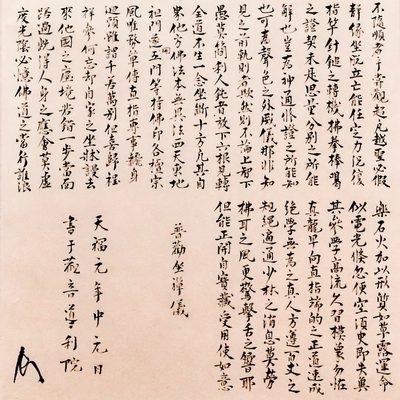
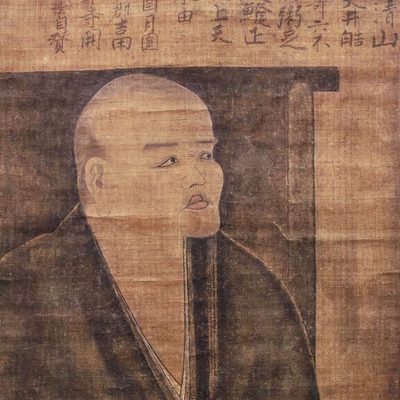
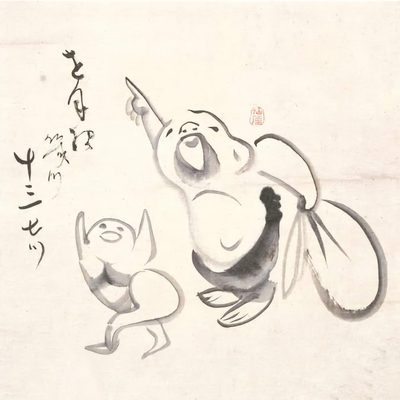

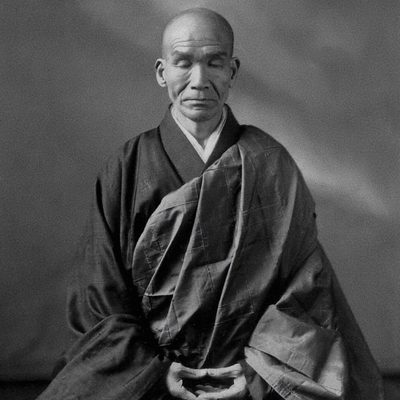




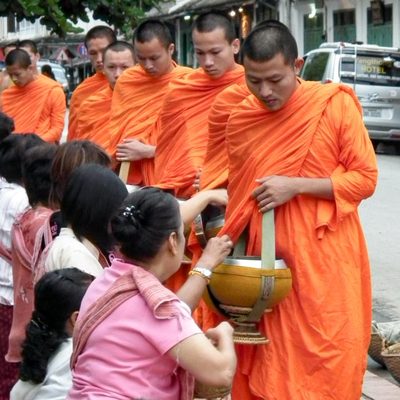
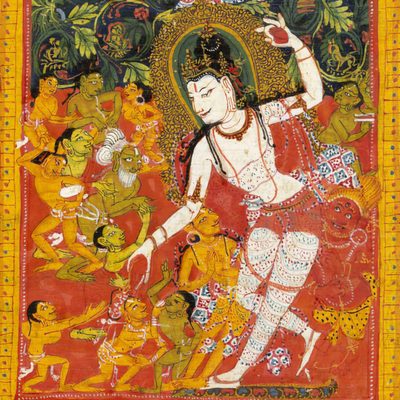
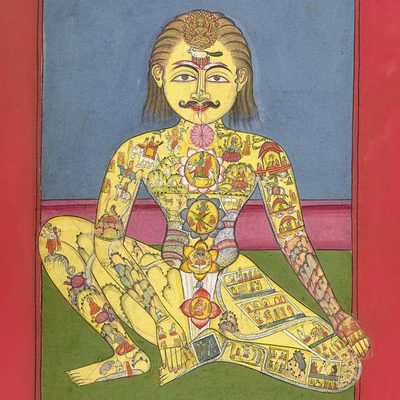

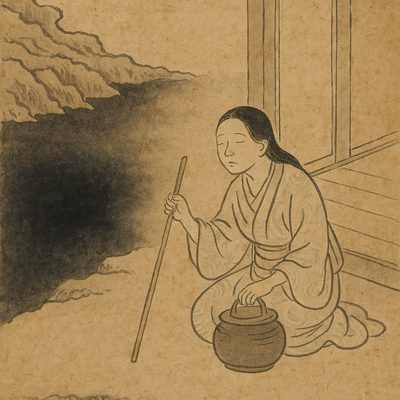
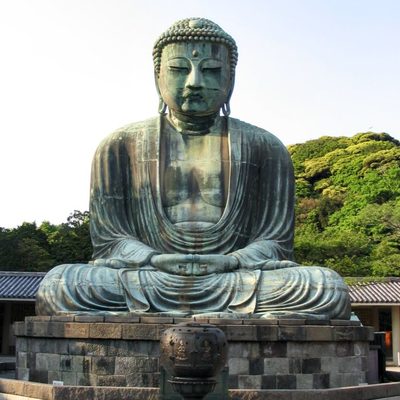
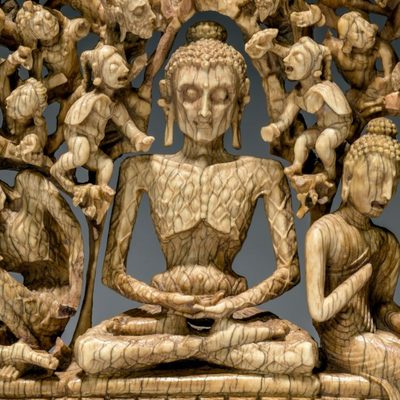
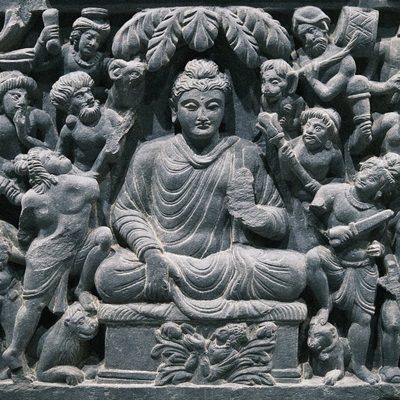
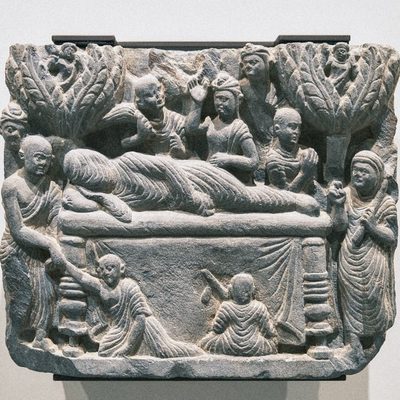
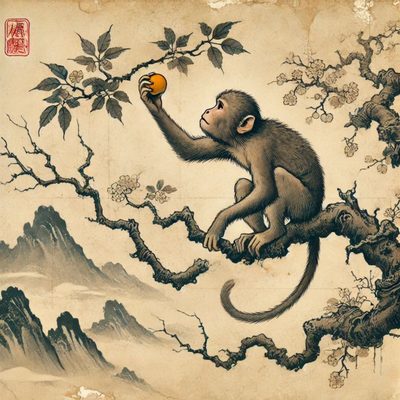
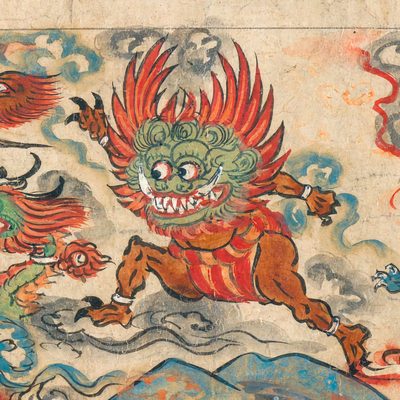

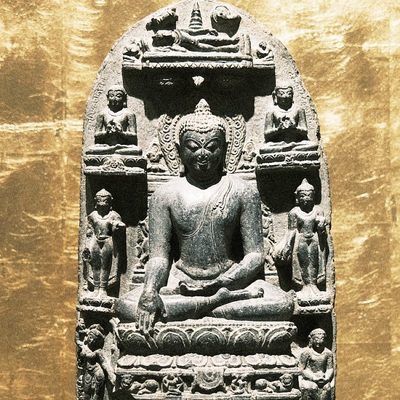

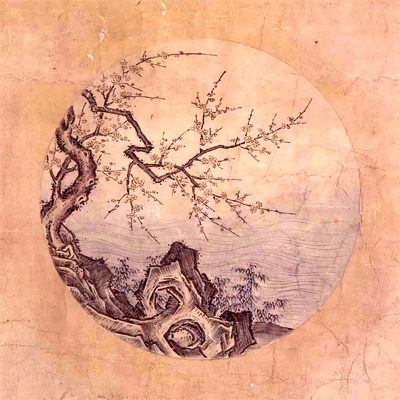
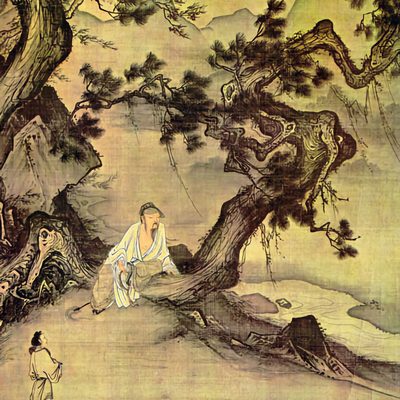
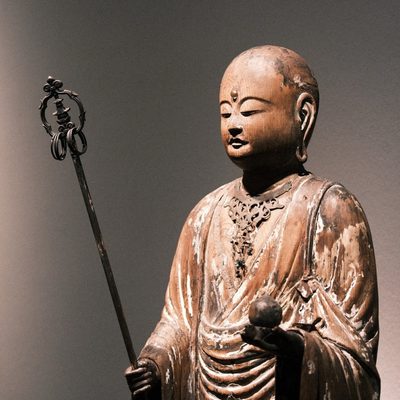
comments