Kōmyō: Radiance and the visibility of the Dharma
Light is among the most widespread images for awakening, knowledge, and spiritual disclosure, but Eihei Dōgen gives this familiar image an unusually concrete meaning. Radiance does not descend upon an otherwise dark world, nor does it reveal a hidden reality behind ordinary appearances. The world itself, in its colors, bodies, places, movements, and activities, is radiant clarity. Mountains and rivers, skin and bones, speech and silence, monastic halls and kitchens do not merely reflect or receive the light of the Dharma. They are the forms in which the Dharma becomes visible and active.
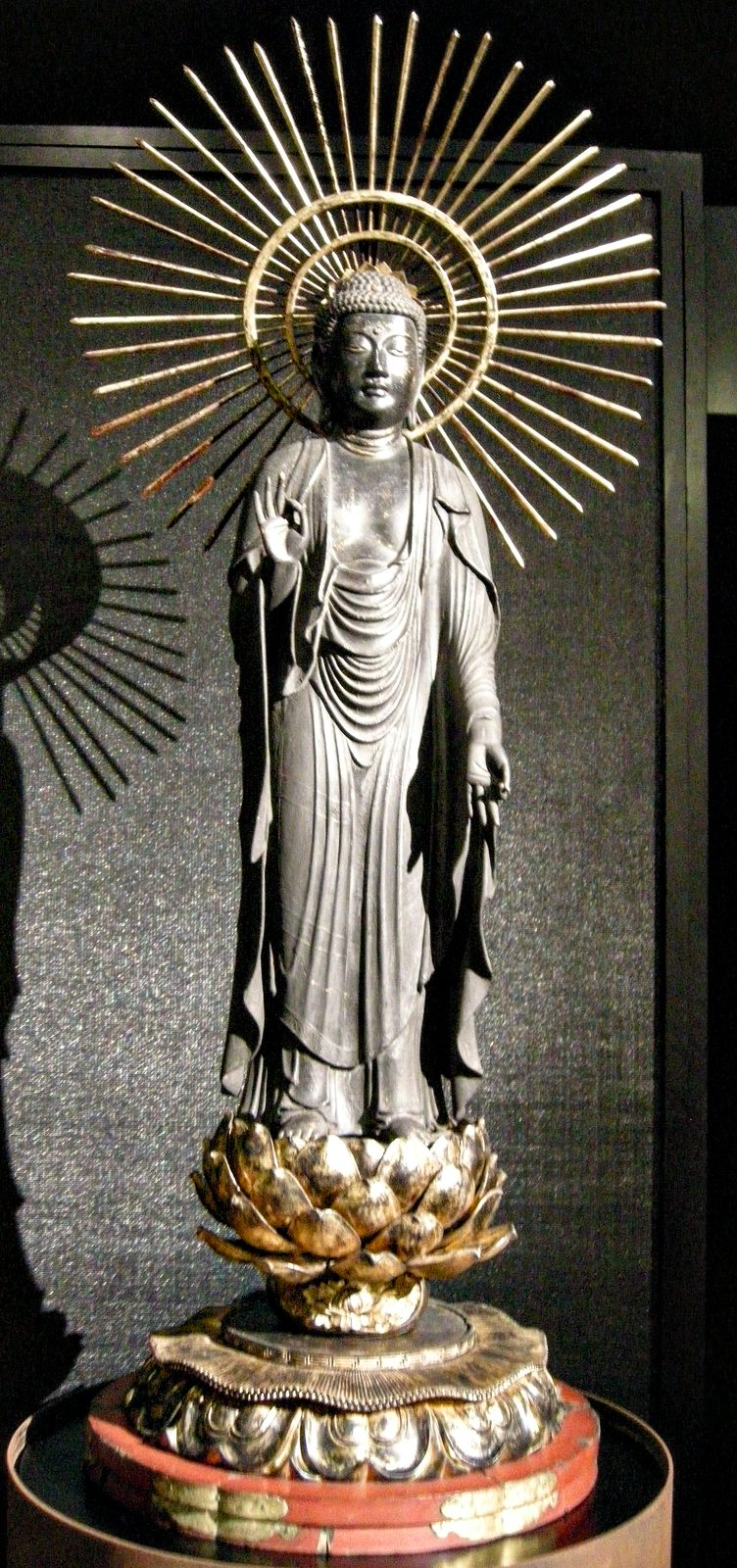
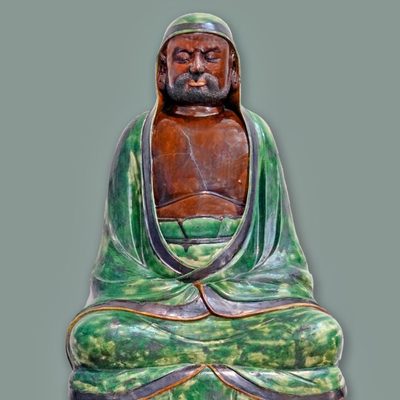
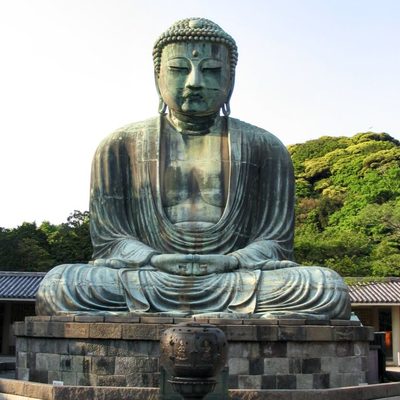
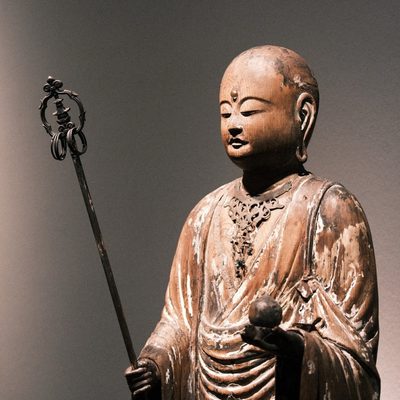
Statue showing Amida with radiant aureole, Japan, Edo period, 17th c.. Dōgen’s Kōmyō emphasizes that radiant clarity is not a hidden spiritual essence behind things. It is the way things exist and appear as themselves. Radiance is not a light added to things. It is the visibility of the Dharma as this concrete world. Source: Wikimedia Commonsꜛ (license: CC BY-SA 3.0)
In this post, we follow Dōgen’s development of radiant clarity in Kōmyō, including its distinction from physical luminosity and inward spiritual light. His interpretation dissolves the opposition between illumination and illuminated things, perceiving subject and perceived world, and sacred revelation and ordinary activity. Radiance is not an exceptional experience reserved for moments of awakening, but the whole universe expressing itself as seeing, speaking, embodiment, practice, and concrete existence.
Introduction
Kōmyō (光明), usually translated as radiance, brightness, luminous clarity, or radiant clarity, is one of Eihei Dōgen’s most explicit reflections on the visibility of the Dharma. The term consists of kō (光), “light”, “brightness”, or “radiance”, and myō (明), “clarity” or “illumination”. In the Buddhist tradition, radiant clarity has long been revered, but it can easily be misunderstood if it is reduced either to physical light or to purely spiritual illumination. But Dōgen rejects both reductions. In Kōmyō, radiance is neither only visible light nor only inner spiritual clarity. It is both physical and spiritual, and at the same time it exceeds that opposition. Radiant clarity is the whole universe in the “ten directions”. It is the eye of the practitioner, the ordinary speech of the practitioner, the whole body of the practitioner, and one’s own clarity. It is not a light added to things. It is the way things exist, appear, speak, act, and practice.
This makes Kōmyō closely related to several other Shōbōgenzō fascicles we have discussed so far. Ikka myōju for intance says that the whole universe is one bright pearl. Inmo points to suchness as “it”, “this”, or “thus”. Keisei sanshiki says that the valley’s voice and the mountains’ form disclose the Dharma. Sansuikyō says that mountains and waters are themselves a sutra. Kōmyō brings these strands together through the image of radiance: The Dharma is not hidden behind reality, but appears as reality’s own clarity.
Dōgen’s central point is not that the enlightened mind sees any special supernatural light. It is that the whole universe is already radiant clarity. Life and death, coming and going, grass and trees, walls and fences, skin, flesh, bones, and marrow, monastic buildings, kitchens, gates, and ordinary actions are all forms of this radiance. Radiance is not elsewhere. It is the visibility of the Dharma as this concrete world.
The structure of the text
Kōmyō unfolds as a sustained correction of what “radiance” means in the Buddha-Dharma. Dōgen does not begin with an abstract definition. Instead, he starts from a striking statement by the Chinese master Chōsa Shōken and then repeatedly tests possible misunderstandings of it. The fascicle moves from a universal claim to historical transmission, from critique of false interpretations to concrete examples of monastic life. Its structure is therefore not a linear theory of light, but a progressive removal of the ways in which radiance can be misunderstood.
First, Dōgen begins with Chōsa’s teaching that the whole universe in the ten directions is the eye, ordinary speech, whole body, and own clarity of a monk or practitioner. This gives the fascicle its central thesis. Radiance is not a separate object that appears inside the world. It is not something apart from the ten thousand things, and it is not a light that turns on and off. Radiance is the whole universe as seeing, speaking, embodiment, and activity. Chōsa’s statement also prevents a purely inward reading: one’s own clarity is not locked inside the mind, but is coextensive with the whole universe.
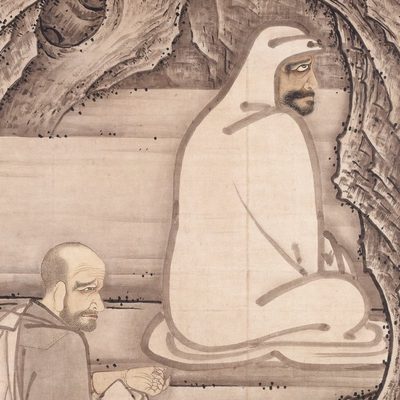
Second, Dōgen situates this radiance historically by referring to the arrival of Buddhism in China and to Bodhidharma’s transmission of the true Dharma-eye. The “Dharma-eye” names the living capacity to see and realize the Dharma directly, rather than merely to possess doctrines about it. It is the vision of reality transmitted from Buddha to ancestor, teacher to student, and embodied practice to embodied practice. For Dōgen, Bodhidharma’s coming to China was therefore not simply an event in religious history, but the appearance of the radiance of Buddhas and ancestors within a new cultural world.
Third, Dōgen criticizes narrow understandings of radiance. Some people imagine it as red, white, blue, golden, like fire, water, jewels, dragons, gods, sun, moon, or a firefly. Dōgen rejects this sensory literalism. Radiance is not merely visible luminosity. It is not a supernatural glow that can be isolated, admired, and mistaken for awakening. This critique also applies to religious imagination more generally: the more one searches for radiance as a special sign, the more one misses the radiance of ordinary things.
Fourth, Dōgen interprets the Lotus Sutra’s image of radiance illuminating eighteen thousand Buddha-lands in the east. He does not read this as a beam of light traveling toward a distant geographical direction. The east is not merely one sector of space. For Dōgen, the east is the whole universe appearing as east. The Buddha-lands are not distant religious scenery. They are the field of seeing itself. This section transforms spatial language in the same way that Uji transforms temporal language, where direction is not a container, but a Dharma-position.
Fifth, Dōgen discusses the story of Emperor Kensō and Kan Yu Bunkō. Bunkō was a Chinese literatus and court official who had studied the Buddha-Dharma as a layperson. When relics emit light at court, others celebrate the event as a miraculous sign of imperial virtue. Bunkō refuses to join them and says that Buddha’s radiance is not blue, yellow, red, or white. Dōgen praises this refusal because Bunkō does not mistake optical light for Buddha’s clarity. At the same time, Dōgen says that Bunkō has not gone far enough. Denying colored light is still not the full realization of radiance, because real radiance is not elsewhere than the concrete colors and forms of the world.
Sixth, Dōgen states the positive meaning of radiance. Real radiant clarity is the ten thousand things themselves. Roots, stems, branches, leaves, flowers, fruits, colors, and lights are not illuminated by something external. They are radiant clarity. This is the center of the fascicle. Radiance is not a hidden divine or spiritual substance behind things. It is the way things exist and appear as themselves.
Seventh, Dōgen returns to Chōsa’s teaching and expands it into life and death, coming and going, ordinary and sacred, grasses, trees, walls, skin, flesh, bones, marrow, smoke, mist, water, stones, bird paths, and dark paths. Nothing is outside radiance. The whole universe in the ten directions is oneself, and oneself is the whole universe. This does not make the self larger in an egoic sense. It dissolves the idea that self, body, world, and clarity are separate possessions.
Eighth, Dōgen discusses Unmon’s statement that every person fully possesses radiant clarity, but when they look for it, it is invisible in deep darkness. The paradox is important. Radiance is not absent, but it cannot be found as an object. When one searches for it as something separate, it becomes darkness. Unmon then identifies radiant clarity with the monks’ hall, Buddha hall, kitchen, and three gates. The “three gates” are the main entrance complex of a Zen monastery, usually understood as the gates of liberation: emptiness, signlessness, and wishlessness. In Dōgen’s reading, they are not merely symbolic architecture. Together with the halls and kitchen, they show that radiance is concrete monastic life: sitting, cooking, entering, leaving, bowing, working, and practicing.
Finally, Dōgen closes with further comments on Seppō, Hofuku, Gakō, and the tenzo, the cook in a monastery. These examples bring the whole fascicle down into ordinary movement. Going to the monks’ hall, withdrawing to private quarters, and the tenzo entering the kitchen are not secondary to the Dharma. They are radiant clarity functioning as practice. The fascicle therefore ends where Dōgen often ends: not with abstract illumination, but with embodied action.
Kōmyō
The full text follows:
Kōmyō
In the great kingdom of Song lived the great master Chōsa Shōken from Konan. One day, in the great Dharma hall, he taught the assembly:
“The whole universe in the ten directions is the eye of a monk.
The whole universe in the ten directions is the everyday speech of a monk.
The whole universe in the ten directions is the whole body of a monk.
The whole universe in the ten directions is your own clarity.
In your own clarity, the whole universe in the ten directions exists.
In the whole universe in the ten directions, there is not a single person who is not themselves.”
In order to experience and study the Buddha-truth, it is undoubtedly necessary to be serious about the matter. Over time, you should not move farther and farther away from the truth and lose it more and more from sight. There were only a few old masters who investigated and realized radiant clarity on the basis of such effort.
The Chinese emperor Kōmyō of the late Han dynasty was the fourth son of Emperor Kōbu. During his reign he was called Sō, and after his death “Emperor Kensō”. In the tenth year of the Eihei era of his reign, Matōgya and Jiku-ran, two monks from central India, brought the Buddha teaching for the first time into the kingdom of Han. On the platforms where the Daoist and Buddhist sutras were to be burned, they defeated a group of Daoists with false views and in this way showed the supernatural powers of the Buddhas.
After that, the first ancestor, Master Bodhidharma himself, came from India to the province of Kōshū at the southern sea of China. This was under the rule of Emperor Wu in the Futsu era of the Liang dynasty. Master Bodhidharma was the twenty-eighth Dharma heir of Sakyamuni Buddha and his rightful successor. He authentically transmitted the treasury of the true Dharma-eye. At that time Bodhidharma stayed at the Shaolin monastery, which was situated on the Shōshitsu peak in the Song mountains. He authentically transmitted the Dharma to the second ancestor, Zen Master Taiso. This was a historical event of the radiant clarity of the Buddhas and ancestors.
Before this, the people in China had neither seen nor heard of the clarity of the Buddhas and ancestors. How could they have recognized their own radiant clarity? Even if they had encountered their clarity with the brain, they would not have experienced and investigated it with their own eyes. Therefore no person could know whether radiant clarity is long or short, square or round, whether it is curved or straight, and whether it gathers in one point or emits rays. Because people did not want to encounter clarity, clarity moved farther and farther away from clarity, and clarity lost clarity more and more from sight. Such estrangement is real estrangement, and it too is radiant clarity.
The stinking skin bags who move farther and farther away from clarity and lose it more and more from sight think and understand it in the following way: The radiant clarity of the Buddhas and their own radiant clarity must be red, white, blue, or golden, like the clarity of fire or water, like the clarity of a pearl or jewel, like the clarity of dragons and gods, or like the clarity of the sun and moon. When they hear the spoken teaching of radiant clarity, they imagine something like a firefly, although they may sometimes follow good teachers and sometimes the sutras. But this is not the practical study of seeing and thinking in the Buddha-Dharma. From the Han through the Sui, Tang, and Song dynasties down to the present day, there have been many such people. You should not learn from Dharma teachers who know only words and letters, and you should also not listen to the strange explanations of certain false Zen masters.
This radiant clarity of the Buddhas and ancestors is the whole universe in the ten directions. It is the whole of the Buddhas and ancestors. It is only the Buddhas together with the Buddhas. It is Buddha’s clarity and the clarity of Buddha. The Buddhas and ancestors see the Buddhas and ancestors as radiant clarity. By practicing and experiencing this clarity, they become Buddha, sit as Buddha, and experience Buddha. Therefore it is said in the Lotus Sutra: “The radiant clarity illuminates the eighteen thousand Buddha-lands in the east.”
This is clarity when it is put into words. This real clarity is Buddha’s clarity. The brightness in the east is the brightness of the east. The east is beyond worldly teachings about this or that place. The east stands at the center of the Dharma teaching and at the center of action. Although the word “east” limits the east, the east is concrete eight pounds of radiant clarity. The east exists in this land, the east exists in other lands, and the east exists in the east. You must experience and investigate this meaning of the east.
“Eighteen thousand” means that ten thousand, half of your concrete doing and action, and half of your real mind are here and now. It does not necessarily mean ten times one thousand, or ten thousand times ten thousand, or one hundred times ten thousand, and so on. The Buddha-lands exist inside the eye. When you hear the statement that radiant clarity illuminates the eighteen thousand Buddha-lands in the east and think that this means a white silk thread extending toward the east, you are not studying the truth. The east is the whole universe in the ten directions. We call the whole universe the east. Therefore the whole universe truly exists. The words that proclaim and reveal the whole universe are nothing other than hearing the voice of the eighteen thousand Buddha-lands.
Emperor Kensō of the Tang dynasty was the father of the two emperors Bokusō and Sensō. He was the grandfather of the three emperors Keisō, Bunsō, and Bu. At his request, Buddha’s relics were brought into the palace so that offerings could be made to them. The story says that they emitted light during the night. The emperor was overcome with joy. Early the next morning all his attendants wrote congratulations to him. They said that the light was the response of the Holy One, Sakyamuni, to the sacred virtues of His Majesty. But one attendant did not write a congratulation. His name was Kan Yu Bunkō, his literary name was Taishi, and as a layman he had earlier studied in the order of the Buddhas and ancestors.
The emperor asked him why he did not send his congratulations like all the other attendants. Bunkō answered: “Your devoted servant once saw a Buddhist scripture in which it is written that Buddha’s radiant clarity is not blue, yellow, red, or white. This here is only the light preserved by some dragon-god.” The emperor asked: “What is Buddha’s clarity?” Bunkō did not answer.
Although Bunkō was only a layman, he had the will of a strong person. One might say of his nature that it moved the heavens and turned the earth. To experience and investigate the truth in this way means to learn it with the mind of a beginner. If one does not do this, it is not the truth. Even if you can expound the sutras so brilliantly that flowers rain down from the sky, if you have not yet reached this truth, your efforts are useless. Even if you are only a bodhisattva of the ten holy and three wise stages, but can preserve the ability to remain silent in the same way as Bunkō, this is awakening to the bodhi-mind and practice and experience.
Nevertheless, Kan Bunkō, there is still something that you have neither seen nor heard in the Buddhist scriptures. How have you understood the words that Buddha’s radiant clarity is not blue, yellow, red, or white? If you have the power to understand that Buddha’s radiant clarity is not blue, yellow, red, or white, then you also must not speak of blue, yellow, red, or white when you see Buddha’s radiant clarity. If Emperor Kensō had been a Buddha or an ancestor, he would have pursued such a question further.
In short, real radiant clarity is nothing other than the ten thousand things of this world. The radiant clarity of these concrete things is already their roots, their stems, their branches, their leaves, their blossoms, their fruits, their light, and their color. It is neither added to them nor taken away from them. There is the radiant clarity of the five worlds and of the six worlds. What is this place where something exists? One possible explanation of radiance and clarity could be this: “How does it happen that the mountains, rivers, and the great earth suddenly arise?”
You must experience and investigate in detail Chōsa’s statement that the whole universe in the ten directions is your own radiant clarity. You must experience and investigate your clarity as the whole universe. Life and death, coming and going, are the coming and going of radiant clarity. Without going beyond the ordinary and the sacred, indigo blue and vermilion red are radiant clarity. Becoming a Buddha and ancestor is the black and gold of radiant clarity. There is practice and experience, but when they are defiled, they cloud radiant clarity. The grasses, trees, hedges, and walls, the skin, flesh, bones, and marrow are the red and white of radiant clarity. Smoke, mist, water, and stones, the path of birds and the dark paths are the never-ending cycle of radiant clarity.
To see and understand one’s own radiant clarity proves that you have directly encountered Buddha and seen him. The whole universe in the ten directions is you yourselves, and you yourselves are the whole universe in the ten directions. There is no other place to which you could flee. Even if there is a place of escape, it is the powerful Way of liberation that goes beyond the body. The seven-foot skull and bones now are without doubt the form and image of the whole universe in the ten directions. The whole universe in the ten directions, which is practiced and experienced in the Buddha-truth, is the skull, the body, the skin, the flesh, the bones, and the marrow.
The great master Daiji-un Kyōshin of Mount Unmon was the thirty-ninth descendant of the Tathāgata, the World-Honored One. He was the Dharma successor of the great master Shinkaku of Mount Seppō. Although he came to the Buddha-Dharma late, he was an extraordinary person in the ancestor’s lineage. Who could say that no radiantly clear Buddha appeared on Mount Unmon?
One day Unmon gave a Dharma talk: “Every person fully possesses radiant clarity. When they seek it, it is invisible in the deepest darkness. What is this radiant clarity that exists in all people?” The assembly did not answer. Unmon himself answered in their place: “The monks’ hall, the Buddha hall, the kitchen, and the three gates.”
The great master’s statement that every person fully possesses radiant clarity does not mean that it will come later, or that it was already there before, and it also does not mean that an outsider realizes it. It simply means that every person possesses radiant clarity from themselves. You should clearly understand this and preserve this clarity. Here Unmon gathers hundreds and thousands of Unmons and lets them experience the same thing, and he lets them say with one mouth and one single voice: every person fully possesses radiant clarity. It is not Unmon who produces the words that every person possesses radiant clarity. Rather, the radiant clarity of every person naturally gathers itself and expresses this truth.
The words “every person fully possesses radiant clarity” mean that all humanity, from itself, is this radiant clarity. Radiant clarity means “every person”. Radiance uses radiant clarity and makes subject and object out of it. It may be that radiant clarity possesses the whole existence of every person. Radiant clarity is, from itself, the existence of every person. Every person is, from themselves, the existence of every person. Every clarity is, from itself, a moment of the existence of clarity. Every moment of existence is the whole of a moment of existence. Every whole is each individual existence of the whole. Because this is so, you should consider that the radiant clarity that every person fully possesses is the realization of every person, and that every person is the whole existence of each individual radiant clarity.
Now let me ask Unmon what he understands by the words “every person” and by the expression “radiant clarity”. Unmon himself asks: “What is this radiant clarity?” This question is the clarity in which doubt destroys every kind of explanation of radiant clarity. When someone expresses radiant clarity in this way, every person and every clarity truly exist here and now. At that time the assembly did not answer. Even if one could formulate the truth hundreds and thousands of times, they expressed themselves by not answering. This is the treasury of the true Dharma-eye, the wondrous mind of nirvana, which the Buddhas and ancestors authentically transmitted.
In place of the monks, Unmon himself answered: “The monks’ hall, the Buddha hall, the kitchen, and the three gates.” The expression “in their place” means putting oneself in the place of Unmon, putting oneself in the place of the great assembly, putting oneself in the place of radiant clarity, and it means putting oneself in the place of the monks’ hall, the Buddha hall, the kitchen, and the three gates. But what does Unmon mean by the words “monks’ hall”, “Buddha hall”, “kitchen”, and “three gates”? You should not confuse the great assembly and each individual person in it with the monks’ hall, the Buddha hall, the kitchen, and the three gates.
How many monks’ halls, Buddha halls, kitchens, and gates might there be? Should we see them as Unmon? Should we see them as the seven Buddhas? Should we see them as the twenty-eight ancestors in India up to Master Bodhidharma? Should we see them as the six ancestors in China up to Master Daikan Enō? Should we see them as our doing and action? Should we see them as life itself? Even if the monks’ hall, the Buddha hall, the kitchen, and the three gates are every Buddha and every ancestor, they are not insensitive to each individual person. Therefore they are beyond individual persons. Because they are so, there are Buddha halls without Buddhas, there are no Buddha halls, and there is no Buddha. There is a radiantly clear Buddha, and there may also not be one. There is clarity without Buddha and clarity with Buddha.
The great master Seppō taught before an assembly: “In front of the monks’ hall, I met all of you.” This is the time when Seppō’s whole body is the eye, the Buddhist vision. It is the brief moment in which Seppō recognizes himself, and it is the monks’ hall that truly is the monks’ hall.
Regarding Seppō’s words, Master Hofuku asked Master Gakō: “Let us leave aside the monks’ hall for now. Where shall we meet the beautiful Bōshū Pavilion or the gently sloping Useki Peak?” Gakō immediately withdrew to his private quarters. Hofuku immediately went into the monks’ hall. This was the liberation of the body from all verbal explanations, when Gakō went into his private quarters and Hofuku went into the monks’ hall. When one encounters the truth, it is the same as encountering one another in front of the monks’ hall.
The great master Shin-ō of Jizō-in monastery said: “The tenzo goes into the kitchen.” These words describe one matter before the seven Buddhas.
Shōbōgenzō Kōmyō
Presented before an assembly at Kannondōri-kōshō-hōrin-ji in the fourth period of the third night watch on the second day of the sixth lunar month in the third year of Ninji, 1242. At that time, the rain of the wet season fell heavily and without pause on the roof. What is this clarity? The assembly was involuntarily pierced by Unmon’s words.
In-depth analysis of the text
Kōmyō asks what radiant clarity really is. Dōgen rejects two simplified answers. Radiant clarity is not merely visible light, and it is not merely inner illumination. For him, it is the whole universe as the appearing, speaking, acting, and practicing of the Dharma.
In the Text that follows, we reconstruct central movements in Dōgen’s argument.
The whole universe as eye, speech, body, and clarity
The fascicle begins with Chōsa’s statement:
The whole universe in the ten directions is the eye of a monk.
The whole universe in the ten directions is the everyday speech of a monk.
The whole universe in the ten directions is the whole body of a monk.
The whole universe in the ten directions is your own clarity.
This opening already contains the whole fascicle. For Dōgen, radiant clarity is not an object seen by the eye. The whole universe is the eye. It is not a teaching spoken about by a person. The whole universe is ordinary speech. It is not something possessed by a body. The whole universe is the whole body. It is not an inner light enclosed in the mind. The whole universe is one’s own clarity. Dōgen therefore begins by dissolving the boundary between subject and world. Eye, speech, body, and clarity are not private possessions, they are universal. Yet they are also not abstract. They are the monk’s eye, the monk’s ordinary speech, the monk’s body, one’s own clarity. Radiance is both intimate and cosmic in this radical re-interpretation by Dōgen.
And Chōsa’s final statement is equally important:
In the whole universe in the ten directions, there is not a single person who is not themselves.
Let’s decipher, what this means. Radiance does not erase individuality, each person is themselves. The whole universe as radiant clarity is not a vague unity in which differences disappear. It is the very place in which each person is completely themselves.
Serious practice and the loss of clarity
Dōgen immediately adds that studying the Buddha-truth requires seriousness. This is not a decorative warning, insteadt it frames the whole text. Radiant clarity may be the whole universe, but it is not realized through superficial interest:
Over time, you should not move farther and farther away from the truth and lose it more and more from sight.
Dōgen then says something striking:
Because people did not want to encounter clarity, clarity moved farther and farther away from clarity, and clarity lost clarity more and more from sight. Such estrangement is real estrangement, and it too is radiant clarity.
Even estrangement from clarity is radiant clarity. This is typical Dōgen. He does not place delusion outside reality. Losing sight of clarity is a real condition, but it is still not outside the whole universe. This resembles his treatment of doubt in Uji and worry in Inmo. Delusion is not denied, but neither is it given independent existence.
The universality of radiance does not function as an excuse for carelessness. Estrangement is also radiance, but remains estrangement. The passage thus presents the investigation and realization of clarity as distinct from making a doctrine out of being already clear.
Against literal light
Dōgen criticizes those who imagine radiant clarity as something like colored light:
The radiant clarity of the Buddhas and their own radiant clarity must be red, white, blue, or golden, like the clarity of fire or water, like the clarity of a pearl or jewel, like the clarity of dragons and gods, or like the clarity of the sun and moon.
This is a false literalism. It treats radiance as a visible phenomenon comparable to fire, jewels, sun, moon, or a firefly. Dōgen rejects this because Buddhist radiance cannot be reduced to sensory brightness. This does not mean that physical light is irrelevant. Dōgen’s point is not idealistic, he does not say that real radiance is only spiritual. Instead, he criticizes the attempt to isolate radiance as a special optical effect. Radiance is the whole universe. Visible light is included, but it does not exhaust the meaning of kōmyō. This is why Dōgen also warns against teachers who know only words and letters, and against false Zen explanations. The wrong understanding of radiance can come from both scholastic literalism and anti-intellectual Zen rhetoric. Both miss the concrete Dharma in Dōgen’s sense.
Radiance as the whole universe
Dōgen gives his positive statement:
This radiant clarity of the Buddhas and ancestors is the whole universe in the ten directions. It is the whole of the Buddhas and ancestors. It is only the Buddhas together with the Buddhas. It is Buddha’s clarity and the clarity of Buddha.
Radiance is not something contained in the universe. It is the universe. It is also not simply an attribute of Buddhas. The Buddhas and ancestors themselves are radiant clarity, and they see one another as radiant clarity. By practicing this clarity, they become Buddha, sit as Buddha, and experience Buddha.
This actually links Kōmyō with Ikka myōju. In Ikka myōju, the whole universe is one bright pearl. Here, the whole universe is radiant clarity. The two images are different, but the underlying concept is similar: The world is not a dead collection of objects, it is luminous Dharma-expression.
The east as the whole universe
Dōgen interprets the Lotus Sutra’s statement that radiant clarity illuminates eighteen thousand Buddha-lands in the east. A literal reading might imagine a beam of light extending toward the east, but Dōgen rejects this:
When you hear the statement that radiant clarity illuminates the eighteen thousand Buddha-lands in the east and think that this means a white silk thread extending toward the east, you are not studying the truth.
The east is not merely a spatial direction. Dōgen writes:
The east is the whole universe in the ten directions. We call the whole universe the east.
This is not a denial of direction, but a transformation of its meaning. The east is not one sector of space separated from the rest. It is the whole universe appearing as east. This resembles Dōgen’s treatment of time in Uji: A single moment is not a fragment of external time but the whole of time from its own Dharma-position. Likewise, the east is not a fragment of space. It is the whole universe as east.
“Eighteen thousand” also does not function as a literal arithmetic number. Dōgen interprets it as the here and now of concrete action and real mind. The Buddha-lands exist inside the eye. Radiance is not a distant spectacle. It is present seeing.
Kan Yu Bunkō and the limits of denial
The story of Kan Yu Bunkō is one of the key narratives in the fascicle. Buddha relics emit light in the emperor’s palace. The court interprets this as a sacred response to the emperor’s virtue. Bunkō refuses to congratulate the emperor and says:
Buddha’s radiant clarity is not blue, yellow, red, or white. This here is only the light preserved by some dragon-god.
Dōgen praises Bunkō’s strength and beginner’s mind. Bunkō correctly refuses to identify Buddha’s radiance with miraculous colored light. He understands that the Dharma’s radiance is not reducible to sensory luminosity. But Dōgen also criticizes Bunkō:
If you have the power to understand that Buddha’s radiant clarity is not blue, yellow, red, or white, then you also must not speak of blue, yellow, red, or white when you see Buddha’s radiant clarity.
Bunkō’s negation is not yet complete. He says what radiance is not, but he still remains caught by the terms he negates. Dōgen pushes beyond both assertion and negation. Radiance is not blue, yellow, red, or white as a mere color category. But real radiant clarity is also not separate from the colors and forms of concrete things. Again, this is typical Dōgen who sees everything being a vivid expression of the Dharma.
The ten thousand things are radiant clarity
Dōgen gives the crucial positive formulation:
Real radiant clarity is nothing other than the ten thousand things of this world. The radiant clarity of these concrete things is already their roots, their stems, their branches, their leaves, their blossoms, their fruits, their light, and their color. It is neither added to them nor taken away from them.
This is the center of Kōmyō. Radiance is not external illumination. It is not a light cast upon things. It is the roots, stems, branches, leaves, flowers, fruits, colors, and lights of things themselves. The world is radiant not because something shines on it, but because it appears as itself. This is very close to suchness. Things are radiant because they are such as they are. Their radiance is not supernatural, it is their concrete existence as Dharma. The grass is radiant as grass. The wall is radiant as wall. Flesh is radiant as flesh. Dōgen therefore avoids both idealism and materialism. Radiance is not only spiritual consciousness. But it is also not merely physical light. It is the concrete manifestation of all dharmas.
Life, death, and the colors of radiance
Dōgen writes:
Life and death, coming and going, are the coming and going of radiant clarity.
This sentence extends radiance into the full structure of existence. Radiance is not limited to pleasant, clear, or sacred states. It includes life and death, arrival and departure. It is not a special state added to life. Life and death themselves are radiant clarity.
Dōgen then writes:
Without going beyond the ordinary and the sacred, indigo blue and vermilion red are radiant clarity. Becoming a Buddha and ancestor is the black and gold of radiant clarity.
The ordinary and the sacred are not rejected, but neither are they made into fixed opposites. Indigo, vermilion, black, and gold are all radiance. The colors of ordinary things and the symbolic colors of awakening belong to the same field. This is a key point for Dōgen’s Zen. The Dharma is not discovered by abandoning ordinary color, body, and world. It is discovered by seeing that ordinary and sacred, color and body, practice and realization are all radiant clarity when not grasped through dualistic fixation.
Body as the whole universe
Dōgen writes:
The seven-foot skull and bones now are without doubt the form and image of the whole universe in the ten directions.
The body is not a prison of flesh contrasted with spiritual light. The body is the image and form of the whole universe. Dōgen continues:
The whole universe in the ten directions, which is practiced and experienced in the Buddha-truth, is the skull, the body, the skin, the flesh, the bones, and the marrow.
This reverses the ordinary hierarchy. It is not that the body contains a spiritual light. The body itself, skin, flesh, bones, and marrow, is the whole universe as radiant clarity. This connects Kōmyō directly to Shinjin gakudō, where the Way is studied with body and mind, and to Busshō, where Buddha-nature is not a hidden essence behind the body. The body is not merely biological matter. But it is also not dismissed as unreal. It is the whole universe practicing and experiencing itself as body.
Unmon’s darkness
Then, Unmon gives another central statement:
Every person fully possesses radiant clarity. When they seek it, it is invisible in the deepest darkness. What is this radiant clarity that exists in all people?
This sentence appears paradoxical. Everyone fully possesses radiance, yet when one searches for it, it is invisible in darkness. The reason is that searching turns radiance into an object. If one seeks radiance as something to find, one loses it in darkness. This is similar to the logic of Inmo: One worries about attaining it because one does not recognize that one is already a person of it. Dōgen clarifies:
The great master’s statement that every person fully possesses radiant clarity does not mean that it will come later, or that it was already there before, and it also does not mean that an outsider realizes it.
Radiance is not a future attainment, not a hidden pre-existing substance, and not something realized by an external agent. It is the self-expression of each person as radiant clarity.
Yet Dōgen does not reduce this to personal inwardness. He says that the radiant clarity of every person gathers itself and expresses the truth. Radiance speaks.
The monks’ hall, Buddha hall, kitchen, and three gates
When the assembly cannot answer Unmon’s question, Unmon answers:
The monks’ hall, the Buddha hall, the kitchen, and the three gates.
This is one of the most important passages in the text. Radiant clarity is not described as a mystical light, meditation state, or inner consciousness. It is the concrete architecture of practice: The monks’ hall, Buddha hall, kitchen, and gates. These are not merely symbols. They are places of sitting, bowing, cooking, entering, leaving, meeting, working, and practicing. Radiance is the lived institution of practice. The kitchen is as much radiant clarity as the Buddha hall. The gate is as much radiance as the meditation hall.
This connects strongly to Dōgen’s practical writings on monastic life, including his emphasis on the tenzo and the dignity of ordinary tasks. The Dharma is not only expressed in doctrine. It is expressed in architecture, cooking, movement, and daily routine. Dōgen explains that answering “in their place” means placing oneself in the position of Unmon, the assembly, radiant clarity, the monks’ hall, the Buddha hall, and the kitchen. This is not abstract empathy, it is the nonseparation of practitioner, place, question, and radiance, reflecting the constant theme in Dōgen’s thinking.
Silence as expression
When Unmon asks, “What is this radiant clarity?”, the assembly does not answer. Dōgen interprets their silence positively:
Even if one could formulate the truth hundreds and thousands of times, they expressed themselves by not answering.
Silence here is not ignorance, it is expression. This recalls many Zen stories in which bodily movement, silence, leaving, entering, striking, or sitting expresses what words cannot. But Dōgen does not use this to reject words. He has just spent the fascicle interpreting words. The point is that expression is not limited to speech.
The assembly’s silence and Unmon’s answer are both radiant clarity. Silence and speech are not opposites. The monks’ hall, Buddha hall, kitchen, and gates are also answers.
Encountering truth in ordinary movement
The final examples intensify the practical point. Seppō says:
In front of the monks’ hall, I met all of you.
Dōgen interprets this as the time when Seppō’s whole body is the eye. Meeting in front of the monks’ hall is not a casual event. It is the whole body as Buddhist vision, and it is the monks’ hall being truly the monks’ hall.
Then Hofuku asks Gakō where to meet the Bōshū Pavilion and Useki Peak if the monks’ hall is set aside. Gakō withdraws to his private quarters. Hofuku goes into the monks’ hall. Dōgen comments:
This was the liberation of the body from all verbal explanations.
One person goes to private quarters, another goes to the monks’ hall. This is not avoidance. It is radiant clarity enacted as bodily response. The Dharma is not explained, it is walked, embodied in action. And the final line is equally explicit in its concreteness:
The tenzo goes into the kitchen.
The cook entering the kitchen is not merely a practical task. It is one matter before the seven Buddhas. Radiance is not only in the Dharma hall. It is in the kitchen, in cooking, in work, and in the daily care of the community.
Kōmyō in a nutshell
The central aspects of Kōmyō can be summarized as follows:
- Radiant clarity is the whole universe.
It is not a light inside the world or beyond the world. It is the whole universe in the ten directions. - Radiance is both physical and spiritual.
Dōgen rejects idealism and materialism. Radiance is not merely inner illumination and not merely visible light. - The whole universe is eye, speech, body, and own clarity.
Seeing, speaking, embodiment, and clarity are not private possessions. They are universal and concrete. - Radiance is not a colored light.
Buddha’s radiance is not blue, yellow, red, white, golden, or like a firefly. Such images reduce it to optical appearance. - The ten thousand things are radiant clarity.
Roots, stems, branches, leaves, flowers, fruits, lights, and colors are not illuminated from outside. They are radiance. - Life and death are radiant clarity.
Radiance includes coming and going, ordinary and sacred, practice and experience. - The body is the whole universe.
Skull, skin, flesh, bones, and marrow are not outside radiance. They are the whole universe practiced as body. - Radiance cannot be found by searching for it as an object.
Every person fully possesses radiance, but when sought as something separate, it is invisible in deep darkness. - Radiance is concrete practice.
The monks’ hall, Buddha hall, kitchen, and three gates are radiant clarity. I.e., radiance, the Dharma, is found in concrete, everyday practice and spaces, not in abstract thought or distant realms. - Silence can express radiance.
The assembly’s non-answer is not merely failure. It is also the treasury of the true Dharma-eye. - Ordinary movement reveals the Dharma.
Going to the monks’ hall, entering private quarters, and the tenzo entering the kitchen are radiant clarity in action. - There is nowhere to flee.
The whole universe is oneself, and oneself is the whole universe. Even escape would be the Way beyond the body.
Kōmyō and core Buddhist concepts
As usual and typical for all fascicles in Dōgen’s Shōbōgenzō, Kōmyō expresses several central Buddhist ideas, through the language of radiance:
- Suchness (tathatā)
Radiance is things as they are: roots, stems, leaves, flowers, colors, halls, kitchens, gates, body, and action. The Dharma is not an abstract concept, it is the concrete reality of things as they are. - Emptiness (śūnyatā)
Radiance is not a fixed substance. It cannot be grasped as a color, object, or inner essence. This is in full expression of emptiness. - Non-self (anattā)
The whole universe is oneself, and oneself is the whole universe. There is no private self that owns radiance. Thus, any sense of ownership or ego is illusory in the face of the Buddha-Dharma. - Impermanence (anicca)
Life and death, coming and going, smoke, mist, water, stones, and bodily existence are all radiant clarity. And all of these phenomena are impermanent, constantly changing, and devoid of a fixed self. - Dependent arising (paṭicca-samuppāda)
Radiance appears through concrete forms, places, relations, speech, silence, and actions. It is not separate from conditions. - Buddha-nature (tathāgatagarbha)
Radiance is not hidden inside beings as an essence. It is the full manifestation of the ten thousand things. - Practice-realization
Radiance is practiced and experienced. Buddhas become Buddha by practicing this clarity, practicing the Dharma. - Embodied practice
Skin, flesh, bones, marrow, halls, gates, and kitchens show that realization is bodily and situated. - Dharma-position
East is east, the monks’ hall is the monks’ hall, the kitchen is the kitchen. Each place is radiance in its own position. - Middle Way
Dōgen avoids both materialist reduction and idealist abstraction. Radiance is neither mere physical light nor pure spiritual light.
Philosophical implications
Kōmyō is philosophically important because it refuses to divide visibility into physical and spiritual categories. Radiance is not only sensory brightness, but neither is it a purely inner illumination. It is the way the whole universe appears as the Dharma. Dōgen’s view is therefore neither materialist nor idealist. The ten thousand things themselves are radiant clarity.
The fascicle also deepens Dōgen’s understanding of embodiment. The body is not an obstacle to light. Skull, skin, flesh, bones, and marrow are the whole universe in the ten directions. This is a direct challenge to any interpretation of Buddhism that treats awakening as escape from the body. For Dōgen, the body is not merely included in practice. It is the universe practicing itself as radiant clarity.
The discussion of Unmon’s monks’ hall, Buddha hall, kitchen, and gates gives the text a practical and institutional dimension. Radiance is not a private mystical experience. It is found in the places where practice occurs, including the kitchen. The tenzo entering the kitchen is not less radiant than a Dharma lecture. Practice appears as architecture, labor, food, movement, and communal life.
Dōgen’s interpretation of the east and the eighteen thousand Buddha-lands also shows his way of transforming spatial language. The east is not merely a direction. It is the whole universe as east. This is similar to his treatment of time in Uji, where one moment is the whole of time from its own position. Space, like time, is not a neutral container. It is Dharma-expression.
Finally, Kōmyō shows that not finding clarity is not outside clarity. Searching for radiance as an object makes it invisible in darkness, but this darkness is not separate from radiant clarity. Dōgen does not turn this into passivity: Radiance is already the whole universe, while its investigation, practice, and realization remain central to the fascicle.
Similarities and differences with other religious traditions
Dōgen’s understanding of kōmyō has some striking similarities and differences with the use of light in other religious traditions.
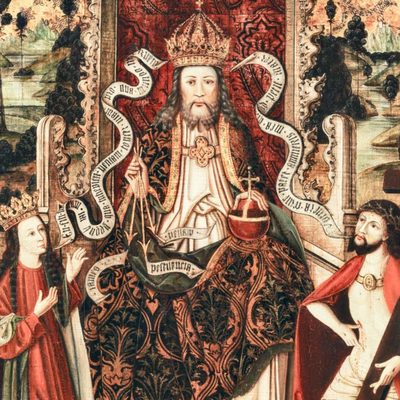
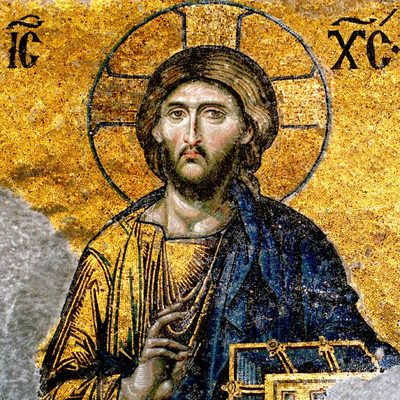
In Christianity, light is often understood to mark the presence, glory, or revelation of Yahweh. The Gospel of John identifies Christ with light, and later Christian theology developed a strong metaphysics of divine illumination. In the Gothic period, this has been even further developed and found expression in the architecture of its time. Churches were not only built as shelters for ritual, but as spaces where light itself became theological. The pointed arch, rib vault, flying buttress, and large stained-glass windows made it possible to open the walls and flood the interior with colored light. The rebuilt abbey church of Saint-Denis under Abbot Suger became the classic example of this vision. Light entered the church through stained glass, was transformed by color, and created an atmosphere in which the material building pointed beyond itself toward divine presence. Light was intended to create a sense of transcendence, to lift the gaze upward, and to make the world itself a reflection of divine glory.
This Christian use of light is close to Dōgen in one sense and very different in another. It is close because light is not merely physical. It is meaning-bearing, theological, and transformative. It changes how space is experienced. But it is different because Gothic light usually keeps a distinction between divine source and illuminated world. Light enters the church, descends into matter, transforms the interior, and points the believer upward toward Yahweh. The visible world becomes radiant because it participates in or receives divine light. However, Dōgen’s kōmyō does not work in the same way. Radiance is not a divine light entering the world from beyond. It is not the glow of a transcendent God made visible through architecture. It is the ten thousand things themselves. Roots, stems, branches, leaves, flowers, fruits, colors, skin, flesh, bones, marrow, halls, kitchens, gates, smoke, mist, water, and stones are radiant clarity as they are. The Dharma is not hidden behind the world and then revealed by light. The world itself is already the visibility of the Dharma.
Islam also has a highly developed language of light, especially through the Qur’anic image of nūr. The famous Light Verse says that Allah is the light of the heavens and the earth and describes divine light through the image of a niche, lamp, glass, blessed olive tree, and “light upon light”. In Islamic thought and art, light can signify guidance, divine presence, intelligibility, beauty, and the ordering of perception. Islamic architecture often works with filtered light, reflection, shadow, geometric pattern, and surface, so that light does not merely illuminate objects but activates the space and reveals order. Here again, the comparison is close but also different. Islamic nūr is not simply physical brightness. It is also guidance, disclosure, and divine orientation. Light makes the world readable as a sign. Yet in most Islamic contexts, the distinction between God and creation remains decisive. The world may manifest signs of divine light, but Allah is not simply identical with the things of the world. Dōgen’s kōmyō avoids this creator-creation structure. Radiance is not a divine attribute reflected by created things. It is not an ontological bridge between God and world. It is the way the Dharma appears as the world itself. The kitchen does not point away from itself toward a higher divine light. The kitchen is radiant clarity. The monks’ hall does not become meaningful because it receives sacred illumination from elsewhere. The monks’ hall is the whole universe in the ten directions as concrete practice.
Thus, while there are resonances between Dōgen’s kōmyō and the use of light in Christianity and Islam, the differences are decisive. Dōgen’s kōmyō is not a divine light entering the world. It is not a sign of Yahweh, Allah or any other god. It is also not a theological metaphor for transcendence. It is the whole universe as radiant clarity, including ordinary things, bodily existence, practice, and even estrangement. Still, the comparison shows why light becomes such a powerful religious image across traditions. It expresses a shared intuition that reality is not merely mute, opaque, or inert. It can appear as meaningful, disclosed, and transformed. Dōgen’s distinctive step is to radicalize this intuition within the Buddhist framework of suchness: Things do not shine because they point beyond themselves. They shine because they are fully themselves.
Conclusion
Kōmyō presents radiant clarity as the visibility of the Dharma. Dōgen does not understand radiance as a supernatural glow, a colored light, or a merely spiritual illumination. Radiance is the whole universe in the ten directions. It is the eye, speech, body, and own clarity of the practitioner. It is life and death, coming and going, grasses and trees, walls and hedges, skin and bones, smoke and mist, water and stones.
This view continues the logic of Ikka myōju. If the whole universe is one bright pearl, then the whole universe is also radiant clarity. But Kōmyō emphasizes visibility, embodiment, and practical location. Radiance is not elsewhere. It is the monks’ hall, the Buddha hall, the kitchen, and the three gates. It is the tenzo entering the kitchen. It is the body meeting the world as practice.
Dōgen therefore rejects both sensory literalism and abstract spirituality. Buddha’s radiance is not blue, yellow, red, or white as an object of visual fascination. Yet it is also not separate from the colors, forms, and bodies of this world. Real radiant clarity is the ten thousand things themselves: roots, stems, branches, leaves, blossoms, fruits, light, and color.
The fascicle’s practical implication follows directly. Clarity is not sought elsewhere: When treated as an object, it becomes invisible in deep darkness. When enacted as body, speech, hall, kitchen, gate, life, and death, it appears as the Dharma’s own visibility. Radiant clarity is not added to the world, but is the world as Buddha-Dharma.
References and further reading
- Dogen Zenji, Shobogenzo – Die Schatzkammer des wahren *Dharma-Auges*, 4 Bände, 2013, Verlage: Kristkeitz Werner, Übersetzung: Ritsunen Gabriele Linnebach, Gudo Wafu Nishijima, ISBN: 9783921508909



comments