Gyōji: Continuous practice as the life of the Dharma
Practice is often interpreted as preparation for a later result. For instance, training is expected to yield insight, discipline, liberation, or awakening. Eihei Dōgen’s Gyōji challenges this temporal separation. It presents practice not as a provisional activity rendered unnecessary by its goal, but as the concrete mode through which awakening, the Dharma, and the lives of practitioners remain active.
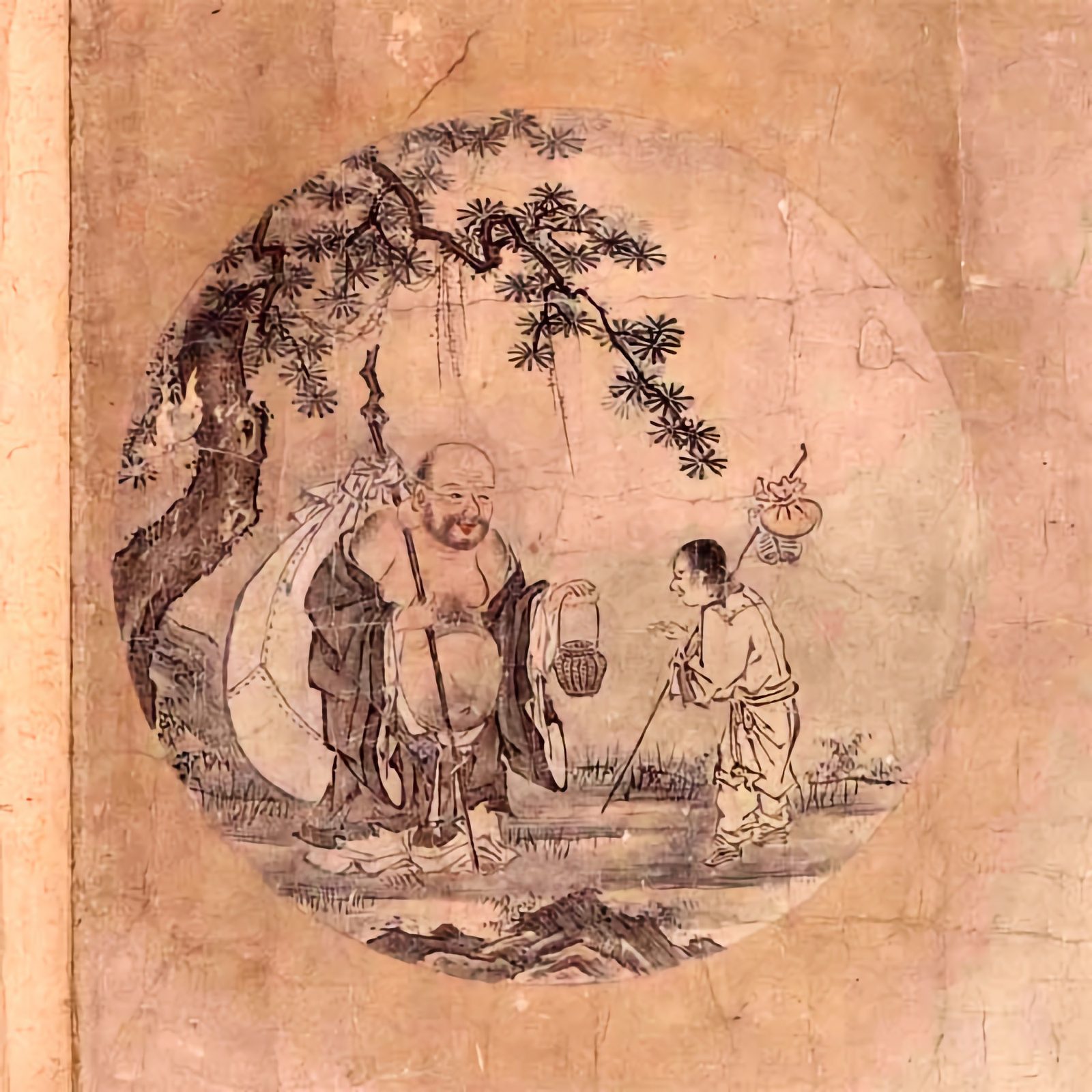
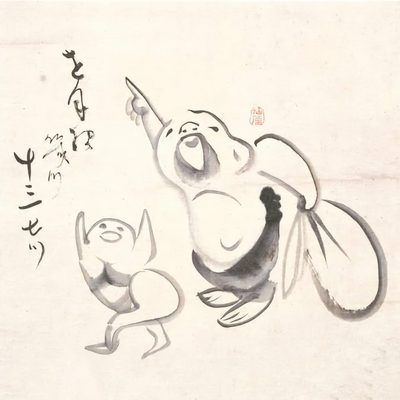
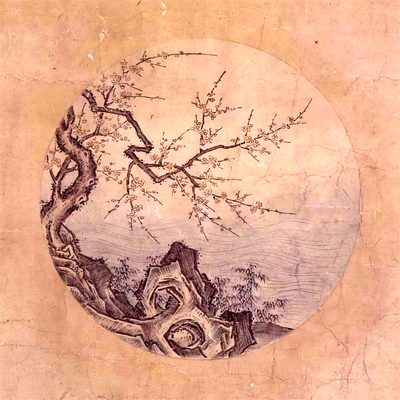
Picture No. 10 of the so-called Oxherding Pictures (十牛図, jūgyūzu), a series of ten images that depict stages of spiritual cultivation in Zen Buddhism. Painted by the Japanese Rinzai Zen monk Shubun in the 15th century after lost 12th-century originals, it is conventionally titled “Entering the Marketplace” and represents a return to ordinary social life after awakening. The image offers parallel to Gyōji’s treatment of continuous practice: The fascicle locates the ongoing expression of the Dharma in conduct within the world rather than in withdrawal from it. Source: Wikimedia Commonsꜛ (license: public domain)
In this post we therefore examine how Dōgen’s Shōbōgenzō fascicle Gyōji develops continuous practice through philosophical reflection and through exemplary accounts of Buddhas, ancestors, teachers, and monastic practitioners. We follow Dōgen’s account of practice as a beginningless and endless ring linking bodhi-mind, realization, and nirvana, including its bodily, historical, ethical, and institutional dimensions. Gyōji treats the preservation of the Buddha-Dharma as an accomplishment of sitting, working, teaching, service, renunciation of attachment, and sustained conduct, rather than of doctrine or lineage claims alone.
Introduction
Gyōji (行持), usually translated as continuous practice, sustained practice, or the preservation of pure practice, is one of the longest and most practically oriented fascicles of Eihei Dōgen’s Shōbōgenzō. The title combines gyō, meaning “practice”, “conduct”, “action”, or “doing”, with ji, meaning “to maintain”, “preserve”, or “sustain”. The expression therefore refers not simply to repeated religious exercises, but to a form of practice that continues across changing situations and is not abandoned after an experience of awakening, the reception of transmission, or the assumption of a teaching position.
Dōgen composed Gyōji in 1242 at Kannondōri Kōshō Hōrin-ji. Much of the fascicle consists of stories about Siddhartha Gautama, Mahākāśyapa, Pārśva, Bodhidharma, Huike, Huineng, Mazu, Baizhang, Zhaozhou, Dongshan, Gensha, Changqing, Isan, Fuyō Dōkai, and Dōgen’s own teacher Tiantong Rujing. These figures are not presented as subjects of detached biography. Dōgen selects and arranges episodes from their lives in order to construct a normative history of Buddhist practice.
The stories repeatedly emphasize sitting, work, poverty, travel, monastic service, refusal of honors, bodily endurance, teaching, and loyalty to a lineage. They are intended to show that the Dharma is maintained through conduct rather than by doctrine, institutional continuity, or reputation alone. Dōgen’s argument is not that written teachings or monasteries are irrelevant. It is that texts, institutions, titles, and buildings cannot preserve the Dharma if they become detached from the practices they are supposed to support. The fascicle therefore develops a historical and ethical form of Dōgen’s principle of practice-realization. Practice is not merely preparation for a later awakening that eventually makes further effort unnecessary. Dōgen uses the exemplary figures of the lineage to argue that awakening, teaching, work, and continued discipline belong to one ongoing process. The ancestors practice before recognition, after recognition, while teaching, and until death.
This argument also has a strong institutional and polemical dimension. Dōgen criticizes religious careers organized around rank, imperial recognition, wealthy patrons, ceremonial display, impressive buildings, and public reputation. At the same time, his own examples establish another form of authority based on lineage, austerity, monastic discipline, and recognized transmission. Gyōji is therefore not a rejection of religious institutions as such. It is an attempt to distinguish institutions that support practice from institutions that use the appearance of religion to accumulate prestige.
The text is often uncompromising. It praises severe asceticism, separation from family, indifference toward bodily comfort, and willingness to risk one’s life for the Dharma. Some examples belong to the hagiographic literature of medieval Buddhism and cannot be treated as straightforward historical reports or literal instructions for present practice. Their function is to dramatize commitment, but their rhetoric also reflects monastic ideals that can become harmful when detached from ethical judgment, bodily care, and contemporary knowledge.
Gyōji is therefore best read neither as a catalogue of heroic acts to be copied literally nor as a purely philosophical meditation on practice. It is Dōgen’s attempt to explain how Buddhist practice is maintained across time, how it becomes visible in ordinary and extraordinary conduct, and how it can be corrupted by the desire for recognition, comfort, and authority.
The structure of the text
Unlike many shorter fascicles, Gyōji develops its argument through an extensive sequence of quotations, lineage narratives, admonitions, and biographical examples. Er do not show the full text here, as that would exceed the limits of this post. Instead, selected passages are examined in relation to Dōgen’s wider argument. A German translation is available in Ritsunen Gabriele Linnebach’s four-volume edition (see the references below).
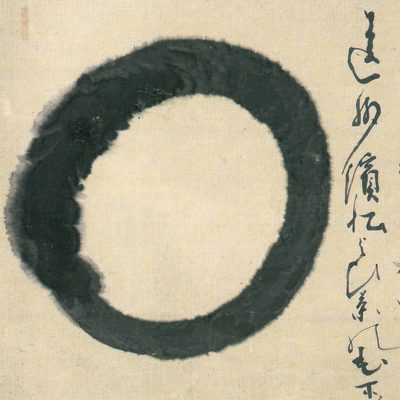
The opening presents Dōgen’s doctrinal account of continuous practice. He describes bodhi-mind, practice, realization, and nirvana as forming a ring without beginning or end. The image challenges a linear interpretation in which aspiration is followed by practice, practice produces enlightenment, and enlightenment brings practice to completion. For Dōgen, each element is understood through the others.
He then extends this argument beyond individual cultivation. Dōgen claims that the practices of present practitioners and those of previous Buddhas and ancestors mutually sustain one another. He even broadens the claim further: Sun, moon, stars, earth, space, body, mind, subject, object, the four elements, and the five skandhas all “exist through” continuous practice. Within Dōgen’s argument, practice is therefore not merely an activity performed by human beings within an already completed world. It belongs to the ongoing realization of the world itself. The passage gives continuous practice a cosmological scope, even though it does not explain this relation as a physical mechanism in the modern scientific sense.
The next point concerns time. Dōgen argues that practice does not simply occur within an already given present. He calls the concrete enactment of continuous practice “now”. This connects Gyōji with Uji, where beings do not merely occupy time but enact particular forms of time through their existence and activity.
The central and longest part of the fascicle consists of exemplary lives. Dōgen moves through Indian and Chinese Buddhist history and eventually reaches his own teacher Rujing. The sequence allows him to present continuous practice as an uninterrupted historical lineage, although the narratives themselves come from sources shaped by legend, sectarian memory, and later interpretation.
Several recurring themes repeatedly occur in these examples:
- Practice continues after awakening.
Dōgen repeatedly highlights masters who continued sitting, working, teaching, traveling, or living under discipline after receiving recognition or transmission. Their stories oppose the idea that realization ends the need for practice. - Practice is embodied.
Sitting, walking, working, eating, wearing robes, maintaining monasteries, traveling, begging, speaking, and remaining silent all participate in the formation of Buddhist life. - Practice is communal.
Serving the Sangha, transmitting teaching, maintaining places of practice, and enabling later generations to encounter the Dharma are central to Dōgen’s account. - Practice is not identical with institutional expansion.
Dōgen praises monasteries when they support disciplined communal life, but criticizes construction, luxury, and administration when they become vehicles for reputation and wealth. - Practice cannot be replaced by explanation.
Dōgen gives practical activity priority over verbal mastery, but he does not reject language. Explanation and practice can support one another when both remain connected with actual conduct. - Practice requires attention to time.
Dōgen’s contrasts between one day of practice and one hundred wasted years are rhetorical attempts to create urgency. - Practice expresses gratitude.
Continuing the practices attributed to earlier teachers becomes Dōgen’s preferred way of repaying the lineage. - Practice is threatened by fame and gain.
The desire for titles, patronage, wealth, and public standing is presented as a structural corruption of religious life rather than merely a personal weakness. - Practice includes ordinary activity.
Tea, rice, work, food, clothing, buildings, and daily monastic routines are not regarded as spiritually secondary. - Practice is the medium of historical continuity.
Dōgen argues that the Dharma reaches the present because earlier practitioners enacted and transmitted it.
The final major section turns to Tiantong Rujing. Dōgen presents his teacher as the contemporary culmination of the lineage he has constructed. Rujing refuses imperial honors and large gifts, emphasizes zazen, and criticizes self-authorized understanding. By ending with his own teacher, Dōgen connects the remote history of Buddhas and ancestors with the legitimacy of his own transmission and teaching in Japan.
In-depth analysis
The following discussion focuses on Gyōji’s central image of continuous practice as a ring and on the cosmological language Dōgen uses to describe its effects. We do not attempt an exhaustive account of the fascicle.
Continuous practice as the ring of the Dharma
The opening of Gyōji gives the fascicle its central conceptual image:
This practice forms a continuous ring of truth, without separation between awakening the bodhi-mind, practice, realization, and nirvana. Therefore this pure practice is neither an action you must force yourself to do nor something imposed from outside, but a practice that was never defiled from the beginning. The virtue of such practice preserves and sustains yourself, and it preserves and sustains the world.
Dōgen uses the image of a ring to question a linear model of the Buddhist path. In a linear model, bodhi-mind initiates practice, practice causes realization, and realization culminates in nirvana. The stages may influence one another, but they remain sequentially ordered. The ring does not simply reverse this sequence. It presents each element as dependent on and expressed through the others. Bodhi-mind is not merely an intention formed before practice. It is renewed through practice. Realization is not merely a result appearing at the end. It shapes how practice is undertaken. Nirvana is not positioned as a final state outside ordinary activity, but as one term within an ongoing pattern. This does not mean that Dōgen abolishes development or that beginners and experienced practitioners are indistinguishable. His own writings contain detailed instructions, disciplinary expectations, and distinctions between adequate and inadequate practice. The ring instead prevents these differences from becoming a story in which practice is discarded once its supposed goal has been reached.
The statement that practice is neither forced from within nor imposed from outside also requires careful interpretation. Dōgen is not denying that practice requires effort, rules, teachers, schedules, and institutional discipline. The fascicle repeatedly demands precisely these things. His point is that authentic practice cannot be reduced either to private willpower or to obedience to an alien command. It becomes meaningful only when aspiration, bodily action, inherited teaching, and realization are integrated. The expression “never defiled from the beginning” similarly does not mean that every action performed by a practitioner is automatically pure. Dōgen distinguishes sharply between practice and conduct motivated by fame, gain, laziness, or self-display. “Undefiled” describes practice that has not been converted into a possession of the practitioner or a means toward another reward.
The claim that continuous practice “preserves the world” expands this argument beyond individual attainment. Practice forms people, institutions, habits, relationships, and modes of attention. Through these effects, it helps preserve a world in which Buddhist teaching can continue to be heard and enacted. Dōgen expresses this social and historical process through cosmological language, but its concrete basis lies in repeated activity.
The cosmological language of practice
Dōgen continues:
Through pure practice the sun, moon, and stars exist; through pure practice the earth and space exist; through pure practice object and subject, body and mind exist; through pure practice the four elements and five skandhas exist.
Taken literally as a causal explanation of nature, the statement would be difficult to defend. Stars, planets, and physical elements do not begin to exist because human beings practice Buddhism. Dōgen is not offering a scientific cosmology. The passage instead shows how completely he refuses to isolate practice within a private religious compartment. Subject and object, body and mind, natural processes, and the categories of Buddhist analysis are all interpreted from within enacted practice. They do not first constitute a completed neutral world to which spiritual meaning is later added. The formulation also presents practice as a mode of disclosure. The sun and moon are not produced by sitting, but their place within the practitioner’s lived and interpreted world changes through practice. Body and mind are not created by Buddhist discipline, but their relation is understood and enacted differently within it.
This helps clarify the connection with Kōmyō and Ikka myōju. In those fascicles, Dōgen applies images of radiance and the pearl to the whole universe. In Gyōji, he organizes a similarly comprehensive claim around activity. The common structure is not that the universe literally becomes light, a jewel, or monastic practice. Dōgen uses each expression to reject a separation between Buddhist realization and the phenomena through which life occurs.
His cosmological language also elevates the historical practice of his own lineage. If the world is sustained through the continuous practice of Buddhas and ancestors, then preserving that practice becomes more than one religious option among others. It becomes, within Dōgen’s framework, participation in the very order of reality.
Practice as the concrete now
Dōgen writes:
When we speak of this now, we do not speak of something that existed before practice; rather, the concrete realization of pure practice is what we call “now”.
The sentence does not deny that events can be dated or that time exists independently of an individual’s awareness. Its purpose is to prevent the present from being treated as an empty container into which practice may or may not later be inserted. A practiced present differs from an abstract point on a timeline. It consists of a particular activity undertaken by a particular body under particular conditions. Sitting, working, teaching, hearing, or serving the community gives the moment its concrete form. This is related to Dōgen’s treatment of time in Uji. There, a being is not simply located at a moment in time. Its activity is a particular configuration of time. In Gyōji, continuous practice is one way in which the present becomes determinate.
The passage does not amount to the vague instruction to “live in the moment”. Dōgen is concerned with enacted conduct: Immediate awareness alone does not make an activity Buddhist, since ambition, resentment, entertainment, or exploitation may be pursued attentively. Within the fascicle’s framework, a present moment becomes a preservation of the Buddha-Dharma only when it participates in the continuity of practice.
Dōgen’s emphasis on “now” therefore combines presence with ethical and practical direction. The relevant issue is not merely awareness of the present, but the habits, values, and relationships that a current action sustains.
A single day of practice
Dōgen quotes a saying according to which one day of realizing the “now of a Buddha” is more valuable than one hundred years without such realization. He then expands the contrast:
If, in the cycle of birth and death lasting hundreds, thousands, tens of thousands, and millions of ages, there is even one day on which pure practice is preserved, that one day is more precious than the bright pearl in the hair knot and the eternal mirror that appears and disappears.
The comparison is intentionally exaggerated. Dōgen is not providing a measurable calculation of spiritual value. He uses the disproportion between one day and one hundred years to challenge the assumption that a long life is automatically a successful or meaningful one. The criterion is qualitative rather than quantitative. A long period can reinforce habits of distraction, greed, or avoidance. A shorter period of disciplined practice can interrupt these patterns and alter the direction of a life.
Dōgen continues:
It is a regrettable waste of days and months when one lives for a hundred years aimlessly. Even if someone lives for a hundred years like a slave driven back and forth by sounds and forms, but in all those years preserves pure practice for a single day, on that day they would not only have practiced a life of one hundred years, they would have liberated other lives of one hundred years.
The language of being driven by “sounds and forms” belongs to Buddhist analyses of attachment to sensory experience. Dōgen uses it broadly for a life governed by external stimulation, status, and habitual reaction. His statement that one day can “liberate” other lives extends practice beyond the individual. A practiced day may influence students, communities, future habits, and the transmission of teaching. It can also reinterpret the past by changing how previous actions are understood and continued.
The claim does not imply that one exceptional day cancels previous harm or eliminates ethical responsibility. Dōgen’s subject is continuity: A single day matters because it enters and may redirect an ongoing pattern, not because it functions as magical compensation. His rhetoric of wasted time can, however, become oppressive when detached from illness, disability, exhaustion, care work, or psychological distress. Writing within a demanding monastic environment, Dōgen often treats interruption as a danger, and we have to keep this fact in mind while reading the fascicle.
Beyond these practical qualifications, the passage connects with Uji’s account of “being-time”. Dōgen’s claim that a day of practice can “liberate” other lives is not a quantitative assertion but describes the historical reach of enacted practice: It may shape communities, future conduct, and the interpretation of the past. The “now of a Buddha” is consequently not a neutral point on a timeline but the concrete realization of practice. This ontological vocabulary gives a single practiced moment significance without turning it into a guarantee of personal or worldly transformation.
Age, ability, and the story of Pārśva
Dōgen uses the story of the ancestor Pārśva, who allegedly entered monastic life at an advanced age and attained understanding after several years of intense practice. He concludes:
Do not worry about your age.
The story belongs to Buddhist hagiography. Claims that Pārśva spent 60 years in the womb, emitted light from his hands, or never lay down to sleep cannot be treated as historically verified biography. They construct an extraordinary figure whose late beginning undermines the claim that practice belongs only to youth. Although Dōgen’s argument affirms the possibility of continued learning, its rhetoric can minimize bodily limitation, where age affects strength, mobility, attention, and health. A critical reading therefore distinguishes continuity of orientation and effort from reproducing the extreme ascetic feats attributed to hagiographic ancestors. Sitting, study, ethical reflection, care for others, ritual, and attention to daily conduct can take changing forms.
Dōgen also writes that practice encounters life and death directly rather than occurring “inside” them. Here he resists treating life and death as abstract containers surrounding a separate spiritual activity. Aging, illness, limitation, and mortality become part of the concrete circumstances through which practice is interpreted. This does not remove fear or grief. It means that Buddhist practice is not postponed until bodily vulnerability has been overcome.
Huineng and the construction of practice after transmission
Dōgen recounts that Huineng stamped rice day and night while living in Hongren’s community. He then claims that Huineng continued carrying and using the rice pestle even after receiving transmission and becoming a teacher.
The historical details of this account are uncertain. The story belongs to a later tradition that shaped Huineng into an exemplary figure of direct insight and humble labor. Dōgen selects the rice-stamping motif because it supports his view of practice. Manual work is not merely preparation for religious status: the activity before transmission and afterward belongs to one continuity. The rice pestle also indicates the material conditions of monastic life, which depend on food production, cleaning, maintenance, administration, and care. The story challenges a hierarchy in which necessary labor is treated as beneath advanced practitioners, since recognition does not exempt a teacher from communal participation.
The same pattern appears in Dōgen’s descriptions of Mazu, Baizhang, Rinzai, and Rujing. Each is presented as continuing bodily practice after receiving the Dharma. These accounts support Dōgen’s rejection of an enlightenment-centered Zen in which a decisive experience replaces discipline.
Work as practice: Baizhang’s “one day without work”
Dōgen praises the saying attributed to Baizhang:
One day without work is one day without food.
According to the story, Baizhang continued working alongside younger monks in old age. When the community hid his tools to protect him from exertion, he refused to eat. The anecdote is often used to present manual labor as a characteristic feature of Chán monasticism. Its historical form may have been shaped by later institutional ideals, but Dōgen treats it as evidence that work belongs to continuous practice. The point is not simply that labor is morally good. Work can be exploitative, unnecessary, or organized for profit and prestige. The true value of Baizhang’s labor lies in the fact that it contributes to the shared life of the Sangha and the continuation of practice itself. Dōgen writes that Baizhang served the community and other people throughout his monastic life. Continuous practice here takes the form of maintenance, participation, and refusal of special privilege.
However, we should keep in mind that Baizhang’s refusal to eat dramatizes his refusal to separate himself from communal responsibility, but it does not establish a general demand that elderly or disabled people or anyone else should work beyond their capacity. Its relevance lies in its criticism of entitlement, not in denying bodily limits or the legitimacy of care.
This connects Gyōji with Jishō zanmai, where teaching others also contributes to one’s own practice. In both texts, Dōgen rejects a model of cultivation isolated from communal needs and activities. Baizhang’s labor is not prescribed for all practitioners, but it challenges the assumption that practice can be fully realized through meditation alone or that advanced practitioners are exempt from communal work. Labor is so central in the story because it contributes to the shared life of the Sangha and sustains continued engagement.
Staying in the monastery
Dōgen quotes Zhaozhou:
If you do not leave the monastery for an entire life, and even if you do not speak for five or ten years, no one will call you mute. After that, even the Buddhas cannot reach you.
The saying praises stability and sustained commitment. Dōgen contrasts it with restless movement between teachers, monasteries, places, and impressions.
The saying is not a literal prohibition against travel or speech. Dōgen’s own life included extensive travel, and Gyōji praises figures such as Seppō and Bodhidharma precisely for difficult journeys. Its target is movement used to avoid sustained engagement. Zhaozhou’s statement opposes the tendency to seek new teachers or settings whenever practice becomes uncomfortable, repetitive, or resistant to quick understanding. Remaining in one place allows habits, conflicts, and limitations to become visible over time. Dōgen adds:
You should simply experience and investigate how valuable each moment is that preserves pure practice. Do not begin to wonder whether this silence is empty of content.
Silence here is not inherently superior to speech. It acquires significance through the practice it supports. Silence can also conceal fear, passivity, or authoritarian control. Dōgen’s concern is with disciplined silence that interrupts habitual speech and display.
He then calls the monastery the whole universe and the “way of birds”. These formulations should not be treated as literal ontological descriptions. They enlarge the meaning of the monastery beyond architecture. A monastery is a network of practices, rules, relationships, and forms of attention. To inhabit it fully is to inhabit a particular world. The “way of birds” evokes movement that leaves no fixed trace. In this context, it suggests that remaining in practice is not the same as becoming rigid or possessive about the institution. It is a way of being that does not cling to a particular form or location. The monastery becomes a place of practice not because of its physical structure, but because of the continuous activity and attention that occur there.
Poverty, buildings, and religious prestige
Dōgen repeatedly praises huts, damaged buildings, simple food, old robes, and communities that continue practice without material security. He criticizes the construction of impressive monastery halls when it serves prestige rather than practical need.
In one story, a teacher refuses to repair a deteriorating monastery despite snow entering the meditation hall. He invokes impermanence and the example of ancient practitioners who lived outdoors. The narrative expresses resistance to luxury. However, we should read Dōgen’s underlying criticism better as a question of priority: Whether construction serves practice, accessibility, safety, and community, or a founder’s reputation and institutional competition. He writes:
Everywhere that practice is carried out is a place of practice of the eternal Buddhas, even if there is no building.
The statement denies that sacredness depends on monumental architecture. A place becomes religiously meaningful through what people do there, and through the place itself. This allows a hut, field, rented room, or ordinary home to support Buddhist practice.
Dōgen continues:
If you uselessly build monastery halls and buildings, they will never be dwellings that you offer to the Buddhas. Rather, they may become caves for your own fame and wealth.
Dōgen is not rejecting all construction. He himself founded and organized monasteries. He objects to construction whose scale and display exceed the needs of practice (“uselessly”).
His polemic also reflects competition among medieval Buddhist institutions for patronage, land, legitimacy, and influence. Criticism of luxurious buildings can itself become a way of claiming superior purity. Dōgen’s point is that the value of a building depends on how it is used and justified. A large hall can support practice and community, but it can also serve as a monument to the founder’s status. A small hut can be a place of disciplined practice, but it can also be an excuse for neglecting safety and comfort. The question is not whether a building is large or small, but whether it serves the needs of practice and community or whether it serves the needs of fame and gain.
Practice beyond fame and gain
The rejection of fame and gain is among the most persistent themes of Gyōji. Dōgen writes:
Free yourselves once and for all from the greed for fame and wealth, and do not let yourselves be bound by the countless entanglements of existence.
He also claims that attachment to fame can be worse than breaking individual precepts because it can organize an entire religious career around self-promotion. The statement is deliberately severe. A single violation may be recognized and corrected, while the pursuit of reputation can disguise itself as service to Buddhism. Teaching, publishing, constructing temples, accepting titles, or attracting students may all appear beneficial while primarily reinforcing the teacher’s status.
Dōgen uses Rujing’s refusal of imperial honors and monetary gifts as his principal counter-example. In Dōgen’s account, these refusals show that political recognition does not define Rujing’s religious authority. Rujing is presented as a model of practice maintained in the face of external rewards. The story supports Dōgen’s larger argument that practice is not a means to wealth or prestige. Rujing’s conduct, and the conduct it forms among his students, sustains an intergenerational continuity of practice.
This does not make public recognition, money, or institutions inherently corrupt. Buddhist communities require material support, and Dōgen himself depended on patrons, buildings, land, and organized labor. The issue is how resources are obtained, distributed, and justified. Both the acceptance of support and its refusal can become vehicles for attachment or claims to moral superiority. Within Gyōji, material restraint and the refusal of official rank protect a form of practice not organized around material or spiritual status.
The criticism of fame also extends to ascetic reputation. Attachment to being known as poor, uncompromising, or detached is addressed by Dōgen’s later instruction to release both possession and non-possession. The move recalls the Middle Way: The fascicle does not reject resources or renunciation as such, but the attachment that either position can sustain.
The fascicle therefore provides no simple rule such as “accepting support is corrupt” or “poverty proves authenticity”. It asks whether resources serve practice and community or whether practice becomes a means of acquiring resources, status, and control.
Great awakening as tea and rice
Dōgen writes:
Act now as if extinguishing a fire on your head. Do not hope for great awakening. Great awakening is nothing other than your daily tea and rice. Do not desire non-awakening either. Non-awakening is a precious pearl in the hair knot.
The passage attacks attachment to awakening as a desired object. If enlightenment is imagined as an extraordinary future event, ordinary activity becomes merely preparatory and inherently deficient. By calling awakening “daily tea and rice”, Dōgen relocates the issue within routine conduct. Eating, preparing food, cleaning, working, and sitting are not obstacles that must be passed before spiritual life begins. In fact, our daily activities are the purest and most direct expression of awakening and the Dharma. But caution, this does not mean that every ordinary activity automatically constitutes awakening. Tea and rice can be consumed inattentively or selfishly. Dōgen’s point is that awakening cannot be separated from the way such activities are performed.
The reference to non-awakening as a precious pearl prevents the opposite fixation. A practitioner may become attached to a romantic identity of being ordinary, unenlightened, or beyond concern with realization. Dōgen refuses to turn either awakening or non-awakening into a stable status. The passage therefore rejects a dualistic model in which practice is a means of obtaining a later state. It also rejects a nihilistic model in which practice is meaningless because awakening is impossible. The value of practice lies in how it is performed, not in what it produces or what it is separate from.
Beyond possession and non-possession
Dōgen instructs practitioners to separate themselves from home, loved ones, status, wealth, land, and family. He then adds that they must also stop rejecting these things:
Precisely because the principle of freeing ourselves from possession is clear, we must also free ourselves from non-possession.
The first part reflects the expectations of medieval monastic renunciation. Dōgen is addressing people who had formally left household life. It should not be universalized into the claim that abandoning family or property is required for every Buddhist practitioner. Some of Dōgen’s statements about spouses, children, and family are dismissive and reflect a strongly male monastic viewpoint. They can obscure the ethical value of care, attachment, responsibility, and mutual dependence. Leaving relationships may sometimes be necessary, but it can also cause harm. The point is more about commitment rather than a specific form of renunciation. A person can be attached to family, work, or possessions in ways that interfere with practice, but they can also be attached to these things in ways that support practice and community. The question is not whether to possess or not to possess, but how to relate to what one has.
The second part of the passage complicates simple asceticism. Non-possession can become a new identity. A practitioner may derive pride, authority, or moral superiority from visible poverty. Dōgen’s argument is that renunciation should weaken self-construction rather than create a purer spiritual persona. Possessions are not merely physical objects. The identity of being someone who possesses nothing can also be possessed.
This is why the passage can also be connected with the Middle Way, although Dōgen does not mean a compromise between wealth and poverty. In particular, he questions attachment to either position.
Practice and explanation
Dōgen quotes Daiji Kanchū:
Three feet of explanation are less than one inch of practice. One inch of explanation is less than one tenth of an inch of practice.
The saying gives priority to enactment over verbal explanation. It challenges the assumption that intellectual understanding is sufficient for spiritual life. A person may discuss discipline, compassion, impermanence, or non-self with great sophistication while their conduct remains unchanged. Dōgen does not infer that explanation is useless. The Shōbōgenzō itself demonstrates his commitment to language, interpretation, quotation, and argument. His target is speech that substitutes for practice.
He also quotes Dongshan:
We explain what cannot be practiced, and we practice what cannot be explained.
The formulation rejects a simple boundary between language and activity. Practice can disclose meanings that explanation alone cannot produce, while explanation can direct attention, correct misunderstandings, and shape practice. Dōgen comments that explanation can lead toward practice and practice can open ways of understanding explanation. The relation is reciprocal without becoming identical.
He then cites Yunju:
In the time of explanation there is no trace of practice, and in the time of practice there is no trace of explanation.
The statement does not place explanation and practice in unrelated worlds. It emphasizes the completeness of each activity in its occurrence, i.e. explanation cannot merely imitate practice rhetorically, and practice cannot be reduced to a continuous self-description. The passage can be related cautiously to Uji, but it concerns the integrity of activities rather than a systematic theory of “Dharma-positions”.
Dōgen is therefore neither anti-intellectual nor a defender of theory for its own sake. He asks whether words participate in practice, clarify it, and remain accountable to conduct. That is an important point to keep in mind when reading the fascicle.
Bodhidharma’s journey as a narrative of transmission
Dōgen devotes a long section to Bodhidharma’s journey from India to China. He interprets the journey as the result of continuous practice and compassion:
It must have been solely the preservation of pure practice and the great compassion arising from it that caused Bodhidharma to transmit the Dharma in order to free all sentient beings from their delusions.
The account is of course hagiographic. Modern scholarship does not confirm many of the details Dōgen reports, including a three-year sea journey, Bodhidharma’s royal origin, or an unbroken succession from Siddhartha Gautama. Dōgen uses the inherited narrative to establish the legitimacy and moral significance of his lineage and, thus, his own authority.
Nevertheless, Bodhidharma’s journey represents willingness to cross cultural, linguistic, and political boundaries for the sake of teaching. This provides the practical content of the compassion Dōgen attributes to him. Dōgen then writes that the transmission was Bodhidharma himself and the whole world. This should not be repeated as a literal metaphysical identity. The formulation collapses distinctions among the person, the journey, the teaching, and its historical effects. Bodhidharma does not merely carry a detachable doctrine. His conduct becomes part of what is transmitted. This helps explain why Dōgen gives biography such importance. The Dharma is not preserved only through propositions. It is preserved through examples of action that later communities remember, interpret, and reproduce.
Dōgen also uses Bodhidharma to make exclusionary claims. He treats Bodhidharma’s lineage as the only authentic transmission and dismisses other Buddhist teachers and textual traditions. These claims belong to Dōgen’s sectarian construction of history. His negative comparisons between India, China, and Japan similarly reflect medieval cultural hierarchies. They reveal Dōgen’s sense of living at the geographical and historical margins of authentic Buddhism, but they should not be seen as objective assessments of cultural value.
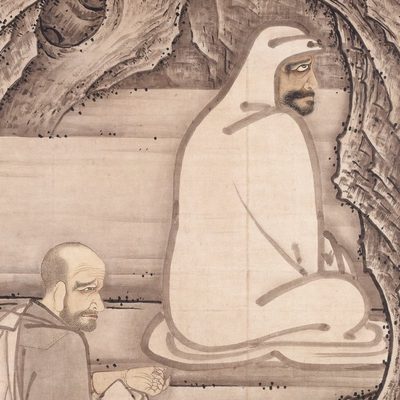
Huike, bodily sacrifice, and gratitude
Dōgen recounts the story of Huike standing in the snow outside Bodhidharma’s cave and cutting off his arm. The story belongs to Chán hagiography as well and should of course not be treated as an instruction to imitate self-harm. Its rhetorical function is to render Huike’s determination absolute. In fact, Dōgen uses this extremity to introduce gratitude: Within the narrative, the body signifies commitment to the Dharma and to the teachers credited with transmitting it. Comparable Chán stories turn gratitude into enacted return rather than private feeling. A critical reading therefore recognizes the dramatic force of the episode, but the used language of bodily injury should not be interpreted as a metaphorical or literal ideal of commitment.
Dōgen concludes that gratitude to earlier teachers should be expressed through daily practice:
Therefore the only right way to express our gratitude is to preserve pure practice day after day.
This formulation shifts gratitude away from monuments, praise, or ceremonial memory and toward the continued examination, practice, and responsible transmission of a tradition. On this reading, practice combined with ethical evaluation makes gratitude a dynamic relation to past, present, and future rather than a static debt.
Practice and the value of the body
Dōgen repeatedly urges practitioners not to cling to body and life. He describes the body as valuable when used to encounter and transmit the Dharma, but wasted when devoted to fame, comfort, or personal attachment. This is not a simple rejection of embodiment. The examples in Gyōji are intensely bodily. Sitting, working, eating, traveling, speaking, enduring weather, and wearing robes all constitute practice. The tension lies in how Dōgen values the body. The body is not primarily presented as something with unconditional worth. Its value often depends on its use for the Dharma.
This instrumental language is ethically problematic. Dōgen’s image of a skull made worthy of veneration by hearing the Dharma may reflect early and medieval beliefs about relics and the religious value of remains, but it does not justify a literal hierarchy between worthy and worthless bodies. The fascicle’s more defensible insight is that practice occurs through embodiment and that bodily care can support continuous practice.
Cold, heat, and the rhetoric of endurance
Dōgen writes:
Do not fear cold. Cold has never harmed a person, and cold has never destroyed the truth. Fear only one thing: not practicing.
Taken literally, the statement is of course false: Exposure to cold and heat can injure or kill, and Dōgen’s examples include conditions that are medically dangerous. The passage uses hyperbole to contrast environmental discomfort with abandonment of practice. Its critical distinction is between hardship that can reasonably be endured and danger requiring protection or adaptation, not between invulnerable practitioners and supposedly weak people who value comfort. No Buddhist merit attaches to preventable injury. Using this passage to discount heating, health care, sleep, nutrition, or disability would reproduce its severity without its rhetorical purpose.
The deeper concern is thus not physical endurance alone but continuity under difficulty, discomfort, or discouragement. “Cold” can be read as a figure for obstacles that interrupt practice, while the fascicle’s wider emphasis on continuity allows form to be modified in response to bodily and social conditions. A contemporary interpretation therefore treats adaptation, support, and, where necessary, temporary withdrawal as compatible with practice rather than as failures of resolve.
Isan and the production of sacred space
Dōgen praises Isan for practicing for decades in remote mountain conditions before a large monastery developed around him:
Everywhere that practice is carried out is a place of practice of the eternal Buddhas, even if there is no building.
The story supports Dōgen’s claim that sacred space is produced through activity rather than guaranteed by architecture, tradition, ritual, or institution. A monastery without practice is only a building, while a place without formal religious status can become significant through sustained discipline. Isan’s mountain life is meaningful within Dōgen’s narrative because it expresses commitment and eventually supports a community, not because isolation and deprivation are inherently spiritually superior. Dōgen’s further claim that Isan’s practice protects divine palaces and human lands belongs to a cosmology in which monastic activity stabilizes cosmos and state. It also gives practice a social scope beyond individual cultivation, although not a literal causal power over environmental or political conditions.
The story also has an institutional irony. Dōgen praises the absence of buildings while describing how a successful monastery eventually formed around Isan, and Dōgen himself founded and organized monasteries. The episode suggests that continuous practice can create institutions even when it does not initially seek them. It evaluates such institutions according to whether they remain subordinate to practice or become ends in themselves.
Fuyō Dōkai and the regulation of communal life
Dōgen quotes a long teaching attributed to Fuyō Dōkai. It combines instructions on non-attachment with concrete regulations concerning food, donations, travel, tea, and the distribution of resources. Dōkai’s instruction to abandon both extremes and the middle, remain unaffected by beauty, regard fame and wealth as irritants, and “exhaust the present moment completely” develops a central theme of Gyōji: The present is not a stage before awakening but the time in which practice occurs.
Dōkai’s institutional rules also reveal that continuous practice depends on organization. The community is instructed not to solicit donations, not to depend on wealthy patrons, to divide available food evenly, and to simplify hospitality. These rules protect the community from economic relationships that might shape teaching according to donors’ preferences. They also limit competition and inequality within the monastery and between monasteries. At the same time, strict refusal of external support is not universally sustainable. Different communities require different financial structures. The relevant principle is transparency and independence from patronage that compromises ethical or religious judgment.
Dōkai’s regulations also show that simplicity is not an absence of organization but is maintained through decisions about resources, labor, food, and social expectations. They are not an unrealistic ideal of abandoning all material support. Rather, they illustrate the interdependence of communal life. Economic structures form part of a community’s practice and can support or undermine the values it teaches. The fascicle therefore poses a question of institutional arrangement: Whether such structures serve practice or reinforce fame, gain, and control.
Dōgen’s critique of theatrical Zen
In the same section, Dōgen quotes a criticism of dramatic gestures associated with Chán teaching:
Why should we ascend a platform in the Dharma hall or enter the master’s room, swing a hammer, raise the yak-tail, shout “katsu” to the east and move the staff to the west? Why should we raise our eyebrows or glare fiercely as if having a seizure?
Numerous stories in Chán literature describe teachers responding to students with dramatic gestures, shouting, or physical demonstrations. Such actions are often interpreted as spontaneous expressions of the Dharma or as methods of disrupting conceptual thought. Dōgen’s critique targets not the methods as such but their repetition without understanding. Once a gesture becomes recognized as a sign of the pure Dharma and awakening, it may be performed theatrically, reproducing the appearance of authority without the practice that gave it meaning. The argument concerns empty or unreflective performance rather than gestures themselves.
This also clarifies Dōgen’s relation to kōan literature. He does not reject stories, paradoxes, striking responses, or embodied encounters. His own Eihei Kōroku (永平広録) records many teachings and comments on kōans. He rejects, rather, their conversion into a repertoire through which a teacher performs Zen. In this argument, kōans belong to living practice but cannot substitute for it or become a checklist of imitated “authentic” behavior.
The distinction between authentic and theatrical performance is not always easy to maintain, since claims of authenticity often depend on the authority of those judging them. Dōgen’s criteria of continued practice and lineage recognition therefore also require critical scrutiny. His broader point remains significant: Religious style, vocabulary, clothing, gestures, and confidence can be reproduced more easily than ethical transformation or sustained discipline. The critique of theatrical Zen is consequently not a rejection of performance as such but a criticism of substituting style for substance.
Rujing and sitting for sitting’s sake
The final major exemplar is Tiantong Rujing, Dōgen’s own teacher. Dōgen presents him as the embodiment of the continuous practice previously attributed to Buddhas and ancestors.
Rujing is quoted as saying:
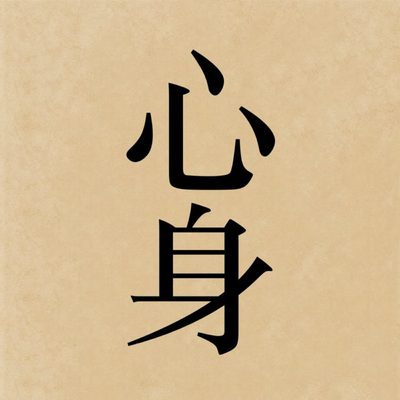
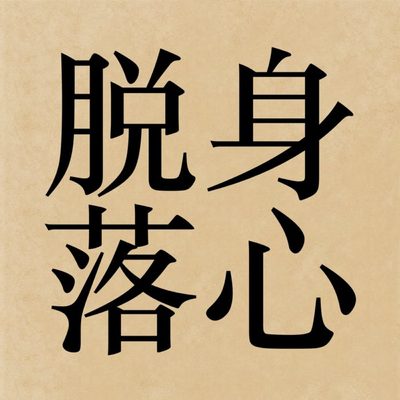
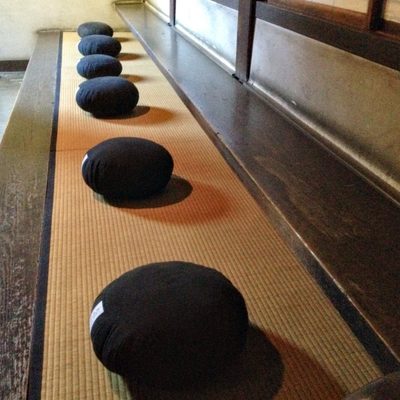
To experience Zen is to drop off body and mind. It is not necessary to burn incense, bow down, recite the names of Buddhas, confess, or read sutras. If you simply just sit, this is from the beginning realization.
The statement gives zazen priority over other practices. Within Dōgen’s use of it, sitting is not a technique valued for producing a later experience but an activity that enacts realization in its occurrence. Zazen is thus presented as a complete expression of the Dharma. Dōgen develops this principle elsewhere, including Fukan zazengi and Bendōwa. The former describes zazen as a central gate of practice, while the latter presents practice and realization as inseparable. Gyōji places this account within biography, monastic work, teaching, renunciation, and institutional life.
The passage does not establish that rituals, scriptures, confession, or devotional practices have no place in Dōgen’s Buddhism. His writings and monastic regulations make extensive use of them. The quotation instead establishes a hierarchy for Gyōji’s specific argument. Zazen cannot be replaced by accumulating ritual performances or textual knowledge. Dōgen’s emphasis is polemical rather than an exhaustive catalogue of acceptable practice, even though sitting occupies a central place in his Zen.
Dōgen also reports Rujing’s claim that no other teacher in Song China properly advocated “sitting for the sake of sitting”. This is not a neutral historical claim. Dōgen presents his teacher as uniquely authentic and thereby authorizes his own position as Rujing’s successor. The statement concerns how sitting was taught and practiced rather than whether other teachers practiced or valued it. Rujing’s approach is presented as more direct, less instrumental, and more continuous than that of other teachers. In this context, “sitting for the sake of sitting” is a particularly concentrated expression of Dōgen’s zazen principle, treating sitting as the present expression rather than the means of awakening.
Dōgen’s account of Rujing is an idealized biography that supports Dōgen’s Zen teaching. Rujing’s refusal of titles and gifts, his continuous practice, his criticism of other teachers, and his recognition of the proper form of sitting exemplify the principles advanced in Gyōji. By presenting Rujing as the culmination of the normative pattern established by earlier figures, Dōgen constructs a line of authority from Bodhidharma through Huike to Rujing and then to himself.
Gyōji in relation to Dōgen’s broader thought
Gyōji brings together themes developed elsewhere in Dōgen’s writings while giving them a historical and institutional form. In Bendōwa, for instance, practice and realization are presented as inseparable. Gyōji shows what this principle looks like across biographies, monastic work, teaching, renunciation, and institutional choices. In Fukan zazengi, zazen is described as a central gate of practice. Gyōji places sitting among a wider range of continuing activities and insists that it should not be abandoned after realization. In Uji, existence and time cannot be separated. Gyōji approaches time through the value and form of action. The present becomes concrete as practiced activity. In Shinjin gakudō, the Way is studied through body and mind. In Gyōji, body and mind appear within sitting, labor, food, clothing, travel, teaching, silence, and endurance. In Jishō zanmai, teaching and hearing become forms of self-verification. In Gyōji, they also become ways of maintaining historical continuity.
Gyōji is therefore more than a collection of exemplary stories, but the stories remain essential to its method. Dōgen does not first develop a theory and then add biographies as illustrations. He constructs the theory through selective biography. The meaning of continuous practice emerges from the accumulated pattern he creates among different figures. This pattern is persuasive only if its construction remains visible. The ancestors do not speak independently from the sources through which Dōgen received them. Their lives are edited into a history that supports his own account of the Dharma. Nevertheless, the stories are not mere rhetorical devices. Dōgen utilizes them to show how continuous practice can be enacted in different situations, in different times, and by different people. The biographies are not just examples of a theory. They are the medium through which the theory is developed and transmitted.
Continuous practice and core Buddhist concepts
Gyōji does not provide a systematic survey of Buddhist doctrine, but its argument can be related to several central concepts:
- Practice-realization
Dōgen places bodhi-mind, practice, realization, and nirvana within one continuous pattern. Practice is not discarded once realization is claimed. - Impermanence (anicca)
The irreversibility of time gives urgency to practice. Dōgen uses impermanence to challenge postponement, although this rhetoric does not negate necessary rest or bodily limitation. - Non-self (anattā)
Practice is distorted when treated as a personal possession or evidence of spiritual superiority. Dōgen’s demand to release body and life concerns the loosening of ownership, not a denial of the ethical value of bodily care. - Dependent origination (paṭicca-samuppāda)
Continuous practice depends on teachers, communities, food, buildings, labor, texts, patrons, bodies, and historical transmission. The Dharma is maintained through the interdependence of these conditions. - Suchness (tathatā)
Tea, rice, work, sitting, speech, and ordinary material conditions become contexts of realization rather than obstacles concealing another reality. This does not make every ordinary action an automatic expression of the Dharma. In Dōgen’s account, their significance arises through the attentive and committed enactment of the ten thousand dharmas, not through a ritual elevation of otherwise neutral objects. - Bodhi-mind
Aspiration is not a single decision made before practice. It is renewed and maintained through action. - Compassion
Dōgen interprets Bodhidharma’s journey and teaching as actions undertaken for others. Continuous practice preserves conditions under which later people may encounter Buddhist teaching. The image of the ring describes a moral as well as causal interdependence: One person’s practice supports that of others and is, in turn, sustained by them. - Renunciation
Dōgen criticizes attachment to home, status, wealth, and comfort, while also warning against attachment to the identity of possessing nothing. The renunciations in Gyōji are historically situated monastic examples, not universal prescriptions. They illustrate a reorientation of relation to the world and a Middle Way between engagement and detachment. - Ethical conduct
Practice is not only a matter of personal discipline. It also involves ethical choices about how to treat others, how to use resources, and how to organize communal life. The examples of Fuyō Dōkai’s regulations and the critique of wealth and prestige show that continuous practice requires attention to ethical conditions as well as individual effort. - Gratitude
Dōgen presents practice as repayment to earlier teachers. A critical account distinguishes this gratitude from uncritical imitation, teacher glorification, or demands for obedience, and relates it instead to continued practice and ethical evaluation. - Middle Way
The fascicle resists several opposing fixations: Practice versus realization, explanation versus action, possession versus non-possession, ordinary life versus awakening, and institutions versus solitary practice. All of these tensions are resolved through the principle of continuous practice. Practice is not a means to an end, but an end in itself. It is not opposed to realization, but the way realization is maintained. It is not opposed to explanation, but the way explanation is embodied. It is not opposed to non-possession, but the way non-possession is enacted. It is not opposed to ordinary life, but the way ordinary life becomes a context for awakening. It is not opposed to institutions, but the way institutions support or hinder practice. In that sense, Dōgen’s Middle Way is not a static position between extremes, but a dynamic process of navigating tensions through continuous practice.
Philosophical implications
Gyōji presents action as the medium through which religious meaning is maintained. A doctrine survives historically only when people continue to interpret, teach, embody, and reorganize their lives around it. This gives the fascicle a strongly process-oriented structure. Practice is not an object possessed by the practitioner. It is a pattern renewed through repeated activity. When the pattern ceases, the Dharma may remain as text or cultural memory, but it no longer functions in the same way. The Dharma is not a static truth that exists independently of practice. It is a living tradition that depends on the ongoing activity of practitioners. This has implications for how we understand religious authority, authenticity, and transmission. Authority is not simply inherited from the past, but must be continuously earned through practice. Authenticity is not a fixed quality, but a dynamic relationship between practitioners and their tradition. Transmission is not a one-time event, but an ongoing process of interpretation and embodiment. This is in my view the core message of Gyōji: The survival and vitality of the Buddhist tradition, i.e., the Buddha-Dharma depend on the continuous practice of its followers.
Dōgen’s cosmological claims radicalize this position. He writes as though sun, moon, earth, body, and mind exist through practice. Of course we should not interpret this as a direct physical causation but as a claim about the world disclosed and organized through activity. Practice changes what phenomena mean, how they are related, and how the practitioner acts among them.
The fascicle also develops a distinctive understanding of time. Time acquires value through what is enacted. Dōgen’s contrast between one practiced day and one hundred wasted years expresses the irreversibility of action. Once a day has passed, it cannot be retrieved. Yet the moral value assigned to a day depends on more than productivity or religious intensity. Care, recovery, and patient endurance can also constitute practice.
The bodily character of Gyōji is equally important. The Dharma is maintained through sitting, working, eating, traveling, clothing, speaking, and building. Dōgen thereby prevents Buddhism from becoming a purely mental worldview. At the same time, his rhetoric often treats the body harshly. Stories of sleeplessness, exposure, self-mutilation, hunger, and indifference to life are used to establish religious seriousness. These examples should be understood as hagiographic intensifications rather than universal requirements, since embodied practice also requires safety, nourishment, health, and freedom from abuse.
Gyōji is also a theory of institutional continuity. Monasteries, lineages, teachers, robes, food systems, work regulations, and patronage structures all shape whether practice can continue. Dōgen is concerned with what institutions maintain: Those that support practice are praised, while those organized around prestige, gain, or control are criticized. Religious institutions can use the language of service to justify expansion, accumulation, hierarchy, and public influence. The appearance of success may thereby conceal weakened practice. The fascicle supplies no simple solution, but its institutional analysis makes this tension visible.
Yet Dōgen’s own alternative is not free from authority. He privileges specific lineage claims, presents Rujing as uniquely authentic, and dismisses competing teachers. The text’s criticism of prestige therefore coexists with a strong effort to establish the legitimacy of Dōgen’s own transmission.
The fascicle also complicates the relation between ordinary life and awakening. Tea, rice, work, and routine are not spiritually inferior, but neither are they automatically awakened. Their meaning depends on how they are performed and what patterns they maintain. The same applies to the relation between practice and realization. Practice is not a means to an end, but an end in itself. Realization is not a final stage that ends practice, but a moment within it. The value of practice does not depend on producing a later experience, but on how it is enacted in the present. This challenges the common assumption that spiritual practice is only valuable if it leads to a specific state of awakening. Instead, Gyōji suggests that the way we practice in the present moment is itself the expression of awakening, regardless of any future attainment.
Finally, Gyōji treats practice as historical gratitude. Present practitioners inherit forms of life created by others. They are not self-originating. Continuing, questioning, and responsibly transmitting those forms becomes a way of acknowledging dependence on the past.
Conclusion
In Gyōji, Dōgen develops continuous practice as the activity through which Buddhist teaching remains historically and practically alive. Bodhi-mind, practice, realization, and nirvana are arranged as a ring because none of them can be isolated as a self-sufficient stage. Aspiration must be enacted, realization must continue in conduct, and nirvana cannot be separated from the practices through which liberation is expressed.
Dōgen constructs this argument through a selective history of Siddhartha Gautama, Mahākāśyapa, Pārśva, Huineng, Baizhang, Zhaozhou, Isan, Bodhidharma, Huike, Fuyō Dōkai, and Rujing. Their stories are not neutral biographies. Dōgen arranges them to create a lineage defined by continued sitting, work, simplicity, teaching, renunciation, and refusal of prestige. The historical accuracy of many episodes remains uncertain, and several belong unmistakably to Buddhist hagiography. Their function is nevertheless clear. They oppose the idea that awakening ends practice, that spiritual authority is proven by reputation, or that the Dharma can be preserved through buildings, titles, and texts alone. Instead, Dōgen presents the Dharma as something maintained through the ongoing activity of practitioners. It is not a static truth that exists apart from practice and can then be learned, possessed, or displayed. In Dōgen’s view, the Dharma is disclosed and maintained through the activity of reality itself, and continuous practice is the form in which this activity becomes visible in human life.
The fascicle therefore has both an ontological and an ethical dimension. Ontologically, Dōgen treats practice not as an activity added to reality from the outside, but as part of how reality is realized and sustained. Ethically, he asks how practitioners and institutions preserve conditions for practice without turning it into a means for fame, wealth, status, or institutional expansion. Wealth, architecture, imperial recognition, and institutional success are not rejected absolutely, but they become dangerous when practice is reorganized around them. Gyōji thereby raises the problem of maintaining the conditions for practice without using practice to maintain an appearance of success.
His praise of poverty and bodily endurance requires a cautious reading. The examples of Bodhidharma, Huike, Baizhang, Isan, and Rujing show – metaphorically! – that hardship can become part of practice when it is carried with patience, discipline, and commitment to the Dharma. However, the fascicle is not a prescription for self-mortification. Many examples are hagiographic intensifications that establish religious seriousness rather than universal requirements. Bodily care, nourishment, health, and freedom from abuse are also necessary conditions for practice. Still, Gyōji challenges the assumption that spiritual practice is always comfortable, convenient, or easy.
Dōgen also addresses the relation between ordinary life and awakening by discussing ordinary activity in a more constructive way. Tea, rice, work, sitting, speech, silence, clothing, and the maintenance of communal life are not secondary to realization. They are situations in which values become conduct. Awakening cannot be separated from how people eat, work, teach, use money, distribute resources, or exercise authority. These activities are contexts in which awakening is expressed rather than obstacles to it. Gyōji thus challenges the assumption that spiritual practice is valuable only when it yields a specific future state of awakening.
Practice is therefore never entirely private. It depends on inherited language, teachers, communities, material support, and the labor of earlier generations. The present practitioner neither creates the Dharma from nothing nor preserves it by passive loyalty. Continuity requires repetition, interpretation, criticism, and adaptation.
The fascicle also connects practice with time. The claim that one day of practice can outweigh one hundred years of non-practice expresses the irreversibility of time. Once a day has passed, it cannot be retrieved. Yet the value of a day does not depend on productivity or religious intensity alone. Care, recovery, patience, and endurance can also constitute practice. Rather than making every moment an object of anxious measurement, the passage treats each moment as taking a concrete form through what is sustained in it. In relation to Dōgen’s understanding of being-time, the present is not an empty point between past and future but a concrete form of reality disclosed through activity.
In this sense, Gyōji presents Buddhism neither primarily as doctrine nor merely as institution. It presents it as a historically transmitted way of acting whose credibility depends on whether its teachings continue to shape embodied, ethical, and communal life. Some passages of the fascicle can be read critically as a self-legitimating account of Dōgen’s own lineage and authority, sure, but the text should not be reduced to that function. Its central claim remains broader: The vitality of the Dharma depends on continuous practice. For Dōgen, this is not just an ontological or philosophical claim, but concerns how reality is disclosed and maintained within his account. The fascicle does not require imitation of every practice it describes or uncritical acceptance of Dōgen’s authority. Rather, it presents the Dharma as preserved through ongoing practice, examination, embodiment, and transmission rather than admiration, inheritance, or institutional success alone.
References and further reading
- Dogen Zenji, Shobogenzo – Die Schatzkammer des wahren Dharma-Auges, 4 Bände, 2013, Verlage: Kristkeitz Werner, Übersetzung: Ritsunen Gabriele Linnebach, Gudo Wafu Nishijima, ISBN: 9783921508909









comments